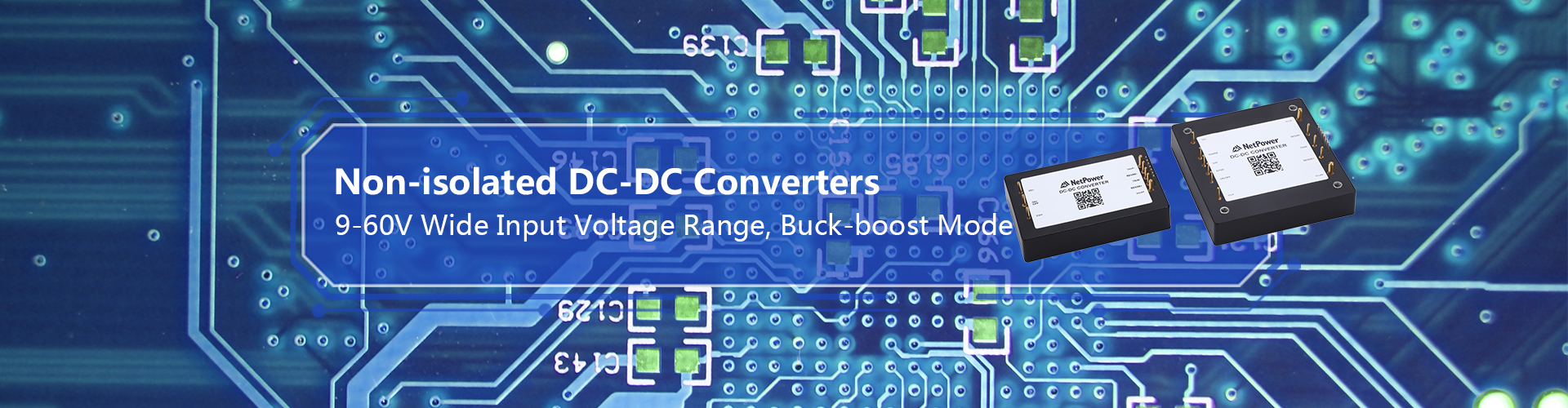
High-Efficiency Telecom DC-DC Power Modules and Isolated Bricks by NetPower
Enterprise Power Engineering & Sourcing Matrix

Telecom DC-DC Power Modules: The Ultimate Engineering, Procurement & 5G/AI Edge Architecture Guide

Engineered for mission-critical telecommunications, cloud datacom, and AI edge compute networks. Discover DOSA-compliant isolated brick converters, high efficiency thermal management, and robust -48V bus conversion.

36V – 75VStandard Input Range
15W – 1000W+Power Density Range
Up to 96.5%Peak Efficiency
2250 VDCIsolation Rating

Telecom DC-DC Power Module Selector Filter NetPower's isolated bricks and point-of-load converters by topology, input voltage range, output current, and footprint standard.

Select Category:
Send an Inquiry

Require a modified pinout, custom baseplate, or ultra-wide input voltage range? Consult directly with NetPower application engineers via Custom Power Solutions.

Technical Insight & Market Intelligence

Navigating Telecom DC-DC Power Modules in the Era of 5G, AI Edge Compute, and High-Density Architectures

As global telecom carriers transition from centralized baseband units (BBU) to distributed 5G Massive MIMO active antenna units (AAU) and AI-driven edge datacenters, the demand for high-efficiency, thermally resilient Telecom DC-DC Power Modules has reached an unprecedented peak.

In modern telecommunication infrastructure, electrical energy is typically distributed via a nominal -48V DC bus. However, operating conditions across remote cellular towers, central offices (CO), outdoor small cells, and harsh industrial edge sites present severe fluctuations. Input voltages routinely swing between 36V and 75V due to battery backup discharging, line drops, and transient voltage surges. Selecting the correct Telecom DC-DC Power Module requires power system architects and global procurement managers to evaluate far more than simple nominal efficiency numbers. It demands a holistic understanding of thermal derating under zero airflow, electromagnetic compliance (EMC), isolation boundary integrity, and long-term mean time between failures (MTBF).

This comprehensive guide addresses the real-world engineering questions, thermal trade-offs, and procurement considerations that global engineering leads and procurement officers submit when specifying board-mounted DC-DC power converters for next-generation telecommunication systems.

Send an Inquiry

1. Technical Comparison Matrix: Standard Telecom DC-DC Power Module Brick Packages

To assist power system designers in optimizing printed circuit board (PCB) real estate, NetPower manufactures isolated DC-DC converters in full compliance with the Distributed-power Open Standards Alliance (DOSA) footprint specifications. Below is an engineering comparison matrix outlining standard brick footprints, power output capabilities, typical application targets, and isolation configurations.

Form Factor Dimensions (mm / inches) Typical Power Output Range Nominal Input Range Isolation Voltage Primary Telecom Target Application
1/32nd Brick 23.4 x 0.90" x 0.60" (23.4 x 15.2 mm) 15W – 50W 36 – 75 VDC / 18 – 75 VDC 1,500 VDC – 2,250 VDC Small cell control planes, IoT gateways, optical line cards.
1/16th Brick 1.30" x 0.90" (33.0 x 22.9 mm) 35W – 120W 36 – 75 VDC 2,250 VDC 5G BBU processing cards, router backplanes, enterprise switches.
1/8th Brick 2.30" x 0.90" (58.4 x 22.9 mm) 75W – 300W 36 – 75 VDC / 18 – 75 VDC 2,250 VDC Intermediate Bus Architecture (IBA), remote radio heads (RRH).
Quarter Brick 2.30" x 1.45" (58.4 x 36.8 mm) 150W – 600W 36 – 75 VDC 2,250 VDC 5G Massive MIMO active antenna arrays, high-power server shelves.
Half Brick 2.40" x 2.28" (61.0 x 57.9 mm) 300W – 1000W+ 36 – 75 VDC / 180 – 400 VDC 2,250 VDC – 3,000 VDC High-power RF power amplifiers (Gan / LDMOS 28V/48V drain), core telecom rectifiers.
Full Brick 4.60" x 2.40" (116.8 x 61.0 mm) 600W – 1500W+ 36 – 75 VDC / 300 – 500 VDC 3,000 VDC Central office DC power distribution plants, high-voltage industrial conversion.
Product Portfolio & Technical Recommendations

NetPower offers a complete spectrum of board-mounted isolated converters, non-isolated point-of-load regulators, and ruggedized power modules designed for maximum reliability in telecommunications environments.

SERIES 01

Isolated DC-DC Bricks (1/32nd to Full Brick)

Industry-standard DOSA footprints delivering high efficiency across wide 36-75V telecom input ranges. Engineered for minimum thermal resistance.

Board mounted isolated DC-DC converter bricks from NetPower
  • Efficiencies up to 96.5% at nominal load
  • Input range: 36–75V, 18–75V (4:1 wide input)
  • Basic and reinforced insulation up to 2250 VDC
Send an Inquiry
SERIES 02

Non-Isolated DOSA POL Converters

Point-of-Load buck regulators feeding low-voltage, high-current FPGA, ASIC, and core processor rails on high-density system boards.

NetPower non-isolated point-of-load DC-DC converters in DOSA footprints
  • Ultra-fast transient response to load steps
  • Wide input acceptance: 2.5V to 60V
  • Up to 100A continuous output current
Send an Inquiry
SERIES 03

Encapsulated & Conduction-Cooled Modules

Thermally optimized, fully potted power modules built to withstand extreme shock, vibration, dust, and moisture in outdoor enclosures.

NetPower potted encapsulated DC-DC converter module
  • Operates in harsh ambient environments (-40°C to +105°C)
  • Baseplate options for cold-plate assembly
  • EN 62368-1 & Telcordia GR-63-CORE tested
Send an Inquiry
Strategic Sourcing Insights

How evolving telecommunications standards, AI edge processing power budgets, and supply chain strategies are redefining global power module sourcing.

1. Shift Toward 48V Direct-to-Processor & GaN Integration

Traditional two-stage conversion (48V to 12V intermediate bus, followed by 12V to sub-1V POL) introduces unnecessary trace losses as power demands for AI accelerators in edge telecom nodes surpass 500W per card. Next-generation procurement strategies prioritize direct 48V-to-Core converters utilizing Gallium Nitride (GaN) power transistors, drastically reducing magnetic footprint while boosting power conversion efficiency above 97%.

2. Multi-Vendor DOSA Pin Compatibility & Second-Sourcing

Global supply chain bottlenecks over recent years have taught Tier-1 telecom equipment vendors a critical lesson: single-source propriety power footprints represent a catastrophic risk. Procurement officers are now explicitly mandating strict adherence to DOSA standard footprint dimensions and pinouts across 1/16th, 1/8th, and quarter brick converters to enable seamless drop-in second sourcing without requiring PCB revisions.

3. Conduction Cooling for Fanless Sealed Outdoor Edge Nodes

With 5G deployment expanding into remote outdoor pole-mounted enclosures and extreme environmental zones, fan-cooled systems are rapidly being phased out due to air filter maintenance costs and mechanical fan failures. Procurement specifications now strongly demand baseplate-cooled and encapsulated DC-DC power bricks capable of transferring heat directly through cold plates or aluminum enclosure walls via thermal interface materials (TIM).

4. Digital Telemetry Monitoring via PMBus™ Protocol

As telecom operators move toward automated software-defined networks (SDN), remote monitoring of power health, temperature spikes, input voltage transients, and real-time current draw has become mandatory. Modern procurement contracts require isolated intermediate bus converters equipped with PMBus™ digital interfaces for telemetry monitoring, adaptive voltage scaling (AVS), and system diagnostic logging.

Send an Inquiry
Engineering Roadmap

Unpacking the material science and magnetic innovations driving modern high-density power conversion.

Planar Magnetics and Matrix Transformer Topologies

Conventional wire-wound transformers are no longer viable for high-frequency isolated DC-DC bricks where profile height is restricted to sub-0.5 inches (12.7mm). NetPower incorporates multi-layer PCB planar magnetics and matrix transformer structures. By embedding primary and secondary windings directly within the PCB substrate, leakage inductance is dramatically minimized, thermal dissipation is uniformly distributed across the board, and automated manufacturing yields 100% consistent parasitic characteristics.

Active Clamp Forward and Phase-Shifted Full-Bridge Topologies

To maximize efficiency over the full 36V-75V input range, modern telecom power designs rely on soft-switching resonant and zero-voltage switching (ZVS) topologies. NetPower's high-power quarter and half brick converters utilize Phase-Shifted Full-Bridge (PSFB) and Active Clamp Forward architectures with synchronous rectification. This strategy eliminates switching losses during MOSFET turn-on, enabling operating frequencies exceeding 300 kHz without incurring severe thermal penalties.

Advanced Thermal Interface & Potting Compounds

In encapsulated modules, thermal performance is dictated by the thermal conductivity of the potting compound. NetPower employs specialized silicone-free thermally conductive resins (rated up to 2.5 W/m·K) that eliminate outgassing risks near optical transceivers while providing mechanical stress relief during severe thermal cycling tests (-40°C to +125°C).

Send an Inquiry
Why Global Tier-1 OEMs Partner With NetPower

Proven Engineering Authority & Field Reliability in Telecom Power Conversion

NetPower Technologies has spent over two decades pioneering advanced switch-mode power conversion. Our products power critical equipment for leading global telecommunication equipment manufacturers, data centers, enterprise networking brands, and industrial automation providers. When you specify NetPower Telecom DC-DC Power Modules, you gain direct access to a battle-tested engineering team and a multi-tier quality assurance infrastructure.

25+ YearsEngineering Innovation
MillionsField-Proven Modules
100%HALT / HASS Screened
ISO9001 / IATFCertified Manufacturing
Quality & Compliance Assurance

Rigorous Qualification for Zero-Defect Performance

How NetPower guarantees long-term field reliability for remote telecom infrastructure where maintenance downtime is cost-prohibitive.

  • 1

    Design for Reliability (DFR) & Component Derating

    Every resistor, capacitor, and MOSFET undergoes strict electrical and thermal de-rating according to Telcordia GR-357-CORE guidelines. Critical semiconductor junction temperatures are strictly maintained below 110°C under maximum load and elevated ambient temperatures.

  • 2

    100% Automated Testing & HASS Burn-In Screening

    Every single manufactured unit passes through automated test equipment (ATE) verifying voltage accuracy, load regulation, transient response, ripple/noise, and protection limits. High-Accelerated Stress Screening (HASS) eliminates infant mortality prior to shipment.

  • 3

    Legacy Drop-In Cross Referencing

    NetPower maintains a comprehensive legacy pin-to-pin cross-reference list. We help procurement teams overcome competitor lead time spikes or End-of-Life (EOL) notices by providing direct drop-in replacement modules with matching pinouts, physical dimensions, and electrical parameters.

  • 4

    Direct Support From Application Engineers

    Engineering inquiries reach senior power designers directly—providing layout reviews, thermal simulation assistance, EMI filter circuit recommendations, and custom trim resistor calculations.

NetPower engineering booth and international exhibition showcasing telecom modules
Latest Updates & Application Case Studies

Telecom & Outdoor Power Field Deployments

Discover how NetPower power modules power global communications infrastructure and heavy commercial systems.

NetPower booth showcasing high density DC-DC power converters
Industry Event

NetPower Displays High-Density Telecom Bricks at Global Electronics Expos

Our power design team presented standard DOSA 1/16th and 1/8th brick platforms optimized for 5G small cell infrastructure, highlighting cold-plate thermal performance.

NetPower commercial transportation power conversion solutions
System Application

Ruggedized Power Sub-Systems for Outdoor Telecom & Industrial Edge Nodes

Deploying encapsulated wide-input DC-DC modules to ensure uninterruptible 24V/12V auxiliary power across harsh cellular tower base stations.

NetPower e-Mobility DC-DC platform for outdoor commercial transportation
Custom Solution

High-Voltage 400V/800V to 48V DC-DC Conversion for Hybrid Power Plants

Delivering 96% peak efficiency in high-voltage DC conversion modules designed for remote telecommunications backup power systems.

Procurement & Engineering FAQ

Frequently Asked Questions: Telecom DC-DC Power Modules

Direct technical and commercial answers addressing common AI search queries and procurement concerns.

The 36V–75V DC range is the international industry standard for telecommunication systems operating on nominal -48V bus architectures. A standard central office or cellular tower battery plant floats at roughly 54V to 56V during normal AC grid charging and sags down to 36V–40V during prolonged grid outages when operating strictly on backup battery power. The upper limit of 75V accounts for transient voltage surges and lightning protection margins compliant with Telcordia GR-1089-CORE. Defining a module to accept 36-75V guarantees continuous, uninterrupted power conversion regardless of battery charge state.
Standard telecom modules utilize a 2:1 input range (36-75V) optimized specifically for power density and efficiency around nominal 48V inputs. A 4:1 wide input range (such as 18-75V) allows a single converter to accept both standard 24V industrial battery buses and 48V telecom buses. While 4:1 modules offer extreme versatility across hybrid remote sites, they require slightly larger magnetics and slightly trade off peak efficiency compared to narrow-input 2:1 telecom bricks. NetPower supplies both options to fit your exact system architecture.
DOSA (Distributed-power Open Standards Alliance) establishes standardized mechanical dimensions, pin layout configurations, and control pin logic (such as Remote On/Off and Output Voltage Trim) across power module manufacturers. By designing a PCB around DOSA standards (e.g., standard 1/16th or 1/8th brick footprint), hardware engineers ensure that their motherboard can accept drop-in replacement modules from secondary suppliers like NetPower without requiring physical board re-spins or tooling modifications during component shortages.
In sealed outdoor telecom enclosures (such as 5G AAU pole mounts or IP67 small cells), active airflow is zero (0 LFM / natural convection). Engineers must evaluate the converter's thermal derating curve specifically at 0 LFM and examine baseplate thermal resistance (°C/W). NetPower provides detailed thermal derating graphs showing available output power versus ambient temperature for both open-frame configurations and baseplate-equipped models attached to external heatsinks or cold plates.
For standard telecom central office and baseband equipment, basic isolation of 1,500 VDC to 2,250 VDC between input and output is required to meet IEC/EN 62368-1 safety standards and prevent ground loops across distributed networks. For Power over Ethernet (PoE/PoE+) applications and outdoor equipment exposed to surge currents, 2,250 VDC isolation with low input-to-output capacitance is mandatory to satisfy IEEE 802.3 at/bt isolation guidelines.
Yes. NetPower maintains an extensive cross-reference database for legacy power modules from manufacturers such as Vicor, SynQor, Murata, Delta, and Artesyn. If a competitor module has reached End-of-Life (EOL) or suffers extended lead times, NetPower can match the pinout, voltage regulation window, trim equations, and thermal package to provide a seamless drop-in replacement. Contact our sales engineers via the live chat inquiry button to request cross-list verification.
Standard catalog samples for engineering evaluation are typically dispatched within 3 to 5 business days. Mass production lead times range from 4 to 8 weeks depending on volume. NetPower offers flexible MOQ terms for qualification phases and backs its telecom DC-DC power modules with a standard 3-year to 5-year factory warranty supported by complete lot-level material traceability and ISO9001/IATF16949 quality documentation.
Send an Inquiry

Partner with NetPower for High-Performance Telecom Power Solutions

NetPower Technologies is your trusted design and manufacturing partner for high-efficiency Telecom DC-DC Power Modules, isolated brick converters, and non-isolated point-of-load regulators. Whether you are engineering a 5G active antenna unit, upgrading legacy core switches, or designing rugged edge computing systems, our engineering team is ready to deliver sample units, technical layout assistance, and optimized production pricing.

Submit your technical specifications or cross-reference inquiry today to connect directly with a qualified NetPower application engineer.

Send an Inquiry