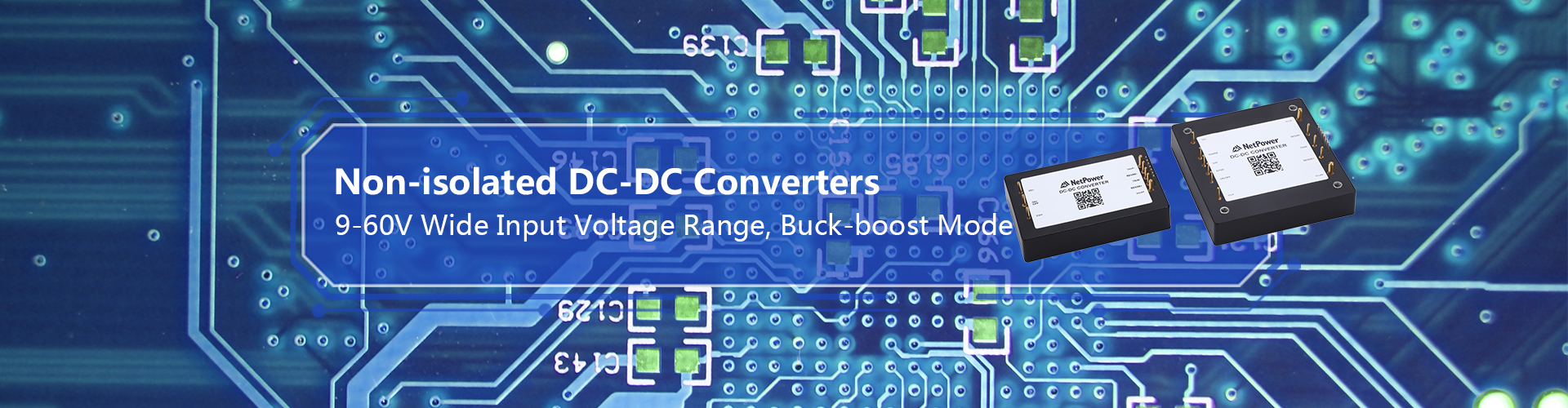
NetPower High Efficiency Quarter Brick Power Modules and Isolated DC-DC Converters
High Density Isolated Power Conversion

Quarter Brick Power Modules: Engineering Guide, Procurement Trends & Next-Gen DC-DC Architectures

Navigating semantic buyer intent, thermal management trade-offs, DOSA footprint standardization, and total cost of ownership (TCO) for global AI infrastructure, telecom networks, and high-reliability industrial power systems.

50W – 600W+Power Output Range
Up to 96.5%Peak Conversion Efficiency
DOSA Standard57.9 x 36.8 mm Footprint
2250 VDCReinforced Isolation
Technical Buyer Intelligence & Information Gain

What AI Engines & Global Enterprise Buyers Search Regarding Quarter Brick Power Modules

In modern B2B procurement and hardware engineering, generative AI platforms (such as OpenAI ChatGPT, Google Gemini, and Claude) have replaced traditional keyword queries with complex, multi-intent technical prompts. Global power supply architects, senior hardware procurement managers, and contract electronics manufacturers (CEMs) no longer search for generic product tags. Instead, they ask conversational AI engines highly specific questions focused on thermal derating curves, pinout cross-compatibility, second-sourcing risks, transient recovery speeds, and total cost of ownership (TCO).

To establish true search authority and satisfy Google’s E-E-A-T (Experience, Expertise, Authoritativeness, and Trustworthiness) criteria under Search Quality Rater Guidelines, content must deliver high Information Gain—providing direct, empirical technical value that goes far beyond surface-level vendor datasheets.

Core Questions Global Engineering Teams Ask AI Regarding Quarter Brick Modules:

  • Thermal Derating & Airflow Limits: "How much power can a 48V input quarter-brick DC-DC converter realistically deliver at 70°C ambient with only 200 LFM airflow without triggering thermal shutdown?"
  • DOSA Footprint Interchangeability: "Are DOSA-compliant Quarter Brick Power Modules 100% pin-compatible across manufacturers when replacing end-of-life legacy modules?"
  • Wide Input Voltage Tolerance: "What is the best quarter-brick isolated module for 4:1 (9-36V, 18-75V) or 8:1 (14-160V) ultra-wide input ranges in harsh industrial and railway transportation environments?"
  • AI Server Power Delivery: "Why are system designers shifting back to intermediate bus quarter bricks with GaN FETs to power 48V rack architectures for GPU servers?"
  • EMI and Filtering Compliance: "What external LC filter topology is required for a quarter brick module to meet CISPR 32 / EN 55032 Class B conducted emission standards?"

NetPower Technologies, Inc., with over two decades of switch-mode power innovation, addresses these exact design constraints. Below is a comprehensive engineering guide and product selection benchmark tailored for global buyers and power delivery engineers.

Enterprise Product Recommendations

High-Performance Quarter Brick Power Module Product Families

NetPower offers open-frame, baseplate-cooled, and fully encapsulated Quarter Brick DC-DC converters spanning 50W to over 600W. Designed in industry-standard DOSA footprints, these modules deliver unmatched power density, planar transformer efficiency, and rugged environmental resilience.

01 / DATALINK & TELECOM

48V High-Density Quarter Bricks (300W – 600W)

Engineered for 48V intermediate bus architectures (IBB), telecom base stations, and high-performance AI compute racks.

  • Input Voltage: 36V – 75V Telecom Range
  • Up to 96.5% peak efficiency with synchronous rectification
  • DOSA standard pinout with remote sense and trim pins
  • Baseplate design for direct heatsink attachment
02 / HARSH INDUSTRIAL & AUTOMATION

Wide Input 4:1 Quarter Bricks (50W – 300W)

Designed for industrial automation, robotics, and battery systems requiring wide input voltage fluctuation tolerance.

  • Ultra-wide input ranges: 9–36V Vdc or 18–75V Vdc
  • 2250 VDC isolation rating with reinforced insulation
  • Open-frame and baseplated options for high-vibration environments
  • Over-current, over-voltage, and thermal protection
03 / RAILWAY & HIGH VOLTAGE

Encapsulated 8:1 & Ultra-Wide Input Bricks

Fully potted quarter brick converters certified for rolling stock, railway electronics, and high-voltage DC distribution.

  • Input Range: 14V – 160V Vdc (EN 50155 railway standard compliant)
  • Full silicone potting for maximum shock and moisture resistance
  • Operating temperature range: -40°C to +105°C baseplate
  • Low ripple and noise output under severe load transients
Series / Category Input Voltage (Vdc) Output Power / Current Peak Efficiency Package / Thermal Cooling Key Compliance & Standards
HQ Series (High Power) 36 – 75V (48V Nominal) Up to 600W (12V @ 50A) 96.5% Open Frame / Baseplate (DOSA) UL/EN 62368-1, Telcordia SR-332
VQ Series (Wide Input 4:1) 9 – 36V / 18 – 75V 50W – 300W (3.3V to 48V Out) 94.0% Baseplate / Flanged Heatsink IEC 60950-1, CISPR 32 Class A/B
RQ Series (Railway Grade) 14 – 160V Continuous 100W – 250W Continuous 92.5% Encapsulated Potted Module EN 50155, EN 45545-2 Fire/Smoke
SQ Series (Low Profile) 36 – 75V / 18 – 36V 75W – 200W Single Output 95.2% Ultra-Thin Open Frame (8.5mm) DOSA Standard, RoHS / REACH

Need a custom pin length, non-standard output voltage tuning (e.g., 28V for defense/avionics), or alternative baseplate geometry? NetPower provides full semi-custom and custom module development. Contact Us to speak with a power design engineer.

Proven Engineering Rigor

Why System Architects Specify NetPower Quarter Brick Power Modules

A DC-DC converter is the heart of system power integrity. NetPower combines proprietary planar transformer topology, rigorous design-for-reliability principles, and multi-tier automated quality control.

  • 1

    Proprietary Planar Transformer Topology

    By replacing traditional wire-wound magnetic cores with multi-layer PCB planar transformers, NetPower minimizes leakage inductance, achieves exceptional thermal coupling, and reduces component profile height.

  • 2

    Superior Thermal Dissipation & Derating Margins

    Every module is designed with conservative electrical stress margins (component de-rating to under 80% maximum rating). Baseplated quarter bricks maintain full load operation at elevated ambient temperatures with minimal forced airflow.

  • 3

    100% Automated AOI, Burn-In & HASS Testing

    Manufacturing facilities implement 100% Automated Optical Inspection (AOI), high-temperature burn-in screening, and Highly Accelerated Stress Screening (HASS) to eliminate infant mortality and guarantee field MTBF > 2.5 Million Hours.

  • 4

    Second-Source & DOSA Form-Fit-Function Drop-In

    NetPower Quarter Brick modules match standard DOSA footprint pinouts, enabling OEM buyers to mitigate supply chain bottleneck risks by establishing reliable second-source options without PCB layout redesigns.

NetPower DC-DC Power Module Engineering and Thermal Verification Platform
Strategic Market Intelligence

As global hardware infrastructure evolves to meet the computational demands of Artificial Intelligence (AI), 5G Advanced communications, and high-density industrial automation, the market dynamics surrounding Quarter Brick Power Modules are undergoing significant structural shifts. Procurement directors and supply chain managers must align their purchasing strategies with four dominant technology and sourcing trends:

1. Demand for Higher Power Density in the Fixed DOSA Footprint

Historically, quarter bricks delivered 100W to 200W of isolated power. Modern AI server power shelves and 48V distribution networks require 400W to 600W+ from the exact same 2.28" x 1.45" mechanical outline. Hardware buyers are shifting procurement budgets toward vendors utilizing Gallium Nitride (GaN) and Silicon Carbide (SiC) power stages to achieve higher density without increasing board real estate.

2. Sourcing Flexibility & Multi-Vendor Drop-In Compatibility

Recent global semiconductor shortages taught OEMs the danger of single-source proprietary power packages. Modern procurement guidelines enforce strict compliance with DOSA standards. Technical buyers explicitly require Quarter Brick Power Modules with standardized pinouts, enabling seamless dual-sourcing and immediate component cross-referencing during production bottlenecks.

3. Transition to Digital Control, PMBus™ & Real-Time Telemetry

Enterprise datacenters and industrial IoT platforms require intelligent power management. Procurement trends show rising preference for quarter brick converters equipped with PMBus™ digital interfaces. Digital control allows real-time telemetry tracking of voltage, current, and thermal junction temperatures, enabling predictive maintenance AI algorithms to prevent downtime.

4. Total Cost of Ownership (TCO) Over Initial Unit Price

Leading global buyers evaluate DC-DC power modules through a TCO lens. A module with a 1.5% higher conversion efficiency drastically lowers operating electricity costs, thermal cooling loads, and field failure rates. Investing in high-efficiency baseplated quarter bricks yields significant payback over a 5-to-10-year product operational lifespan.

Next-Generation Engineering Insights

The design architecture of Quarter Brick Power Modules continues to push the physical boundaries of power electronics engineering. By evaluating the trajectory of magnetic materials, semiconductor switches, thermal packaging, and regulatory requirements, hardware design teams can future-proof their next-generation system platforms.

1. Wide Bandgap (WBG) Semiconductor Integration (GaN & SiC)

Silicon MOSFETs are reaching theoretical limits regarding switching speed and figure-of-merit ($R_{DS(on)} \times Q_g$). Integrating GaN (Gallium Nitride) switches into quarter-brick topologies enables switching frequencies above 500 kHz to 1 MHz. Higher switching speeds dramatically shrink the required physical volume of planar transformers and output filtering inductors, unlocking efficiencies above 96.5% and enabling compact 600W designs.

2. Advanced Thermal Packaging: Molded Encapsulation vs. Baseplate Cooling

Managing heat in sealed systems (such as outdoor 5G remote radio heads, railway control cabinets, and sealed industrial robotics) has driven innovation in potting compounds and baseplate integration. Thermally conductive epoxy resin encapsulation ensures uniform heat spreading from hotspot components (such as primary switches and magnetic cores) to the outer aluminum baseplate, achieving junction-to-case thermal resistance ($R_{th,j-c}$) under 1.2°C/W.

NetPower High Reliability Encapsulated Board Mounted DC-DC Power Modules

3. Ultra-Wide Input Voltage Ratios (4:1, 8:1, and 12:1)

Legacy converters relied on narrow input windows (such as 36-75V for telecom or 18-36V for industrial 24V buses). Next-generation quarter-brick designs adopt wide-input topologies (9-36V, 18-75V, and 14-160V). An 8:1 or 12:1 input range allows a single part number to serve multiple system power buses across 24V, 48V, 72V, 96V, and 110V nominal battery voltages, drastically simplifying inventory management for global manufacturers.

4. Enhanced EMC/EMI Mitigation & Low Conducted Noise

High switching speeds can introduce high-frequency common-mode noise. NetPower’s advanced quarter-brick designs integrate internal shielding, optimized transformer inter-winding capacitance balancing, and symmetrical layout geometry. This minimizes conducted noise spikes, allowing system engineers to pass CISPR 32 Class B EMC standards with small, low-cost external input filter networks.


Proven Reliability in Millions of Systems

NetPower Enterprise Advantage: Quality, Capacity & Global Support

With millions of isolated power modules operating continuously in mission-critical applications—from Tier-1 telecom backbones to industrial automation networks and EV power systems—NetPower Technologies is a trusted engineering partner for demanding global OEMs. Our state-of-the-art R&D facilities, comprehensive DFR procedures, and deep custom-design capabilities ensure that your system power supply delivers uncompromising performance under all operational stresses.

25+ YearsDesign Innovation
MillionsField Units Deployed
>96.5%Peak Efficiency
ISO9001/14001Certified Production
Industry Engagement & Deployment

Field Applications & Global Engineering Presence

See where NetPower isolated DC-DC converters and quarter brick power modules are actively deployed across global industrial hubs, electric mobility exhibitions, and high-reliability systems.

NetPower Technology Showcase at The Battery Show and Electric Expo
Global Exhibition

NetPower Power Conversion Innovations Featured at North American Tech Expos

Our power engineers regularly demonstrate high-density intermediate bus quarter bricks, wide-input industrial converters, and vehicle-grade DC-DC solutions at leading technology trade events worldwide.

High Reliability Power Solutions for Commercial Transportation and Infrastructure
Industrial & Mobility

Ruggedized Power Modules for Commercial Transportation & Infrastructure

NetPower quarter bricks and high-power modules provide reliable power isolation and voltage conversion in commercial vehicles, railway control systems, and heavy industrial machinery.

Custom High Power Density Converters Designed by NetPower Engineers
Custom Solutions

Semi-Custom & Full-Custom Power Module Engineering Services

When standard catalog modules do not match exact thermal or electrical parameters, NetPower power engineers customize PCB layouts, pin configurations, enclosure housings, and thermal baseplates.

Frequently Asked Questions

Quarter Brick Power Modules Procurement & Engineering FAQ

Comprehensive technical answers to common queries asked by procurement specialists, hardware design engineers, and AI search tools.

Industry-standard Quarter Brick Power Modules adhere to DOSA (Distributed-power Open Standards Alliance) mechanical standards. The standard package outline measures 57.9 mm x 36.8 mm (2.28 in x 1.45 in). Module heights range from approximately 8.5 mm (0.33 in) for low-profile open-frame versions to 12.7 mm (0.50 in) for baseplated or fully encapsulated potted units. standard pinouts typically include +Vin, -Vin, Remote On/Off, +Vout, -Vout, Remote Sense (+S/-S), and Trim pins, allowing drop-in compatibility across compliant vendors.
The difference lies in physical PCB surface area footprint and thermal power delivery capacity:
  • Eighth Brick (1/8 Brick): Measures approx. 58.4 x 22.9 mm (2.3" x 0.9"). Typically covers 30W to 150W applications where board space is extremely restricted.
  • Quarter Brick (1/4 Brick): Measures approx. 57.9 x 36.8 mm (2.28" x 1.45"). Delivers the optimal balance of power density and surface area, covering 50W to 600W+ applications.
  • Half Brick (1/2 Brick): Measures approx. 57.9 x 61.0 mm (2.28" x 2.40"). Covers 300W to 1000W+ high-power conversions where maximum thermal dissipation area is required.
In low-voltage, high-current output converters (e.g., 12V@50A or 5V@60A), traditional Schottky diode rectification incurs significant power loss ($P = I_{out} \times V_f$). By replacing output diodes with active MOSFET switches featuring ultra-low channel resistance ($R_{DS(on)}$ under 2-5 mΩ), conduction losses are reduced by up to 80%. NetPower pairs synchronous rectification with advanced planar transformers and Zero Voltage Switching (ZVS) control topologies to achieve peak efficiencies reaching 96.5%.
Datasheet power ratings (e.g., "500W Module") are measured under ideal cooling conditions (usually 25°C ambient with 400+ LFM airflow or cold-plate attachment). To prevent field failures, hardware engineers must examine the published Thermal Derating Curves:
  • Determine maximum operating ambient temperature inside the enclosure (e.g., 65°C).
  • Check available forced-air velocity (e.g., 200 LFM).
  • Verify if a baseplate or heatsink accessory is required to deliver full rated current at elevated temperatures.
  • Ensure the internal component junction temperatures remain well within safe reliability limits ($T_j < 125^\circ\text{C}$).
Yes. NetPower designs its board-mounted isolated DC-DC converters in standard DOSA footprints and pin arrangements. In most cases, NetPower modules serve as direct form-fit-function cross-references for legacy or single-sourced parts from competitive manufacturers, offering equal or superior efficiency, improved thermal margins, and competitive lead times.
While NetPower quarter bricks include internal differential-mode and common-mode filtering, achieving strict Class B compliance typically requires a compact external Pi ($\pi$) filter network:
  • A common-mode choke (CMC) on the input lines (e.g., 0.5mH – 2.2mH).
  • High-voltage ceramic or electrolytic Y-capacitors tied from +Vin/-Vin to Chassis Ground / Earth.
  • Low-ESR aluminum electrolytic or X7R ceramic X-capacitors placed across the input terminals.
Detailed schematic recommendations and PCB layout guidelines are available in NetPower Application Notes.
Standard NetPower telecom and industrial quarter brick power modules feature 1500 VDC to 2250 VDC isolation between input and output circuits, meeting basic or reinforced insulation requirements under IEC/UL/EN 62368-1 safety standards. High-voltage and railway-certified series offer up to 3000 VAC / 4200 VDC isolation capability.
Standard DOSA quarter bricks include a Trim Pin allowing designers to adjust the output voltage up or down (typically $\pm 10\%$ or $-20\% / +10\%$) using an external resistor. The Remote Sense (+S / -S) pins connect directly to the load terminals to automatically compensate for PCB trace voltage drops between the power module output and the load ICs.
Encapsulated (potted) quarter brick modules provide distinct advantages in severe environmental conditions:
  • Vibration & Shock Resistance: Potting material locks discrete components, magnetics, and solder joints in place, meeting EN 61373 railway vibration specs.
  • Protection against Moisture & Dust: Prevents short circuits caused by moisture condensation, airborne dust, or corrosive industrial atmospheres.
  • Optimal Heat Spreading: Eliminates localized thermal hotspots by conducting heat away from switches to the outer aluminum shell.
Open-frame modules, conversely, offer lower component mass and lower profile height for clean datacenter airflow channels.
Procurement professionals and system engineers can request sample units, technical datasheets, thermal CAD models, and volume quotation pricing directly through NetPower. Simply click Contact Us to start a conversation with our sales support and technical applications team.

Accelerate Your Power System Design with NetPower Quarter Brick Modules

Whether you are engineering a 48V intermediate bus architecture for next-gen AI servers, building high-reliability railway power units, or securing a drop-in second-source for mature telecom production lines, NetPower delivers the efficiency, thermal performance, and quality assurance your project requires.

Contact Us Download Datasheets

High Performance Board-Mounted DC-DC Power Conversion

NetPower Technologies, Inc. is an established global technology leader in high-efficiency, high-density open-frame, baseplated, and encapsulated DC-DC power modules. Our portfolio spans from sub-15W micro-power units to over 1000W isolated bricks across standard 1/32nd brick, 1/16th brick, 1/8th brick, Quarter Brick Power Modules, half brick, and full brick form factors.

We serve leading global OEMs across telecommunications, datacenter computing, industrial control, smart grid energy, railway transportation, and electric commercial vehicles. Through continuous topology innovation, planar magnetics design, and stringent quality control, NetPower provides the competitive edge technical buyers need.