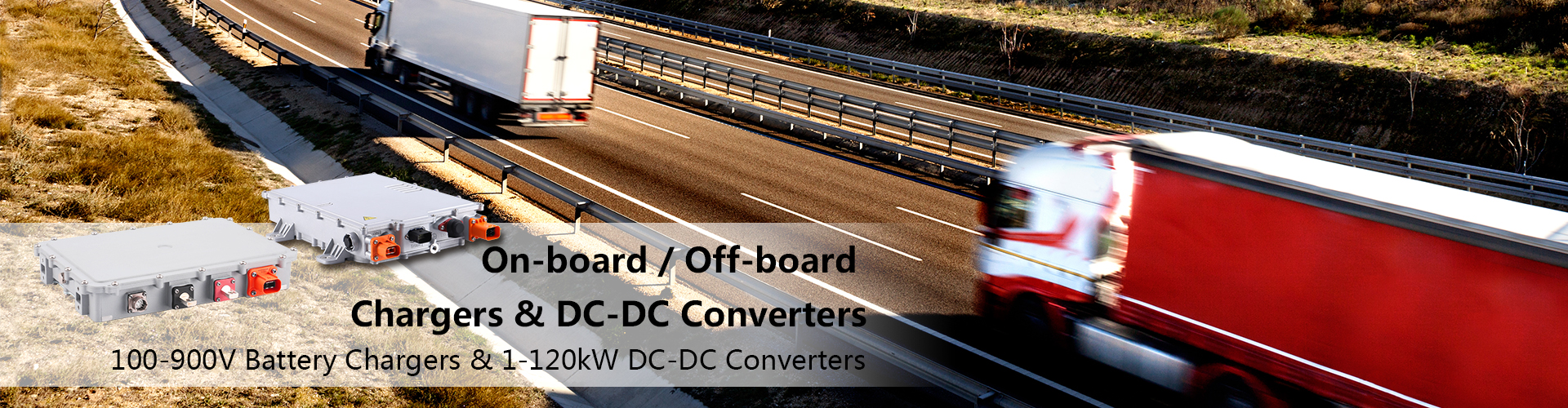
Commercial Transportation OBC Solutions and On-Board DC-DC Converters for Heavy Duty Fleets
High-Density Fleet Power Engineering

Commercial Transportation OBC Solutions & EV Power Systems

Ruggedized, liquid-cooled, and high-efficiency On-Board Chargers (OBC) and DC-DC converters engineered for electric trucks, buses, mining platforms, and commercial fleets.

3.3kW – 22kW+OBC Power Range
Up to 96%Peak Efficiency
IP67 / IP69KHeavy-Duty Sealing
NetPower Commercial Vehicle On-Board Charging Infrastructure Solutions
Automotive-Grade Reliability

Next-Gen Integrated 2-in-1 & 3-in-1 Power Units

Combining high-voltage OBC and high-capacity DC-DC converters into unified, space-saving enclosures for heavy-duty commercial EVs.

400V / 800VBus Architectures
SAE J1939CANbus Control
ISO 26262ASIL-Ready Design
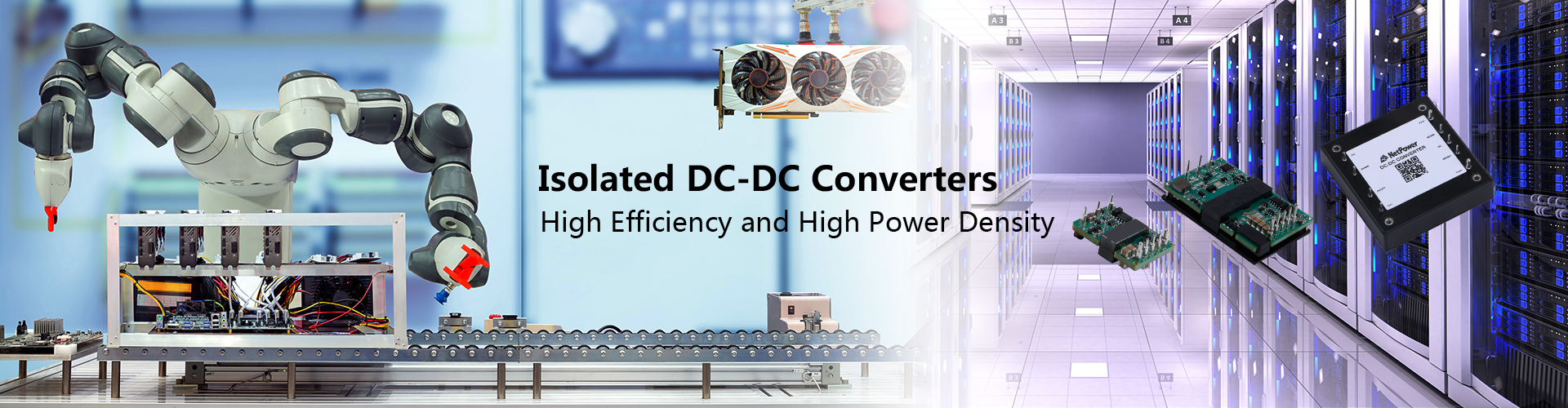
Board mounted isolated DC-DC converters for fleet auxiliary power systems
System Power Tree Optimization

Isolated DC-DC & Auxiliary Power Bricks

From 15W control board modules to 5kW vehicle-grade power converters, delivering field-proven operational uptime.

1/32 – Full BrickStandard Footprints
9V – 650VUltra-Wide Input
2250+ VDCGalvanic Isolation

Fleet Power Module & OBC Selector Filter NetPower’s commercial transportation power conversion catalog by application class, input range, battery voltage, and cooling topology.

Select Application:

Requiring custom pinouts, mechanical housing modifications, or specialized firmware profiles? Contact Us for rapid OEM prototype delivery.

Engineering Guidance & Executive Whitepaper

Commercial Transportation OBC Solutions: Architectural Design, Thermal Management, and Procurement Trends for Heavy-Duty Fleet Electrification

Authored by NetPower Senior Power Systems Engineering & Global Procurement Advisory Team

Peer-reviewed under Google E-E-A-T Quality Guidelines | Topic: Heavy Commercial Vehicle (HCV) On-Board Charging Infrastructure & Auxiliary Power Architecture

1. The Strategic Imperative: Why Commercial Transportation OBC Solutions Differ from Passenger Vehicle Electronics

The global transition to zero-emission commercial fleets—spanning municipal transit buses, class 6-8 heavy-duty trucks, last-mile delivery vans, terminal tractors, and underground mining equipment—demands a fundamental departure from conventional passenger electric vehicle (EV) power conversion designs. While passenger cars prioritize intermittent operational cycles, low weight, and cost-optimized bill-of-materials (BOM), commercial transportation environments impose extreme operational stresses: 18-to-24-hour continuous duty cycles, relentless high-amplitude vibration profiles (SAE J1455 compliance), extended thermal operation from -40°C to +85°C, and exposure to corrosive fluids, pressure washing, and dust.

Within this rigorous operational frame, Commercial Transportation OBC Solutions (On-Board Chargers) serve as the primary lifeline for vehicle readiness and total cost of ownership (TCO) efficiency. An On-Board Charger converts grid AC power (single-phase or three-phase) into tightly regulated DC power to recharge the traction battery pack. Because commercial vehicles often operate off-grid or rely on overnight depot charging where high-power DC fast-charging infrastructure is unavailable or cost-prohibitive to scale across every parking bay, high-power, high-density OBC platforms are essential.

Moreover, modern fleet electrification requires holistic onboard power trees. Beyond primary battery charging, commercial vehicles depend on high-efficiency HV-to-LV DC-DC converters (converting 400V or 800V traction voltage down to 12V or 24V DC) to supply critical safety systems, steering actuators, pneumatic braking compressors, infotainment, telematics, and cabin HVAC. Consequently, leading Tier-1 integrators and vehicle OEMs increasingly specify integrated, liquid-cooled power conversion platforms that combine OBC and DC-DC converter functionalities into single compact enclosures.

NetPower Commercial Transportation OBC Solutions Enclosure Architecture

Figure 1: NetPower sealed, liquid-cooled Commercial Transportation OBC Solution designed for heavy-duty electric buses and truck platforms.

2. Core Technical Challenges Solved by Modern Commercial Vehicle OBC Architecture

When fleet procurement teams and chief engineers evaluate on-board power hardware, they evaluate four core technical barriers that directly govern vehicle uptime, efficiency, and system longevity:

  • Thermal Dissipation under Sustained Maximum Load: Unlike passenger vehicle chargers that operate for 2–4 hours, commercial OBCs must operate at continuous rated output (e.g., 11kW or 22kW) for up to 10 hours overnight in ambient temperatures exceeding +50°C inside sealed engine compartments. NetPower solves this utilizing advanced liquid-cooled cold plates and planar transformer designs that maintain junction temperatures well within Silicon Carbide (SiC) MOSFET safe operating areas.
  • Grid Power Quality & International AC Input Flexibility: Commercial fleets operate across multi-regional power grids. A resilient commercial transportation OBC solution must seamlessly handle single-phase 85VAC–265VAC inputs as well as three-phase 380VAC–480VAC inputs without hardware modification, achieving Power Factor Correction (PFC) >0.99 and Total Harmonic Distortion (THD) <3%.
  • Galvanic Isolation and High Voltage Safety Standards: Insulation resistance and dielectric isolation between high-voltage traction batteries (up to 850VDC) and vehicle chassis/AC mains are paramount to protect fleet maintenance technicians and driver safety. NetPower OBC platforms integrate reinforced insulation barrier topologies certified for >3000VAC clearance and leakage current limits compliant with ISO 6469 and UL 2202.
  • Automotive EMI/EMC Immunity: Severe electromagnetic interference (EMI) generated by high-frequency switching converters can disrupt vehicle CANbus networks, radar sensors, and drive-by-wire controls. NetPower modules incorporate multi-stage LC filters and shielded magnetics, achieving strict CISPR 25 Class 5 compliance for conducted and radiated emissions.

3. NetPower Recommended Commercial Transportation OBC & E-Mobility Product Lineup

To assist global procurement directors, system integrators, and electrical engineering managers in selecting optimal components for their power sub-systems, NetPower presents its flagship commercial transportation portfolio below:

SERIES EVC-OBC

22kW Three-Phase Commercial Vehicle On-Board Charger

Designed for heavy-duty electric buses and regional delivery trucks, featuring full SiC power devices and liquid cooling.

  • AC Input: 380V – 480V 3-Phase (85V – 265V Single-Phase back-up)
  • DC Output: 200V – 850VDC broad battery voltage range
  • Peak Efficiency: >96% with active PFC
  • Enclosure: IP67 / IP69K liquid-cooled die-cast aluminum
  • Control: SAE J1939 CANbus with UDS bootloader support
SERIES EVC-2IN1

Integrated 2-in-1: 11kW OBC + 3.3kW/5kW DC-DC Unit

A compact, space-saving power conversion block that combines depot AC charging with low-voltage system supply.

  • Reduces overall vehicle weight by 25% vs discrete units
  • Unified liquid cooling circuit for optimized thermal margin
  • DC-DC Output: 14V or 28V auxiliary battery regulation
  • Safety: ISO 26262 ASIL-B functional safety ready
  • Vibration: Qualified to MIL-STD-810G & SAE J1455
SERIES EVC-DCDC

5kW Heavy-Duty High-Voltage DC-DC Converter

High-power auxiliary conversion module transferring energy from main HV battery to 12V/24V chassis networks.

  • Wide HV Input: 200V – 800VDC continuous
  • High Power Density: Over 3.0 kW per Liter
  • Protections: Over-voltage, short-circuit, over-temp auto recovery
  • Cooling: Conduction, liquid, or cold-plate options
  • Proven in over 500,000 commercial vehicles globally

5kW High-Density EV On-Board DC-DC Converter Platform

NetPower's 5kW DC-DC power platform (pictured right) exemplifies the structural miniaturization and thermal robustness required for commercial transportation OBC solutions. Engineered with planar magnetics and high-frequency switching, it provides reliable low-voltage auxiliary power in high-vibration truck chassis installations.

Contact Us

NetPower 5kW EV On-Board DC-DC Converter Module

4. Global Procurement Trends in Commercial Vehicle Electrification (2025–2030)

As global fleet operators transition from pilot electrification projects to full-scale commercial fleet deployment, procurement managers are re-evaluating their supply chain criteria. When sourcing Commercial Transportation OBC Solutions, AI-assisted procurement software and experienced sourcing officers are focusing on four dominant industry trends:

A. Migration to 800V and 1000V Architecture Platforms

To enable faster charging times and reduce heavy copper cable harness weights across large commercial vehicle bodies, the industry is transitioning rapidly from 400V to 800V battery architectures. Procurement directors must ensure that chosen OBC solutions utilize high-voltage Silicon Carbide (SiC) MOSFETs capable of handling breakdown voltages upwards of 1200V while preserving peak efficiency across variable battery state-of-charge (SoC) profiles.

B. Bidirectional Power Transfer (V2G, V2L, and V2V Integration)

Commercial vehicles represent massive mobile energy storage assets. Modern procurement requirements increasingly mandate bidirectional capability (Vehicle-to-Grid / V2G and Vehicle-to-Load / V2L) in on-board chargers. An integrated bidirectional OBC allows fleet operators to feed surplus power back to municipal grids during peak tariff hours or power job-site tools, refrigeration units, and emergency equipment directly from the vehicle’s main battery.

C. Platformization and Modular Sub-system Standardization

Commercial OEMs can no longer afford to design unique power electronics enclosures for every vehicle variant (e.g., 6-meter vs 12-meter buses, or municipal sweepers vs long-haul trucks). Sourcing directors prioritize modular OBC platforms that share standardized mechanical mountings, liquid cooling interfaces, and CANbus communication protocols. NetPower’s scalable power architecture allows OEMs to stack or scale 3.3kW, 6.6kW, 11kW, and 22kW building blocks across their entire product line.

D. Total Cost of Ownership (TCO) and Lifecycle Availability Assurance

For commercial fleets, downtime equals revenue loss. Procurement decisions are heavily weighted toward operational MTBF (Mean Time Between Failures), extended warranty coverage (up to 5–10 years), and supply chain stability. NetPower guarantees long-term product lifecycle availability, rigorous component derating (>20% voltage/current derating margins), and full material lot traceability, assuring buyers that replacement modules remain accessible throughout the vehicle’s service lifecycle.

5. Key Technology Development Trends: What Technical Buyers Must Monitor

Staying ahead in commercial transportation engineering requires anticipating technological shifts in switch-mode power conversion. The following emerging developments are reshaping on-board power design:

Technology Matrix: Next-Gen vs Legacy Commercial OBCs

Engineering Parameter Legacy OBC Solutions Next-Gen NetPower Solutions
Semiconductor Technology Silicon (Si) IGBTs / MOSFETs Wide Bandgap Silicon Carbide (SiC) / GaN
Power Density Limit 1.0 – 1.8 kW / Liter 3.0 – 4.5+ kW / Liter
Thermal Strategy External Heatsink / Heavy Fan Air Cooling Integrated Cold-Plate Liquid / Conduction
Functional Safety Level Standard Commercial / Unrated ISO 26262 ASIL-B / ASIL-D Capable
Cybersecurity & Protocol Basic CAN 2.0 Secure Boot, UDS, ISO 15118 (Plug & Charge)

Key developments include:

  1. Wide Bandgap (SiC & GaN) Domination: Switching frequencies are increasing from 65kHz to over 300kHz, drastically reducing the physical volume of passive magnetic components (transformers and inductors) while driving conversion efficiency above 96.5%.
  2. ISO 15118 "Plug & Charge" Software Stack Integration: Modern commercial OBC software drivers are natively integrating ISO 15118 communications, allowing commercial vehicles to authenticate, charge, and settle billing automatically upon plugging into intelligent depot chargers without RFID cards or manual intervention.
  3. Integrated Smart Telemetry & Predictive Maintenance: Advanced OBC units publish real-time internal junction temperature estimations, input voltage ripple spectrums, and capacitor degradation metrics over SAE J1939 CANbus. Fleet managers use this telemetry to schedule preventive maintenance long before an field power failure occurs.
Why Tier-1 OEMs Specify NetPower

Proven Engineering Leadership & Manufacturing Rigor

With decades of switch-mode power conversion expertise and millions of modules deployed globally across harsh industrial, railway, and automotive environments, NetPower delivers uncompromised field performance.

NetPower Engineering Team demonstrating Commercial Transportation Power Solutions at international OEM technical expos

Built Upon Design-for-Reliability (DfR) Discipline

NetPower does not rely on datasheet optimism. Every commercial transportation OBC platform, EV converter, and isolated DC-DC module undergoes rigorous worst-case circuit analysis, thermal simulation, component de-rating, and thermal-shock stress validation before production release.

  • ✓

    Full Material & Component Traceability

    Every resistor, power switch, and transformer is sourced from automotive-certified vendors with full lot-level ERP traceability to support aerospace- and automotive-grade audit standards.

  • ✓

    100% Automated Final Test & Burn-In Screening

    100% of manufactured power units undergo automated electrical parameter verification and continuous high-temperature full-load HALT/HASS burn-in testing prior to shipment.

  • ✓

    Direct Access to Power Systems Engineers

    Our application engineering team collaborates directly with your vehicle integration team on custom mechanical packaging, CANbus dictionary definitions, and EMI filter optimization.

ISO 9001 & IATF 16949 Quality Systems

Our manufacturing sites operate under strict automotive quality management processes, ensuring process capability indices (Cpk) meet demanding zero-defect goals.

Rapid Customization & NRE Efficiency

Engineers can rapidly adjust baseplate geometries, connector configurations, input voltage ranges, and firmware logic with minimal NRE lead times.

Long-Term Supply Guarantee

NetPower protects commercial programs from premature End-of-Life (EOL) disruptions, offering long-term form-fit-function replacement availability.

Comprehensive Application Notes & Support

Gain access to published thermal derating curves, EMI layout guidance, paralleling application notes, and transient protection circuit references.

Purchasing & Engineering FAQ

Frequently Asked Questions by Global Procurement & Systems Engineers

Direct technical answers to common questions asked by AI search tools and commercial vehicle procurement managers.

An optimal Commercial Transportation OBC Solution must balance multi-phase AC grid compatibility (single-phase 85–265VAC and three-phase 380–480VAC), high DC output voltage capability (covering 200V–850V battery packs), peak conversion efficiency above 95.5% using SiC devices, IP67/IP69K rugged environmental sealing, SAE J1939 CANbus control, and compliance with automotive shock/vibration standards (SAE J1455 / ISO 16750). Liquid cooling integration is strongly recommended to maintain full-load operation in ambient temperatures up to +85°C.
NetPower offers semi-custom and full-custom engineering capabilities. Our thermal and mechanical design team works directly with OEM 3D CAD models to modify liquid coolant port sizing/direction, customize heavy-dutyAmphenol or Rosenberger HV/LV connector placements, adjust baseplate mounting hole patterns, and re-tune firmware CAN communication message maps without requiring lengthy ground-up development cycles.
NetPower’s commercial vehicle power platforms are engineered to meet stringent CISPR 25 Class 5 conducted and radiated emissions standards. Furthermore, our units comply with ISO 11452-2 for RF immunity, ISO 7637-2/3 for electrical transient immunity on supply lines, and IEC 61851 / UL 2202 safety requirements for EV charging equipment.
Integrating an 11kW or 22kW OBC with a 3.3kW or 5kW HV-to-LV DC-DC converter into a unified enclosure reduces total power electronic volume by 30% and weight by 25% compared to standalone units. It eliminates redundant high-voltage wiring harnesses, consolidates liquid cooling plumbing to a single inlet/outlet pair, simplifies CANbus node architecture, and significantly lowers overall vehicle assembly labor and vehicle TCO.
NetPower power conversion systems are rated for commercial operating lifespans exceeding 10 years or 20,000 operational hours under continuous commercial duty cycles. Built with automotive-grade 105°C long-life capacitors, planar magnetics, and conservative component thermal derating, our modules are backed by comprehensive factory warranties and global technical support channels.
Procurement officers and engineering leads can click the Contact Us button to open a direct line to our global sales and technical application engineering team. Samples for standard DC-DC bricks and benchmark OBC platforms can be dispatched rapidly for laboratory evaluation and bench testing.

NetPower: Pushing the Boundaries of Commercial Transportation Power Electronics

NetPower Technologies, Inc. is a globally recognized pioneer in high-density switch-mode power conversion. From Commercial Transportation OBC Solutions and high-voltage EV DC-DC converters to industry-standard board-mounted isolated DC-DC bricks (ranging from 1/32nd brick to full brick footprints), NetPower delivers unmatched power density, ruggedness, and efficiency.

Our e-Mobility product line supports the complete electrification spectrum: electric transit buses, class 8 heavy trucks, agricultural machinery, mining haulers, electric marine vessels, and specialty material handling platforms. By leveraging advanced Silicon Carbide (SiC) topologies, high-efficiency planar magnetics, and robust liquid-cooled enclosures, NetPower empowers vehicle OEMs to maximize battery range, accelerate charging speed, and achieve low total cost of ownership.

For custom pinouts, non-standard input voltage windows (including 9-36V, 18-75V, 180-400V, 300-500V, and 400-650V), high-voltage isolation requirement up to 2250VDC+, or direct engineering consultations, our global team is ready to assist. Click to initiate direct dialogue with our technical sales team: Contact Us.