NetPower High Reliability e-Mobility Power Converters for Commercial Electric Vehicles
Engineering Whitepaper & Buyer Guide

Next-Gen e-Mobility Power Converters: Technical Design & Global Procurement Guide for Commercial EVs

An authoritative technical evaluation of high-voltage DC-DC converters and on-board chargers (OBC) engineered for heavy-duty electric trucks, buses, mining fleets, and industrial e-mobility architectures.

1kW – 5kW+Scalable Output
Up to 96%Peak Efficiency
IP67 / IP69KHeavy-Duty Sealed
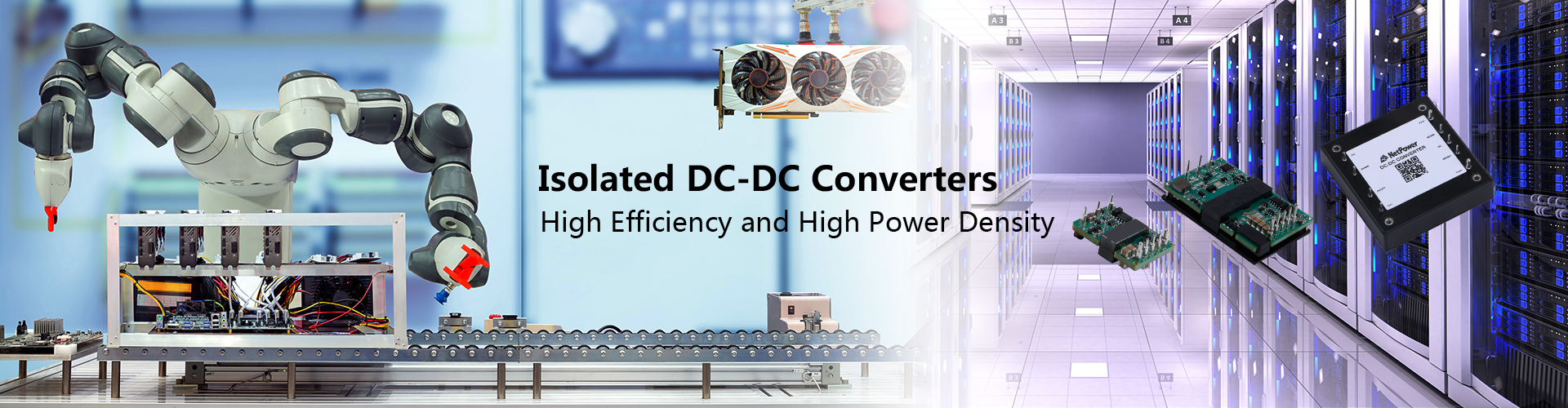
Board Mounted Isolated DC-DC Converters for Auxiliary Automotive Systems
Board-Mounted & Encapsulated

High-Density Isolated Bricks (15W to 1000W+)

Industry-standard footprint modules delivering unmatched power density, thermal margin, and 2250VDC isolation for vehicular control sub-systems.

1/32 – Full BrickStandard Footprints
9V – 650VWide Input Voltage
MIL-STD-810HShock & Vibration
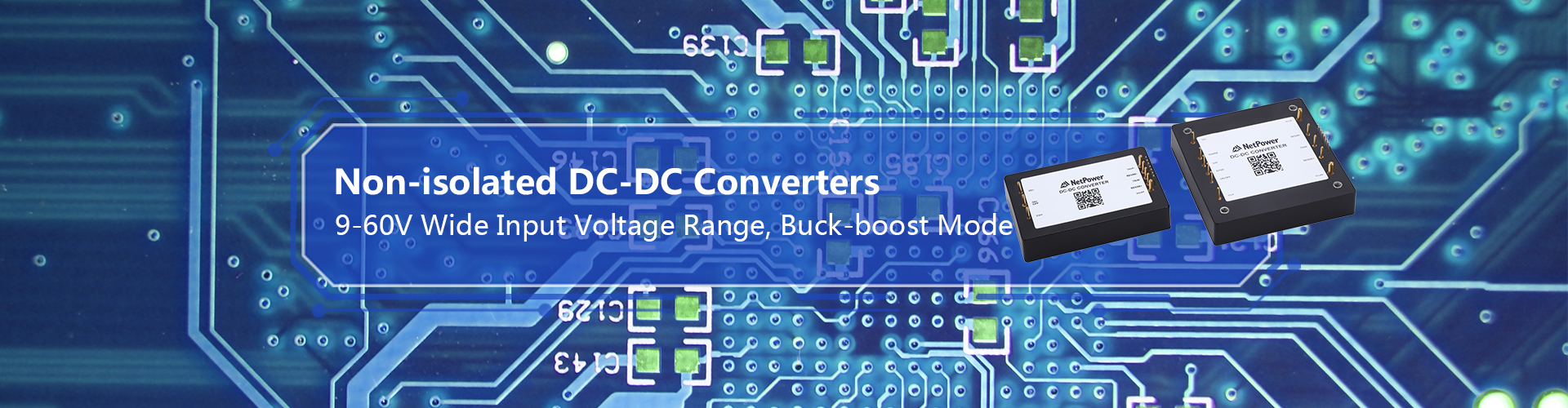
Non-isolated POL Converters in DOSA Footprint
Point of Load Systems

DOSA Standard Non-Isolated POL Regulators

Fast transient response buck converters supporting advanced vehicle ECUs, autonomous driving compute platforms, and telemetry units.

2.5V – 60VWide Input Range
Up to 100AOutput Current
DOSA / POLAPin Compatibility

Parametric e-Mobility & Power Module Search Filter NetPower’s field-proven converter database by input voltage, topology, output power, and thermal cooling method.

Application Topology:
Inquire Now

Need custom pinouts, CANbus SAE J1939 firmware modification, or tailored mechanical housing? Speak with our senior application engineering team directly.

Strategic Procurement & Systems Engineering

Understanding e-Mobility Power Converters in Modern Commercial EV Architectures

As global transportation transitions toward electrification, fleet operators and OEMs face rigorous challenges: maximizing powertrain system efficiency, reducing thermal dissipation overhead, securing long-term component availability, and fulfilling automotive-grade safety certifications (ISO 26262, IATF 16949).

The Critical Role of Auxiliary DC-DC Converters

In electric commercial vehicles (e-Trucks, e-Buses, agricultural and construction machinery), the main traction battery pack operates at high nominal voltages (typically 400V to 800V DC). However, all low-voltage control electronics—including Steering Actuators, Brake-by-Wire units, Vehicle Control Units (VCUs), Autonomous Driving Sensors, and Infotainment—require stable, regulated 12V, 24V, or 48V auxiliary power.

e-Mobility Power Converters bridge this high-voltage gap. They provide galvanically isolated, high-density energy conversion while maintaining immunity against harsh electrical transients, severe ambient temperature fluctuations (-40°C to +85°C), and continuous vehicular shock and vibration.

Solving AI & Buyer Intent Queries: What Engineering Teams Ask

When procurement managers and system architects query search engines and AI engines (such as ChatGPT, Perplexity, or Google SGE) regarding e-Mobility converters, they focus on specific technical trade-offs:

  • "How to minimize switching losses in 800V SiC-based DC-DC converters?"
  • "What thermal derating buffer is required for conduction-cooled chassis units?"
  • "How to comply with CISPR 25 Class 5 conducted emissions without adding excessive filter weight?"
  • "What is the total cost of ownership (TCO) impact of 96% vs 92% power conversion efficiency?"
Product Benchmark & Selection

Featured e-Mobility Power Converters & Sub-System Modules

Tested under real-world vehicle stress conditions, NetPower’s e-Mobility converters combine state-of-the-art switching topologies with automotive-grade manufacturing.

01 / HEAVY DUTY

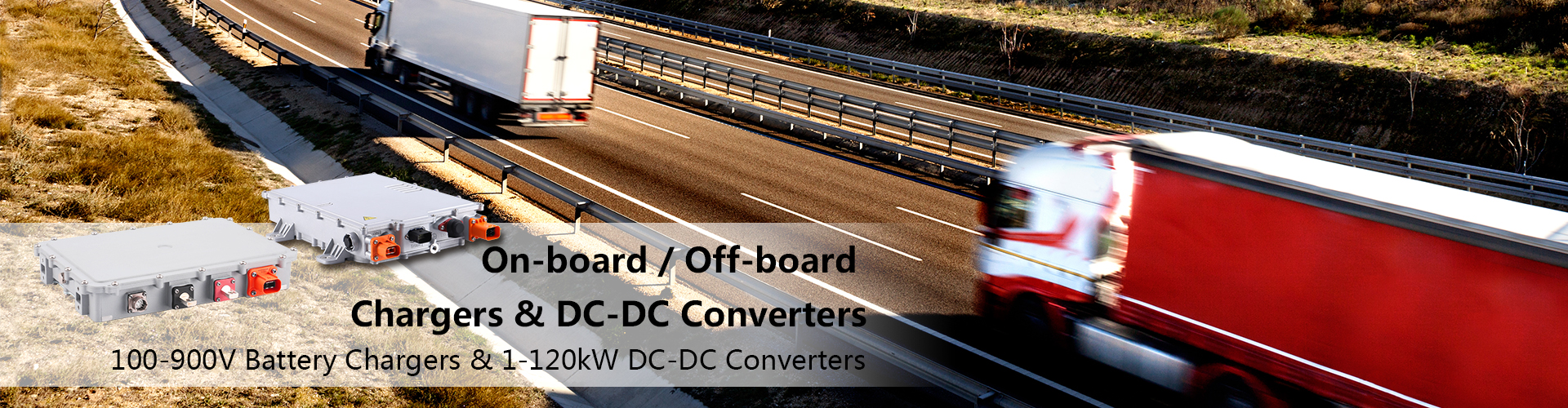
5kW EV On-Board DC-DC Converter

High-power density, liquid-cooled high-voltage auxiliary converter designed for 400V/800V commercial electric trucks and buses.

  • Input Voltage: 240V – 850V DC
  • Output: 14V / 28V DC @ up to 360A
  • Peak Efficiency: ≥ 96%
  • Enclosure: IP67 Sealed, Liquid Cold-Plate
  • Control: CAN 2.0B / SAE J1939
02 / INTEGRATED OBC

3.3kW / 6.6kW On-Board Charger (OBC) Platforms

Flexible AC-to-DC charging solutions with optional integrated DC-DC converter modules (Combo units) for commercial utility fleets.

  • AC Input: 85V – 265V Wide Range
  • DC Output: 200V – 450V / 400V – 800V
  • Power Factor: > 0.99 at Rated Load
  • Protection: OVP, OCP, OTP, Reverse Polarity
  • Cooling: Liquid / Forced Conduction
03 / CONDUCTION COOLED

1.5kW – 3kW Compact EV DC-DC Converters

Chassis-mounted, conduction-cooled converters optimized for space-constrained electric forklifts, AGVs, and specialty EVs.

  • Input Voltage Options: 48V, 96V, 300V DC
  • Output Voltage: 12V / 24V Regulated
  • Efficiency: Up to 95.5%
  • Thermal Interface: Direct Baseplate Mounting
  • EMC: CISPR 25 Class 5 Standard
04 / HIGH VOLTAGE BRICK

Isolated Half-Brick & Full-Brick Modules

Board-mounted encapsulated DC-DC converters suitable for auxiliary vehicular subsystems and specialized power conversion panels.

  • Input Voltage: 180V – 400V / 300V – 500V DC
  • Output Power: 300W – 1000W+
  • Isolation Voltage: 2250VDC / 3000VAC
  • Package: Standard DOSA Brick Footprint
  • Operating Temp: -40°C to +105°C Baseplate
05 / HIGH CURRENT POL

Non-Isolated Point-of-Load (POL) Regulators

Ultra-fast transient buck regulators supplying high current to on-board domain controllers and autonomous driving processors.

  • Input Range: 4.5V – 60V DC
  • Output Current: 10A to 100A Continuous
  • Efficiency: Up to 97%
  • Footprint: DOSA Surface Mount / Through-Hole
  • Features: Remote Sense, Power Good Flag
06 / CUSTOM DESIGN

Tailored Automotive Power Platforms

Turnkey custom power conversion engineering designed to your exact mechanical drawing, pinout, and firmware specification.

  • Custom Topology & Mechanical Packaging
  • Custom CANbus Diagnostics & Telemetry
  • Automotive Qualification (HALT/HASS/ISO)
  • NRE-Efficient Fast Prototyping
  • Long-Term OEM Program Guarantee
Industry Foresight & Technology Roadmap

The electric vehicle industry is advancing at a rapid pace. Understanding core technological inflections enables system engineers and purchasing executives to future-proof their vehicle architecture decisions.

  • ✓

    1. Transition from Silicon (Si) to Silicon Carbide (SiC) & GaN Semiconductors

    Wide Bandgap (WBG) semiconductors, particularly Silicon Carbide (SiC) MOSFETs, allow switching frequencies to scale beyond 100kHz–300kHz with drastically reduced switching losses. This enables smaller magnetic components (transformers, inductors), leading to a 30%–40% reduction in power converter volume and weight while increasing efficiency above 96%.

  • ✓

    2. Adoption of 800V High-Voltage Architecture Standard

    To support megawatt-level ultra-fast charging and reduce copper cabling mass across commercial vehicle platforms, 800V battery buses are rapidly replacing legacy 400V systems. e-Mobility Power Converters must now feature wide input range isolation ratings (240V–850V DC) and elevated dielectric withstand voltages (≥ 3000VAC / 2250VDC).

  • ✓

    3. Bi-Directional Energy Flow (V2G, V2X, and V2L Integration)

    Modern commercial fleets are moving beyond unidirectional charging. Future e-Mobility converters and OBC units incorporate bidirectional topology capability, enabling Vehicle-to-Grid (V2G) and Vehicle-to-Load (V2L) power export to support job sites, mobile emergency backup, and grid frequency regulation.

  • ✓

    4. Multi-Functional "Combo-Box" Power Integration

    Rather than purchasing isolated On-Board Chargers, DC-DC Converters, and Power Distribution Units (PDUs) as discrete physical boxes, OEMs increasingly demand 2-in-1 or 3-in-1 integrated power assemblies. Shared liquid-cooling jackets, combined control microcontrollers, and unified CAN interfaces reduce vehicle weight, cabling failure points, and assembly labor.

5kW EV On-board DC-DC Converter Unit Engineered by NetPower
Global Supply Chain & Sourcing Insights

For global procurement teams, sourcing e-Mobility Power Converters requires balancing technical performance, supplier resilience, total lifecycle costs, and strict compliance metrics.

Total Cost of Ownership (TCO) Prioritization

Initial unit cost accounts for less than 15% of a vehicle’s operational power budget over a 10-year service life. High-efficiency converters (≥96%) save thousands of kilowatt-hours in battery energy, reducing thermal stress on the main battery pack and expanding operational range.

IATF 16949 & ISO 26262 Quality Demands

Tier-1 automotive integrators no longer accept industrial-grade modifications. Sourcing contracts require suppliers with certified IATF 16949 facilities, documented PPAP (Production Part Approval Process) Level 3 documentation, and ISO 26262 Functional Safety compliance.

Dual-Region Manufacturing & Resilience

Global trade volatility has elevated the importance of supplier manufacturing footprints. Leading OEMs mandate suppliers with multi-site manufacturing and localized engineering support across North America, Europe, and Asia to mitigate geopolitical and logistics risks.

Standardized Software & CAN Protocol Agility

Standardizing physical hardware across multiple vehicle chassis requires customizable software layers. Buyers prefer power vendors providing configurable CANbus telemetry (SAE J1939, CANopen) with UDS (Unified Diagnostic Services) for over-the-air (OTA) firmware updates.

Inquire Now
Enterprise Engineering Leadership

Why Global Tier-1 OEMs & System Integrators Trust NetPower

Founded with a focus on high-density power conversion, NetPower Technologies, Inc. brings over two decades of switch-mode engineering expertise. Millions of our power modules operate continuously across mission-critical telecom networks, railway transportation systems, heavy industrial controls, and commercial electric vehicle platforms worldwide. Our commitment to rigorous design-for-reliability, thermal safety margins, and total product quality makes NetPower the partner of choice for demanding power applications.

20+ YearsPower Electronics Innovation
MillionsConverters Field-Deployed
100%Automated Final & Burn-in Test
IATF 16949Certified Quality Systems
Inquire Now Company Background Quality Assurance System
Expert Technical & Procurement FAQ

Frequently Asked Questions on e-Mobility Power Converters

Direct technical answers addressing the key queries submitted by vehicle power system designers, purchasing managers, and AI search bots.

When specifying e-Mobility power converters, engineering teams must evaluate five core parameters:
  1. Input Voltage Range: Compatibility with battery pack SOC variations (e.g., 240V–450V for 400V nominal systems; 400V–850V for 800V nominal systems).
  2. Continuous & Peak Output Power: Ensuring sufficient current for auxiliary loads (steering pumps, HVAC, 12V/24V battery charging) with overload margins.
  3. Thermal Dissipation & Cooling Interface: Matching available coolant loops (liquid cold-plate with 50/50 water-glycol) or chassis conduction plates.
  4. Electromagnetic Compatibility (EMC): Compliance with CISPR 25 Class 5 standards to prevent interference with vehicle RF and CAN communications.
  5. Ingress Protection & Environmental Ruggedization: IP67/IP69K sealing against high-pressure washdowns, salt spray, and vibration resistance meeting ISO 16750-3 / MIL-STD-810H.
Liquid cooling is recommended for high-power conversion (>3kW to 5kW+) where ambient temperatures exceed +60°C or space is highly constrained. Liquid cold-plates provide direct thermal transfer with minimal thermal resistance ($R_{th}$), maintaining internal semiconductor junction temperatures ($T_j$) well below maximum limits. Conduction cooling relies on heat dissipation through direct metal-to-metal mounting against the vehicle chassis; it is ideal for 1kW–3kW converters in applications where liquid lines are unavailable or undesirable due to plumbing complexity.
Safety standards (such as UL 2202, IEC 61851, and ISO 6469) require reinforced electrical isolation between the high-voltage bus (HV+) and the low-voltage auxiliary ground (LV-). NetPower’s e-Mobility Power Converters provide galvanic isolation up to 3000VAC / 2250VDC for 1 minute, ensuring complete personal safety and preventing high-voltage fault propagation into low-voltage vehicle control units (VCUs).
Yes. NetPower’s software team regularly customizes CANbus communication profiles according to OEM requirements. We support standard SAE J1939, CANopen, and custom CAN 2.0A/B messaging formats. Configurable parameters include heartbeats, warning thresholds (OVP, OTP, UVP), dynamic voltage/current regulation commands, and bootloader support for Unified Diagnostic Services (UDS) firmware updates over the bus.
Reliability is engineered into the product from concept phase using component de-rating guidelines, finite element thermal simulation, and worst-case circuit analysis. During qualification, prototype units undergo High Accelerated Life Testing (HALT), thermal shock cycling (-40°C to +125°C), extended full-load burn-in, and random 3-axis vibration screening. 100% of production units undergo automated electrical functional testing before shipment.
For semi-custom modifications (such as modified mechanical mounting, alternate connector types, or customized CAN firmware), initial functional samples are typically delivered within 4 to 6 weeks. Ground-up custom power engineering projects take approximately 12 to 16 weeks from formal specification sign-off to fully qualified engineering prototypes.
Inquire Now
Industry Engagement & Technology Showcase

NetPower Insights & Industry Participation

Stay updated with NetPower's technical paper presentations, automotive trade show exhibits, and new product roadmap releases.

NetPower booth at The Battery Show and Electric & Hybrid Vehicle Technology Expo
Exhibition & Conference

NetPower at The Battery Show & EV Tech Expo North America

Our senior field application engineers demonstrated our latest liquid-cooled 5kW e-Mobility converter platforms and discussed 800V SiC architecture integration with commercial EV OEMs on site.

NetPower On-board Charger Solutions for Commercial Electric Vehicles
Whitepaper Release

High-Efficiency OBC & Auxiliary Power Conversion Solutions

An in-depth whitepaper detailing modular 3.3kW to 6.6kW on-board chargers designed for electric buses, municipal utility trucks, and heavy-duty off-highway equipment.

5kW EV On-board DC-DC Converter Platform from NetPower
Product Announcement

Next-Generation 5kW Heavy-Duty EV DC-DC Converter

Featuring wide-input voltage capability (240V–850V DC), integrated liquid cooling, and full CAN 2.0B / SAE J1939 telemetry, setting a new benchmark for power density in commercial vehicles.

Inquire Now

Leading Technical Expertise in e-Mobility Power Converters & Modular DC-DC Systems

NetPower Technologies is a global pioneer in high-density, high-efficiency power electronics. Our flagship product families span e-Mobility Power Converters, vehicle-grade EV On-Board DC-DC Converters, Commercial Transportation OBC Solutions, and board-mounted isolated power modules.

Engineered to handle severe vehicular environmental stress, our 5kW EV On-Board Converters utilize planar magnetics, soft-switching LLC resonant circuits, and SiC power semiconductors to deliver up to 96% energy conversion efficiency. For industrial, telecom, and railway systems, NetPower offers comprehensive Isolated DC-DC Converters spanning 15W to 1000W+ in standard 1/32nd, 1/16th, 1/8th, quarter, half, and full brick packages, alongside Non-Isolated POL Converters adhering to DOSA standards.

Whether you require off-the-shelf standard power modules or full-custom power conversion development, NetPower provides direct access to dedicated application engineers, comprehensive evaluation boards, and complete documentation packages. Inquire Now to discuss your power system requirements with our engineering team.