
High-efficiency, IP67-rated power conversion systems engineered to replace unverified grey-market modules across Nagoya's EV and industrial robotics sectors.
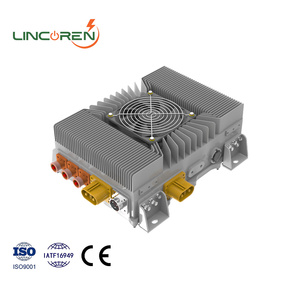
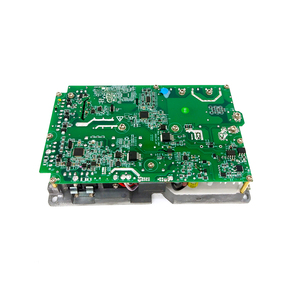
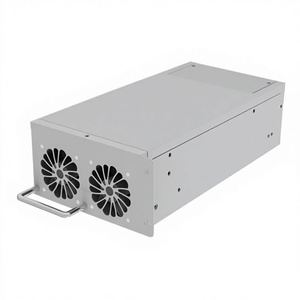
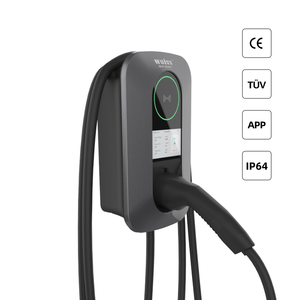
Understanding the engineering implications of grey-market power modules versus certified switch-mode converters within Nagoya's Tier-1 and Tier-2 supply networks.
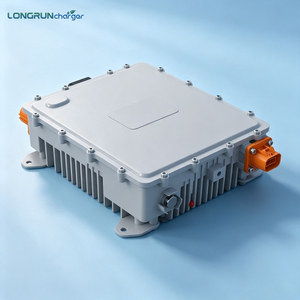
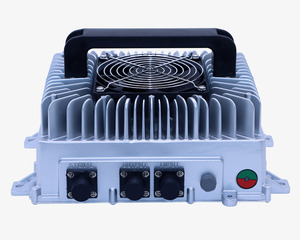
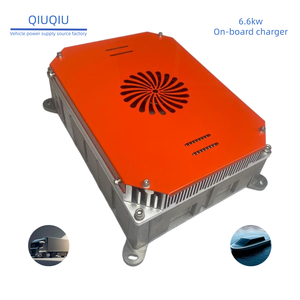
The Greater Nagoya area—encompassing Aichi, Gifu, and Mie prefectures—represents the beating heart of Japan's automotive manufacturing, advanced robotics, and industrial automation sectors. As global electrification accelerates across light commercial vehicles (LCVs), autonomous mobile robots (AMRs), material handling equipment, and public transit systems, the demand for compact, high-efficiency On-Board Chargers (OBC) and isolated DC-DC converters has surged exponentially.
However, this rapid market expansion has attracted a proliferation of unregulated converter suppliers and third-party exporters sourcing unverified components from low-cost overseas jurisdictions. While these entities offer attractive upfront procurement discounts, technical evaluations reveal severe engineering concessions: non-compliant Electromagnetic Interference (EMI) profiles, lack of galvanic isolation integrity, uncertified thermal designs, and complete omission of ISO 26262 functional safety protocols.
A rigorous engineering breakdown comparing verified power module platforms against uncertified grey-market alternatives circulating in Nagoya.
| Evaluation Parameter | OEM-Grade Regulated Converters | Unregulated / Grey Market Exporters | Operational Risk Level |
|---|---|---|---|
| Galvanic Isolation | 2,250 VDC – 3,000 VDC reinforced insulation; fully compliant with IEC/EN 60950 & UL 62368-1. | Basic basic or single-stage isolation (<1,000 VDC), prone to micro-fractures under vibration. | Critical Failure Hazard |
| Electromagnetic EMC / EMI | Integrated CISPR 25 Class 5 multi-stage LC filters; complies with DENAN Act & JIS D 5500. | Omitted or minimal LC filtration; generates severe conducted noise on 24V/48V signal buses. | High Interference |
| Thermal Management | Automotive potting (UL 94 V-0 silicon compound); liquid or conduction-cooled cold-plate design. | Unpotted open-frame or low-grade epoxy with air voids; extreme hot-spot accumulation. | Moderate to High Thermal Deg |
| Communication Protocols | ISO 11898 compliant CAN 2.0B, CANopen, or SAE J1939 with hardware-level optical isolation. | Unshielded UART or rudimentary non-isolated CAN transceivers subject to latch-up locks. | Systemic Bus Crash Risk |
| Environmental Ingress | Certified IP67 / IP69K die-cast aluminum enclosures with waterproof automotive connectors. | Stamped sheet metal with porous rubber gaskets; prone to moisture ingress during high humidity. | Corrosion & Short Circuit |
| Traceability & QA | 100% automated optical inspection (AOI), HALT/HASS stress testing, lot-level component tracking. | Batch testing only; frequent use of counterfeit or degraded excess-stock MOSFETs/IGBTs. | Unpredictable MTBF |
Deploying high-reliability isolated DC-DC converters and integrated OBC units across specialized Chubu regional operations.
Tier-1 automotive sub-system integrators building electric powertrain test rigs require wide-input (180V–400V HV, 9V–75V LV) DC-DC converters with strict ground isolation. NetPower’s regulated modules eliminate offset voltage errors across telemetry equipment, securing predictable validation cycles.
High-density semiconductor plants in Yokkaichi and logistics fulfillment centers along Nagoya Port rely on 24/7 AGVs. Unregulated converters generate high thermal output that degrades battery packs. Our 96% efficient point-of-load (POL) and 2-in-1 OBC units maximize operating shift duration.
Municipal electric buses and specialty rail maintenance machinery operating throughout Aichi Prefecture encounter heavy shock, vibration, and wide voltage surges (66V–160V input). Encapsulated quarter-brick and half-brick converters guarantee immunity under harsh EN 50155 railway equivalent conditions.
Navigating the shifting regulatory and technological landscape driving power electronics procurement in Japan.
Automotive engineering teams across Aichi are transitioning from legacy 400V architectures to 800V silicon carbide (SiC) platforms. Unregulated suppliers cannot supply wide input ranges (up to 650V/800V continuous) with certified isolation creepage distances, forcing buyers toward fully qualified OEM platforms.
Japan’s Ministry of Economy, Trade and Industry (METI) has heightened compliance enforcement on imported electrical apparatus. Gray-market exporters frequently issue fraudulent CE or PSE certificates. OEM suppliers provide full lab test reports and factory inspection records for audit immunity.
Nagoya's smart grid initiatives emphasize Vehicle-to-Grid (V2G) power sharing. Dual-Active Bridge (DAB) topologies integrated into 3.3kW and 6.6kW OBCs allow bidirectional energy flow, transforming EV fleets into emergency power reserve modules during regional outages.
Leveraging decades of power electronics design mastery to supply mission-critical industrial and automotive systems.
Every isolated converter brick (1/32nd to Full Brick) and OBC module undergoes strict derating calculations, thermal simulation, and Worst-Case Circuit Analysis (WCCA) prior to tape-out. This yields MTBF ratings exceeding 2.5 million hours per Telcordia SR-332 standards.
Offering input ranges from 9V up to 650V continuous, and outputs spanning 1.0V to 48V (POL) and 48V to 312V (OBC), NetPower enables Nagoya system architects to scale a single control architecture across their entire product portfolio without board redesigns.
Unlike unverified overseas exporters, NetPower maintains complete component lot tracking. Every power switch, controller IC, and planar transformer is logged. Engineering teams receive direct access to thermal derating curves, EMI evaluation notes, and schematic reviews.
Our application engineering team provides semi-custom pinout modifications, liquid-cooling cold plate matching, and CANbus protocol adaptation for commercial vehicles and robotics.
Direct answers to common technical, procurement, and regulatory queries regarding power converter implementation in Japan.
Rephrase your supply chain strategy away from unverified exporters. Contact NetPower's technical team today to request complete documentation, CAD models, and test reports for our full line of On-Board Chargers and isolated DC-DC converters.