
High-performance Level 2 AC Wallboxes and High-Power Modular DC Fast Chargers certified to UL, CE, and ISO standards with smart OCPP 2.0.1 and ISO 15118 interoperability.
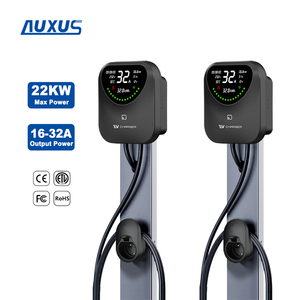

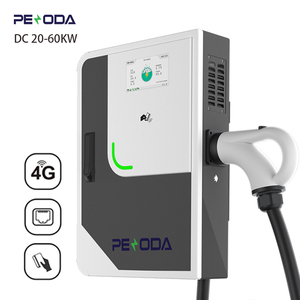
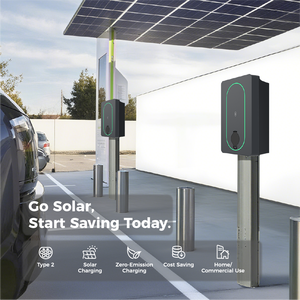
The Commonwealth of Massachusetts has established some of the most rigorous clean energy mandates in the United States, targeting net-zero greenhouse gas emissions by 2050 under the Massachusetts Clean Energy and Climate Plan (CECP). At the center of this transformation is the Greater Boston Metropolitan Area—encompassing Suffolk, Middlesex, and Norfolk counties—where rapid electric vehicle (EV) adoption across municipal, commercial, and multi-family residential sectors is placing unprecedented demand on local charging infrastructure.
Procuring EV Supply Equipment (EVSE) in the Boston market requires overcoming distinct geographic, climatic, and structural constraints:
To navigate these technical demands, fleet operators, electrical contractors, municipality procurement officers, and commercial developers require verified manufacturing partners capable of delivering industrial-grade power density, modular reliability, and extensive OEM/ODM customization.
Building reliable EV chargers for the demanding Boston climate starts at the sub-component power conversion layer. As a leading manufacturer of high-efficiency board-mounted isolated DC-DC converters, point-of-load (POL) modules, and vehicle-grade on-board power systems, our engineering methodology applies rigorous aerospace and industrial switch-mode design principles to EVSE hardware.
Our EV charging platforms utilize military-grade power modules featuring conduction-, air-, and liquid-cooled architectures that minimize thermal derating under maximum current loads. Utilizing planar magnetics and high-frequency switching topologies, our internal DC power modules achieve peak power conversion efficiency exceeding 96%. This reduced heat generation directly translates to longer component lifespans, eliminating premature fan failure and degradation of internal power switches.
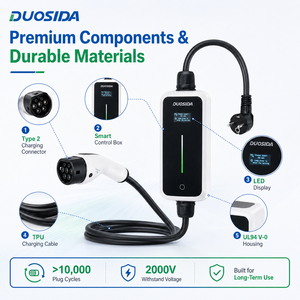
Every commercial wallbox and DC fast charger module undergoes protective dipping and encapsulation. Enclosures are manufactured with high-impact, UV-stabilized thermoplastics rated at UL94 V-0 flame retardance, offering maximum protection against thermal runaway. Rated at IP65 to IP67, our structural housings prevent moisture ingress, dust accumulation, and chemical degradation caused by winter de-icing salts used on Massachusetts roadways.
To deliver uncompromising field reliability across North American installations, every manufacturing batch adheres to strict Quality Management Systems (QMS):
Real-time current monitoring balances power distribution across multi-unit charging hubs without exceeding localized building main breaker limitations.
Native encryption protocols enable seamless automated Plug & Charge vehicle authentication and compliant billing integration with commercial CSMS platforms.
Engineered to meet strict requirements for the Eversource EV Make-Ready Program and National Grid Commercial EV Charging Incentive initiatives.
Customizable branding, cable lengths, RFID access cards, POS payment integration, and enclosure colorways tailored for turnkey market deployment.
Deploying electric vehicle chargers in the Boston area requires tailored hardware configurations matching specific site dynamics. Below are primary operational deployment profiles engineered by our technical support team:
Locations: Cambridge, Somerville, Back Bay, South End, Brookline.
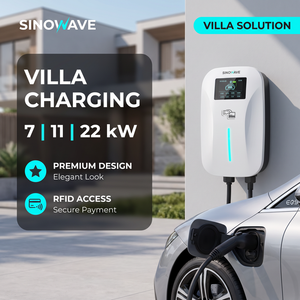
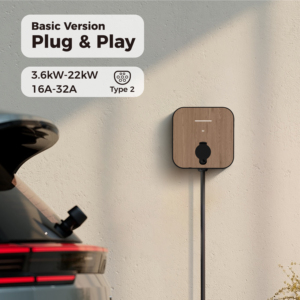
Deployment Focus: 7.4kW to 22kW AC Smart Wallboxes (IP65/IP67) equipped with RFID access controls and Dynamic Load Balancing. Because historic brownstones frequently share sub-panel capacity, our DLB algorithms continuously adjust power delivery based on real-time household electrical loads, eliminating expensive transformer retrofits.
Locations: Route 128 / I-95 Technology Corridor, Route 9, Logan Airport Logistics Hubs.
Deployment Focus: 20kW to 40kW Compact DC Fast Charging Modules and 44kW Dual-Socket AC Chargers. Fleet vehicles operating on continuous delivery shifts require rapid turnaround times. Our CCS modular DC chargers supply high DC voltage directly to vehicle battery packs, bypassing onboard AC charger bottlenecks during short dwell periods.
Locations: Longwood Medical Area, MIT, Harvard University, Boston University.
Deployment Focus: Dual-socket 22kW/44kW OCPP 2.0.1 Level 2 Chargers integrated with centralized billing, POS payment terminals, and campus card authentication. High daily turnover requires rugged UV-resistant IP65 enclosures capable of managing multi-tenant authorization via cloud-based software.
Locations: MBTA Transit Maintenance Hubs, Municipal Garages, Public Park-and-Ride Lots.
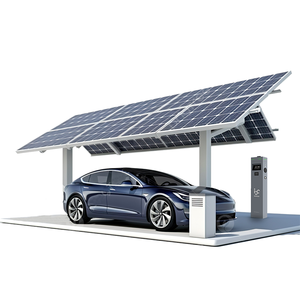
Deployment Focus: Solar-interfaced dual 22kW chargers and high-power DC fast charging wallboxes. Designed with native communication interfaces for Battery Energy Storage Systems (BESS) and rooftop solar arrays, these stations buffer peak energy draw, minimizing demand charges from local utility providers during peak daytime hours.
As the Boston market transitions from early EV charger adoption to enterprise-scale fleet electrification, equipment specifiers must anticipate evolving regulatory standards and technological shifts:
Legacy proprietary charging hardware is rapidly being phased out across Massachusetts public projects. Municipal and commercial RFPs now mandate open-protocol hardware compatible with any Central System Management Software (CSMS). ISO 15118 compliance enables automated vehicle-to-grid communication, paving the way for future Vehicle-to-Building (V2B) and Vehicle-to-Grid (V2G) energy export during extreme New England peak grid events.
Commercial electricity rates in New England rank among the highest in the continental United States. To mitigate high utility demand charges, forward-thinking Boston enterprise site hosts are coupling 44kW Dual AC chargers and DC Fast Charging wallboxes with solar PV installations. Native solar-charging firmware protocols automatically match EV charge rates with real-time solar generation curves.
Standard consumer chargers suffer significant efficiency drops in freezing conditions. High-reliability commercial EVSE units must feature integrated temperature compensation circuitry, automatically adjusting power ramp rates to protect both the internal power module and the vehicle's lithium-ion battery management system (BMS) during extreme New England freeze events.
Answers to critical engineering, installation, and compliance questions asked by commercial buyers, electrical contractors, and site developers in the Boston market.
Whether you are an EVSE brand owner scaling commercial deployment in Massachusetts, an electrical distributor supplying Boston contractors, or a fleet manager electrifying commercial transportation hubs, our engineering team provides turnkey support, sample testing, and high-volume OEM/ODM manufacturing capability.