
Direct factory supply of high-density DC-DC, DC-AC, and Point-of-Load power modules designed to standard DOSA footprints and rigorous AS/NZS electromagnetic compatibility criteria.
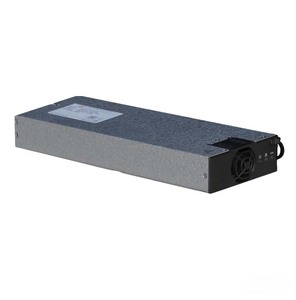
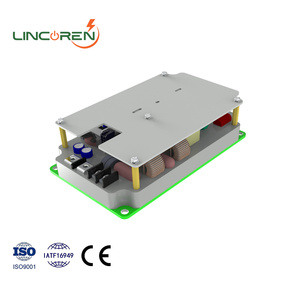
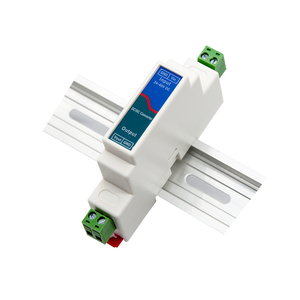
Sydney and the broader New South Wales (NSW) industrial corridor represent one of the Southern Hemisphere’s fastest-growing hubs for advanced infrastructure, electrified urban transport, data center expansion, and renewable energy integration. As project managers, embedded systems design engineers, and procurement specialists evaluate power conversion components for deployments across Greater Sydney—from the Western Sydney Aerotropolis to Port Botany maritime logistics—the requirements for thermal robustness, electromagnetic compliance (EMC), and power density have escalated dramatically.
Operating electronic systems in Australian environments presents unique engineering challenges. Unconditioned enclosures in Western Sydney routinely experience internal ambient operating temperatures exceeding +50°C to +65°C during summer heat waves. Concurrently, regional rail networks and remote telecommunication towers demand continuous operation despite wide input voltage fluctuations, severe salt-spray humidity, and intense vibration profiles. Standard commercial-grade converter modules frequently suffer from early thermal derating, loop instability, and premature component breakdown under these grueling conditions.
Information Gain Insight: Selecting a converter module factory for Sydney projects requires evaluating thermal derating curves beyond typical +25°C bench test specifications. True industrial reliability requires guaranteed full-load operation up to +85°C baseplate temperatures without forced-air cooling, backed by complete design-for-reliability (DfR) documentation and DOSA-compliant pinout standardization.
Our OEM/ODM manufacturing facility specializes in high-power-density, high-efficiency conversion architectures designed to minimize thermal losses while providing clean, isolated voltage rails. By integrating zero-voltage switching (ZVS) LLC resonant circuits alongside Wide Bandgap (WBG) Gallium Nitride (GaN) and Silicon Carbide (SiC) semiconductors, our module series achieve operational efficiencies up to 96.5%.
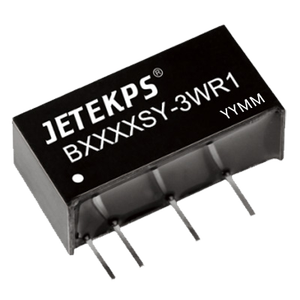
Designed strictly to standard Distributed-power Open Standards Alliance (DOSA) footprints, our isolated DC-DC converter line covers 15W to over 1000W across standard brick dimensions:
For modern system architectures where point-of-load step-down efficiency is critical, our non-isolated POL series accepts input ranges from 2.5V to 60V and delivers up to 100A output current. Designed with ultra-fast transient response, these modules hold voltage regulation within ±1% during severe step-load changes in server racks and embedded automation controllers.
With Sydney’s aggressive push toward zero-emission public transport and electric commercial fleets, our high-power 2.5kW to 5kW DC-DC converters provide high-voltage to low-voltage (HV-to-LV) step-down power conversion for electric buses, forklifts, mining vehicles, and utility utility carts. Housed in IP67-rated liquid, air, or conduction-cooled aluminum enclosures, these units withstand the intense shock and vibration standards set by automotive ISO specifications.
| Converter Category | Input Voltage Ranges | Output Voltage / Current | Peak Efficiency | Primary Sydney Application |
|---|---|---|---|---|
| Isolated Brick Modules | 9–36V, 18–75V, 34–160VDC | 3.3V, 5V, 12V, 24V, 48V | 94.5% | Telecom 5G Towers, Industrial PLCs, Sydney Metro Rail |
| Vehicle-Grade DC-DC | 180–400V, 400–650VDC | 13.8V, 28V (Up to 5kW) | 96.5% | Electric Buses, Mining Fleets, Logistics Forklifts |
| Non-Isolated POL | 2.5V – 60VDC Wide Input | 0.8V – 15V (Up to 100A) | 95.0% | Data Center AI Processors, FPGA System Boards |
| Rack Inverter Modules | 48VDC Nominal Input | 220VAC Single-Phase 3000W | 93.8% | Substation Uninterruptible Power Supply (UPS) |
As a specialized converter module exporter to Australia, our product engineering accounts directly for local installation conditions and industry-specific compliance requirements:
Traction control systems and trackside signaling electronics require extreme isolation and surge immunity. Our 34-160V wide-input railway DC-DC converters comply with EN 50155 and AS 7722 standards, offering 2250VDC isolation, transient suppression, and wide-temperature stability to prevent operational downtime along Sydney’s passenger rail network.
Utility-scale battery energy storage systems (BESS) deployed across regional New South Wales demand high-efficiency auxiliary converters to power battery management systems (BMS), cooling valves, and monitoring nodes directly from 48V or 1000V bus lines with minimal standby self-consumption.
Hyper-scale data centers in Eastern Creek and Macquarie Park rely on 48V intermediate bus converters and non-isolated POL regulators to power high-density servers. Our high-power-density bricks drastically reduce PCB surface area footprints while offering low ripple noise to ensure signal integrity.
Port Botany container handling equipment, electric delivery vans, and industrial forklifts operate under continuous heavy-duty duty cycles. Our 2.5kW boost DC-DC modules and motor drive frequency converters feature rugged IP67 cast enclosures that resist oil, salt, and thermal cycles.
The Australian industrial power landscape is undergoing rapid transformation driven by net-zero emission targets, stringent EMC regulations, and localized grid stability initiatives:
1. Shift Toward 48V Architecture in Commercial Mobility & Telecom: Legacy 12V bus systems are rapidly giving way to 48V distribution networks to reduce current draw, wire harness mass, and resistive copper losses (I²R). Sydney OEMs are increasingly adopting 48V-to-12V and 48V-to-5V step-down bricks for onboard power distribution.
2. Strict Electromagnetic Compatibility (AS/NZS CISPR 32 / RCM Compliance): Electrical equipment imported into Sydney must satisfy strict Regulatory Compliance Mark (RCM) mandates. Our manufacturing facility embeds dual-stage multi-layer ceramic filter topologies and internal shield plates directly into power modules, guaranteeing compliance with radiated and conducted noise standard thresholds (Class A & Class B).
3. Demand for Bespoke Voltage Derivatives & Rapid OEM Prototyping: Local system integrators frequently require non-standard output voltages (e.g., 28V military-grade, 52V PoE boost rails, or tailored battery charging curves). Our factory provides agile semi-custom engineering, altering feedback loops, mechanical baseplates, and pin assignments with short lead times to support local NRE cycles.
From initial design evaluation to direct air/sea cargo arrival at Sydney Harbour, our rigorous quality control system ensures total supply chain reliability:
Review of customer electrical parameters, thermal budget, footprint constraints, and required isolation ratings (1500VDC to 3000VDC).
Advanced thermal imaging, worst-case circuit analysis, and rapid prototype sampling dispatched directly to Sydney engineering offices.
100% automated optical inspection (AOI), high-potential (Hi-Pot) insulation isolation verification, and full-load burn-in screening.
Thermal shock cycling (-40°C to +125°C), vibration endurance testing, and long-term mean time between failures (MTBF) validation.
Full shipment documentation including RoHS, REACH, CE certificates, and detailed thermal derating curve application notes.
Fast customs clearance and reliable freight forwarding directly to warehouse facilities across Greater Sydney and regional Australia.
Proven engineering excellence delivering millions of power modules globally with field-tested reliability across critical industrial, datacom, and e-Mobility installations.
Millions of converter modules active worldwide in 24/7 continuous operations. Verified MTBF values exceeding 2.5 million hours backed by full lot-level component traceability.
Full compliance with industry-standard DOSA dimensions (1/32, 1/16, 1/8, Quarter, Half, Full Brick). Easy drop-in replacement for end-of-life (EOL) competitive power modules.
Skip generic customer support line agents. Work directly with experienced switch-mode power supply (SMPS) application engineers for circuit review, hold-up time calculations, and layout tuning.
Get immediate answers to common technical, shipping, and customization questions regarding converter module procurement for Sydney.
Our board-mounted isolated DC-DC converter line spans from sub-15W micro-modules up to 1000W+ high-density power bricks. Standard isolated input voltage ranges cover 9–36V, 18–36V, 18–75V, 36–75V, 16–160V, 34–160V (railway standard), and high-voltage 180–400V, 300–500V, and 400–650V for EV and industrial power grids.
All industrial and automotive converter modules feature heavy-copper PCBs, optimized thermal vias, aluminum baseplates, or encapsulated potted housings. They are rated for operating temperatures up to +85°C or +105°C baseplate limits. Application notes detailing specific airflow versus derating curves are provided for every part number.
Yes. We offer semi-custom and full-custom OEM/ODM engineering services. Whether your Sydney project requires specific output voltage trimming, custom pin lengths, enhanced conformal coating, IP67 enclosure re-packaging, or CAN bus communication customization, our R&D team can deliver cost-effective derivative designs quickly.
Every shipment includes comprehensive documentation: technical datasheets, CE certifications, RoHS and REACH compliance reports, isolation voltage test data, and EMC compliance reports (CISPR 32 / EN 55032) to simplify your local Australian Regulatory Compliance Mark (RCM) registration process.
Absolutely. Because our power bricks strictly follow standard DOSA package footprints and pinout configurations, we offer a comprehensive cross-reference cross-list. Our engineering team will review your existing legacy part numbers and recommend form-, fit-, and function-compatible drop-in replacements with equivalent or superior efficiency specifications.
Standard production sample evaluation units are typically dispatched within 3 to 5 business days via express air freight (DHL/FedEx) direct to Sydney. Commercial production orders are shipped via scheduled air or sea freight arriving directly at Sydney Cargo Terminals with full export packaging protection.