
Ireland is undergoing an unprecedented transition in its mobility sector. Under the National Climate Action Plan 2030, the Irish government has committed to placing 945,000 electric vehicles on the road, alongside electrifying 100% of the urban public bus fleet across major hubs including Dublin, Cork, Limerick, and Galway. As electric passenger cars, light commercial vehicle (LCV) fleets, heavy-duty trucks, and off-highway agricultural machinery accelerate their deployment, the internal automotive architecture is experiencing a fundamental paradigm shift.
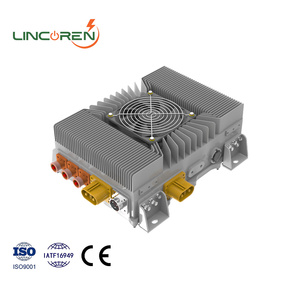
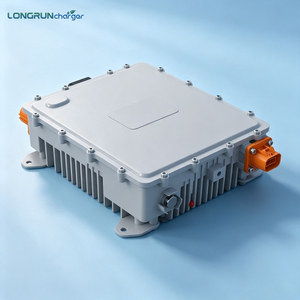
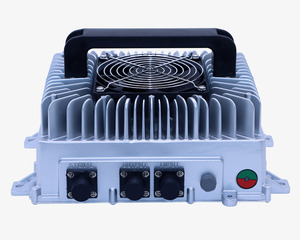
At the core of every modern Electric Vehicle (EV) powertrain sits the On-Board DC-DC Converter. While high-voltage battery packs (ranging from 300V to 800V DC) store the primary propulsion energy, the vehicle's low-voltage auxiliary networks—powering critical sub-systems like Autonomous Driving Assistance Systems (ADAS), electronic power steering (EPS), LED lighting, infotainment, brake actuators, and CAN bus control modules—operate on 12V, 24V, or 48V DC rails. The DC-DC converter serves as the indispensable power backbone, stepping down high traction voltage to low auxiliary voltage with high precision, zero disruption, and total galvanic safety.
Information Gain Insight: Operating in Ireland's unique maritime environment presents distinct engineering challenges. DC-DC converters deployed in Irish fleets must withstand high humidity, coastal airborne salt fog corrosion, and prolonged vibration across rural road networks. Standard industrial power bricks are inadequate; automotive OEM integrators require fully encapsulated, liquid- or air-cooled IP67/IP69K units equipped with automotive-grade Silicon Carbide (SiC) switches and dynamic CAN 2.0B communication protocols.
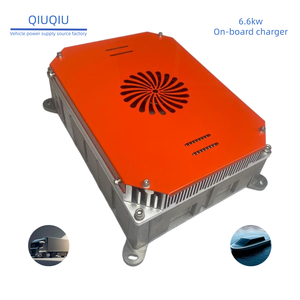
Furthermore, with the introduction of integrated 2-in-1 and 3-in-1 combo architectures—merging the On-Board Charger (OBC) and DC-DC Converter into a unified, space-saving housing—tier-1 suppliers and EV retrofitters in Ireland can save up to 35% in spatial volume and reduce wire harness complexity by over 20%. This whitepaper serves as an authoritative procurement and engineering guide to the top 10 EV DC-DC converter suppliers operating within and delivering to the Ireland market.
Selecting an automotive power electronics partner requires evaluating power density, thermal dissipation efficiency, functional safety ratings (ASIL), and localized technical support. Below is an exhaustive technical review of the leading 10 manufacturers serving Irish OEMs, fleet operators, and EV conversion specialists.
Specialization: High-Density Isolated Bricks, e-Mobility 1.5kW–5kW DC-DC Converters & Integrated OBC Combo Platforms.
NetPower stands out as a technological powerhouse in board-mounted isolated converters and ruggedized e-Mobility power blocks. Ranging from sub-15W micro-modules to 5kW continuous vehicle-grade converters, NetPower platforms utilize wide input spectrums (9V–650V DC) and standardized DOSA brick footprints (1/32nd to full-brick). Designed with zero-voltage switching (ZVS) and custom planar magnetics, their liquid- and air-cooled IP67 modules achieve up to 96% peak efficiency, making them the preferred choice for commercial truck fleets and transit buses across Ireland and Western Europe.
Specialization: High-Voltage 800V SiC DC-DC Converters & Integrated Power Electronics Management Systems.
BorgWarner leads high-end OEM automotive integrations with legacy strength in propulsion components. Their latest generation of high-voltage DC-DC converters focuses on 800V SiC architecture, enabling ultra-fast charging compatibility and continuous step-down power for luxury electric passenger cars and heavy highway haulers operating through Ireland's freight corridors.
Specialization: Mass-Market On-Board Chargers & Bidirectional DC-DC Converters.
Delta Electronics maintains a dominant supply presence in European commercial vehicle assembly plants. Their bi-directional DC-DC converters support Vehicle-to-Grid (V2G) and Vehicle-to-Load (V2L) functionalities, allowing electric municipal service vehicles in Ireland to feed power back into emergency infrastructure or on-site field tools.
Specialization: 3.3kW OBC + 1.5kW DC-DC 2-in-1 Integrated Assemblies & Air-Cooled Modules.
Dilong specializes in standardized e-mobility power conversion blocks. Known for their widely deployed DA3K3M series (100V-200V output range), Dilong offers cost-effective, IP67 sealed air-cooled and conduction-cooled units suitable for electric utility vehicles, light delivery vans, and specialized electric boat conversions throughout Ireland.
Specialization: Heavy Commercial Vehicle Powertrain Control & High-Power DC-DC Units.
Inovance provides robust electrical powertrain hardware engineered specifically for heavy e-buses and logistics trucks. Their DC-DC converters feature advanced CAN FD communication, software-configurable voltage outputs, and extreme shock immunity (up to 10G), meeting rugged Irish transit requirements.
Specialization: Compact On-Board Battery Chargers & Low-Profile Auxiliary DC-DC Bricks.
TC Charger is widely recognized among Irish EV custom build studios and low-volume OEM bodybuilders. Their modular 3.3kW to 6.6kW OBCs with integrated DC-DC converters feature extensive hardware protection against over-voltage, over-temperature, and reverse polarity connections.
Specialization: Automotive-grade High-Voltage Management & Tier-1 Integrated Systems.
Lear provides tier-1 OEM power management hardware. Highly focused on ISO 26262 functional safety, Lear’s DC-DC modules incorporate redundant circuit pathways to guarantee steering and braking power during traction inverter faults.
Specialization: Heavy-Duty e-Mobility & Industrial Isolated DC-DC Power Modules.
Bel Power Solutions supplies liquid-cooled e-Mobility power supplies rated up to 4kW+. Designed for challenging mining, agricultural, and public transit applications, Bel's liquid-cooled line excels in thermal stability under intense continuous duty cycles.
Specialization: High-Voltage Power Distribution Units (hPDU) & Multi-Rail DC-DC Converters.
Eaton's eMobility division delivers flexible power conversion for commercial vehicle platforms. Their multi-rail output DC-DC converters allow simultaneous powering of both 12V legacy accessories and high-draw 24V hydraulic pump systems in specialized commercial vehicles.
Specialization: Integrated Axle Drives & Smart Automotive Power Conversion Controllers.
Vitesco focuses on miniaturization and high power density. Their lightweight, highly integrated onboard DC-DC solutions target passenger EV platforms and urban delivery micro-vans, emphasizing high switching frequencies and low electromagnetic interference (EMI).
To simplify technical evaluation for Irish design engineers and fleet procurement officers, the following matrix compares core operational parameters across primary converter families:
| Manufacturer | Power Output Range | Input Voltage Spectrum | Cooling Topology | IP Rating | Primary Target Application |
|---|---|---|---|---|---|
| NetPower Technologies | 15W – 5.0 kW Continuous | 9V – 650V DC Wide Range | Liquid / Air / Conduction | IP67 / IP68 | E-Buses, Trucks, Telecom & Industrial Fleet Converters |
| BorgWarner | 2.5 kW – 6.0 kW | 400V / 800V Traction High Volts | Liquid Cooled | IP67 / IP69K | Passenger EVs, Heavy Highway Haulage |
| Delta Electronics | 1.8 kW – 3.3 kW Combo | 250V – 450V DC Input | Liquid Cooled | IP67 | OEM Fleet Vans & Urban Transit |
| Dilong Tech | 1.5 kW – 3.3 kW | 100V – 200V / 400V Output | Air Cooled / Sealed Fan | IP67 | Utility Vehicles, LCV Conversion, Marine EVs |
| Inovance Automotive | 2.0 kW – 4.0 kW | 300V – 750V DC Input | Liquid Cooled | IP67 | Heavy Commercial Transit & Municipal Fleet |
| Bel Power Solutions | 1.0 kW – 4.0 kW | 240V – 430V DC Input | Liquid Cooled | IP67 / IP69K | Mining, AgTech Tractors & Severe Duty Equipment |
Deploying electric vehicle power systems in Ireland requires adjusting for specific geographic, regulatory, and infrastructural dynamics. Below are three primary real-world application scenarios where specialized DC-DC converter technology plays a pivotal role.
Under the Transport for Ireland (TFI) National Sustainable Mobility Policy, urban double-decker and single-decker transit buses in Dublin, Cork, and Waterford are shifting rapidly to pure battery-electric propulsion. Public transport buses incur massive 24V auxiliary power loads—running automated ticketing validators, passenger Wi-Fi, HVAC circulation fans, pneumatic door systems, and interior digital display networks. NetPower’s 3.3kW and 5kW continuous-duty isolated DC-DC converters deliver stable, low-noise 24V output from a 600V+ battery bus, ensuring uninterrupted passenger amenities even during extreme stop-and-go city transit cycles.
Ireland’s extensive coastal highway footprint (e.g., Wild Atlantic Way routes) exposes logistics fleets to dense, salt-laden marine air. Standard unsealed converter units quickly suffer from pin oxidation and dielectric breakdown due to moisture ingress. Deploying IP67 waterproof, fully encapsulated 2-in-1 OBC and DC-DC assemblies (such as NetPower's premium air-cooled or liquid-cooled modules) completely isolates sensitive gate drivers and microcontrollers from corrosive ambient salt mist, preserving MTBF figures exceeding 500,000 hours.
Ireland’s agricultural technology sector is electrifying specialized equipment—ranging from automatic feed pushers and turf-management tractors to yard loaders. These machines encounter severe shock, vibration, and mud immersion. Open-frame converters fail rapidly in these environments. Industrial-grade encapsulated DC-DC converters with DOSA-compliant footprints and heavy-duty metal baseplates deliver the shock immunity (MIL-STD-810G compliant) necessary to keep agricultural machinery operational through demanding Irish winters.
To achieve true automotive-grade reliability, power design engineers must look beyond nominal datasheet specifications. True operational success depends on three key power electronics fundamentals:
A converter rated for 3kW at 25°C ambient may experience severe thermal throttle at 65°C under-hood temperatures if heat dissipation pathways are sub-optimal. Advanced converters employ direct-to-coolant copper cold plates or high-density finned aluminum heatsinks designed for liquid-glycol loops (common in EV thermal management systems). NetPower’s design methodology incorporates rigorous finite-element thermal simulation prior to prototype release, ensuring that output power holds flat across the entire ambient operating window (-40°C to +85°C).
High-voltage safety is non-negotiable. Creepage and clearance distances between the 400V/800V high-voltage bus and the 12V/24V human-touchable auxiliary network must comply with stringent UN ECE R10 and ISO 6469 safety directives. By utilizing high-frequency planar transformers with reinforced triple-insulated wire and optoelectronic isolation, modern isolated converters prevent high-voltage spikes from leaking into low-voltage control circuits during fault conditions, protecting vehicle occupants and diagnostic technicians alike.
Fixed output converters are a legacy concept. Modern EV integration demands real-time communication between the Vehicle Control Unit (VCU) and the DC-DC converter. Via CAN bus protocol (SAE J1939 or CANopen), the VCU can dynamically command the converter to adjust its target output voltage (e.g., shifting from 13.8V trickle float to 14.4V fast-charge boost based on auxiliary battery chemistry and temperature), report internal thermal telemetry, and flag diagnostic trouble codes (DTCs) instantly.
Direct answers to common technical, regulatory, and commercial queries encountered when sourcing EV power conversion hardware in Ireland.
Whether you are engineering a high-voltage electric bus platform, upgrading a commercial delivery fleet, or specifying high-efficiency board-mounted isolated power bricks, our application engineering team is ready to assist.