
Finland’s heavy industrial ecosystem—spanning arctic forestry, advanced marine engineering, automated mining, and state-of-the-art cleantech—demands an uncompromising tier of power delivery hardware. As the regional market transitions rapidly toward electro-hydraulic integration and stringent carbon-neutral targets by 2035, original equipment manufacturers (OEMs) and system integrators face unique challenges: sub-zero thermal cold starts (-40°C), strict CE and SFS-EN compliance, and high power density requirements within compact footprints.
This technical whitepaper provides a comprehensive framework for selecting, integrating, and maintaining commercial-grade hydraulic power units (HPUs), switching power supplies, and DC-DC power modules tailor-made for Finnish infrastructure. By analyzing local operational parameters—such as fluid viscosity dynamics in low-temperature hydraulics, IP-rated weatherproofing, and digital CANbus management—we deliver actionable insights to eliminate downtime and maximize cycle longevity.
Key Takeaway for Procurement & Engineering Teams: Standard off-the-shelf power equipment frequently experiences premature valve sticking, seal brittle failures, or voltage conversion ripple when subjected to Finland's harsh Arctic operational profiles. Modular, thermal-compensated, and high-efficiency custom power units provide the only field-proven defense against high operational expenditure in Nordic logistics and manufacturing hubs.
Engineered for high power density, superior duty cycles, and field-proven reliability under extreme temperature swings.
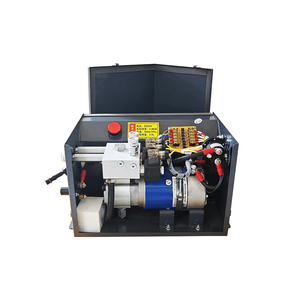
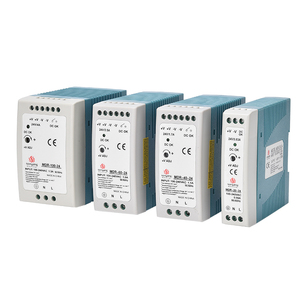
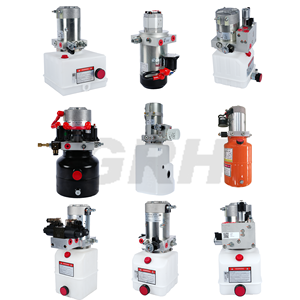
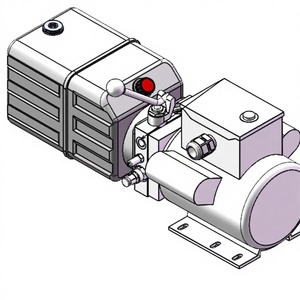
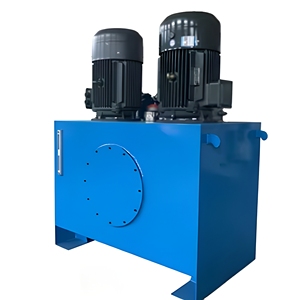
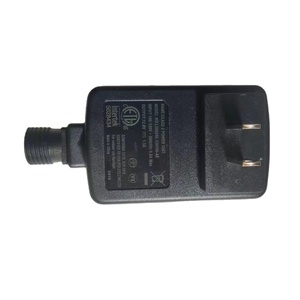
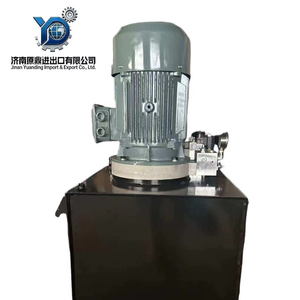
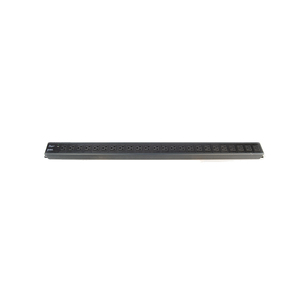
Deploying electro-hydraulic and switching power solutions in Finland requires an intimate understanding of local operational environments. Generic power equipment deployed in Southern Europe or Asia rapidly degrades when exposed to the ambient stress profiles common in regions like Lapland, Ostrobothnia, and the Gulf of Finland. Below are the core sectors in Finland where our power units excel:
Finland’s timber sector relies heavily on cut-to-length harvesters and forwarders operating in isolated forest tracts. Our 12V/24V corrosion-resistant hydraulic power units drive auxiliary winches, cabin tilt mechanisms, and automated log grabbers with consistent 25MPa fluid force, utilizing arctic-grade synthetic oils that resist cold cavitation down to -40°C.
Operated out of shipyards in Turku and Helsinki, vessels facing Baltic Sea salinity require marine-treated hydraulic power packs and switching supplies. Our cast-iron non-standard HPUs feature multi-stage anti-corrosion primers and IP67 weather-sealed electric motors capable of handling salt spray, continuous roll pitch, and severe wave impact vibrations.
As Finland's mining clusters in Tampere and Lapland transition to zero-emission underground loaders and drill rigs, board-mounted isolated DC-DC converters (15W to 5kW+) step down high-voltage traction battery power (400V/650V DC) to safe 12V/24V control buses, powering onboard steering, hydraulic solenoids, and CANbus sensors with over 95% conversion efficiency.
The Finnish industrial landscape is undergoing two major structural shifts: total industrial carbon-neutrality goals by 2035 and the rapid adoption of digitalized, sensor-integrated electro-hydraulic systems. These trends are drastically changing how power units are specified by local engineering teams:
Traditional engine-driven PTO (Power Take-Off) hydraulic pumps are rapidly losing ground in Finland to modular, battery-electric DC hydraulic power packs. By decoupling hydraulic pressure generation from the primary internal combustion engine, OEMs can run vehicle tail-lifts, hydraulic cranes, and municipal sweepers silently on electric energy—enabling night-time urban operations in Helsinki and Tampere while complying with low-emission municipal zones.
In telecommunications and edge-datacenter infrastructure across northern Finland, power consumption density per square meter is at an all-time high. Modern industrial power topologies rely heavily on isolated DC-DC converters (quarter brick, half brick, and full brick footprints) operating across wide input ranges (18-75V and 180-400V) to deliver tight regulation for core microprocessors without generating excessive thermal waste.
To reduce emergency maintenance calls in winter, Finnish engineering firms now demand integrated smart sensors within hydraulic power units. Pressure transducers, fluid level sensors, and oil temperature transmitters are integrated directly into the power pack block, outputting J1939 CANbus signals directly to the main equipment controller.
As a global power hardware designer and exporter, our engineering capability spans both high-efficiency electronics and precision hydraulic fluid mechanics. We enforce a rigorous Quality Management System verified by international standards to ensure zero field-failures upon delivery to Northern Europe.
Every power unit architecture undergoes Highly Accelerated Life Testing (HALT) and Stress Screening (HASS). From high-pot isolation tests (2225 VDC) on electronic board converters to 30MPa burst-pressure testing on hydraulic reservoirs, our products are verified far beyond standard operating thresholds.
Whether your project requires custom manifold valve arrangements, non-standard tank geometry, special liquid-cooling blocks, or modified input voltage windows (e.g., 9-75V wide range), our R&D center delivers tailored CAD models and schematic reviews with minimal Non-Recurring Engineering (NRE) costs.
By combining automated SMT assembly for power electronics with CNC precision machining for cast-iron and aluminum hydraulic manifolds, we maintain complete lot-level material traceability. This integrated manufacturing model gives Finnish importers total confidence in long-term supply continuity and warranty enforcement.
Connect with our senior application engineers to review your technical drawings, request detailed CAD step files, or receive a formal export quotation for the Finnish market.
Contact Us