
High-reliability power conversion blocks, bi-directional energy storage converters, and integration assemblies configured for Berlin solar distributors and system integrators.
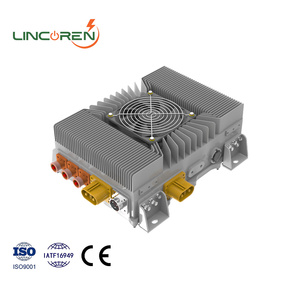
Bi-directional energy transfer platform supporting Vehicle-to-Grid (V2G) and micro-storage inverter integration. IP67 sealed thermal housing for extreme environmental durability.
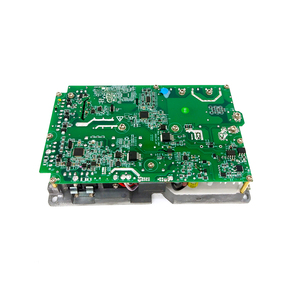
Wide voltage output architecture optimized for battery backup sub-systems, solar energy buffer storage, and precision digital power control systems.
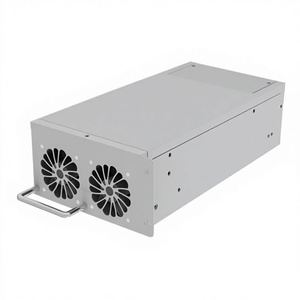
Modular 19-inch rack-compatible power conversion unit designed for commercial solar storage enclosures and uninterrupted industrial DC power hubs.
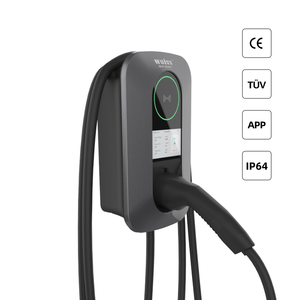
Wall-mounted smart power control assembly featuring CAN-bus telemetry for solar-assisted urban battery management systems.
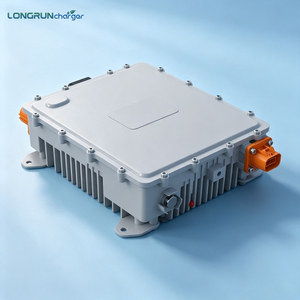
Integrated DC-DC auxiliary power system built for high vibration resistance, operational continuity, and extended thermal headroom in solar-microgrids.
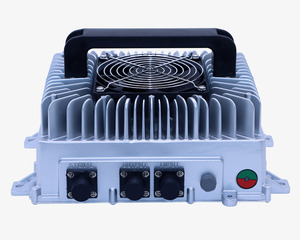
Multi-voltage lithium battery charger platform incorporating active power factor correction (PFC) and full CAN-Bus 2.0B communication integration.
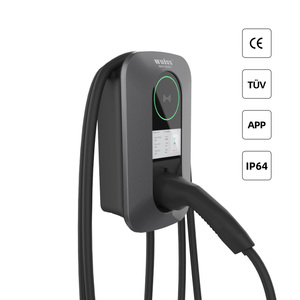
Customizable OEM chassis designed for fast urban deployment, supporting direct solar DC bus pairing and dynamic load switching.
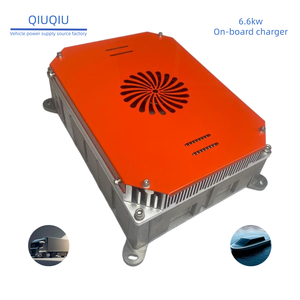
High-capacity dual-mode converter platform tailored for residential and commercial battery storage system (BESS) manufacturers in Germany.
The state of Berlin presents a uniquely challenging environment for solar energy deployment. With the enforcement of the Solargesetz Berlin (Berlin Solar Act), which mandates photovoltaic systems on all new residential, commercial, and heavily renovated buildings, the demand for high-efficiency, space-saving, and grid-compliant solar inverters has surged dramatically. However, integrating solar power into Berlin’s dense metropolitan grid—operated by Stromnetz Berlin GmbH—requires stringent technical compliance, advanced thermal management, and dynamic grid stabilization capability.
Berlin leads Germany in urban plug-in solar installations. OEM inverters developed for this segment require ultraclean sine-wave output (THD < 2.0%), rapid anti-islanding shutdown (<100ms per EN 50549-1), and high ambient heat dissipation without noisy mechanical fans. Our micro-inverter topology uses advanced Gallium Nitride (GaN) and Silicon Carbide (SiC) power switches to maintain 97.5%+ conversion efficiency even under partial shading conditions common in multi-story apartment facades.
Commercial developments across Berlin-Brandenburg are increasingly combining rooftop PV with battery energy storage systems (BESS) and commercial electric vehicle charging infrastructure. OEM/ODM hybrid inverters must handle high DC voltage inputs (up to 1000V DC) and provide seamlessly integrated bidirectional DC-DC conversion stages to bridge solar arrays, 48V/144V/400V battery chemistry, and AC distribution panels with zero-gap UPS transfer capabilities.
Leveraging over two decades of high-density isolated DC-DC converter engineering, micro-power module packaging, and automotive-grade power conversion manufacturing, our facilities provide complete end-to-end OEM/ODM customization for global solar brands entering the DACH (Germany, Austria, Switzerland) region.
From sub-15W auxiliary board supplies to 5kW+ heavy-duty energy conversion modules, our hardware inherits industry-standard DOSA brick footprints (1/32nd, 1/16th, 1/8th, quarter, half, and full brick). By incorporating phase-shifted full-bridge (PSFB) and LLC resonant converters, we achieve power densities exceeding 4.5W/cm³ while maintaining conservative junction temperature margins.
Every manufactured unit undergoes 100% automated optical inspection (AOI), high-potential electrical isolation verification (up to 2250VDC standard isolation, optional 4200VDC reinforced isolation), Highly Accelerated Life Testing (HALT), and HASS burn-in screening. This ensures an operational Mean Time Between Failures (MTBF) exceeding 2.0 million hours under standard European operating profiles.
| Feature Parameter | Generic Commodity Inverters | NetPower Technical OEM/ODM Solution |
|---|---|---|
| Grid Code Compliance | Basic CE mark; requires external decoupling relay for Germany | Native VDE-AR-N 4105 & DIN VDE V 0124-100 embedded firmware control |
| Thermal Architecture | Basic active fan cooling (high maintenance, failure-prone) | Encapsulated IP67 conduction/liquid cooling; zero moving parts options |
| Dynamic Tariff Ready | Fixed power control curve | Real-time dynamic power throttling via Section 14a EnWG digital interface |
| Low Voltage Isolation | 1500 VDC Basic Isolation | 2250 VDC to 4200 VDC Reinforced Galvano-Magnetic Isolation |
| Customization Scope | Fixed enclosure, branding sticker only | Full mechanical footprint modification, PCB re-engineering & custom CAN/Modbus firmware |
In Berlin’s central residential districts (such as Mitte, Friedrichshain, and Prenzlauer Berg), spatial restrictions prevent large rooftop installations. OEM micro-inverters paired with high-efficiency DC-DC boost modules allow vertical mounting on balcony railings and building facades. Integrated MPPT algorithms ensure optimal yield under severe urban shading from adjacent structures.
Across outer Berlin and Brandenburg logistics corridors (e.g., Grossbeeren, Tegel Airport Business Park), massive commercial rooftop solar arrays generate megawatt-scale power. Custom 3.3kW to 6.6kW OEM inverter power blocks are paralleled into rack-mounted cabinets to provide high-voltage DC bus stability for heavy-duty electric commercial fleet charging.
Under Germany's new Building Energy Act (Gebäudeenergiegesetz - GEG), Berlin heating systems are transitioning to electric heat pumps coupled with local PV generation. Our bi-directional inverter sub-assemblies incorporate SG-Ready (Smart Grid Ready) contact relays and high-speed CAN communication to prioritize direct self-consumption before exporting excess power to the grid.
With the introduction of dynamic electricity prices (EPEX Spot day-ahead coupling) across Germany, solar inverters must intelligently shift energy export modes based on negative electricity price signals. OEM inverters engineered by NetPower allow real-time firmware modification to direct surplus energy into local battery buffers or heat storage rather than feeding back into an oversupplied grid during peak midday hours.
As energy infrastructure is classified as critical (KRITIS) under German law, solar inverters connected to public networks must enforce hardware-level encryption (TPM 2.0 modules) and secure boot functionalities. Our ODM R&D team provides full software stack localization, ensuring firmware update mechanisms strictly adhere to European cyber resilience frameworks.
Technical and logistical guidance for EPC contractors, OEM brand owners, and system integrators operating in Germany.
Our solar inverter control electronics are engineered with hardcoded VDE-AR-N 4105 parameters, including automatic NA Protection (Netz- und Anlagenschutz) grid decoupling, frequency-dependent active power reduction (P(f) curve starting at 50.2 Hz), and configurable reactive power control modes (Cos φ static or Q(U) dynamic). Certified test reports are provided with OEM evaluation kits.
We offer comprehensive ODM services covering mechanical chassis re-design (IP65/IP67 cast aluminum enclosures), custom DC connector configurations (MC4, Amphenol, specialized automotive plugs), custom PCB layouts for integration into pre-existing battery storage cabinets, and tailored communication protocols (Modbus-RTU, CANbus, SunSpec, RESTful API).
Our modules utilize high-conductivity potting materials combined with metal-core printed circuit boards (MCPCB) and direct-to-baseplate conduction cooling. This allows complete heat dissipation through structural mounting plates or external heatsinks, eliminating the need for cooling fans which often fail in dusty or outdoor urban environments.
Standard engineering sample lead time is 2 to 3 weeks, with mass production batch cycles within 4 to 6 weeks. All industrial-grade solar power modules and inverter assemblies shipped to European buyers carry standard 5-year to 10-year factory warranties supported by localized RMA processing procedures.
Yes. Our bi-directional DC-DC and AC-DC modules feature fully programmable constant current/constant voltage (CC/CV) multi-stage charge profiles optimized specifically for LiFePO4, NMC, and emerging sodium-ion battery chemistries, with active cell-balancing telemetry via integrated CAN-bus messaging.
Partner with an established OEM/ODM leader in high-density power electronics. Request detailed datasheets, VDE test documentation, and custom engineering samples for your engineering team today.