
Ruggedized, IP67-rated, and thermally optimized converter modules engineered for high reliability under wide input line variations and severe operational environments.
The Pakistani electrical and electronic OEM manufacturing landscape is undergoing a systemic structural transition. Driven by the National Electric Vehicle Policy (NEVP 2025–2030), accelerating industrial automation, widespread deployment of off-grid solar photovoltaic (PV) microgrids, and the electrification of urban transportation (specifically 2-wheeler motorbikes, 3-wheeler auto-rickshaws, and commercial light logistics vehicles), the demand for robust, high-efficiency OEM/ODM power converters has reached an unprecedented high.
However, the operating environment across key industrial hubs—including Karachi, Lahore, Gujranwala, Sialkot, Rawalpindi, and Faisalabad—presents severe technical hurdles for off-the-shelf power modules designed for benign Western or East Asian grids. System integrators and vehicle manufacturers in Pakistan face severe operational stresses: chronic grid voltage sags (dropping below 140VAC), high ambient operating temperatures frequently exceeding 45°C to 50°C during peak summer months, airborne industrial particulate contaminants, and unpredictable load shedding. Standard power supplies often suffer from premature thermal breakdown, electrolytic capacitor failure, and catastrophic overvoltage damage caused by switching surges and un-stabilized generator feedbacks.
As a primary manufacturing partner and OEM/ODM engineering specialist (synthesizing NetPower’s field-proven technological core), we provide Pakistani equipment manufacturers with tailored power electronics solutions across board-mounted isolated DC-DC bricks, non-isolated point-of-load (POL) buck regulators, high-voltage bus converters, and complete e-Mobility On-Board Chargers (OBC). Rather than forcing clients into rigid off-the-shelf catalog numbers, our custom design workflow enables ground-up topology tuning, customized pinouts, custom aluminum housing dimensions, and targeted firmware modifications for localized digital control protocols.
| Design Parameter | Generic Off-the-Shelf Converter | NetPower Localized OEM/ODM Custom Solution | Operational Benefit in Pakistan Market |
|---|---|---|---|
| Input AC Range (OBC) | 180V – 240V AC (Narrow Window) | 85V – 290V AC Ultra-Wide Input Range | Operates continuously during low-voltage grid sags & generator fluctuations without tripping. |
| DC-DC Input Range | 2:1 Input (e.g., 36V–75V) | 4:1 or Wide HV Range (9V–75V, 34V–160V, 180V–400V) | Handles extreme battery pack discharge-to-charge voltage swings in traction lithium/lead systems. |
| Thermal Management | Standard plastic casing / air cooling @ 25°C | Baseplate conduction cooling / IP67 sealed liquid & air heatsink fins | Prevents thermal thermal shutoff in ambient environments reaching +50°C in Sindh & Punjab. |
| Vibration & Shock | Commercial PCB mounting (IEC 60068) | Automotive ISO 16750 & Railway EN 50155 encapsulations | Resists violent mechanical shaking on rough rural roads and unpaved logistics tracks. |
| BMS / CAN Integration | Fixed baud rate, proprietary closed CAN | Configurable CAN 2.0B / J1939 with customizable firmware handshake | Plug-and-play synchronization with locally assembled LiFePO4 and NCM battery packs. |
| EMC / Surge Tolerance | Basic Class A EMI protection | Enhanced Class B EMI filtering + 4kV surge transient suppression | Suppresses severe lightning spikes and industrial inductive switching surges across local grids. |
From sub-15W micro-power modules to over 1000W bricks in standard DOSA footprints (1/32nd, 1/16th, 1/8th, quarter, half, and full brick). Isolation ratings up to 2250VDC for telecom and railway electronics.
High-density buck converters delivering up to 100A output current with ultra-fast dynamic transient response. Accepts 2.5V to 60V inputs for FPGA, ASIC, and network processor power rails.
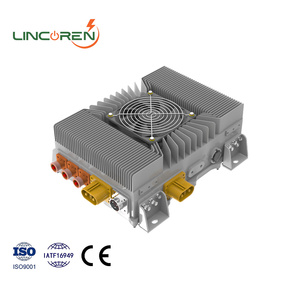
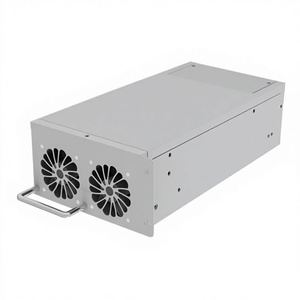
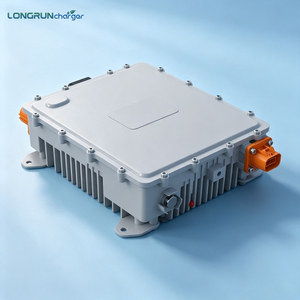
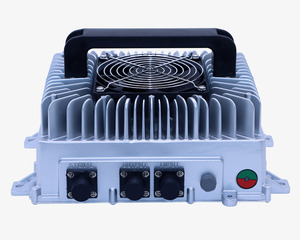
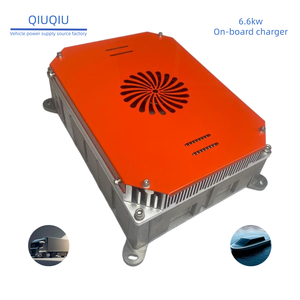
3.3kW to 6.6kW On-Board Chargers integrated with 1.5kW–2kW auxiliary DC-DC converters in a single IP67 aluminum chassis, saving vehicle weight and space in e-trucks and e-buses.
Tailored technical integration for local transport, renewable energy systems, commercial telecommunications, and heavy manufacturing facilities.
In cities like Lahore and Karachi, heavy-duty 48V, 60V, and 72V 3.3kW OBC modules and 12V auxiliary DC-DC converters power 3-wheeler loader rickshaws and delivery motorbikes. Robust IP67 aluminum housings protect electronics against waterlogging during monsoon road flooding.
Pakistani cellular operators require 48V isolated DC-DC bricks (half-brick and full-brick, 300W to 1000W+) capable of converting wide DC battery voltages (36-75V) to isolated system rails. High efficiency lowers diesel generator backup fuel consumption during scheduled power outages.
To counteract high commercial electricity tariffs, Pakistani factories are rapidly deploying industrial solar storage. High-voltage input isolated converters (180V-400V DC input) stepping down to low-voltage control circuits enable efficient power extraction from high-voltage DC solar buses.
Textile mills in Faisalabad and surgical instrument manufacturing units in Sialkot rely on encapsulated non-isolated POL converters and high-density DC-DC bricks to power PLC units, motor controllers, and robotic assembly arms immune to severe electromagnetic noise (EMC).
High-power 6.6kW OBCs combined with 3kW/5kW high-voltage to low-voltage DC-DC converters manage power transformation between 300V-650V traction battery packs and 24V commercial vehicle auxiliary systems for municipal e-bus transit projects in metro regions.
Custom encapsulated DC-DC modules designed for solar-powered tube-well pumps and agricultural automated monitoring systems operate flawlessly under high-humidity, high-dust outdoor field conditions across rural agrarian zones.
Understanding user intent and market shifts allows localized manufacturers to build compliant, future-proof electronics. Over the coming five years, three dominant technology vectors will define converter procurement across Pakistan:
Historically, Pakistani light EVs and power backups used flooded lead-acid or gel batteries. The rapid cost drop of Lithium Iron Phosphate (LiFePO4) chemistry has triggered a massive industry shift. LiFePO4 batteries demand highly precise CC/CV (Constant Current / Constant Voltage) charging profiles with automated CAN bus communication between the charger and the BMS. OEM converters must integrate pre-programmed battery charging curves to prevent cell degradation caused by unmonitored voltage overshoots.
To minimize vehicle assembly labor, reduce wiring harness complexity, and save space in compact 3-wheelers and mini-trucks, Pakistani EV manufacturers are abandoning standalone units in favor of integrated power assemblies. Integrating a 3.3kW On-Board Charger (OBC) and a 1.8kW auxiliary DC-DC converter into a unified IP67 liquid- or air-cooled chassis reduces total system weight by up to 25% while decreasing mechanical failure points.
Silicon Carbide (SiC) MOSFETs and Gallium Nitride (GaN) power switches are replacing legacy Silicon IGBTs in modern high-frequency converters. By utilizing SiC power devices, our OEM converters achieve over 96% peak power conversion efficiency and double the volumetric power density (W/in³). Higher efficiency translates directly into lower thermal dissipation, allowing smaller heatsinks and cooler operating temperatures inside enclosed engine compartments.
Direct answers regarding import logistics, technical customization, grid compatibility, and quality guarantees for B2B engineering purchases.
Inheriting NetPower’s decade-long engineering heritage, our manufacturing facilities combine automated high-speed SMT placement, advanced planar transformer manufacturing, and automated final testing. Every converter that leaves our production floor undergoes a multi-tier quality assurance protocol designed to eliminate infant mortality and guarantee long-term operational MTBF (Mean Time Between Failures) in demanding applications.
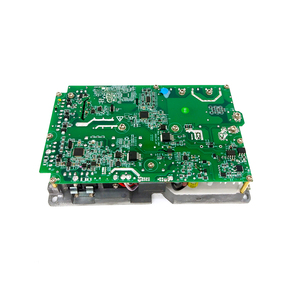
All board assemblies undergo Automated Optical Inspection (AOI) followed by full thermal burn-in screening under full load, exposing hidden component flaws before final enclosure sealing.
Complete MES barcode tracking traces every power MOSFET, IC chip, transformer wire reel, and aluminum housing batch back to the original tier-1 silicon supplier.
Our manufacturing processes comply with strict automotive quality management standards, supporting high-volume commercial vehicle production runs.
Whether you are developing a new line of electric 3-wheelers in Lahore, upgrading telecommunications power infrastructure across rural districts, or designing industrial solar hybrid inverters, our engineering team provides direct technical support from initial topology selection through final mass production qualification.
Request detailed datasheets, custom mechanical CAD drawings, or schedule a technical consultation with our power electronics application engineering team for your Pakistani project.