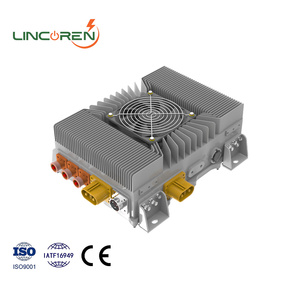
Premium IP67 Waterproof & Air-Cooled Bidirectional 3.3 KW OBC & 1.8 KW DCDC Converter 2-in-1 Assembly
- Integrated 2-in-1 Power Density System
- IP67 Sealed & Shockproof Housing
- Bidirectional Energy Transfer Capability

Proven on-board battery chargers (OBC) and isolated DC-DC converter modules built for extreme thermal tolerances, harsh vibration profiles, and maximum energy efficiency.
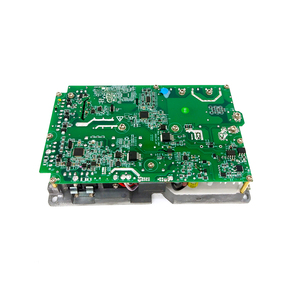
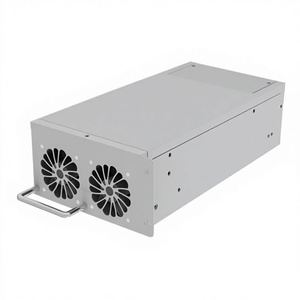
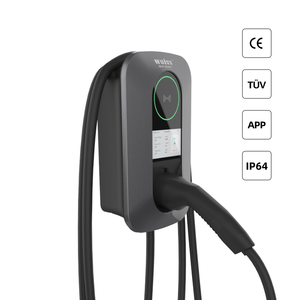
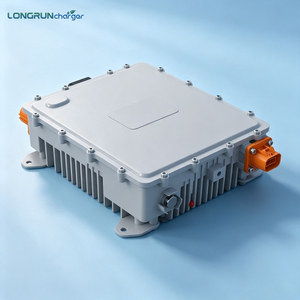
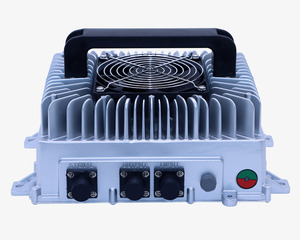
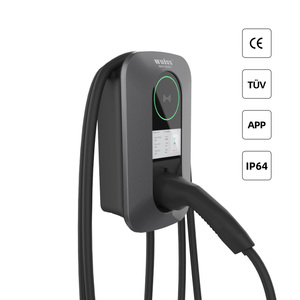
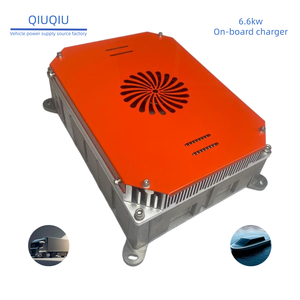
Our power topologies are engineered with conservative derating and robust thermal margins, validated through extensive stress testing to guarantee continuous uptime.
Addressing the specific operational challenges of sub-Saharan infrastructure: severe thermal gradients, high airborne dust, mining vibration, and power grid instability.
Operated in the Bushveld Igneous Complex and Witwatersrand mining hubs, underground load haul dump (LHD) trucks and utility platforms demand fully potted, IP67-rated isolated DC-DC converters (converting 48V–600V traction battery power down to 12V/24V auxiliary power) that resist corrosive mineral dust, moisture, and intense shock.
Supplying South African defense contractors and tactical vehicle fabricators with military-grade DC-DC converters compliant with MIL-STD-810G (vibration/shock) and MIL-STD-461G (EMC/EMI). Our units power mobile command units, telemetry, and encrypted communication systems mounted on armored platforms.
South Africa’s frequent grid interruptions require industrial battery energy storage systems (BESS) and telecom tower backup modules equipped with wide-input (90V–305V AC) rack-mounted AC/DC fast chargers and DC-DC step-down modules that gracefully handle voltage sag, brownouts, and massive inductive switching surges.
Logistics operators in Gauteng, Western Cape, and KwaZulu-Natal converting urban delivery fleets to electric vehicles rely on integrated 2-in-1 bidirectional OBC and DC-DC converter units. These modules optimize space while supporting active liquid and conduction cooling under high daytime temperatures.
Off-grid agricultural operations in the Northern Cape utilize non-isolated Point-of-Load (POL) and high-voltage isolated bus converters to bridge solar PV array DC buses directly to automated irrigation controllers, cold storage refrigeration, and sensor networks without excessive AC conversion losses.
High-voltage input DC-DC power modules accepting 66V–160V DC inputs with reinforced galvanic isolation, delivering stable voltage power rails to signaling, engine management, and onboard telemetry hardware across South Africa’s extensive freight railway corridors.
In modern industrial, commercial, and defense sectors, power conversion hardware must perform under environmental and electrical conditions far more stringent than standard commercial off-the-shelf (COTS) units are designed to withstand. South Africa presents a unique matrix of operational demands: extreme ambient temperature differentials between daylight and nighttime in interior regions like the Kalahari and Karoo, high airborne particulate levels in heavy mining operations, severe mechanical shock in off-highway transport, and chronic grid instability characterized by Eskom load shedding transients and voltage dips.
Selecting military-grade power converters and EV on-board chargers (OBC) for deployments in Southern Africa requires an engineering approach focused on total system thermal margin, magnetic components optimization, electromagnetic compatibility (EMC), and robust galvanic isolation. Standard power converters frequently experience premature field failure due to dielectric breakdown caused by dust ingress, thermal runaway under unmitigated solar loading, or component stress from severe input voltage sags.
Key Engineering Takeaway: Military-grade power conversion relies on conservative thermal derating, planar magnetics, silicone encapsulation, and advanced switch-mode topologies (LLC Resonant & Zero-Voltage Switching) to maintain high efficiency across fluctuating input ranges without active fan failures.
The South African national grid experiences severe operational stress, resulting in structured load shedding and localized voltage swings. When power is restored following a load shedding block, heavy inductive loads kicking back onto the line cause voltage surges exceeding 1.5x nominal levels. Standard AC/DC chargers and DC-DC modules with narrow input windows suffer over-voltage stress on their primary-side switching MOSFETs, resulting in eventual gate oxide breakdown.
Our military-grade power modules incorporate ultra-wide input range capability (such as 9V–75V, 18V–75V, 180V–400V, and 300V–500V DC input blocks, alongside 90V–305V AC input windows with active Power Factor Correction). Integrated metal oxide varistors (MOVs), gas discharge tubes, and heavy-duty TVS diodes absorb high-energy transients, protecting downstream lithium battery management systems (BMS) and electronic control units (ECUs).
Ambient air temperatures in South Africa's industrial heartlands and mining zones regularly exceed 40°C, with internal enclosure temperatures reaching +70°C to +85°C inside sealed equipment bays. Conventional power converters that rely on internal cooling fans are highly susceptible to dust clogging and mechanical bearing failure.
To overcome this limitation, our e-Mobility OBC and isolated DC-DC modules utilize dual thermal management strategies: conduction cooling through high-conductivity aluminum baseplates and direct liquid cooling channels. By potting the internal circuitry in thermal silicone compound, heat generated by the power switches, transformers, and inductors is efficiently conducted to the outer chassis, allowing full-power operation at baseplate temperatures up to +100°C without requiring forced-air movement.
To achieve peak efficiencies up to 96%, our military-grade 3.3kW to 6.6kW OBC and board-mounted isolated converters employ soft-switching topologies, specifically Zero Voltage Switching (ZVS) LLC resonant circuits and Zero Current Switching (ZCS) buck/boost stages. By ensuring that switching transistors change state only when voltage across or current through the switch is zero, switching losses are dramatically minimized.
This reduction in wasted energy translates directly into lower thermal dissipation inside sealed IP67 enclosures. Furthermore, reduced high-frequency switching noise simplifies compliance with electromagnetic emission standards, such as CISPR 25 and MIL-STD-461G.
Safety and equipment protection demand high dielectric isolation between high-voltage traction batteries (up to 400V or 700V DC) and low-voltage auxiliary logic buses (12V/24V DC). Our isolated DC-DC brick modules (spanning 1/32nd brick, 1/16th brick, 1/8th brick, quarter brick, half brick, and full brick footprints) offer standard isolation ratings of 1500 VDC to 2250 VDC, with reinforced isolation options reaching 3000 VAC.
Through the use of multi-layer planar transformers integrated into the printed circuit board (PCB), thermal resistance across the transformer assembly is reduced while power density is elevated up to 100W/in³. Planar windings ensure consistent parasitic leakage inductance, eliminating line-to-line variation and delivering predictable EMI performance across large production volumes.
As a global pioneer in board-mounted isolated converters, non-isolated Point-of-Load (POL) modules, and e-Mobility power conversion systems, NetPower applies a rigorous Quality Management System to guarantee field reliability. Every module shipped to South African OEMs, defense contractors, and system integrators undergoes strict quality assurance protocols:
The industrial landscape in Southern Africa is undergoing a rapid transition driven by energy security demands and environmental regulations:
Mining Equipment Electrification: Mining operations across Limpopo, the North West, and Mpumalanga are aggressively adopting Battery Electric Vehicles (BEVs) to eliminate diesel particulate matter (DPM) in underground shafts. This transition demands high-durability, potted 3.3kW to 6.6kW chargers and 2-in-1 DC-DC converters capable of surviving severe vibration and moisture.
Fleet Electrification in Logistics Hubs: Commercial transport operators linking Johannesburg, Durban, and Cape Town are piloting light commercial EVs and electric buses. The deployment of robust, bidirectional on-board chargers with CAN bus integration allows fleet operators to manage charge schedules dynamically and integrate Vehicle-to-Grid (V2G) power backup protocols.
Resilient Industrial DC Microgrids: To bypass grid reliability issues, manufacturing facilities and telecommunications towers are installing local solar PV + battery storage microgrids operating on intermediate DC buses (48V, 110V, or 380V DC). Non-isolated POL converters and wide-input isolated brick converters serve as critical nodes to down-convert intermediate DC voltages to high-current, low-voltage processor and sensor rails with minimal energy loss.
Answers to common questions regarding local compliance, custom modifications, grid surge resilience, and shipping logistics for South African deployments.