
Explore our North American field-certified bi-directional power conversion platforms, micro-inverters, and utility-scale energy storage converters designed for grid stability.
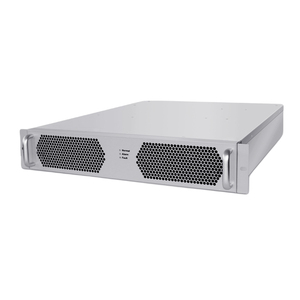
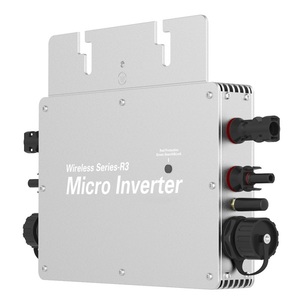
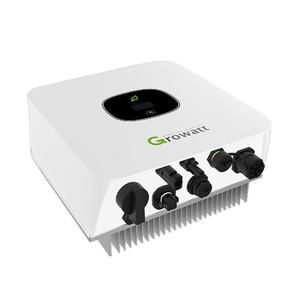
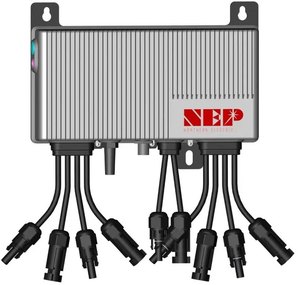
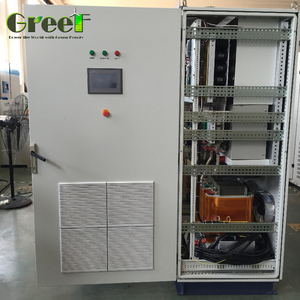
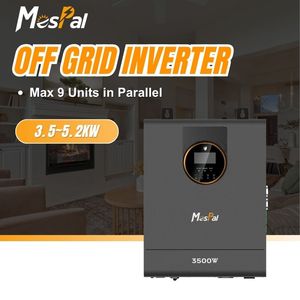
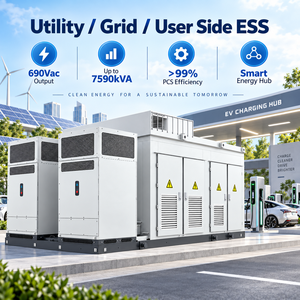
The transition of the United States electrical grid toward high-density renewable generation, distributed energy resources (DERs), and utility-scale Battery Energy Storage Systems (BESS) has transformed power electronics requirements. As grid operators (ISOs and RTOs such as CAISO, ERCOT, PJM, and MISO) implement stricter interconnectivity mandates, selecting a certified grid converter supplier for United States projects requires an engineering-first evaluation. A power grid converter—whether functioning as a bi-directional Power Conversion System (PCS), a isolated DC-DC step-down converter, or an advanced grid-forming microgrid inverter—serves as the critical electronic bridge between direct current (DC) assets and the alternating current (AC) grid.
When procuring grid converters in the United States, electrical engineers must differentiate between legacy Grid-Following (GFL) topology and next-generation Grid-Forming (GFM) control systems:
| Parameter / Feature | Utility-Scale BESS PCS (1000kW - 6900kW) | C&I Microgrid Converter (30kW - 250kW) | Micro Grid-Tie Inverter (800W - 1000W) |
|---|---|---|---|
| DC Input Voltage | 1000V - 1500V DC (High Voltage) | 48V - 900V DC (Flexible Input) | 18V - 60V DC (Low Voltage) |
| Cooling Topology | Liquid Cooling / Forced Air Ducting | Conduction / Temperature-controlled Fan | Passive Aluminum Heatsink (IP67) |
| Grid Interconnection | IEEE 1547-2018 / UL 1741 SB | UL 1741 SA / CSA C22.2 | VDE-AR-N 4105 / UL 1741 |
| Target US Application | Utility Storage, Grid Frequency Control | Factory Peak Shaving, EV Buffering | Residential Balcony & Small Commercial |
Deploying 1500V DC bi-directional PCS units into US regional transmission networks. Provides rapid frequency response (FFR), VAR support, and energy arbitrage in ERCOT and PJM wholesale markets.
3-Phase 400V/480V bidirectional converters operating alongside manufacturing plants to mitigate demand charges, manage TOU (Time-of-Use) tariffs, and supply uninterruptible emergency backup.
Interfacing high-voltage DC busbars directly with battery storage buffer blocks to prevent local utility transformer overload during simultaneous ultra-fast EV charging cycles.
Hybrid grid converters operating in islanded mode for defense installations, remote mining, and agricultural microgrids, seamlessly combining solar, wind, and diesel generator power.
Procuring power conversion equipment for North American deployment involves adhering to strict regulatory frameworks established by state public utility commissions and federal agencies:
Federal Energy Regulatory Commission (FERC) Order 2222 enables Distributed Energy Resources (DERs) to aggregate and compete in regional wholesale power markets. Concurrently, the Inflation Reduction Act (IRA) offers substantial Investment Tax Credits (ITC) for energy storage systems—provided the hardware complies with domestic content bonuses, standardized efficiency levels, and rigorous safety certifications.
Across the United States, utility-scale projects are rapidly transitioning from 1000V DC to 1500V DC system topologies. Higher DC voltages reduce copper conductor cross-sections, minimize system cable losses, and increase power density per footprint square foot. Our 1500V liquid-cooled PCS converters deliver up to 98.8% efficiency while lowering Balance of System (BOS) costs by up to 15%.
As an industry-leading OEM/ODM grid converter manufacturer and global power solutions provider, NetPower Technologies enforces uncompromising quality control protocols to ensure zero-defect field reliability:
Direct technical answers to common questions raised by US utility engineers, BESS integrators, and procurement officers.
For US grid interconnection, converters must comply with UL 1741 (including Supplement SB for smart inverters) and IEEE 1547-2018. Additional state-specific compliance may include California Rule 21 and Hawaii HECO SRD. Fire safety standards such as UL 9540 (for complete BESS safety) also require grid converters to integrate compliant protection circuitry.
Yes. Our grid-forming (GFM) bidirectional PCS modules feature automated microgrid control algorithms capable of executing a seamless transfer from grid-tied to islanded mode in under 3 milliseconds, providing robust black-start voltage building for local facility loads.
Liquid-cooled grid converters provide superior thermal management in high-ambient environments (such as the US Southwest). Liquid cooling maintains uniform IGBT junction temperatures, extends component operational lifespan, offers IP65/IP67 environmental isolation against dust/sand, and reduces auxiliary cooling power losses by up to 40% compared to heavy fan arrays.
Our power module portfolio covers broad DC input bands: board-mounted DC-DC modules span 9-36V, 18-75V, and 180-400V; low-voltage microinverters span 18-60V DC; and industrial/utility-scale PCS units accommodate 48V, 800V, 1000V, up to 1500V DC high-capacity battery strings.
Standard power modules are stocked across global distribution channels for rapid delivery. Custom or semi-custom solutions (encompassing mechanical housing revisions, proprietary communication protocols, or liquid cooling fittings) typically feature engineering prototype cycles of 6 to 10 weeks, backed by full engineering support.
Consult with our senior power conversion engineering team to select, customize, and sample high-reliability grid-tie inverters, bi-directional PCS units, and board-mounted converters tailored for your project specs.