
The global shift toward high-density power conversion has elevated the Distributed-power Open Standards Alliance (DOSA) framework from a standard design guideline to an essential requirement for tier-1 industrial OEMs. For hardware design engineers, systems integrators, and procurement directors in Norway, specifying DOSA-compliant power converters guarantees drop-in interchangeability, pin-for-pin compatibility, and reduced single-source supply chain risk across long product lifecycles.
DOSA standard footprints—spanning 1/32nd micro-bricks, 1/16th brick, 1/8th brick, quarter brick, half brick, to full-brick dimensions—standardize physical form factors, mechanical mounting options, pinout configurations, and control logic functions (such as Remote On/Off, Output Voltage Trim, and Sense lines). This mechanical standardization enables Norwegian engineers operating in high-reliability sectors—such as subsea robotics, maritime propulsion control, telecom remote base stations, and electric vehicle fleet assemblies—to upgrade power levels or swap topologies without redesigning base printed circuit boards (PCBs).
Strict mechanical compliance across sixteenth-, eighth-, quarter-, and half-brick enclosures ensures seamless layout migration from 15W control rails to 1000W+ main power channels.
Galvanic isolation options ranging from 1500 VDC to 2250 VDC protect sensitive microprocessors and supervisory control networks from high-voltage transient spikes in heavy machinery.
Multi-range input topologies including 9-36V, 18-75V, 36-75V, 66-160V, and high-voltage DC inputs (180-400V, 300-500V, 400-650V) accommodate unpredictable energy storage outputs.
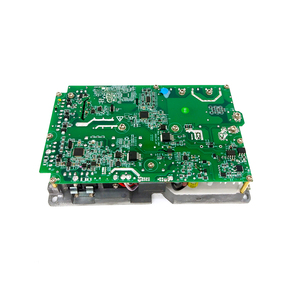
As a specialized manufacturer and direct-to-factory supplier, NetPower Technologies engineers DOSA standard converters and e-Mobility power conversion systems that exceed industry benchmarks for power density. Utilizing advanced planar magnetics, Gallium Nitride (GaN) / Silicon Carbide (SiC) switching devices, and fully encapsulated potted structures, our converter modules achieve power conversion efficiencies up to 96%. This minimal power dissipation translates directly into lower thermal stress, reduced cooling hardware costs, and enhanced mean time between failures (MTBF) under harsh environmental conditions.
Norway represents one of the world's most demanding physical and regulatory operational environments. From the arctic temperatures of Svalbard and Kirkenes to the salt-spray environments of the North Sea offshore sector, electronic components must deliver unflinching power delivery despite sub-zero cold starts, high ambient humidity, vibration, and stringent electromagnetic interference (EMI) guidelines.
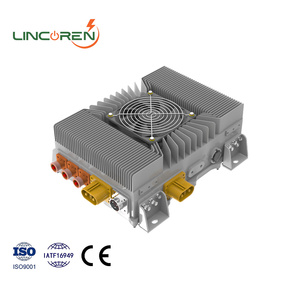
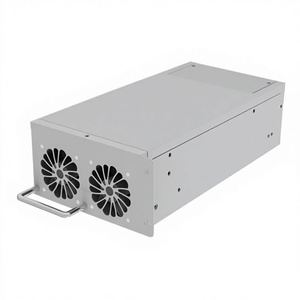
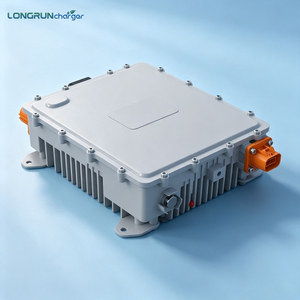
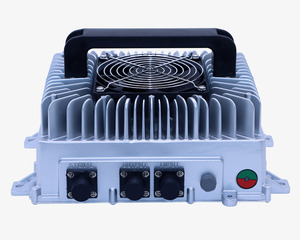
Norway's ambitious marine electrification initiatives—pioneered by zero-emission electric ferries, hybrid offshore supply ships, and autonomous aquaculture support craft along the Norwegian coastline—demand high-power DC-DC converter modules and on-board chargers (OBC). NetPower’s IP67 and IP68 sealed, liquid- and air-cooled 3.3kW to 5kW DC-DC converters act as critical auxiliary power supply units (APUs). They convert high-voltage DC traction or battery bus voltages (400V–650V) down to stable 12V, 24V, or 48V auxiliary networks powering navigation radars, dynamic positioning system (DPS) computers, and environmental sensors. Encapsulated brick modules withstand continuous mechanical vibration (MIL-STD-810G / DNV-CG-0339 compliance) and aggressive ocean salt spray corrosion.
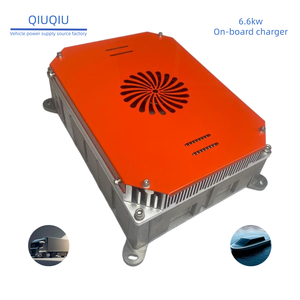
In Northern Norway's heavy mining, forestry, and construction sectors, diesel-to-electric conversion of heavy machinery requires robust power conversion hardware. NetPower’s 2-in-1 assembly systems (combining 3.3kW OBC and 1.8kW DC-DC converters) offer integrated, compact footprints that operate seamlessly in temperatures as low as -40°C. Standard off-the-shelf power modules often suffer from cold-start latch-up or cracking encapsulants at low temperatures; NetPower's custom thermally managed potting compounds and wide-temperature silicon components guarantee cold-boot startup without external pre-heating systems.
Providing seamless 5G connectivity across fjord-indented terrain requires decentralized telecom shelters powered by local hydro microgrids, solar-wind hybrids, and battery backups. NetPower’s DOSA-compliant eighth-brick, quarter-brick, and half-brick isolated converters (accepting standard 36-75V telecom inputs) feed precise, low-ripple power to sensitive digital signal processors (DSPs) and high-frequency RF power amplifiers. Conduction-cooled baseplate options allow heat dissipation through passive metal chassis walls, completely eliminating cooling fan maintenance in remote, inaccessible mountain installations.
| Performance Parameter | Standard Commercial Converters | NetPower Industrial DOSA Series (Norway Spec) |
|---|---|---|
| Operating Temperature Range | -20°C to +70°C | -40°C to +105°C (Full cold-start capability) |
| Ingress & Environmental Protection | Open Frame / IP20 Plastic Cases | IP67 / IP68 Fully Encapsulated & Thermally Conductive Potting |
| Galvanic Isolation Rating | 1000 VDC to 1500 VDC | Up to 2250 VDC / 1500 VAC Reinforced Isolation |
| Conversion Efficiency | 88% – 91% | Up to 96% (GaN/SiC Power Stage Optimization) |
| Vibration & Shock Resistance | Standard PCB Mounting | MIL-STD-810G & EN 50155 / DNV Maritime Grade |
| Control Interface & Telemetry | Analog Pin Control Only | High-Speed CAN BUS (J1939) + Analog Remote Sense & Trim |
Norway stands as Europe's foremost pioneer in electrification policies. With government mandates driving toward comprehensive zero-emission transportation, maritime operation, and industrial automation by 2030, the technical requirements imposed on power supply manufacturers have undergone a fundamental shift.
Norwegian system designers are rapidly shifting from traditional 12V/24V primary distribution architectures toward 48V, 300V, and 700V Intermediate Bus Architectures. NetPower high-density bus converters (IBC) efficiently step down high DC rail voltages directly at the point of load (POL), minimizing copper cable gauge requirements, reducing total vehicle weight, and improving system power efficiency.
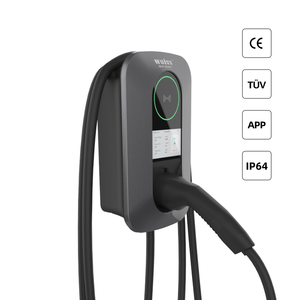
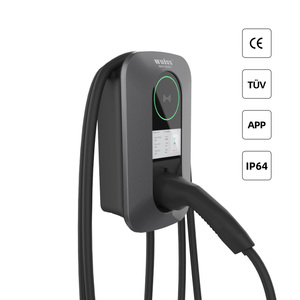
Vehicle-to-Grid (V2G) and bi-directional charging capabilities are becoming baseline requirements in Norway. NetPower’s bi-directional 3.3kW OBC and 1.8kW DC-DC integrated units allow EV battery packs to feed energy back into localized smart grids or marine auxiliary systems during peak demand periods, supporting grid stability in isolated fjord communities.
With high labor costs in Scandinavia, maintenance visits to mountain radar stations, offshore platforms, or subsea sensors carry immense financial costs. NetPower's strict adherence to Design-for-Reliability (DfR), Highly Accelerated Life Testing (HALT), and 100% automated burn-in screening guarantees field reliability over 10 to 15-year operational lifetimes.
NetPower Technologies, Inc. is a premier global designer and manufacturer of board-mounted isolated DC-DC converters, non-isolated point-of-load (POL) modules, and heavy-duty electric vehicle power conversion platforms. Founded on rigorous power electronics innovation, NetPower has delivered millions of highly reliable converter units across telecom, industrial automation, medical, railway transportation, and electric vehicle sectors worldwide.
Our state-of-the-art ISO 9001 and ISO 14001 certified manufacturing facilities feature multi-line automated surface-mount technology (SMT) lines, automated optical inspection (AOI), 3D X-ray solder inspection, dynamic burn-in chambers, and fully automated final testing suites. Every single power module shipped to Norway undergoes 100% full electrical functional testing and statistical process control (SPC) tracking to ensure complete zero-defect manufacturing consistency.
Every component batch is tracked down to the individual serial number, ensuring complete material lineage and quick compliance documentation for audit-heavy sectors.
Engineering workflows incorporate worst-case circuit analysis, derating verification, finite element thermal simulation, and HALT/HASS testing prior to volume release.
Norwegian system integrators work directly with senior NetPower power design engineers for circuit reviews, PCB layout optimization, and thermal integration advice.
Contact NetPower's technical team for full engineering datasheets, 3D CAD step files, competitive cross-reference analyses, or customized DOSA power converter samples.