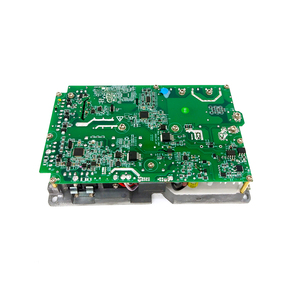
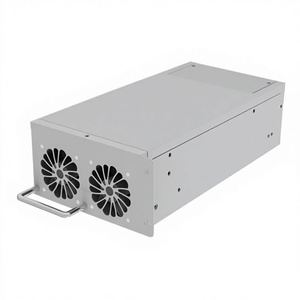
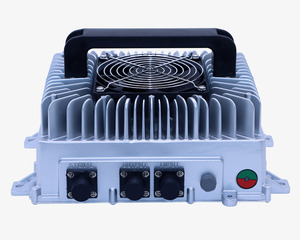
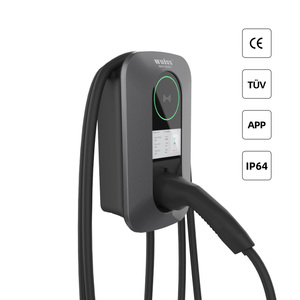
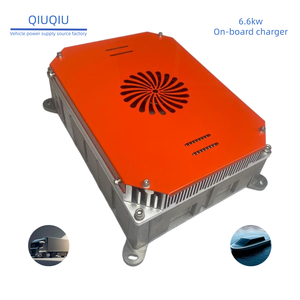
Certified On-Board Chargers (OBC) and high-density DC-DC integrated systems engineered for severe environmental duty, high thermal stress, and CAN-bus automated commercial fleets in Hungary.
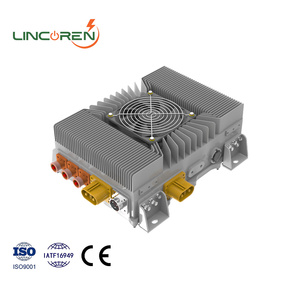
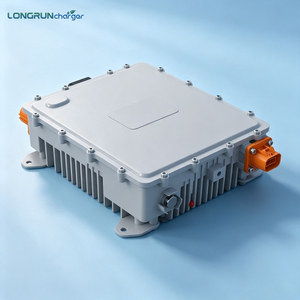
Hungary has rapidly cemented its position as the central manufacturing engine for Europe’s transition toward zero-emission transport. Driven by massive capital investments across regional automotive industrial zones—such as the emerging mega-battery production infrastructure in Debrecen, powertrain manufacturing in Győr, and commercial vehicle assembly hubs in Kecskemét and Komárom—the Hungarian e-mobility ecosystem requires tier-1 automotive components that meet rigorous European operational frameworks. Within commercial transportation, including heavy-duty electric trucks, municipal e-buses, logistics vans, and specialized agricultural machinery, the On-Board Charger (OBC) serves as the critical energy gateway. It must withstand relentless thermal cycling, fluctuating CEE grid power quality, and intense daily operation cycles.
Modern commercial fleets deployed across the Hungarian market face distinct operational challenges. Operations along key trans-European transport corridors (such as the TEN-T network intersecting Budapest) require fast AC charging turnaround, seamless grid interoperability compliant with EN 50160 power quality standards, and total protection against ambient temperatures ranging from bitter Danubian winter freezes (-25°C) to scorching summer tarmac heat (+45°C). Consequently, purchasing directors and system integrators in Hungary are pivoting away from standard consumer EV power electronics, demanding highly ruggedized 3.3kW to 22kW industrial-grade OBC solutions integrated with auxiliary high-voltage to low-voltage DC-DC converters.
Designed with wide AC input voltage tolerances (85V–265V single-phase / 380V–415V three-phase) to handle rural grid voltage dips across regional Hungarian logistics hubs without derating power delivery.
Fully encapsulated die-cast aluminum enclosures certified to IP67 and IP69K standards safeguard internal magnetic topologies against winter salt spray, pressure cleaning, and industrial dust.
Third-generation SiC MOSFET switches reduce switching losses, shrink magnetic core sizes by 40%, and achieve market-leading power conversion efficiencies exceeding 96.5%.
Achieving optimal Total Cost of Ownership (TCO) for Hungarian commercial transport operators requires OBC architectures designed for long-term component longevity and maximum volumetric power density. Our product engineering framework prioritizes modular power stages, bi-directional vehicle-to-everything (V2X/V2L) power transmission, and hybrid thermal management (liquid-cooled and advanced forced-air architectures).
Below is an in-depth breakdown of how our technical architectures solve complex vehicle-level power conversion demands:
| Architecture Parameter | 3.3kW Single-Phase Modular OBC | 6.6kW Dual-Phase / Bidirectional OBC | 22kW 3-Phase Heavy-Duty Commercial OBC | Integrated OBC + DC-DC 2-in-1 Combo |
|---|---|---|---|---|
| Nominal AC Input | 100V–240V AC (1-Phase, 50/60Hz) | 180V–264V AC (1-Phase / Split-Phase) | 380V–415V AC (3-Phase + N) | 85V–265V AC Universal Input |
| DC Output Range | 48V / 72V / 144V / 312V Nominal | 200V–450V DC / 400V–800V HV Range | 250V–850V DC Traction Battery Voltage | OBC: 200V–450V | DCDC: 13.8V / 28V DC |
| Auxiliary DC-DC Power | Optional External Module | Optional Integrated 1.2kW Submodule | Integrated 2.5kW Low-Voltage Supply | Integrated 1.8kW–3.0kW Continuous |
| Peak Power Efficiency | ≥ 95.5% | ≥ 96.2% | ≥ 96.8% (Silicon Carbide Based) | OBC ≥ 95.8% | DCDC ≥ 94.5% |
| Cooling Methodology | Sealed Air-Cooled / Conduction Plate | Liquid Cooled (Glycol/Water 50:50) | Liquid Cooled (Flow Rate ≥ 10 L/min) | Dual Air-Cooled & Liquid Cooled Options |
| Control Interface | CAN 2.0B / CANopen Protocol | SAE J1939 / UDS Diagnostics | SAE J1939 / ISO 15118 Ready | Isolated CAN 2.0B with Automotive Baud |
| Target Application in Hungary | E-Motorcycles, Airport Tug Vehicles, AGVs | Last-Mile Logistics Vans, Municipal Sprinters | Heavy Duty E-Buses, Regional E-Trucks | Industrial Forklifts, Yard Tractors, Sweepers |
From high-density warehouse hubs in Pest County to heavy municipal transport networks in Budapest, our OBC power conversion systems are tailored to exact localized duty cycles.
Municipal bus operators in cities like Budapest, Miskolc, and Szeged are systematically electrifying their transit routes. Our 6.6kW and 22kW liquid-cooled OBC units integrate smoothly with high-voltage traction batteries (up to 750V DC). Built-in support for SAE J1939 CAN protocol ensures real-time diagnostic reporting to fleet telematics systems, protecting against unexpected downtime and maintaining strict passenger transit schedules.
With Hungary serving as a primary logistics crossroads for Central and Eastern Europe (CEE), courier fleets operate high-mileage daily routes. Our 3.3kW to 6.6kW OBC modules with combined 1.8kW DC-DC auxiliary converters powering 12V/24V vehicle electronics reduce component weight and chassis space, allowing logistics vehicle manufacturers to maximize cargo volume while guaranteeing reliable overnight AC charging.
Logistics facilities around the M0 ring road require zero-emission material handling equipment capable of multi-shift operation. Our compact, IP67 air-cooled 3.3kW OBC chargers are optimized for 48V, 72V, and 96V LiFePO4 battery chemistry. Featuring programmable charging curves and fast-charge capabilities, these modules keep autonomous guided vehicles (AGVs) and heavy forklifts running continuously with minimal maintenance.
The agricultural heartlands of Hungary’s Great Plain (Alföld) present rigorous demands: heavy dust, mud, continuous mechanical shock, and extreme vibration. Our ruggedized 2-in-1 integrated OBC charger assemblies are sealed inside shock-tested cast housings. Designed to meet ISO 16750 standards for commercial road vehicles, they ensure uninterrupted performance on electric utility tractors and vineyard haulers.
Addressing key technical, regulatory, and logistics queries for engineering teams purchasing commercial OBC solutions in Hungary and the wider EU region.
All of our commercial OBC platforms are fully certified to ECE R10 Rev.6 (EMC compliance for automotive components), CE requirements, and IEC 61851-1 electric vehicle conductive charging standards. They incorporate internal EMI filtering to pass strict Class B limits, protecting surrounding vehicle sensors from harmonic interference.
Yes. Our units feature programmable multi-stage charging algorithms configurable via CAN bus software tools. Whether your commercial vehicle utilizes Lithium Iron Phosphate (LFP), Nickel Manganese Cobalt (NCM), or Lithium Titanate (LTO) cell chemistry, custom voltage/current thresholds and CC/CV profiles can be flashed at the factory or updated over-the-air (OTA).
Our 3.3kW OBC variants offer flexible sealed natural convection, forced air, or cold-plate conduction cooling ideal for compact chassis designs. The higher-power 6.6kW and 22kW models are optimized for liquid cooling using standard automotive 50/50 ethylene glycol-water mixtures, maintaining low thermal impedance even under continuous peak load.
By combining an AC-to-DC On-Board Charger and a high-voltage to low-voltage DC-DC converter into a unified IP67 housing, vehicle engineers eliminate external HV cabling, reduce total weight by up to 30%, free up critical chassis space, and significantly lower system integration costs during vehicle assembly.
Our chargers support standard CAN 2.0B operating at 250kbps or 500kbps, as well as customized SAE J1939 messages tailored for commercial truck and bus architectures. Complete communication matrices (DBC files) and software development guides are provided to simplify Vehicle Control Unit (VCU) integration.
Evaluation samples and engineering prototype units are typically dispatched within 2 to 3 weeks. Mass production volumes are delivered via optimized logistics channels to Hungary, complete with full material traceability, IATF 16949 quality documentation, and direct engineering support from our application design team.
Building high-reliability power electronics demands more than standard circuit assembly—it requires deep automotive engineering heritage, robust testing methodologies, and a commitment to field reliability. Our power module platforms are engineered from the ground up to solve complex power conversion challenges across commercial, industrial, telecom, and e-mobility applications globally.
Every platform undergoes extensive Highly Accelerated Life Testing (HALT), Highly Accelerated Stress Screening (HASS), thermal shock (-40°C to +125°C), and 100% automated full-load burn-in testing prior to shipment.
Our dedicated application engineering staff partners directly with your design teams, offering guidance on electrical schematics, thermal dissipation modeling, EMI compliance, and custom mechanical bracket design.
Operating under strict automotive quality control frameworks, guaranteeing total material traceability, rigorous SPC production monitoring, and long-term product availability commitments for OEM vehicle lines.
Need customized OBC voltage outputs, thermal simulation assistance, or evaluation sample units for your vehicle prototype testing? Speak directly with our senior power electronics engineers today.
Contact Us