
As Denmark accelerates toward its aggressive decarbonization targets—aiming for a 70% reduction in greenhouse gas emissions by 2030 and a complete phase-out of fossil-fuel vehicles—the demand for highly reliable, thermally resilient, and grid-compliant Onboard Chargers (OBC) has reached an unprecedented high. Danish Original Equipment Manufacturers (OEMs), e-fleet operators, electric boat builders, and industrial vehicle retrofitters require power conversion hardware capable of withstanding harsh North Sea marine humidity, sub-zero Scandinavian winter temperatures, and stringent IEC/EN safety standards. This document delivers a technical white-paper analysis of top-tier Chinese OBC manufacturing capabilities customized for the Danish B2B market.
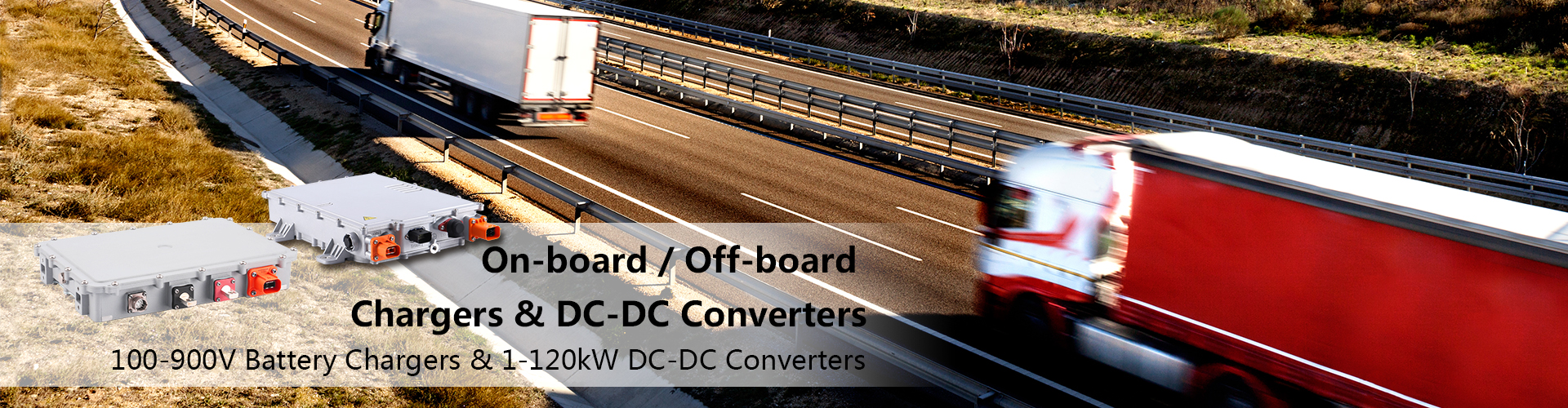
Explore our qualified lineup of 3.3kW to 6.6kW On-Board Chargers, DCDC integrated 2-in-1 modules, and industrial rack-mounted power units customized for European deployment.
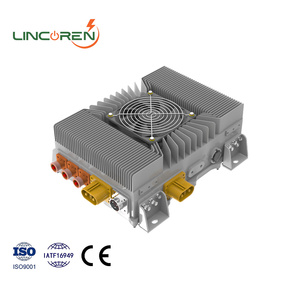
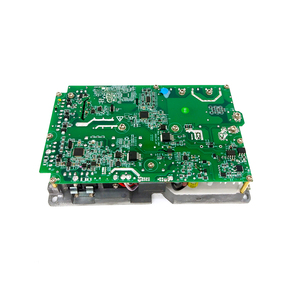
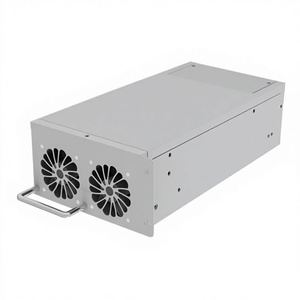
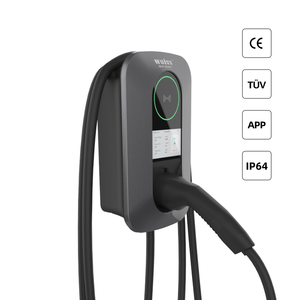
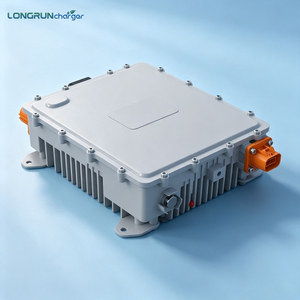
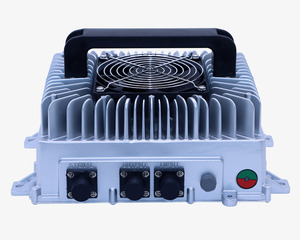
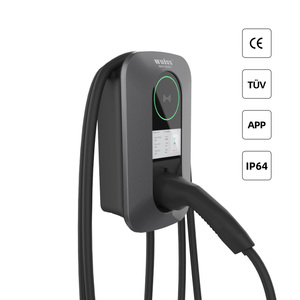
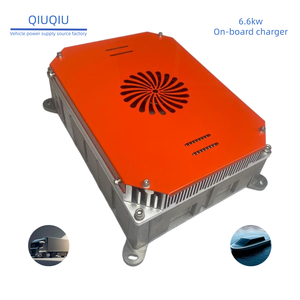
Understanding the unique operational environment of Danish transport, maritime, and municipal infrastructure is essential for specifying the correct OBC topology.
In logistics hubs across Copenhagen, Aarhus, and Odense, zero-emission commercial vans and light duty trucks rely on continuous daily fast AC charging. Our IP67-rated 3.3kW and 6.6kW OBC units feature active Power Factor Correction (PFC > 0.99) and cold-start thermal algorithms designed to charge efficiently even in sub-zero winter temperatures without degrading battery chemistry.
Denmark leads the global transition to green maritime vessels, workboats, and electric ferries operating along the Baltic coastline. Our corrosion-resistant, potted aluminum-housed Onboard Chargers provide robust galvanic isolation (up to 2250 VDC) to prevent salt-spray degradation and electrolytic hull corrosion when tethered to port infrastructure.
Danish agricultural automation and construction projects demand ruggedized power electronics. Featuring liquid-cooled and conduction-cooled 2-in-1 OBC + DC/DC combinations, our hardware tolerates continuous ISO 16750 mechanical shock, heavy mud exposure, and high-vibration off-road profiles.
Standard silicon-based power switches suffer from high switching losses and thermal limits under continuous full-power charging cycles. Our manufacturer platforms incorporate third-generation Silicon Carbide (SiC) MOSFETs within the active PFC and LLC resonant converter stages.
This semiconductor elevation yields critical advantages for European buyers:
Furthermore, our integrated 2-in-1 assemblies (OBC + High-Voltage to Low-Voltage DC-DC Converter) simplify vehicle wiring harnesses, lower overall assembly weight, and minimize EMI noise compliance hurdles for European CE/EMC certification.
Evaluate key engineering specifications to understand why Danish OEMs are upgrading their power conversion supply chains.
| Performance Metric | Legacy Off-Board / standard Chargers | Tier-1 Chinese Integrated OBC (Our Lineup) | Danish Market Advantage |
|---|---|---|---|
| Power Density | 1.2 - 1.8 kW/L | 2.8 - 3.5 kW/L (SiC Topology) | Maximizes onboard battery space & vehicle payload capacity. |
| Ingress Protection | IP54 or IP65 open-vented | Fully Sealed IP67 / IP68 Enclosure | Complete resistance to North Sea salt mist & road spray. |
| Grid Voltage Flexibility | Single-phase fixed 230V | Wide 85V - 265V AC Auto-Sensing | Seamless operation on Danish single & three-phase grid feeds. |
| Communication Protocol | Basic PWM / Analog control | ISO 11898 CAN 2.0B / ISO 15118 V2G | Direct BMS telemetry handshaking & dynamic smart grid charging. |
| Thermal Management | External fan-forced air | Conduction / Liquid Cooled Channels | Silent operation, maintenance-free, sub-zero cold start (-40°C). |

Backed by decades of switch-mode power innovation, our manufacturing ecosystem operates under strict ISO 9001 and IATF 16949 quality management systems. Every product family published undergoes intense Design-for-Reliability (DfR) evaluations before mass-market release.
Addressing critical certification, regulatory, thermal, and supply chain questions for importing Chinese OBC units to Denmark.
Yes. All chargers in our recommended catalog comply with European Union safety directives (CE Mark), including EN 61851-1 (Electric vehicle conductive charging systems) and EN 55011 / EN 61000 Class B electromagnetic compatibility standards. Active PFC ensures low harmonic distortion (THD < 5%) on the Danish grid.
Liquid-cooled OBCs integrate directly into the vehicle's thermal loop, utilizing glycol mixtures to maintain ideal operational temperatures down to -40°C. Air-cooled and conduction-cooled units feature automated low-temperature thermal derating and cold-start pre-heating protocols to prevent battery stress in Nordic climates.
Absolutely. Our R&D engineering team provides custom firmware flashing for CAN 2.0B protocols, including J1939 and custom baud rates (250kbps / 500kbps). We assist Danish engineers with CAN dictionary mapping, DBC files, and remote debugging during sample evaluation.
Standard catalog evaluation samples ship within 5 to 7 business days via international air express. Semi-custom prototypes featuring tailored connector pinouts or custom enclosure brackets generally require 3 to 4 weeks, backed by dedicated technical support.
Yes. Programmable output curves allow precise matching to Lithium Iron Phosphate (LiFePO4), Nickel Manganese Cobalt (NCM), Lithium Titanate (LTO), and traditional lead-acid voltage profiles spanning 48V to 650V nominal battery packs.
We provide standard 24 to 36-month warranties on automotive-grade OBC series, backed by documented MTBF calculations (>150,000 hours) and direct engineer-to-engineer technical consultation for qualification audit support.
Accelerate your e-mobility platform's market entry in Denmark. Contact our power application specialists today to request technical datasheets, CAD 3D models, or evaluation samples.
Get a Quote