
As Istanbul solidifies its position as the premier automotive manufacturing and commercial fleet electrification corridor connecting Europe and Asia, Tier-1 automotive integrators, municipal transit operators, and EV conversion factories require robust, CE-certified On-Board Chargers (OBC) and integrated DC-DC converters. This guide analyzes technological parameters, compliance protocols under EU/Turkish standards, localized grid resilience, and supply chain strategies for 3.3kW to 22kW charging modules.
Explore our benchmarked, field-proven OBC modules engineered for industrial vehicles, electric buses, light commercial fleets (LCV), and urban e-mobility platforms in the Marmara industrial region.
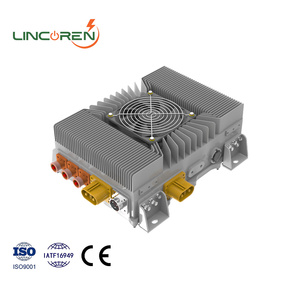
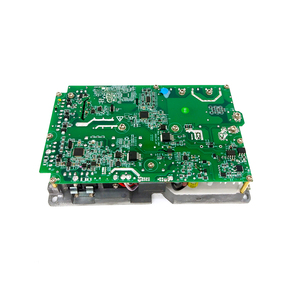
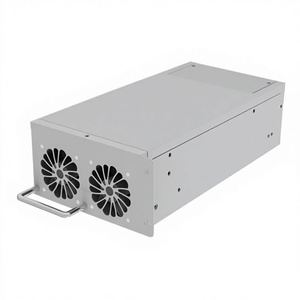
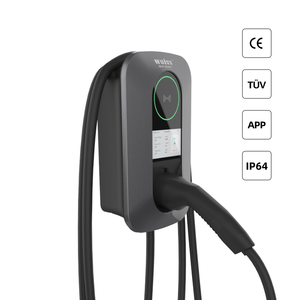
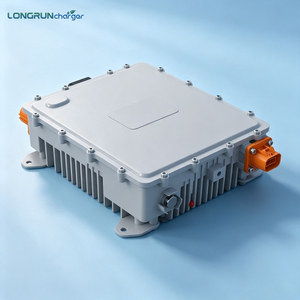
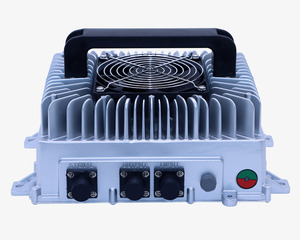
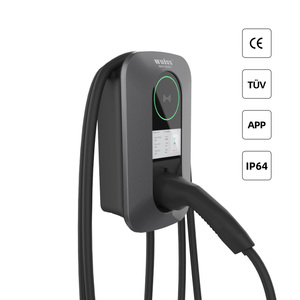
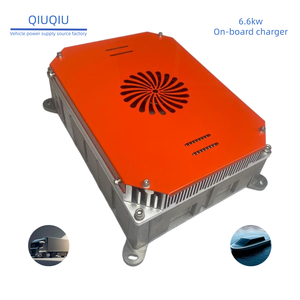
Evaluate hardware topologies, thermal management efficiency, and voltage compatibility designed for Turkish commercial vehicles and industrial equipment.
| Specification Parameter | 3.3kW Standard Air-Cooled | 3.3kW Combo (OBC + DC-DC) | 6.6kW Liquid-Cooled Heavy Duty | Compliance / Standards |
|---|---|---|---|---|
| Input AC Voltage Range | 85 VAC – 265 VAC (Universal) | 85 VAC – 265 VAC (Universal) | 180 VAC – 460 VAC (3-Phase Ready) | CE Certified EN 61851-1 |
| Nominal Output DC Range | 48V / 72V / 144V / 312V | 48V / 72V / 144V + 13.8V DCDC | 200V – 450V DC / 600V Max | IEC 60664-1 Insulation |
| Power Factor (PFC) | ≥ 0.99 @ Full Load | ≥ 0.99 @ Full Load | ≥ 0.995 @ Rated Grid Power | EN 61000-3-2 Harmonics |
| Thermal Management | Forced Air / Natural Conduction | Integrated Heat Sink Air/Liquid | Liquid Cooled (Glycol/Water mix) | ISO 16750-4 Thermal Shock |
| Ingress Protection | IP67 Sealed Aluminium | IP67 Sealed Unit | IP6K9K High-Pressure Washdown | DIN 40050-9 Standards |
| Communication Protocol | CAN 2.0B (250/500 kbps) | Dual CAN 2.0B (BMS + VCU) | SAE J1939 / CANopen / Auto-Baud | ISO 11898 Physical Layer |
Integrating high-frequency Silicon Carbide (SiC) MOSFET switches into on-board charging topologies allows suppliers to achieve up to 96% energy conversion efficiency while reducing heat dissipation load. In high-ambient temperature operating zones like Tuzla Shipyards, Dilovası, or Gebze, liquid-cooled or ruggedized IP67 sealed air-cooled architectures significantly increase mean time between failures (MTBF > 150,000 hours).
From municipal transit electrification initiatives to maritime conversions along the Bosphorus, customized OBC configurations drive localized performance.
Istanbul’s rigorous urban transit cycles require reliable 3.3kW and 6.6kW on-board chargers capable of withstanding constant stop-and-go battery top-ups. Our CE-certified chargers interface seamlessly via CAN 2.0B with local Vehicle Control Units (VCU), maintaining stable power conversion under 230V single-phase or 400V three-phase depot charging systems.
Marine electrification projects in the Tuzla and Golden Horn shipyards demand extreme resistance to salt-spray corrosion and moisture. Featuring IP67/IP68 die-cast enclosures and conformal-coated internal boards, our OBC units guarantee long-term operational integrity in marine-grade 48V to 144V DC battery packs.
Intralogistics hubs across the Marmara region utilize custom 48V/72V 3.3kW rack-mounted and embedded OBC chargers. Wide AC input ranges (85V–265V) accommodate local grid fluctuations in heavy industrial zones, ensuring uninterrupted charging cycles for LiFePO4 material handling fleets.
Key technology shifts, regulatory standards, and supply chain dynamics influencing procurement decisions across Turkish OEMs and aftermarket integrators.
Turkish EV assemblers are increasingly phasing out standalone OBC and DC-DC converters in favor of integrated 2-in-1 combo assemblies (e.g., 3.3kW OBC + 1.8kW DCDC). This reduces powertrain footprint by up to 35% and simplifies harness routing.
With Turkey’s customs union with the EU, local customs authorities (TSE) rigorously enforce CE compliance under the Low Voltage Directive (LVD 2014/35/EU) and Electromagnetic Compatibility Directive (EMC 2014/30/EU). Sourcing fully certified units prevents port entry delays.
Demand for Vehicle-to-Load (V2L) bidirectional OBCs is surging in utility service fleets and commercial vehicles operating in rural or off-grid construction sites across Anatolia, enabling vehicles to act as mobile AC power generators.
Operating environments in Turkey span from hot summer coastal zones to freezing eastern provinces. OBCs equipped with intelligent thermal derating algorithms prevent catastrophic thermal shutdown while maximizing charge current.
From rapid prototyping to volume production, our power architecture guarantees uncompromised field performance.
Every charger module undergoes 100% automated optical inspection (AOI), full-load burn-in screening, and end-of-line (EOL) electrical safety testing to eliminate field failures before shipment to Turkish ports.
Our power electronics team provides customized CAN baud rates, diagnostic trouble code (DTC) mapping, and specific charging curves tailored to local battery management systems (BMS) including LiFePO4, NCM, and LTO chemistries.
With direct sales support and established shipping routes to Ambarlı and Haydarpaşa ports, we streamline customs documentation, CE certification dossiers, and ongoing field application engineering assistance.
Clear technical and regulatory answers regarding import compliance, grid compatibility, and operational safety.
The rapid transformation of Turkey's commercial vehicle sector—led by municipal fleet conversions, light commercial vehicle (LCV) manufacturing in Kocaeli and Bursa, and urban last-mile delivery growth in Istanbul—has highlighted the critical importance of selecting reliable power electronics. An On-Board Charger (OBC) serves as the primary gateway between the utility AC power grid and the high-voltage direct current (DC) traction battery pack. Designing or sourcing an OBC unit for operation within Turkey and broader Eurasian markets requires a deep technical understanding of power electronics topology, thermal limits, regulatory compliance, and grid interconnectivity.
Modern automotive-grade on-board chargers operate in two primary conversion stages: an active Power Factor Correction (PFC) front-end stage followed by an isolated DC-DC converter stage.
For factory procurement officers and importers in Istanbul, regulatory compliance is non-negotiable. Importing electrical sub-assemblies into Turkey requires passing inspections by the Turkish Standards Institution (TSE), which mirrors the European Union framework.
Key certification requirements include:
Thermal dissipation is the single greatest factor governing the lifespan of power semiconductors and magnetic components in an OBC. In the Istanbul industrial zone, ambient temperatures can fluctuate from winter freezing to high summer heat, coupled with elevated humidity along the Bosphorus.
Forced-Air Cooling: Ideal for lighter vehicles, utility carts, and electric motorcycles where space permits external heat sinks with waterproof fans. Air cooling reduces system cost and eliminates liquid plumbing complexity, provided the unit features IP67 potted housing to guard against atmospheric humidity and dirt.
Liquid Cooling: Essential for high-power density applications (6.6kW to 22kW) or fully enclosed engine compartments in electric buses and heavy machinery. Utilizing a water-glycol coolant loop, liquid-cooled OBC modules maintain junction temperatures below 105°C even during maximum power delivery at 45°C ambient temperatures, ensuring constant power output without premature thermal derating.
To optimize space and weight in modern electric vehicle platforms, leading suppliers offer integrated 2-in-1 assemblies that combine a 3.3kW OBC with a 1.8kW or 2.0kW low-voltage DC-DC converter inside a single aluminum housing.
This integrated architecture shares the high-voltage DC bus, control microcontroller, cooling baseplate, and CAN communication bus. The result is a 30% reduction in total weight, elimination of extra high-voltage cabling and connectors, and a lower total bill of materials (BOM) cost for Turkish EV manufacturers.
When evaluating vendor factories for onboard chargers in the Istanbul market, purchasing directors should verify:
Partner with an established power conversion manufacturer. Contact our application engineering team today to request datasheets, CAD models, CE compliance certificates, and customized pricing for your vehicle production line in Turkey.