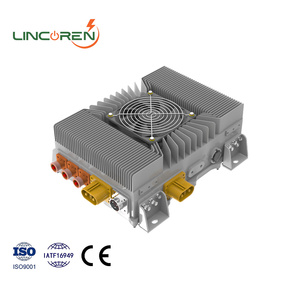
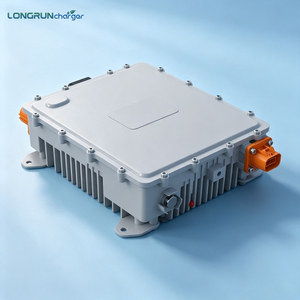
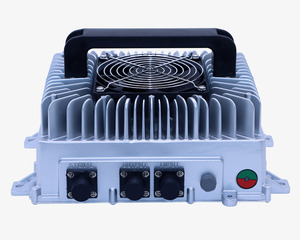
Premium IP67 Waterproof & Air-Cooled Bidirectional 3.3 KW OBC & 1.8 KW DCDC Converter
3.3kW OBC + 1.8kW DC-DC 2-in-1
IP67 Sealed Housing / Air-Cooled

Explore our field-proven range of isolated DC-DC converters, bidirectional units, and IP67 vehicle-grade modules engineered for demanding UK industrial and e-Mobility platforms.
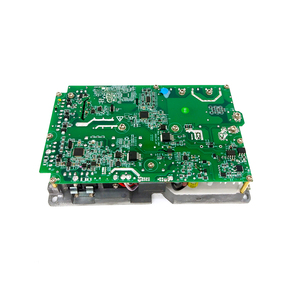
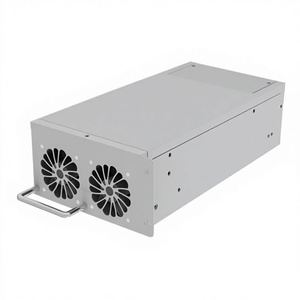
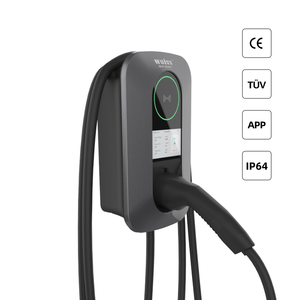
As the United Kingdom accelerates towards its stringent Net Zero 2050 targets and expands its domestic advanced manufacturing footprint, the demand for ultra-reliable, high-density power conversion architectures has reached an unprecedented peak. System design engineers across the Midlands industrial belt, the Thames Valley tech corridor, and Scottish renewable hubs face growing challenges: power envelopes are shrinking, thermal dissipation demands are rising, and strict compliance with UK conformity standards (such as UKCA, BS EN 61000 EMC, and BS EN 62368-1 safety standards) is mandatory.
Board-mounted isolated DC-DC converters represent the foundational backbone of distributed power architectures (DPA) and intermediate bus architectures (IBA). By providing robust galvanic isolation between high-voltage primary supply buses and sensitive secondary micro-controllers, FPGAs, and communication buses, these compact bricks protect mission-critical payloads against ground loops, high-voltage transients, and common-mode electromagnetic interference (EMI).
Information Gain Insight: Unlike standard off-the-shelf power modules that compromise on thermal margin under continuous loading, advanced isolated DC-DC modules engineered by leading global manufacturers integrate planar transformer topologies and synchronous rectification to sustain up to 96% energy conversion efficiency within standard DOSA brick footprints.
Reinforced isolation up to 2250VDC / 1500VAC ensuring absolute noise decoupling and safety compliance for industrial controls and UK grid ties.
Drop-in compatibility across 1/32nd, 1/16th, 1/8th, quarter, half, and full brick footprints to eliminate single-source supply chain bottlenecks for UK procurement.
Conduction-cooled baseplates and potting technologies designed for wide operating temperature ranges (-40°C to +105°C) in harsh UK environments.
Achieving ultra-high power density in board-mounted isolated converters requires a fundamental departure from legacy hard-switched forward topologies. Modern industrial applications demand high-frequency resonant and soft-switching topologies that minimize switching losses while maintaining tight output voltage regulation under dynamic step loads.
UK equipment builders often design hardware meant for deployment across disparate voltage networks—ranging from 12V/24V/48V industrial battery banks to 110V railway lines and high-voltage DC distribution in green data centers. Standard isolated power converters feature wide input windows, including 2:1 (e.g., 18–36V, 36–75V), ultra-wide 4:1 (9–36V, 18–75V), and multi-rail 10:1 (16–160V) ranges tailored specifically for railway rolling stock complying with BS EN 50155.
Heat dissipation remains the single greatest bottleneck in micro-footprint power design. Encapsulated brick converters utilize thermosetting polymer potting compounds with elevated thermal conductivity (>1.5 W/m·K). This structural filling transfers heat evenly from planar transformer windings and synchronous MOSFET switches directly to an integrated aluminum baseplate. As a result, systems achieve higher derating thresholds under natural convection or forced airflow cooling regimes typical of sealed industrial enclosures.
As a dedicated global manufacturer supplying the United Kingdom market, our engineering solutions directly solve deployment challenges faced by Tier-1 OEMs, system integrators, and research facilities across Great Britain.
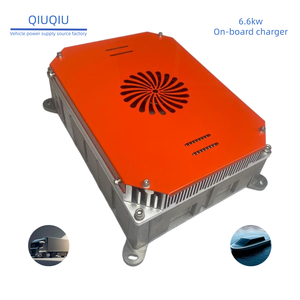
With the UK government mandating zero-emission public transport and commercial fleets, our IP67 liquid- and air-cooled 3.3kW/6.6kW On-Board Chargers (OBC) and auxiliary 1.8kW DC-DC converters provide vital step-down conversion from 400V/800V traction batteries to 12V/24V chassis control electronics in electric buses (manufactured in Scotland and Northern Ireland) and urban delivery vans.
The UK leads Europe in offshore wind generation across the North Sea. Our high-isolation (2250VDC) quarter-brick and half-brick isolated DC-DC modules power remote terminal units (RTUs), SCADA monitoring nodes, and turbine pitch controls operating in corrosive marine environments where un-scheduled maintenance costs are prohibitive.
Modernizing train lines across Network Rail demands compliance with severe electrical surges and mechanical vibration. Our 16-160V ultra-wide input isolated converters power passenger Wi-Fi gateways, signaling computers, and cab instrumentation with built-in hold-up circuit optimization.
Supporting the dense cloud computing infrastructure around Slough and London, our Non-Isolated Point-of-Load (POL) and High-Density Intermediate Bus Converters (IBC) deliver high current step-down to AI accelerators, GPUs, and network switches with minimal board area consumption.
Procurement directors and chief technology officers in the UK are navigating a dynamic regulatory landscape post-Brexit. Power supply vendors must provide clear documentation and compliance assurances to facilitate seamless market access:
Dual compliance assurance certifying that all converter safety parameters align with UK Electromagnetic Compatibility Regulations 2016 and Electrical Equipment (Safety) Regulations 2016.
Strict compliance with environmental standards, ensuring zero lead, mercury, or restricted phthalates are used in potting materials or lead-free soldering processes.
Full lot-level material traceability and ISO 9001 certified quality control, shielding UK buyers against counterfeit components and unexpected field failures.
With millions of isolated power modules operating reliably across demanding global environments, our organization combines rigorous design-for-reliability principles with unmatched manufacturing flexibility. Whether your engineering team requires a standard DOSA footprint quarter-brick or a fully customized liquid-cooled e-Mobility converter, our team provides direct engineering support from concept stage through to volume manufacturing release.
Field-Proven Quality Verification: Every single power converter undergoes automated optical inspection (AOI), 100% full-load burn-in screening, and HASS (Highly Accelerated Stress Screening) testing to guarantee zero-defect delivery to UK manufacturing facilities.
Our engineering design tools include thermal finite element analysis (FEA), worst-case circuit analysis (WCCA), and automated test suites that allow us to rapid-prototype semi-custom modifications—such as custom pin lengths, alternative output voltage trimming, or specialized CAN bus telemetry protocols—within shortened development timelines.
Answers to common technical, regulatory, and logistics queries raised by UK power design engineers and procurement teams:
All our board-mounted isolated DC-DC converters and vehicle chargers undergo comprehensive electromagnetic compatibility (EMC) and low-voltage electrical safety testing according to BS EN standards. Declaration of Conformity certificates for UKCA and CE markings ship standard with complete technical documentation packages.
Yes. In addition to wide standard input ranges (e.g., 9-36V, 18-75V, 16-160V), our engineering team offers semi-custom voltage trimming, modified pinout layouts, and specific output voltage settings (such as 3.3V, 5V, 12V, 15V, 24V, 28V, or 48V) to meet exact system specs with minimal NRE costs.
For basic functional isolation, 1500VDC isolation is standard. For applications involving high-voltage battery systems, industrial grids, or railway equipment, we provide reinforced isolation options up to 2250VDC / 1500VAC, meeting safety standards BS EN 62368-1 and IEC 60950-1.
Engineering evaluation samples are typically dispatched from stock within 3–5 working days to any UK business address. Standard production runs ship within 4–6 weeks, supported by buffer stocking agreements for key UK OEM production lines.
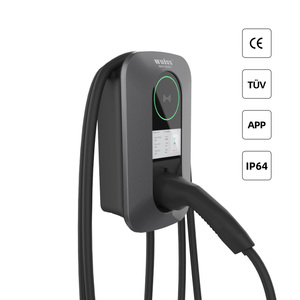
Absolutely. Our integrated 3.3kW/6.6kW On-Board Chargers and DC-DC converters feature programmable CAN 2.0B communication interfaces that integrate smoothly with UK EV battery management systems (BMS) and standard charging station protocols compliant with BS EN 61851.
Consult directly with our experienced power application engineers to shortlist the optimal isolated DC-DC converter brick, request CAD files, or discuss custom power supply development.