
Explore our automotive-grade 3.3kW to 5kW+ on-board chargers (OBC) and DC-DC converters engineered for high ambient temperatures, dust resistance, and demanding duty cycles across Egypt.
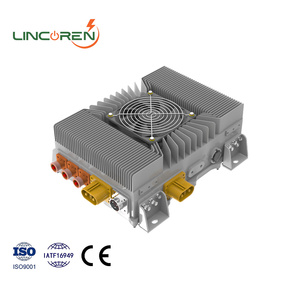
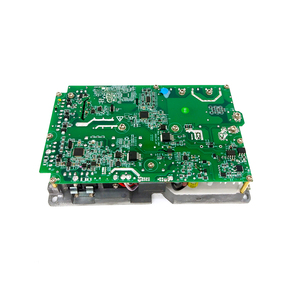
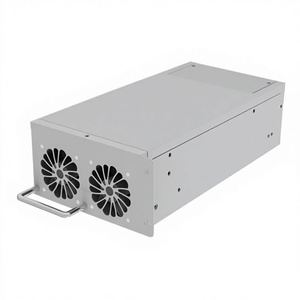
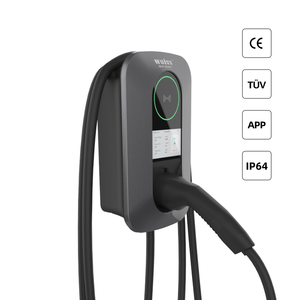
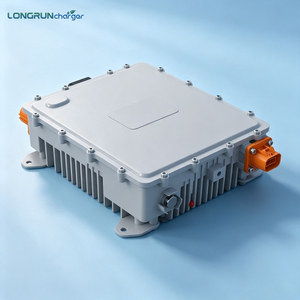
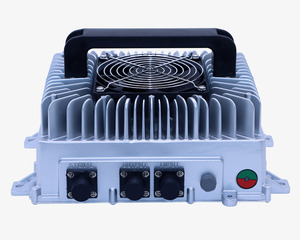
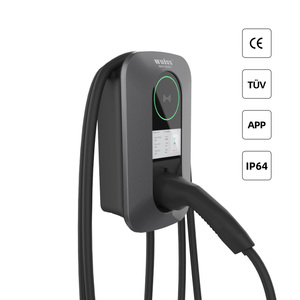
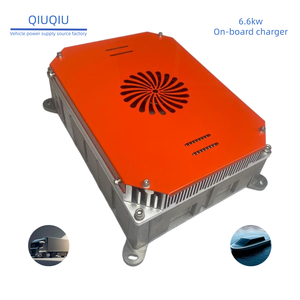
As the Arab Republic of Egypt accelerates its nationwide electrification strategy under Egypt Vision 2030, the demand for automotive-grade, high-reliability 5kW EV On-Board Converters (OBCs) and DC-DC converters has shifted from a niche commercial requirement to a core industrial imperative. Driven by government mandates to localize electric vehicle manufacturing, upgrade Cairo and Alexandria public transit fleets, and establish the Suez Canal Economic Zone (SCZone) as a regional EV hub, vehicle OEMs and fleet operators require conversion hardware capable of enduring North Africa's uniquely challenging environment.
An On-Board Converter (OBC) and auxiliary DC-DC system serves as the electrochemical bridge between the AC utility grid, the high-voltage (HV) traction battery, and the low-voltage (LV) vehicle electronics. In a 5kW architecture, power density, thermal dissipation efficiency, and electromagnetic compatibility (EMC) are critical. This whitepaper provides engineering executives, fleet procurement managers, and system integrators with a comprehensive technical framework for evaluating, specifying, and sourcing 5kW EV on-board converters manufactured specifically to withstand the operational realities of the Egyptian market.
Key Engineering Insight: Operating electric vehicles in Egypt demands converters engineered for extreme ambient heat (+50°C summer road surface temperatures), severe particulate ingress (fine silica dust), and significant AC voltage sags common in expanding grid infrastructures.
Tolerates utility fluctuations from 85VAC to 265VAC, ensuring uninterrupted charging even during severe regional grid brownouts.
Fully encapsulated die-cast aluminum enclosures prevent fine desert particulate contamination and moisture ingress under pressure.
Utilizes wide-bandgap SiC MOSFETs to achieve switching frequencies above 150kHz, yielding 96.5% efficiency and minimal heat dissipation.
Modern 5kW EV on-board converters must achieve high power density ($>2.5 \text{ kW/L}$) without compromising thermal safety margins. Traditional silicon IGBT-based converters suffer from high switching losses, requiring bulky heatsinks and heavy liquid cooling loops that add unnecessary mass to light commercial vehicles, electric buses, and 3-wheeler tuk-tuk conversions.
Leading 5kW OBC manufacturing processes incorporate a two-stage power conversion topology:
In regions such as Aswan, Luxor, and the Western Desert industrial zones, ambient air temperatures frequently exceed +45°C, with enclosed engine compartment temperatures surpassing +70°C. Standard converters trigger thermal shutdown under these conditions, disrupting transport schedules. Advanced 5kW converters manufactured for Egypt feature dynamic algorithmic thermal derating:
| Operating Ambient Temp (°C) | Cooling Mechanism | Continuous Power Output | Thermal Efficiency Control |
|---|---|---|---|
| -40°C to +50°C | Forced Air / Liquid (Glycol 50/50) | 5,000 W (100% Full Load) | Nominal ZVS Switching Mode |
| +50°C to +65°C | Liquid Cooled (60°C Inlet) | 4,200 W (84% Derating) | Active Duty Cycle Optimization |
| +65°C to +85°C | Integrated Heat Sink conduction | 2,500 W (50% Emergency Mode) | Overtemperature Foldback Protection |
Our engineering team provides direct OEM/ODM customization, CAN bus database integration, and technical sample evaluation for Egyptian vehicle manufacturers and conversion facilities.
Contact UsSelecting the right 5kW on-board converter or integrated 2-in-1 combo (OBC + DC-DC) depends heavily on the specific duty cycle and vehicle classification. Below are the primary deployment vectors across Egypt:
Egypt's massive public infrastructure investments in BRT systems and electric feeder buses demand heavy-duty, continuous-duty 5kW to 6.6kW auxiliary converters. These converters step down high-voltage battery power (typically 300V-600V DC) to a stable 12V/24V DC bus to supply power steering pumps, air-conditioning compressors, pneumatic brake valves, and passenger ticket validation terminals.
With the rapid growth of e-commerce across Cairo, Alexandria, and Giza, urban delivery fleets are rapidly electrifying. 5kW single-phase on-board converters allow operators to recharge 72V to 144V LiFePO4 battery packs directly from standard commercial AC wall sockets overnight without requiring expensive, dedicated DC fast-charging infrastructure at every micro-depot.
Under national initiatives to modernize urban micro-mobility, low-cost, ultra-durable integrated 3.3kW to 5kW chargers with built-in DC-DC converters are replacing noisy internal combustion engines. Highly integrated 2-in-1 units reduce wiring harness complexity, save limited chassis space, and feature IP67 sealing against flooded streets during Alexandria's winter rain surges.
In Egypt's phosphate mines, stone quarries, and agricultural processing hubs along the Nile Delta, heavy industrial electric forklifts and utility vehicles demand ruggedized power supplies. Converts installed in these environments incorporate reinforced galvanic isolation (2250 VDC) and anti-vibration potting to endure constant shock loads.
Understanding the regulatory environment and industrial policy in Egypt is essential for procurement managers and engineering directors sourcing EV power electronics:
To assist power design engineers in selecting the exact module for their powertrain architecture, the following matrix compares key operational parameters across standard product classes:
| Technical Parameter | 3.3kW Air-Cooled OBC | 5kW Heavy-Duty OBC | 5kW OBC + 1.8kW DC-DC Combo |
|---|---|---|---|
| Nominal Input Voltage | 110V / 220V AC (Auto-ranging) | 220V AC Single Phase | 85V – 265V AC Universal |
| Output DC Voltage Range | 48V – 150V DC | 200V – 450V DC | 200V – 450V (HV) / 13.8V (LV) |
| Power Factor (Full Load) | ≥ 0.98 | ≥ 0.99 | ≥ 0.995 |
| Galvanic Isolation | 1500 VDC Input-Output | 2250 VDC Input-Output | 3000 VDC Input-Output |
| Communication Protocol | CAN 2.0B / 250kbps | CAN 2.0B / J1939 | Automotive Ethernet / CAN 2.0B |
| Ingress Protection | IP65 | IP67 | IP67 / IP69K Sealed |
| Operating Temp Range | -30°C to +70°C | -40°C to +85°C | -40°C to +105°C (Automotive) |
When procuring power electronics for critical automotive applications, manufacturer credibility and quality control processes are paramount. Our factory production facilities adhere to rigorous international automotive quality management frameworks:
Every 5kW EV on-board converter is assembled in cleanroom environments utilizing SMT automated optical inspection (AOI), 3D X-ray solder joint verification, and robotic conformal coating applications. This guarantees that internal PCBs are completely immune to atmospheric moisture, conductive dust particles, and salt-spray oxidation in coastal cities like Alexandria and Port Said.
To eliminate infant mortality in high-power conversion modules, 100% of manufactured units undergo dynamic high-temperature burn-in testing under full electrical load for 4 to 8 hours. Thermal cycling tests (-40°C to +85°C with rapid ramp rates) ensure solder joint integrity across years of field operation.
Each converter module is assigned a unique laser-etched matrix code tracking key semiconductor component batches, magnetic core origins, testing logs, and final inspection sign-offs. Full RoHS, REACH, and CE compliance documentation is supplied with every sample shipment.
Empower your fleet electrification project in Egypt with field-proven, high-efficiency power conversion electronics. Request datasheets, engineering consultation, or sample units today.
Contact Us