Industrial & OEM Grade
Featured On-Board Power Conversion Modules
High-efficiency, liquid and air-cooled 3.3kW to 5kW OBC & DC-DC integrated systems compliant with Standards Institution of Israel (SII) and European automotive frameworks.
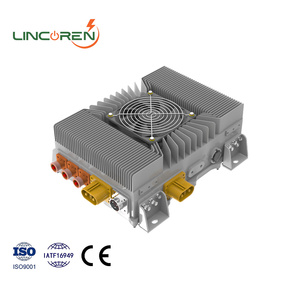
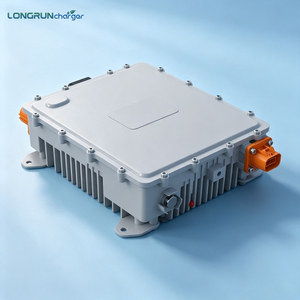
Premium IP67 Waterproof & Air-Cooled Bidirectional 3.3 KW OBC & 1.8 KW DCDC Converter 2-in-1 Assembly
- Combined 5.1kW Total Power Output
- Bi-directional V2L / V2G Integration
- IP67 Heavy-Duty Sealed Enclosure
- CAN 2.0B Communication Bus
Inquire Now
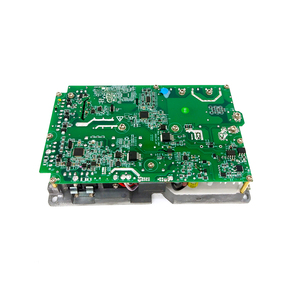
Dilong 3.3kW OBC EV On-board Charger Module 100V-200V Output DA3K3M13-150C Models
- Wide Output DC Range: 100V - 200V
- Peak Efficiency ≥ 95.5%
- Over-Temperature Derating Protection
- Designed for Commercial Utility Vehicles
Inquire Now
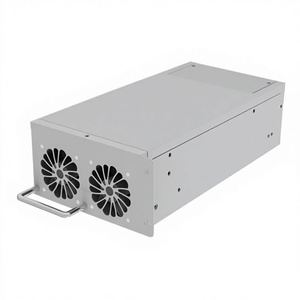
High Efficiency AC to DC Fast Charger 3.3kW Power Supply Rack-Mounted OBC Module
- Modular Rack-Mount Footprint
- Power Factor Correction (PFC) > 0.99
- Galvanic Isolation 2250 VDC
- Industrial EV Conversion Ready
Inquire Now
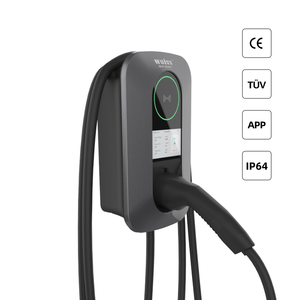
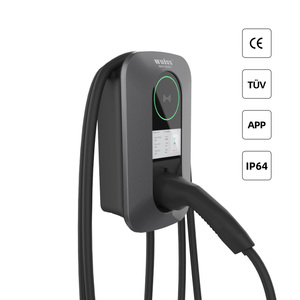
3.3kW OBC Charger Module & Wall-Mounted EV Charging Unit (48V / 72V / 144V System)
- Flexible Voltage Support: 48V - 144V
- Dual On-Board & Wall Station Utility
- Smart BMS Interfacing via CAN
- Rugged Anti-Vibration Design
Inquire Now
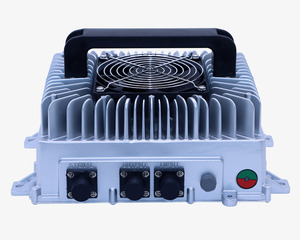
Industrial Grade 3.3KW EV Charger Module OBC DC DC Integrated Charger IP67 Waterproof
- Integrated OBC + DC/DC Topology
- Extreme Heat Dissipation Baseplate
- Short Circuit & Reverse Voltage Lockout
- Automotive IATF 16949 Manufacturing
Inquire Now
3.3kW EV On-Board OBC Charger 48V to 312V Lithium Battery Charger with Isolated CAN BUS
- Ultra-Wide DC Voltage Output (48V - 312V)
- Optimized for LiFePO4 & NCM Chemistries
- Ultra-Quiet Air/Conduction Cooling
- Active Power Factor Correction
Inquire Now
3.3KW OBC DC Charger Module with Smart Floor/Wall Mounting Compatibility (72V/144V)
- High Power Density SiC Architecture
- Multi-level EMI Filtering (UNECE R10)
- Comprehensive Thermal Shock Resistance
- Commercial Fleet Optimization
Inquire Now
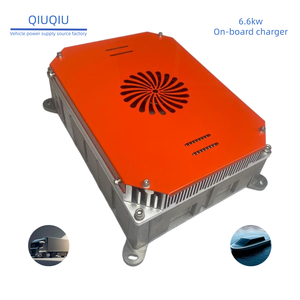
3.3kW / 5kW / 6.6kW Scalable EV OBC DC Charger Module for High-Voltage Battery Packs
- Parallel-Capable Power Scalability
- Customizable Charging Profiles
- Resilient against High-Salt Ambient Air
- Long-Term OEM Component Availability
Inquire Now
96.2%
Peak Power Efficiency
IP67 / IP69K
Environmental Protection
50,000+
Field-Deployed Units
IATF 16949
Automotive Certified
1. Strategic Overview: The Israeli E-Mobility Transition & Converter Demand
The State of Israel is executing one of the Mediterranean region's most ambitious energy decarbonization strategies. Spearheaded by the Ministry of Energy's "2030 Economy Energy Plan," Israel has mandated an absolute prohibition on the import of internal combustion engine (ICE) passenger cars and light commercial vehicles past 2030. Simultaneously, major urban transit hubs—including Gush Dan (Tel Aviv metropolitan area), Haifa, and Jerusalem—are converting their entire municipal bus fleets (over 10,000 active units) to zero-emission battery electric vehicles (BEVs).
This macro-environmental shift presents acute technical demands for power conversion components. Unlike mainland Europe, Israel's unique geographic and climatic profile—characterized by high ambient temperatures exceeding +45°C during summer months in the Negev desert, elevated atmospheric salinity along the Mediterranean coastline (Haifa, Ashdod, Tel Aviv ports), and strict electrical safety protocols enforced by the Standards Institution of Israel (SII)—requires specialized 5kW EV On-Board Converters (OBCs) and integrated DC-DC conversion sub-systems.
"Information Gain Insight: EV power electronics destined for the Israeli market cannot simply be off-the-shelf industrial components. They must incorporate wide-bandgap Silicon Carbide (SiC) semiconductors, IP67 enclosure seals capable of resisting fine dust ingress (Haboob desert sandstorms), and localized CAN bus firmware protocols compliant with Israeli telematics platforms such as Pointer and Ituran."
Israel's Grid Architecture & Input Voltage Requirements
Israeli electrical distribution infrastructure operates under a nominal single-phase voltage of 230V AC at 50Hz, and a three-phase system at 400V AC. On-board chargers must maintain robust Power Factor Correction (PFC > 0.99) and extremely low Total Harmonic Distortion (THD < 3%) to prevent localized voltage drop in dense urban charging hubs. NetPower’s 5kW on-board converter platforms are designed with universal AC input ranges (85V AC – 265V AC), allowing seamless operation across Israel's standard domestic grids and industrial 400V AC three-phase depot charging systems.
2. Engineering Architecture of 5kW Integrated OBC & DC-DC Systems
Modern electric vehicles—ranging from light commercial utility vans and agricultural utility vehicles (UTVs) in kibbutzim to heavy-duty municipal delivery trucks—rely on two primary high-voltage power conversion nodes:
- On-Board Charger (OBC): Responsible for converting grid AC power into precise DC voltage to charge the primary high-voltage traction battery pack (typically 48V, 72V, 96V, 144V, or 400V architectures).
- High-to-Low DC-DC Converter: Step-downs high voltage from the primary traction pack to a stable 12V or 24V DC auxiliary rail, powering essential vehicle safety systems, drive-by-wire steering actuators, lighting, and internal CAN telemetry modules.
SiC Wide-Bandgap Power MOSFETs
By transitioning from legacy Silicon IGBTs to Silicon Carbide (SiC) switches, NetPower's 5kW converters reduce switching losses by up to 60%. This yields a total conversion efficiency of 96.2%, allowing for compact physical footprints (power density up to 3.5kW/L) and minimal heat rejection.
2in1 Integrated Architecture
Combining a 3.3kW/5kW OBC with a 1.5kW/1.8kW auxiliary DC-DC converter into a unified IP67 housing eliminates redundant liquid cooling loops, saves up to 35% in spatial volume, and cuts harness assembly labor for vehicle original equipment manufacturers (OEMs).
Bidirectional Capability (V2L / V2G / V2X) for Israeli Applications
Given Israel's focus on microgrid resilience and distributed renewable energy (solar PV expansion in the Arava Valley), bidirectional power conversion is becoming a mandatory requirement for public sector tenders. NetPower’s bidirectional 5kW OBC modules support Vehicle-to-Load (V2L) mode, allowing electric service vehicles, emergency response units, and agricultural mobile machinery to export high-quality 230V AC sine wave power to run field tools, medical equipment, or auxiliary power stations in remote locations.
3. Localized Application Scenarios Across Israeli Heavy & Light Mobility Sectors
To successfully export 5kW EV on-board converters to Israel, manufacturers must customize thermal management, enclosure mechanics, and control interfaces to specific regional use-cases. Below are four primary deployment environments engineered by NetPower:
Scenario A: Commercial Fleet Electrification in Gush Dan Urban Area
Last-mile delivery vehicles operating in Tel Aviv, Ramat Gan, and Holon experience intense stop-and-go drive cycles under extreme urban thermal loads. Constant high-current fast charging at depot stations can elevate battery temperatures rapidly. NetPower’s 5kW OBCs feature active liquid-cooling integration (utilizing standard 50/50 ethylene glycol coolant loops) and intelligent thermal derating algorithms that adjust charge currents seamlessly when ambient temperatures hit peak midday spikes (+42°C to +48°C), preventing unprogrammed vehicle downtime.
Scenario B: Agritech & Utility Electric Vehicles in Israeli Kibbutzim
Israel's renowned agricultural cooperatives (Kibbutzim and Moshavim) are rapidly replacing diesel utility vehicles with zero-emission electric tractors, UTVs, and automated guided vehicles (AGVs). These vehicles operate in fine, airborne soil and dust environments. NetPower’s die-cast aluminum enclosures feature IP67 and IP69K liquid-tight potting, completely isolating sensitive planar transformers, gate drivers, and digital signal processors (DSPs) from dust penetration and high-pressure washdowns.
Scenario C: Port Logistics & Heavy Machinery at Haifa & Ashdod Ports
Maritime container terminals present severe atmospheric challenges: continuous exposure to high salt spray, humidity, and intense mechanical vibration from container handlers and yard tractors. NetPower converters utilize conformal coating (IPC-CC-830 certified) over all internal PCB assemblies, marine-grade stainless hardware, and shock-resistant potting compounds certified to IEC 60068-2-6 (vibration) and IEC 60068-2-27 (mechanical shock) standards.
Scenario D: Defense & Special-Purpose Off-Road Platforms
Israel’s defense and security technology ecosystem frequently integrates electric light tactical vehicles (ELTVs) and autonomous border surveillance rovers. These platforms demand high-efficiency, silent-running power systems with low electromagnetic signatures. NetPower 5kW converters comply with UNECE R10 (EMC/EMI) and CISPR 25 Class 5 limits, preventing high-frequency switching noise from interfering with delicate optical sensors, thermal imaging cameras, or radio communications equipment.
4. Regulatory Compliance, SII Approval & Automotive Quality Standards
Importing electric vehicle components into Israel requires strict adherence to international safety frameworks aligned with European Union directives and local regulations enforced by the Standards Institution of Israel (SII) and the Ministry of Transport and Road Safety.
Standards Institution of Israel (SII)
Vehicle components must comply with SI 62368-1 for electrical safety and SI 61851 for conductive charging systems. NetPower provides complete CB Scheme test reports, CE compliance documentation, and factory inspection records to ensure hassle-free SII clearance for Israeli importers.
ISO 26262 & Automotive Functional Safety
Safety-critical power conversion units must incorporate hardware fault tolerance. NetPower converters integrate dual hardware over-voltage protection (OVP), over-current protection (OCP), over-temperature shutdown (OTP), and reverse polarity protection with ASIL-B functional safety alignment.
CAN Bus Communication & Telematics Integration
Israeli automotive integrators rely heavily on high-speed CAN 2.0B networks utilizing J1939 or CANopen higher-layer protocols to monitor battery State-of-Charge (SoC), State-of-Health (SoH), charging current limits, and diagnostic fault codes (DTCs). NetPower provides customizable CAN matrix files (.DBC) allowing Israeli fleet engineers to seamlessly map converter telematics into local fleet management platforms (Ituran, Pointer, Axon) within hours of system integration.
5. NetPower Enterprise Capabilities: Manufacturing & Global Export Reliability
NetPower Technologies, Inc. stands as an industry leader in high-density, board-mounted isolated DC-DC converters, non-isolated point-of-load (POL) modules, and advanced e-Mobility power conversion systems ranging from 15W to over 5kW+. Our production infrastructure operates under stringent automotive-grade quality systems certified to IATF 16949 and ISO 9001.
End-to-End Reliability Verification (HALT / HASS Testing)
To guarantee long-term field reliability in harsh operating environments such as the Middle East, every NetPower converter architecture undergoes rigorous Design-for-Reliability (DfR) protocols:
- Highly Accelerated Life Testing (HALT): Exposing prototype hardware to rapid thermal cycling (-60°C to +130°C) and multi-axis random vibration to discover and eliminate structural failure modes prior to mass production.
- 100% Automated Burn-In & End-of-Line (EOL) Testing: Every single unit shipped to Israeli OEMs undergoes full-load thermal burn-in screening, high-voltage dielectric isolation testing (2250 VDC), and automated parameter validation.
- Full Material Traceability: Barcode tracking at the component level ensures 100% auditability for automotive tier-1 supply chains.
For Israeli vehicle manufacturers requiring custom mechanical dimensions, specialized mounting flanges, or tailored DC output voltage curves (e.g., custom 72V to 312V LiFePO4 charging algorithms), NetPower offers rapid OEM/ODM engineering services backed by dedicated application engineering support.
6. Frequently Asked Questions (FAQ) for Israel OEM Procurement & Import
Q1: Are NetPower 5kW EV On-board Converters compatible with Israel's single-phase 230V and three-phase 400V grid topology?
Yes. NetPower OBC modules feature a wide universal AC input voltage window (85V AC – 265V AC, 45Hz – 65Hz) with Active Power Factor Correction (PFC > 0.99). They operate seamlessly when connected to standard Israeli single-phase 230V wall boxes or stepped-down feeds from 400V AC three-phase commercial depot chargers.
Q2: What thermal cooling methods are recommended for EV converters operating in the Negev Desert or hot Israeli summers?
For high ambient temperature environments (+40°C to +50°C), we strongly recommend our liquid-cooled 5kW OBC & DC-DC integrated units. Liquid cooling maintains low SiC junction temperatures, allowing full 5kW continuous power output without thermal derating. For lighter duty UTVs or ambient temperatures under +40°C, our conduction and forced-air-cooled baseplate options provide a lightweight, cost-effective alternative.
Q3: How does NetPower assist Israeli importers with Standards Institution of Israel (SII) compliance?
NetPower provides complete automotive and electrical compliance packages, including CE declarations, CB Scheme test certificates, ISO 9001/IATF 16949 audit reports, and UNECE R10 EMC test results. These documents streamline the SII customs inspection and certification process for Israeli importers and vehicle integrators.
Q4: Can the CAN bus protocol be customized to interface with local Israeli fleet management systems like Ituran or Pointer?
Yes. Our firmware engineering team can customize CAN baud rates (typically 250kbps or 500kbps), message ID structures, scale factors, and periodic transmission rates to match your vehicle control unit (VCU) or third-party telematics hardware. We supply full CAN matrix documentation (.DBC files) for immediate integration.
Q5: What battery chemistry charging profiles are supported by NetPower 5kW OBC modules?
Our on-board chargers feature programmable digital control loops capable of charging Lithium Iron Phosphate (LiFePO4), Lithium Nickel Manganese Cobalt (NCM), Lithium Titanate (LTO), and traditional lead-acid battery chemistries. Constant Current (CC), Constant Voltage (CV), and Constant Power (CP) stages can be fully configured via CAN bus interface.
Q6: What is the lead time for sample delivery and mass production shipments to Israel?
Standard evaluation samples are typically dispatched within 1 to 2 weeks via express international air freight (DHL/FedEx to Ben Gurion Airport). Mass production volume orders are fulfilled within 4 to 6 weeks, supported by flexible shipping terms (FOB, CIF, or DDP Israel).
Q7: Are bidirectional V2L / V2G power features available on all 5kW EV converter models?
Bidirectional power transfer is available on our premium SiC 2-in-1 series (OBC + DC/DC). In V2L mode, the unit converts DC power from the traction pack back into 230V AC pure sine wave output (up to 3.3kW continuous), allowing vehicles to power tools, emergency microgrids, or remote field gear in agricultural applications.
Ready to Electrify Your Vehicle Platform for the Israel Market?
Contact our senior power electronics application engineers today for detailed datasheet downloads, STEP CAD models, customized CAN protocol matrices, and factory-direct quotation.