
Explore our industrial-grade power conversion catalog designed for demanding telecom, EV, and industrial applications.
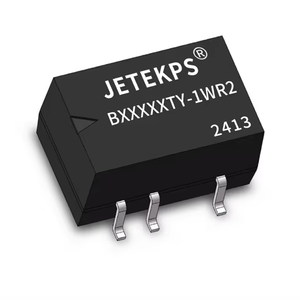
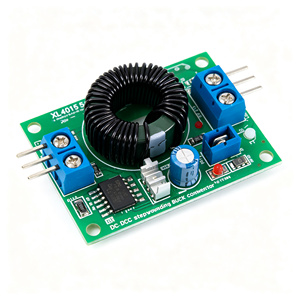
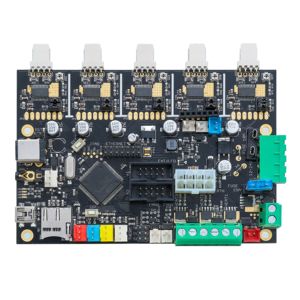
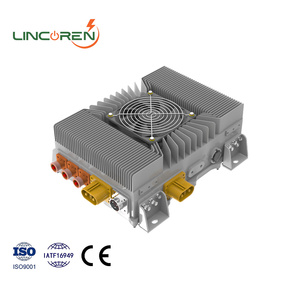
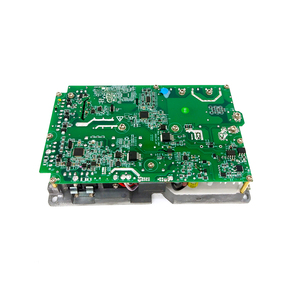
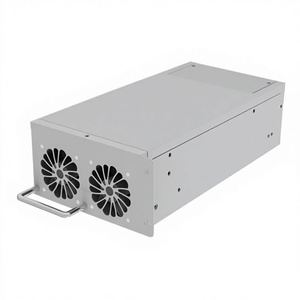
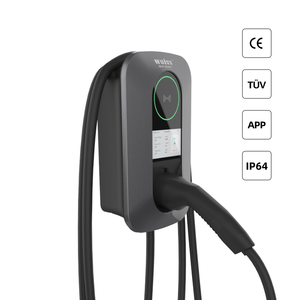
In the rapidly evolving landscape of global electronics manufacturing, thermal management, power density, and conversion efficiency represent the core pillars of mission-critical hardware design. As a premier global power module manufacturer and exporter, NetPower Technologies has engineered industry-leading board-mounted isolated DC-DC converters, non-isolated Point-of-Load (POL) modules, and advanced electric vehicle (EV) on-board power conversion platforms that consistently exceed modern industrial standards.
Modern electrical infrastructure across telecommunications, datacenters, heavy industrial automation, rolling stock transportation, and e-Mobility demands power supplies capable of operating reliably under severe thermal stress and wide input voltage fluctuations. Selecting a qualified power module exporter involves scrutinizing topology design, component de-rating metrics, Mean Time Between Failures (MTBF), and adherence to standardized footprints such as DOSA (Distributed-power Open Standards Alliance). NetPower’s commitment to high efficiency, planar magnetics, and advanced encapsulation techniques guarantees seamless field integration across diverse operating environments.
Information Gain Insight: Power density gains should never compromise operational thermal margins. Modern isolated converters must maintain at least 80% continuous rated load at 85°C ambient temperatures without auxiliary airflow, leveraging high-thermal-conductivity potting and planar transformer topologies.
Building high-reliability power modules requires rigorous design validation and strictly controlled manufacturing workflows. Our product ecosystem spans micro-power SMD modules starting from 1W up to high-capacity 5kW automotive-grade bidirectional converters. Key technical advantages that set our manufacturing capability apart include:
Supporting ultra-wide isolated input ranges from standard 9-36V, 18-75V, and 36-75V telecom buses up to high-voltage industrial and transportation rails of 16-160V, 180-400V, and 400-650V.
Fully compliant with standard 1/32nd, 1/16th, 1/8th, quarter, half, and full brick form factors, ensuring seamless drop-in cross-reference compatibility for global OEM system architects.
Engineered with liquid, air, and conduction cooling mechanisms tailored for EV On-Board Chargers (OBC) and heavy-duty commercial transportation DC-DC converters subjected to vibration and moisture.
Every module undergoing export passes 100% automated optical inspection (AOI), automated functional testing (ATE), and rigorous HASS/HALT (Highly Accelerated Stress Screen / Life Test) protocols. This rigorous approach ensures that field failure rates remain below 10 PPM across telecom infrastructure, industrial robotics, and electric vehicle platforms worldwide.
The matrix below provides engineering buyers and system integrators with a comparative breakdown of standard topology platforms, input/output voltage boundaries, peak conversion efficiencies, and targeted market applications.
| Product Category | Standard Footprint / Form Factor | Input Voltage Ranges | Peak Efficiency | Isolation Rating | Target Applications |
|---|---|---|---|---|---|
| Micro Isolated DC-DC | SMD / DIP / SIP (1W - 15W) | 5V, 12V, 24V ±10% | 83% - 88% | 1500 VDC - 3000 VDC | Board-level noise isolation, RS485/CAN transceivers, sensors |
| High-Density Brick Converters | 1/32nd to Full Brick (15W - 1000W+) | 9-36V, 18-75V, 36-75V, 66-160V | 92% - 95.5% | 2250 VDC Reinforced | 5G Base stations, cloud servers, railway electronics, routers |
| Non-Isolated POL Modules | DOSA Surface Mount / Vertical SIP | 2.5V - 60V Wide Input | 94% - 97% | Non-Isolated | FPGA, ASIC, DSP core voltage rails, high-current point-of-load |
| e-Mobility OBC & DC-DC Assembly | Sealed Enclosure / Rack Module (1kW - 5kW) | 100V-200V / 200-450V / 400-650V | 95% - 96.5% | 3000 VAC Automotive | Electric commercial trucks, buses, off-highway EVs, chargers |
The power conversion industry is undergoing a structural paradigm shift driven by decarbonization mandates, cloud compute expansion, and the electrification of mobility. Designers must stay ahead of key technological vectors that dictate next-generation hardware viability:
Gallium Nitride (GaN) and Silicon Carbide (SiC) power switches are replacing traditional Silicon MOSFETs in high-density power modules. Due to significantly lower gate charge ($Q_g$) and zero reverse recovery losses ($Q_{rr}$), switching frequencies can be elevated from hundreds of kilohertz into the megahertz realm. This dramatic reduction in switching loss allows power module engineers to downsize passive components—transformer cores and output inductors—resulting in up to a 50% decrease in overall volumetric footprint while scaling thermal thresholds.
Analog PWM controllers are increasingly being augmented or superseded by digital signal processors (DSPs) and digital controllers utilizing telemetry protocols like PMBus. Modern power architectures require real-time reporting of input/output voltage, current draw, and internal junction temperatures. Digital loop compensation allows dynamically changing switching parameters based on real-time load demand, optimizing low-load efficiency profiles while maintaining ultra-fast transient responses during dynamic step loads.
Traditional wire-wound transformers are a primary bottleneck for profile reduction and thermal dissipation. The adoption of multilayer Printed Circuit Board (PCB) planar magnetics allows for precise leakage inductance control, superior thermal coupling directly to baseplates, and automated manufacturing. Combined with direct-bonded copper (DBC) and potting resins featuring thermal conductivities exceeding $3.0\text{ W/m}\cdot\text{K}$, modern isolated converters achieve power densities scaling past $300\text{ W/in}^3$.
In the EV space, the shift from 400V to 800V battery architectures requires on-board chargers (OBC) and DC-DC converters to support higher isolation test voltages and bidirectional power flow (V2G - Vehicle-to-Grid, V2L - Vehicle-to-Load). Integrating the high-voltage DC-DC converter with the AC On-Board Charger into a unified 2-in-1 combo housing substantially lowers vehicle weight, minimizes external high-voltage cabling harness cost, and maximizes volumetric energy density inside commercial vehicles.
For procurement directors, component engineers, and supply chain managers, procuring power components involves evaluating long-term operational resilience, compliance landscapes, and dynamic supply ecosystems. Key purchasing strategies include:
Experienced procurement officers recognize that selecting low-cost power modules with poor efficiency profiles leads to significantly increased system-level cooling costs and heightened field failure liabilities. A 2% increase in conversion efficiency across a datacenter deployment translates to thousands of kilowatt-hours saved per rack annually, drastically offsetting initial module procurement premiums. Evaluating TCO requires analyzing thermal derating capabilities, system MTBF figures under elevated ambient temperatures, and energy conservation metrics over a 5-to-10-year operational lifecycle.
Supply Chain Mitigation Tip: Always mandate dual-sourcing options based on DOSA-standard mechanical pinouts. Utilizing standardized quarter-brick or half-brick power modules guarantees alternative vendor qualified substitutions without requiring a mainboard PCB redesign during component shortages.
Global electronic manufacturing services (EMS) providers prioritize standardized footprints that allow drop-in interchangeability. Standardized pinout dimensions, terminal pitch, and logic control voltages (such as positive or negative enable logic) allow procurement departments to maintain supply flexibility. Power module manufacturers offering extensive cross-reference databases for end-of-life (EOL) competitor modules enable OEMs to extend product manufacturing lifecycles without incurring expensive re-engineering NRE charges.
Global distribution demands strict compliance with international regulatory frameworks. Leading exporters must guarantee full compliance with standard regulatory directives, including RoHS (Restriction of Hazardous Substances), REACH (Registration, Evaluation, Authorisation and Restriction of Chemicals), UL62368-1 for audio/video and ICT equipment, EN50155 for railway applications, and ISO26262 functional safety for automotive EV platforms. Comprehensive documentation packages, including certified test reports and application layout guidelines, are imperative for accelerating final system-level certification.
To assist global buyers and system architects in selecting the optimal power module platforms, our technical team has compiled answers to frequently asked engineering and procurement questions.
Isolation is necessary when ground loop elimination, safety isolation from high input voltages (such as 48V or 400V buses to low voltage logic), or noise decoupling between power domains is required. Non-isolated point-of-load (POL) converters are ideal for stepping down low input voltages (e.g., 12V to 1.2V) directly adjacent to high-current processors, offering higher efficiency and smaller footprints where ground isolation is unnecessary.
Datasheet power ratings are typically quoted at 25°C ambient temperature with optimal airflow. In actual enclosed industrial control boxes or high-temperature ambient environments, a module's continuous deliverable output power decreases. Reviewing published thermal derating curves (Airflow vs. Ambient Temperature vs. Output Power) is essential to determine whether baseplates, heatsinks, or forced air cooling are required to maintain component temperatures within safe limits.
DOSA (Distributed-power Open Standards Alliance) establishes standardized mechanical dimensions, pin configurations, and feature sets for brick converters (1/32, 1/16, 1/8, quarter, half, full brick). Choosing DOSA-compliant modules protects your production line from single-source component risks, allowing easy second-sourcing without requiring PCB redesigns.
Yes. Beyond our standard catalog, NetPower offers semi-custom and full-custom engineering services. This includes modifying input/output voltage settings, tweaking pin lengths, developing custom liquid/conduction-cooled cold plates, integrating CAN bus 2.0B protocols, and designing custom multi-kW assemblies tailored for commercial electric vehicle platforms.
Every lot undergoes 100% automated test screening, thermal burn-in, and strict statistical process control (SPC). Materials are fully traceable back to raw silicon wafer and magnetics component batches, supporting detailed Quality Assurance (QA) audits and long-term field reliability compliance.
Whether you are designing next-generation 5G telecom racks, high-efficiency industrial robotics, or ruggedized electric commercial vehicle platforms, NetPower provides the engineering depth, proven reliability, and global export infrastructure your supply chain requires.