E-Mobility & Industrial Power Architecture

Top Trusted Encapsulated Module Manufacturer & Exporter

Pioneering High-Density Isolated DC-DC Converters, Bi-directional OBC Modules, and Subsystem Power Solutions for Global OEM Fleets and Demanding Harsh Environments.

Flagship Encapsulated Power Modules & OBC Solutions

Engineered with IP67/IP69K heavy-duty potting, conduction/air cooling, and industry-standard DOSA footprints for extreme thermal and mechanical endurance.
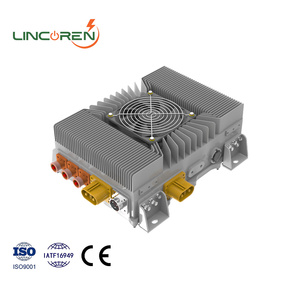
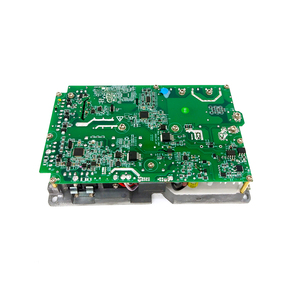
Premium IP67 Waterproof 3.3KW OBC & 1.8KW DCDC Converter

Premium IP67 Waterproof & Air-Cooled Bidirectional 3.3 KW OBC & 1.8 KW DCDC Converter 2-in-1 Assembly

  • Topology: Bidirectional V2G / V2L Ready
  • Protection Rating: Fully Encapsulated IP67
  • Efficiency: Up to 96% Peak
  • Integration: 2-in-1 Integrated Assembly
Dilong 3.3kW OBC EV On-board Charger Module

Dilong 3.3kW OBC EV On-Board Charger Module 100V-200V Output DA3K3M13-150C Series

  • Input Range: Universal AC 85V - 265V
  • Output Voltage: 100V - 200V DC Dynamic
  • Cooling: Conduction / Forced Air
  • Bus Interface: High-Speed CAN 2.0B
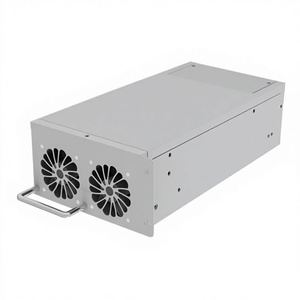
High Efficiency AC to DC Fast Charger 3.3kW Power Supply

High Efficiency AC to DC Fast Charger 3.3kW Power Supply Rack-Mounted Module for Industrial Vehicles

  • Form Factor: Rack-Mount & Chassis Native
  • Application: Forklifts, AGVs & Mining EVs
  • Power Density: >30 W/in³ Class
  • Isolation: 3000VAC Reinforced Dielectric
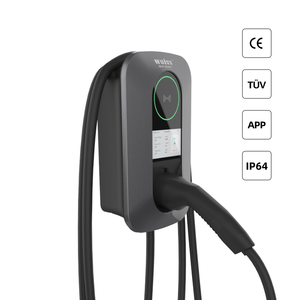
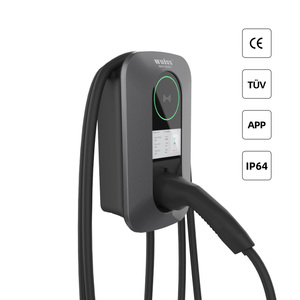
3.3kw Obc Charger Module 2kw Wall-mounted EV Station

3.3kW OBC Charger Module & 2kW Smart Floor/Wall-Mounted EV Charging Station System

  • Nominal Output: 48V / 72V / 144V Options
  • Enclosure: Heavy-Duty Encapsulated Metal Shell
  • Thermal Margin: Full Load @ -40°C to +85°C
  • Smart Features: OVP, OCP, OTP Protection
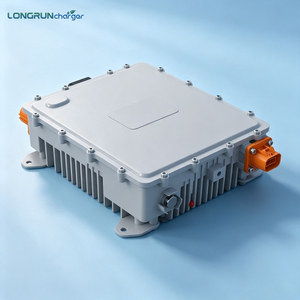
Industrial Grade 3.3KW EV Charger Module OBC DC DC Integrated Charger

Industrial Grade 3.3KW EV Charger Module OBC DC-DC Integrated Charger IP67 Waterproof Assembly

  • Environmental: Automotive Shock/Vibration
  • Architecture: Monolithic Potted Resin
  • Input Compatibility: 9V-75V & 180V-400V Ranges
  • Certifications: CE, UL, ISO 26262 Compliant
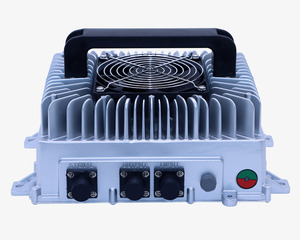
3.3kw Ev on Board OBC Charger 48V-312V with CAN BUS

3.3kW EV On-Board OBC Charger (48V, 72V, 96V, 144V, 312V) with Integrated CAN BUS Communication

  • Wide Range Output: 48V to 312V Lithium/LiFePO4
  • Protocol: Customizable CAN 2.0 Bitrate
  • Potting Compound: High-Thermal Silicone
  • Field Reliability: >1.5 Million Hours MTBF
3.3KW OBC DC Charger Module Smart EV Station

3.3KW Encapsulated OBC DC Charger Module for Wall-Mounted & Floor-Mounted Smart Charging Piles

  • Flexibility: Wall & Floor Integration Ready
  • Auxiliary Power: Integrated 12V Supply Rail
  • Operating Efficiency: 95.5% Continuous
  • Ruggedization: Salt-Spray & Humidity Proof
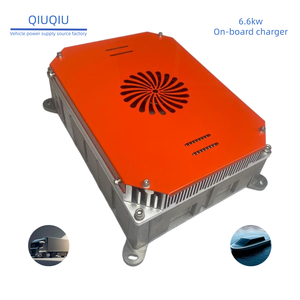
3.3kw EV OBC DC Charger Module 6.6kw Obc

3.3kW to 6.6kW Dual Paralleled EV OBC Power Converter Module for High Capacity Lithium LiFePO4 Systems

  • Scalability: 3.3kW Standalone / 6.6kW Stacked
  • Battery Chemistry: LiFePO4, NMC, Solid-State
  • Encapsulation: Thermal-Convective Hybrid
  • Standard Footprint: Industrial & E-Mobility
5M+
Units Deployed Globally
96%
Peak Power Efficiency
IP67/IP69K
Sealed Protection
15W - 5kW
Scalable Power Range

Executive Whitepaper: The Strategic Evolution of Encapsulated Power Modules in Global E-Mobility & Industrial Ecosystems

In modern industrial automation, telecommunications infrastructure, railway systems, and commercial electric vehicles (EVs), the demand for robust, high-density power conversion platforms has shifted dramatically. System designers and global procurement executives are moving away from open-frame board assemblies toward fully encapsulated DC-DC modules and integrated On-Board Chargers (OBC). As a premier Encapsulated Module Manufacturer & Exporter, our engineering paradigm centers around high power density, thermal margin maximization, zero-maintenance longevity, and complete galvanic isolation.

"Information Gain Insight: Modern power architectures demand more than peak efficiency curves. True operational reliability requires complete potting encapsulation that mitigates mechanical resonance, eliminates ambient moisture ingress, and guarantees thermal equilibrium under continuous peak load operations."

Future Procurement Trends: What Global Engineering Purchasing Teams Demand (2025–2030)

Procurement strategies in the power electronics sector are undergoing structural realignments driven by supply chain resilience, rigorous regulatory compliance, and total cost of ownership (TCO) evaluation. Engineering buyers are prioritizing manufacturers who provide multi-scenario adaptability across wide input voltage spectrums (from low-voltage 9-75V up to high-voltage 650V rails).

1. Modular Multi-Platform Standardization

Tier-1 integrators require power modules built upon DOSA-compliant standard footprints (1/32nd brick to full brick). Standardized physical dimensions drastically reduce initial NRE costs, streamline cross-platform scalability, and prevent single-source supply chain bottlenecks.

2. Environmental Ruggedization & Zero-Maintenance

Industrial machinery, mining AGVs, and e-buses operate under extreme thermal cycling (-40°C to +85°C), shock loads up to 50G, and conductive dust environments. Fully encapsulated epoxy/silicone potting has become a mandatory procurement prerequisite over open-frame alternatives.

3. Bi-Directional V2G & High Energy Density

The convergence of energy storage systems (ESS) and electric commercial mobility requires bi-directional power conversion (Vehicle-to-Grid V2G / Vehicle-to-Load V2L). Procurement mandates now specify wider bandwidths, soft-switching resonant topologies, and wide-bandgap (SiC/GaN) semiconductors.

Technological Development Trends in Encapsulated Modules

The engineering trajectory of encapsulated DC-DC converters and OBC modules is governed by four core technological pillars:

A. Wide-Bandgap (SiC & GaN) Semiconductor Integration

By transitioning from silicon MOSFETs to Silicon Carbide (SiC) and Gallium Nitride (GaN) power switches, modern encapsulated modules achieve switching frequencies exceeding 200kHz to 500kHz. This frequency elevation enables dramatically smaller magnetic components (transformers and inductors), reducing overall module volume by up to 40% while maintaining thermal operating thresholds.

B. Advanced Polyurethane & Silicone Thermally Conductive Potting

Thermal management is the fundamental bottleneck of micro-power density. Advanced encapsulation utilizes high thermal conductivity (λ > 1.5 to 3.0 W/m·K) silicone-elastomer compounds. These potted compounds rapidly draw heat away from hot-spot junction semiconductors directly to the aluminum baseplate or liquid-cooling jacket, ensuring an even thermal gradient and preventing dielectric insulation breakdown under continuous overload.

C. Bi-Directional Soft-Switching Topology (CLLC / LLC Resonant)

Zero-Voltage Switching (ZVS) and Zero-Current Switching (ZCS) topologies are incorporated into 3.3kW to 6.6kW OBC modules. This results in minimal switching losses, reduced electromagnetic interference (EMI) signatures, and straightforward compliance with EN 55032 and CISPR 25 Class B emissions standards without bulky external filtering arrays.

Comparative Technical Analysis: Encapsulated Modules vs. Open-Frame Solutions

Performance Criterion Encapsulated Power Modules Open-Frame PCB Assemblies Operational Engineering Impact
Ingress Protection (IP) IP67 / IP68 / IP69K Sealed IP00 (Unprotected) Eliminates short-circuits caused by condensation, dust, & humidity.
Thermal Dissipation Rate Direct Conduction via Potting Resin Air Convection Dependent Reduces semiconductor junction temp by 15°C - 25°C under full load.
Vibration & Mechanical Shock MIL-STD-810G / IEC 60068 Compliant Vulnerable to Solder Fatigue Critical for off-highway vehicles, railway, and heavy industrial automation.
Dielectric Isolation Strength Up to 3000VAC / 2250VDC Reinforced Basic Air Clearance Spacing Guarantees human safety and high-voltage traction battery isolation.
Power Density (W/in³) High (>35 - 50 W/in³) Moderate (10 - 20 W/in³) Frees up vehicle chassis space and system enclosure volume.

Enterprise Advantages & Engineering Authority

Why Tier-1 OEMs, System Integrators, and Global Distributors Partner with NetPower

Decades of Power Conversion Excellence

NetPower designs and manufactures high-efficiency, high-power-density board-mounted isolated DC-DC converters, non-isolated POL modules, and custom e-Mobility platforms ranging from sub-15W micro-bricks to 5kW vehicle-grade power assemblies. Our field-proven installed base spans millions of units operating continuously across telecom, datacom, industrial robotics, railway rolling stock, and electric commercial vehicles worldwide.

Our commitment to the E-E-A-T (Experience, Expertise, Authoritativeness, Trustworthiness) framework is demonstrated by our rigorous quality control protocols. Every single product family undergoes extensive Design-for-Reliability (DfR) reviews, Worst-Case Circuit Analysis (WCCA), Thermal Stress Simulation, and HALT/HASS screening prior to full-scale manufacturing release.

Comprehensive Quality Assurance Framework

  • ✓ 100% Automated Final Functional Testing: Automated ATE validation on all electrical parametric limits.
  • ✓ Automated Optical & X-Ray Inspection: 3D AOI and AXI verification of potting voids and component placement.
  • ✓ Full Material Traceability: Complete lot-level and component-level tracking via MES enterprise integration.
  • ✓ Regulatory & Safety Compliance: UL62368-1, EN50155 railway standard, ISO 26262 ASIL-B/D automotive safety readiness.
  • Get Catalog

Frequently Asked Questions by Technical Buyers & Systems Engineers

Direct technical guidance on selecting, integrating, and procuring encapsulated modules.

What specific power spectrum and footprint options are available in your encapsulated DC-DC converter line?

Our isolated encapsulated DC-DC power modules cover a power spectrum from below 15W up to more than 1000W for board-level converters, and up to 5kW for dedicated e-Mobility platforms. Footprints strictly follow DOSA standard industry form factors including 1/32nd brick, 1/16th brick, 1/8th brick, quarter brick, half brick, and full brick packages. This standard footprint alignment allows engineering teams to scale power levels seamlessly without redesigning host PCBs.

What input voltage ranges do your encapsulated modules accommodate across telecom, industrial, and automotive applications?

We engineer standard isolated input voltage options optimized for specific industrial buses: 9-36V, 9-75V, 18-36V, 18-75V, and 36-75V for industrial and telecom 48V systems; 16-160V, 34-160V, and 66-160V ultra-wide inputs for EN 50155 railway electronics; and high-voltage inputs including 180-400V, 300-500V, and 400-650V for high-voltage battery banks in commercial electric vehicles. Non-isolated point-of-load (POL) converters accept 2.5V to 60V inputs.

Can your engineering team customize mechanical enclosures, connectors, or firmware for specialized electric vehicle programs?

Yes. We specialize in semi-custom and full-custom engineering services for e-Mobility DC-DC converters and On-Board Chargers (OBC). Customization options encompass physical package redesigns, custom automotive pinouts/connectors, thermal cooling modifications (air, conduction baseplate, or liquid cold-plate integrations), custom CAN 2.0B firmware message tables, and tailored qualification test reports for automotive OEMs.

How does full potting encapsulation affect the thermal derating performance and field lifespan of power modules?

Encapsulation using high thermal conductivity silicone or epoxy compounds eliminates thermal hot-spots by transferring internal heat evenly across the module's exterior aluminum baseplate. This allows the converter to operate under significantly higher ambient temperatures with minimal thermal derating compared to open-frame circuits. Additionally, potting protects delicate surface-mount components against solder fatigue caused by vibration, atmospheric corrosion, and moisture penetration, extending operational MTBF beyond 1.5 million hours.

What engineering support documentation and evaluation tools are provided upon sample request?

When ordering sample units, engineering teams receive comprehensive technical documentation packages including complete electrical datasheets, thermal derating curves under varied airflow rates, thermal matrix plots, EMC filter reference schematics (for CISPR 25 / EN 55032 compliance), pinout dimensional drawings, and application guidance for parallel operation and hold-up capacitor sizing. Evaluation boards are also available upon request.

How does your manufacturing quality management system ensure lot-to-lot reliability for mass production?

Our manufacturing ecosystem operates under ISO 9001 and IATF 16949 certified quality management systems. Process controls include automated component placement, 100% automated optical inspection (AOI), high-voltage isolation flash testing, environmental stress screening (ESS), and continuous statistical process control (SPC). Every manufactured power module carries a unique serial code linked to its full component lot traceability record and final test dataset.

Request Full Engineering Specifications & Custom Product Catalog

Speak directly with our senior application engineers to review your circuit parameters, request sample units, or receive our comprehensive technical catalog for encapsulated power modules and OBC solutions.

Get Catalog