Top Trusted Converter Board Manufacturers & Exporters
Global OEM/ODM Engineering Analysis on High-Density DC-DC Modules, VFD Inverter Assemblies, Switching Power Supply PCBA & Next-Generation Wide-Bandgap Converters
Flagship Portfolio
Featured Converter Boards & Custom PCBA Assemblies
Engineered for high power density, thermal stability, and rigorous industrial, automotive, and data center compliance.
High Frequency Inverter AC Compressor PCB 50Hz DC 220V VFD Frequency Converter Circuit Diagram Inverter Board
Designed for heavy-duty HVAC and commercial refrigeration compressors. Integrates variable frequency drive (VFD) switching with robust DC 220V bus handling for maximum thermal efficiency.
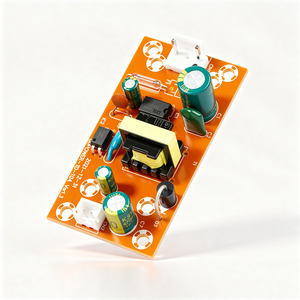
9V 1.5A 13.5W Single Output Open Frame Switching Power Supply AC-DC Converter Board OEM/ODM Customizable
Compact open-frame AC-DC converter PCBA designed for industrial instruments and IoT edge controllers. Delivers tight voltage regulation with low stand-by power loss.
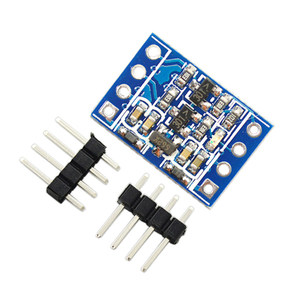
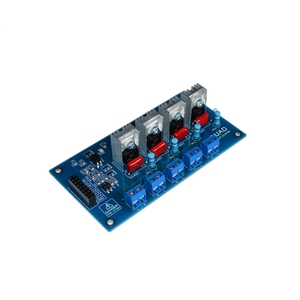
Ultra-fast bidirectional logic translation module for seamless interfacing between 3.3V microcontrollers and 5V sensors across I2C, SPI, and UART digital communication buses.
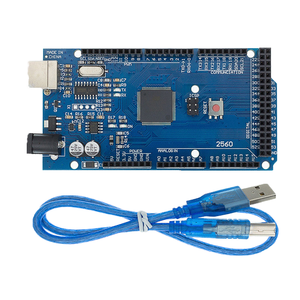
Mega2560 Pro ATmega2560-16AU CH340G USB Fully Populated DC/DC Converter Development Board 3.3V/5V 800mA
High-density embedded processing board featuring on-board DC-DC buck regulators capable of supplying stable 3.3V and 5V power rails up to 800mA for robotics and automation.
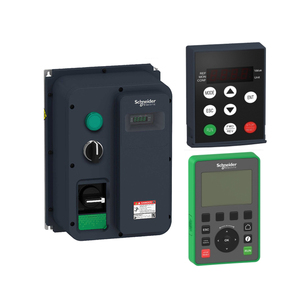
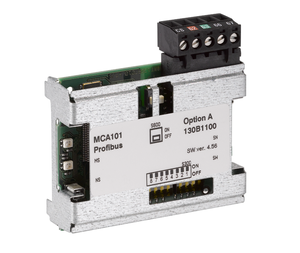
VLT Ethernet Module V1 MCA101 130B1100 Communication Card Frequency Converter Control Board
Industrial Ethernet fieldbus gateway and frequency converter control card for real-time motor drive synchronisation, automated diagnostics, and low-latency network telemetry.
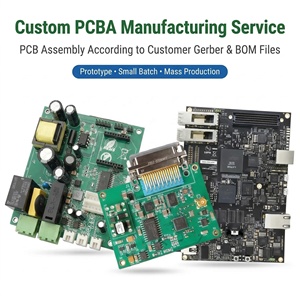
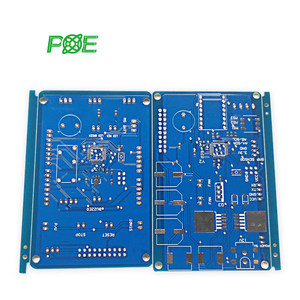
High Quality Data Center Switches Converter PCBA Board Factory Customized FR4 / ROGERS / Aluminum Base
Enterprise-grade multi-layer power distribution PCBA built on high-frequency Rogers and aluminum substrates. Engineered for telecom switches and high-speed data servers.
PCB Assembly for Vehicle Media Player HD Converter Control Board Automotive Media Converter PCBA
Automotive-grade media signal conversion board designed to satisfy stringent IATF 16949 standards. Offers superior EMC shielding and shock resistance for commercial vehicles.
1. Executive Summary & State of Industrial Converter Board Manufacturing
In modern electronic systems—spanning from cloud data center infrastructure and telecom base stations to commercial electric vehicles (EVs) and industrial robotics—the converter board serves as the essential power management backbone. Converter boards, encompassing isolated DC-DC brick modules, non-isolated Point-of-Load (POL) regulators, Variable Frequency Drive (VFD) compressor control boards, and switching power supply PCBAs, are responsible for converting raw, fluctuating input voltages into tightly regulated, clean voltage rails required by sensitive digital microprocessors, power switches, and electromechanical actuators.
Selecting the right manufacturer and exporter for converter boards is a critical procurement decision. A failure in power conversion architecture directly yields system downtime, excessive thermal dissipation, field returns, and brand damage. Top-tier manufacturers utilize state-of-the-art Surface Mount Technology (SMT), Advanced Optical Inspection (AOI), Highly Accelerated Life Testing (HALT), and Stress Screening (HASS) to deliver products that meet strict international safety standards such as UL62368-1, EN50155 (for railway equipment), and IATF 16949 (for automotive systems).
This industry whitepaper provides global procurement managers, chief technology officers (CTOs), and electrical design engineers with an authoritative analysis of modern converter board manufacturing, topology trade-offs, thermal management strategies, wide-bandgap (SiC/GaN) semiconductor adoption, and global supply chain risk mitigation.
High-Power Density
Achieving up to 100W/in³ through advanced planar magnetics, multi-layer PCB stack-ups, and optimized semiconductor layout topology.
Wide Bandgap Semiconductors
Integration of Gallium Nitride (GaN) and Silicon Carbide (SiC) switches to achieve over 96% energy conversion efficiency.
Reinforced Isolation
Dielectric withstand ratings up to 2250VDC and 4200VAC to safeguard downstream FPGA, ASIC, and MCU electronics.
Power converter boards are classified according to their underlying circuit topology, input/output voltage boundaries, and isolation requirements. Choosing the correct topology is paramount to balancing circuit size, bill-of-materials (BOM) cost, electromagnetic compatibility (EMC), and operating efficiency.
A. Isolated DC-DC Brick Topologies (1/32nd to Full Brick)
Isolated DC-DC converter boards utilize high-frequency transformers to decouple input power grounds from output load grounds. The standard brick packages follow the Distributed-power Open Standards Alliance (DOSA) footprint standards, spanning from micro-power modules up to full-brick formats:
Active Clamp Forward Converter Boards: Ideal for power levels ranging from 50W to 300W with wide 2:1 or 4:1 DC input ranges (e.g., 9-36V, 18-75V, 36-75V). Provides zero-voltage switching (ZVS) operation to minimize turn-on switching losses.
LLC Resonant Half-Bridge / Full-Bridge Topologies: Utilized in high-power isolated converters exceeding 300W to 1000W+. Operates above or below the resonant frequency to allow soft-switching across the full load spectrum, reaching efficiencies above 95%.
Phase-Shifted Full Bridge (PSFB): Primary topology for high-voltage commercial transportation on-board converters (EV OBC & HV-to-LV DC-DC converters), managing voltage conversions from 300V-650V down to 12V/24V power networks.
B. Non-Isolated Point-of-Load (POL) Buck Regulators
As digital processing ICs (such as modern FPGAs, ASICs, and GPUs) transition toward lower core operating voltages (0.8V - 1.8V) paired with dynamic load step requirements exceeding 100A, non-isolated POL converter boards are positioned directly adjacent to the load. Key architectural features include:
Multi-Phase Synchronous Buck Topologies: Distributes current across multiple interleaved power stages to dramatically lower input ripple current and output voltage ripple.
Digital Control Loops (PMBus / I2C Integration): Enables real-time telemetry of board temperature, output current, voltage trimming, and automated fault reporting back to the master system CPU.
C. Variable Frequency Drive (VFD) & AC Compressor Control Boards
VFD converter boards integrate high-voltage AC rectifier stages, DC-bus filter capacitors, gate driver circuitry, and Intelligent Power Modules (IPMs) or discrete IGBT/SiC MOSFET bridges. These boards perform high-speed pulse-width modulation (PWM) to drive variable speed AC induction and permanent magnet synchronous motors (PMSM) with exceptional energy performance in heat pumps, HVAC compressors, and industrial motor drives.
The table below provides a comparative design and procurement benchmark across major converter board families engineered by leading global OEM exporters:
Converter Category
Typical Input Range
Output Voltage / Power
Peak Efficiency
Isolation Rating
Target End-Market
1/16th & 1/8th Brick Isolated
18-75V DC / 36-75V DC
3.3V - 48V DC (15W - 300W)
91% - 94.5%
1500VDC - 2250VDC
5G Telecom Base Stations, Datacom Switches
Quarter & Half Brick High Power
9-36V DC / 66-160V DC
5V - 28V DC (300W - 1000W+)
93.5% - 96.0%
2250VDC - 3000VAC
Railway Rolling Stock (EN50155), Heavy Machinery
Non-Isolated DOSA POL
2.5V - 60V DC
0.8V - 15V DC (Up to 100A)
94.0% - 97.5%
Non-Isolated
FPGA/ASIC Core Power, Edge Computing AI Servers
EV On-Board Converter (EVC)
180-400V / 400-650V DC
12V / 24V DC (1kW - 5kW)
95.0% - 96.5%
Reinforced 3000VDC
Commercial Electric Trucks, Buses, Marine Fleets
HVAC Compressor VFD PCBA
220V AC / 380V AC 3-Phase
Variable 3-Phase AC (0.5kW - 7.5kW)
97.0% - 98.5%
Opto/Galvanic Isolation
Commercial Air Conditioning, Cold Chain Compressors
Factory Competencies
World-Class Manufacturing & Quality Control Standards
Leading international buyers rely on converter board exporters who maintain strict quality management systems (QMS). Premium manufacturing facilities leverage automated surface-mount assembly lines integrated with high-precision solder paste inspection (SPI), multi-angle 3D AOI, and X-ray inspection for BGA and bottom-terminated components.
Design for Reliability (DfR): Applying thermal derating models, MTBF stress calculations (>1.5 million hours per Telcordia SR-332), and worst-case circuit tolerance simulation prior to mass production release.
Substrate & Material Options: Fabrication capabilities across High-TG FR4, Rogers ceramic-filled laminates, and Heavy Copper / Aluminum-base substrates for superior thermal dissipation.
100% Automated Burn-In & HASS: Every production unit undergoes automated dynamic load testing, temperature cycling, and HASS screening to eliminate infant mortality failures before international export shipping.
Customization Flexibility (OEM/ODM): Rapid modification of mechanical mounting baseplates, custom pin configurations, unique input voltage windows, and tailored conformal potting (Epoxy, Polyurethane, Silicone).
Industry Insight
4. Global Technology & Future Procurement Trends (2025–2030)
As the global electronics industry faces accelerating demand for decarbonization, edge computing, and electrification, the procurement landscape for converter boards is evolving rapidly. Purchasing leaders must align with suppliers capable of staying ahead of key technical developments:
1. GaN & SiC Acceleration
Wide-Bandgap semiconductors reduce switching losses by up to 60%, permitting higher switching frequencies (over 1MHz) and shrinking planar transformer sizes by half.
2. Liquid Cold-Plate Cooling
High-power vehicle and industrial converters are migrating from forced air to direct liquid cooling plates, managing up to 5kW in compact IP67 sealed enclosures.
3. Digital Telemetry & PMBus
Intelligent converter boards now feature embedded microcontrollers providing real-time voltage monitoring, temperature prediction, and failure prevention.
4. Supply Chain Resilience
Global buyers prioritize manufacturers with dual-sourcing capability for critical components, full material traceability, and compliance with RoHS, REACH, and Conflict Minerals rules.
Field-Proven Reliability
5. Applications Across Demanding Operational Environments
Converter boards manufactured under strict quality systems perform flawlessly across severe environmental conditions, including thermal shock, high vibration, moisture exposure, and electrical surge stress:
Electric Commercial Mobility
On-board DC-DC converters step down high traction battery voltages (400V/800V) to standard 12V/24V auxiliary power networks in electric buses, delivery vans, and mining equipment. Fully encapsulated housings deliver IP67 protection against water ingress and road shock.
Railway Transportation Electronics
Compliant with EN50155 standards, ultra-wide input isolated converter boards (e.g., 14-160V DC input) withstand severe line surges and transient dips on rolling stock power grids, ensuring unbroken operation of passenger infotainment, braking controls, and signaling systems.
Industrial VFD Motor Drive
Precision frequency converter control boards manage high-speed AC compressor and motor drives in HVAC systems and factory automation. Advanced gate-driver isolation safeguards sensitive control electronics from high-voltage DC bus spikes.
Procurement & Technical FAQ
6. Frequently Asked Questions for Global Procurement & Engineering Teams
Q1: What input voltage ranges are supported by standard isolated DC-DC converter boards?
Standard isolated converter boards support wide DC input voltage ranges tailored to specific industries: 9-36V DC and 18-75V DC for industrial automation; 36-75V DC for 48V telecom bus systems; 14-160V DC ultra-wide input for railway rolling stock (EN50155); and 180-650V DC high-voltage ranges for commercial electric vehicle powertrains.
Q2: How do DOSA standard footprints benefit procurement and board layout design?
DOSA (Distributed-power Open Standards Alliance) standards establish uniform pinouts, mechanical dimensions, and pin functions across brick sizes (from 1/32nd brick up to full brick). This standardization enables second-sourcing flexibility, reduces supply chain risk, and allows hardware engineers to drop alternative qualified converter boards into existing PCB layouts without redesigning the system motherboards.
Q3: What thermal management options are available for high-power converter assemblies?
Depending on the thermal environment and space constraints, converter boards can be configured with open-frame conduction cooling via thermal interface pads, attached aluminum baseplates for heatsink mounting, full encapsulation potting (epoxy/silicone) for high vibration environments, or integrated liquid cold-plates for high-power (1kW - 5kW) EV platforms.
Q4: Can manufacturers provide OEM/ODM custom converter board developments?
Yes. Leading manufacturers offer comprehensive OEM/ODM services, including electrical topology customization, multi-layer PCB layout redesign (FR4, Rogers, High-TG, Aluminum), firmware adaptation for CAN/PMBus protocols, custom mechanical enclosures, and qualification testing to satisfy client-specific regulatory standards.
Q5: How is product quality and long-term field reliability guaranteed by exporters?
Trustworthy exporters implement a strict quality management system incorporating 100% Solder Paste Inspection (SPI), multi-axis 3D AOI inspection, automated functional testing, automated dynamic burn-in screening, HALT/HASS stress testing, and full component lot traceability under ISO 9001 and IATF 16949 certifications.
Q6: What is the lead time for sample development versus mass production export shipments?
Standard prototype sample delivery typically ranges from 1 to 2 weeks. Custom OEM/ODM designs requiring specialized tooling or PCB fabrication usually require 3 to 5 weeks for initial prototype verification. Mass production lead times generally range between 4 to 8 weeks, supported by buffer stock agreements for long-term production contracts.
Strategic Engineering Partnership
Accelerate Your Power Conversion Project with Trusted Exporters
Whether you require off-the-shelf isolated DC-DC bricks, custom VFD motor inverter PCBAs, or high-density e-Mobility converters, our experienced application engineering team is ready to support your layout review, thermal modeling, and sample evaluation.