
Standard and custom-engineered power stabilization units built for rigorous industrial, commercial, and residential applications. Fully certified to international CE and ISO safety standards.
In modern industrial and commercial infrastructure, power quality is no longer merely an operational variable—it is a critical determinant of equipment longevity, process continuity, and total cost of ownership (TCO). Unstable grid conditions, localized brownouts, transient voltage surges, and harmonic distortion pose massive risks to automated manufacturing lines, data centers, medical imaging facilities, and telecom hubs. Finding verified, technologically advanced China voltage regulator factories has become a core strategic imperative for international B2B procurement managers, system integrators, and OEM distributors worldwide.
China's power electronics ecosystem has evolved from high-volume assembly to frontier research and high-density, smart power management systems. Modern manufacturing facilities integrate fully automated toroidal transformer winding lines, vacuum pressure impregnation (VPI) varnish processes, digital signal processing (DSP) control algorithms, and solid-state Silicon Controlled Rectifier (SCR) switching logic. This whitepaper analyzes the technological landscapes, trade-offs, and procurement frameworks essential for evaluating enterprise-grade AC Automatic Voltage Regulators (AVR) and industrial fluid/gas pressure regulators.
Selecting the optimal power stabilization platform requires a thorough technical understanding of the underlying switching mechanisms. China's top factories primarily engineer three distinct electrical voltage regulation topologies, alongside specialized mechanical gas regulation platforms:
| Regulation Technology | Response Speed | Output Accuracy | Maintenance Profile | Best Use Case Scenario |
|---|---|---|---|---|
| Static Solid-State SCR (Contactless) | Ultra-Fast (<10 ms) | High (±1% to ±1.5%) | Maintenance-Free (No moving parts) | CNC Machining, Medical Scanners, Semiconductor Labs, Data Centers |
| Servo Motor Carbon Brush (SVC/SBW) | Moderate (20V - 40V/sec) | High (±2% to ±3%) | Periodic carbon brush inspection required | Factory Main Feeders, Printing Presses, Commercial HVAC Systems |
| Relay-Switching Electronic AVR | Fast (15ms - 30ms) | Standard (±5% to ±8%) | Relay contact wear over extended cycles | Residential Appliances, Office Electronics, POS Terminals |
| Direct-Acting Gas Regulators (RTZ Series) | Instantaneous Mechanical | High Pressure Stability | Diaphragm & Seal inspection cycles | LPG/Propane Distribution, Industrial Gas Manifolds, Gas Burners |
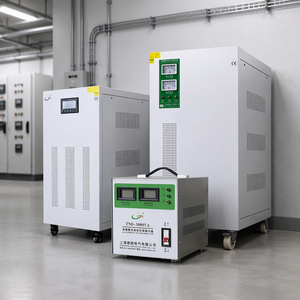
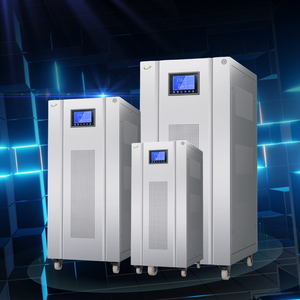
Representing the pinnacle of AC voltage stabilization, Static SCR (Silicon Controlled Rectifier) regulators eliminate all mechanical moving components. By utilizing high-power thyristor modules governed by a micro-second DSP control unit, these systems adjust transformer tap ratios at zero-crossing points. This design completely eliminates electrical arcing, acoustic noise, and mechanical wear. Facilities experiencing erratic grid spikes, heavy pulse loads, or continuous 24/7/365 operations benefit immensely from the zero-maintenance architecture and ultra-fast correction speed (<10 milliseconds) characteristic of solid-state systems.
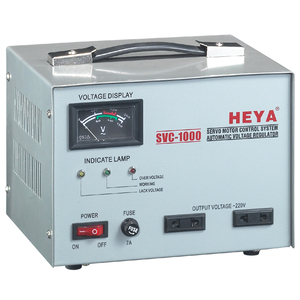
Servo-motor regulators remain the workhorse of industrial facilities worldwide due to their high power density, exceptional overload capacity, and cost-effectiveness across high KVA thresholds (up to 2000KVA+). These units utilize a precision servomotor connected to an auto-transformer and a buck-boost compensation transformer. When input voltage fluctuates, the control circuit signals the servo motor to position a carbon brush along the polished transformer surface, maintaining a stable voltage output. Top Chinese manufacturers enhance brush durability by applying specialized graphite-silver alloys and micro-stepper motors for sub-millimeter positioning accuracy.
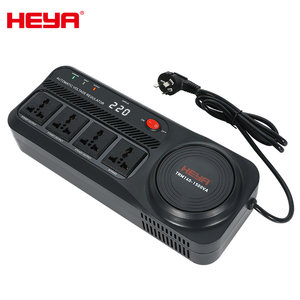
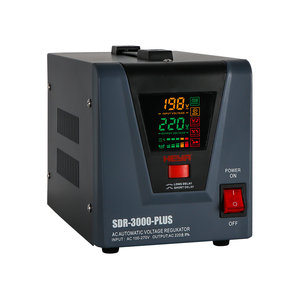
Ideal for lower power applications (0.5KVA to 10KVA), relay-switching regulators step input voltage up or down by switching secondary taps on a auto-transformer via electromagnetic relays. While offering discrete step regulation rather than a continuous smooth wave, their lightweight form factor, affordable price point, and wide input window make them the primary choice for consumer electronics, domestic appliances, and localized office equipment protection.
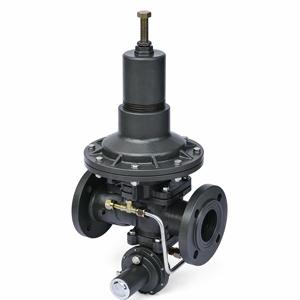
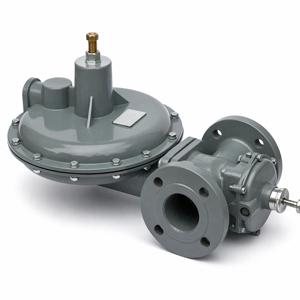
Parallel to electrical power stabilization, precision fluid dynamics require robust mechanical regulation. The RTZ-50 series gas pressure regulators are direct-acting, spring-loaded units engineered to maintain stable outlet pressure despite fluctuating inlet pressures or gas flow rates. Utilized heavily in LPG, Propane, Natural Gas, Argon, and Helium supply lines, top-tier factories construct these bodies from high-grade cast steel or aluminum alloy, featuring nitrile-coated nylon diaphragms for superior chemical resistance and zero-leakage safety guarantees.
When auditing potential voltage regulator suppliers and factories in China, buyers must evaluate technical execution across the entire manufacturing lifecycle. Enterprise-grade supplier platforms differentiate themselves through comprehensive design-for-reliability principles, robust component sourcing, and rigorous quality control methodologies:
High-grade Class H insulation electrolytic copper transformer coils ensure lower I²R losses, superior thermal dissipation, and extended service life compared to cost-reduced aluminum alternatives.
Advanced digital microprocessors continuously analyze true RMS voltage waveforms, sampling grid parameters thousands of times per second to execute instant phase compensation and harmonic filtering.
Color LCD touchscreen displays provide real-time visibility into input/output phase voltages, line currents, frequency, load percentage, historical fault logs, and RS485 Modbus remote telemetry interface.
Highly Accelerated Life Testing (HALT) and Stress Screening (HASS) subject finished regulator assemblies to extreme thermal cycling (-20°C to +60°C) and structural vibration to ensure zero-defect shipment.
Form-factored enclosures ranging from compact IP20 indoor modules to IP54 / IP65 NEMA-rated weatherproof, dust-tight, and corrosion-resistant steel cabinets designed for severe mining or outdoor environments.
As industrial automation advances toward Industry 4.0 and renewable energy microgrids become mainstream, the requirements placed on voltage regulation hardware are shifting dramatically. Key trends transforming the procurement landscape include:
Next-generation static regulators are transitioning from traditional Silicon SCRs to Silicon Carbide (SiC) and Gallium Nitride (GaN) power switches. This transition allows switching frequencies to increase exponentially, reducing internal transformer magnetics volume by over 40% while raising energy efficiency to unprecedented levels above 99%.
Modern enterprise regulators are no longer passive isolated boxes. Standard specifications now demand cloud-connected IoT gateways. Integrated sensors collect internal transformer temperatures, contact brush friction profiles, total harmonic distortion (THD), and surge event counts. Machine learning models analyze this data remotely to predict component wear and schedule preventative maintenance before catastrophic system downtime occurs.
With solar PV and battery storage systems creating bidirectional power flows, industrial regulators are being engineered with hybrid control logic. Modern stabilizers manage high grid voltage swells caused by peak solar feed-ins while maintaining precise phase synchronization during instantaneous transitions to back-up battery storage modes.
A common mistake in B2B procurement is selecting voltage regulation equipment solely based on initial purchase price (CAPEX). In continuous industrial applications, electrical losses dictate that operational expenditure (OPEX) far exceeds the initial unit cost within 18 to 24 months of deployment.
Total Cost of Ownership = Initial Purchase Price + Installation CAPEX + Lifetime Energy Loss Cost [P × (1 - η) × Hours × Rate] + Scheduled Maintenance OPEX - Residual ValueChoosing a high-efficiency Contactless SCR Regulator with 98.5% efficiency versus a low-cost conventional stabilizer operating at 92% efficiency yields massive power savings. For a 100KVA continuous industrial load, a 6.5% efficiency delta saves tens of thousands of kilowatt-hours annually, offsetting the initial price premium of premium solid-state equipment within the first year of continuous service.
Direct answers to common engineering, customization, and factory logistics queries from global equipment buyers.