
Discover our field-tested range of high-efficiency On-Board Chargers (OBC), DC-DC converters, and integrated power assemblies built to strict IATF 16949 automotive quality standards.
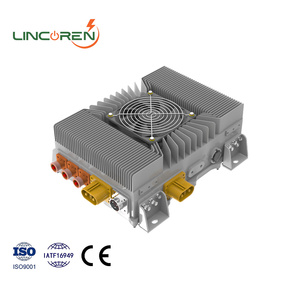
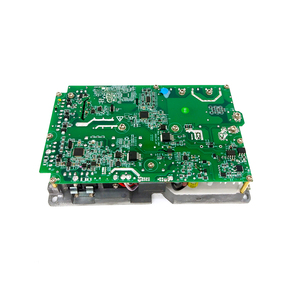
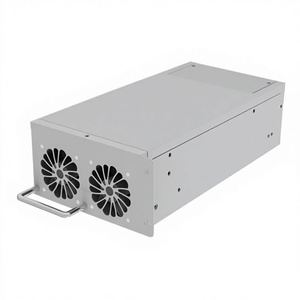
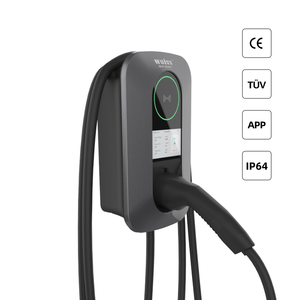
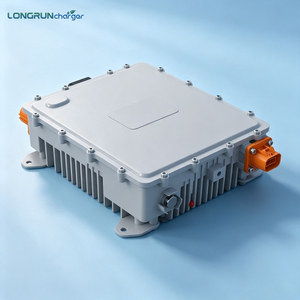
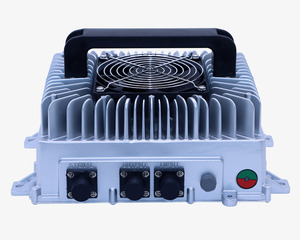
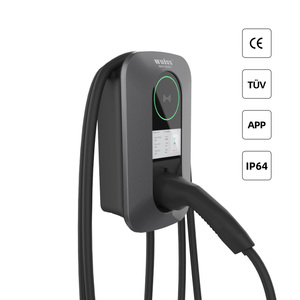
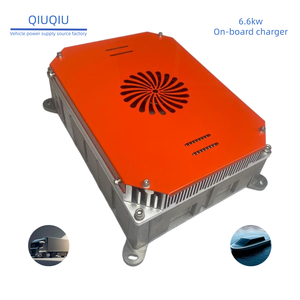
As the global automotive industry accelerates toward full electrification, the role of a premier China traction inverter manufacturer & factory shifts from simple component manufacturing to becoming a strategic technology integration partner. The main electric drivetrain—comprising the traction inverter, On-Board Charger (OBC), and high-to-low voltage DC-DC converter—demands precise thermal design, advanced semiconductor topologies, and uncompromising field reliability under extreme ambient and mechanical stress.
Modern commercial and passenger electric vehicles require power conversion systems that achieve maximum energy density while suppressing electromagnetic interference (EMI). As a dedicated OEM/ODM manufacturer, our engineering framework integrates wide bandgap (WBG) semiconductors, such as Silicon Carbide (SiC) MOSFETs, enabling system efficiencies exceeding 97.5% while reducing physical weight by up to 35% compared to legacy Silicon IGBT architectures.
By adopting third-generation SiC power modules, thermal switching losses are reduced by up to 70% at high switching frequencies (20 kHz - 50 kHz). This allows for dramatically smaller passive filtering components, lighter cooling jackets, and an extended vehicle driving range under urban stop-and-go driving cycles.
Engineered for ultra-fast charging platforms supporting 400V-to-800V voltage doubling, minimizing copper weight and heat generation during high-current energy transfers.
Dual-stage active resonant converters enabling Vehicle-to-Grid (V2G) and Vehicle-to-Load (V2L) energy export with seamless AC/DC power synchronization.
Combining Traction Inverter, OBC, and DC-DC converters within a single IP67 cast aluminum housing, reducing interconnect wire harnesses and point-of-failure risks.
Procurement directors and vehicle design engineers must evaluate future-proof power conversion technologies to stay ahead of international safety standards and consumer performance expectations. Key development vectors include:
The transition from traditional Silicon IGBT switches to SiC MOSFETs allows traction inverters and OBC modules to operate at substantially higher switching frequencies. This dramatically decreases the physical footprint of inductors, capacitors, and planar transformers while reducing thermal dissipation requirements.
On-board chargers are rapidly evolving from uni-directional battery replenishment tools into bi-directional smart power hubs. Modern 3.3kW and 6.6kW OBC units incorporate grid-tied inversion logic, allowing electric commercial trucks, buses, and passenger cars to feed power back into industrial equipment or municipal microgrids.
Thermal management is the single biggest factor governing component lifespan in automotive power electronics. Custom-machined pin-fin cooling channels integrated directly into the traction inverter chassis ensure uniform junction temperatures under continuous heavy acceleration cycles.
The following performance breakdown outlines the key parameter shifts across standard vehicle power conversion topologies manufactured in our China facility:
| Specification Parameter | Standard Silicon (IGBT) Systems | Next-Gen SiC MOSFET Systems | Integrated 3-in-1 Assemblies |
|---|---|---|---|
| Operating Voltage | 250V - 450V DC | 400V - 850V High-Voltage Bus | Multi-Voltage (48V - 650V) |
| Peak Conversion Efficiency | 93.5% - 95.0% | 97.2% - 98.6% | 96.0% Overall System Avg. |
| Switching Frequency | 8 kHz - 15 kHz | 40 kHz - 100 kHz | 20 kHz - 65 kHz |
| Power Density | 10 - 15 kW/L | 25 - 40 kW/L | 18 - 30 kW/L |
| Cooling Requirement | Heavy Liquid Loop / Large Fins | Compact Liquid Plate / Air-Cooled | Integrated Shared Fluid Loop |
| EMC Compliance | CISPR 25 Class 3 | CISPR 25 Class 5 (Shielded) | CISPR 25 Class 4/5 Internal |
Global original equipment manufacturers (OEMs) and commercial vehicle integrators face shifting supply chain dynamics, rising compliance requirements, and aggressive cost-performance mandates. Sourcing from a top China traction inverter factory provides distinct advantages in speed-to-market, scale, and custom engineering flexibility.
Rather than designing custom power stages for every vehicle model, procurement teams are adopting modular brick platforms. Standardized footprints—such as DOSA-compliant low-voltage DC-DC converters and scalable 3.3kW-to-6.6kW OBC modules—allow engineers to scale power outputs without redesigning the core sub-assembly hardware.
Leading tier-1 buyers require 100% component-level traceability, encompassing semiconductor wafer lot verification, automated optical inspection (AOI), and full HALT/HASS stress testing prior to shipment. A trusted supplier must maintain ISO 9001 and IATF 16949 quality certifications.
In addition to initial bill-of-materials (BOM) cost, procurement evaluations focus on field reliability rates (MTBF > 500,000 hours), warranty exposure, and overall thermal efficiency, which directly impacts battery sizing and cooling loop design costs.

Combining decades of switch-mode power conversion experience with cutting-edge automated production lines and automotive qualification protocols.
Over 80 senior power electronics engineers specializing in resonant LLC topologies, high-frequency transformer design, digital control loop algorithms, and CAN/LIN communication stack integration.
Full compliance with IATF 16949 standards, operating automated surface mount technology (SMT) lines, selective soldering, 3D AOI inspection, and 100% full-load burn-in testing.
Rapid semi-custom and full-custom capabilities for mechanical chassis modification, custom pinouts, specialized liquid cooling fittings, and proprietary firmware flashing.
Every traction inverter, on-board charger module, and isolated DC-DC converter manufactured in our facility undergoes rigorous verification stages before leaving the plant:
Answers to common technical, commercial, and engineering integration questions from international OEM procurement managers.