
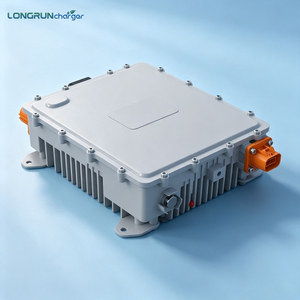
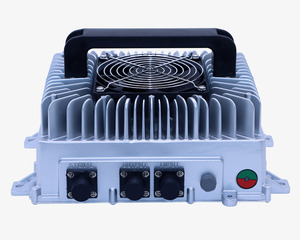
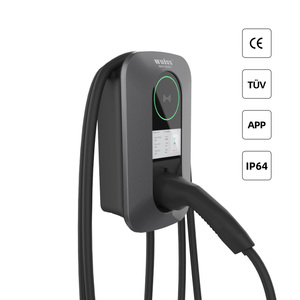
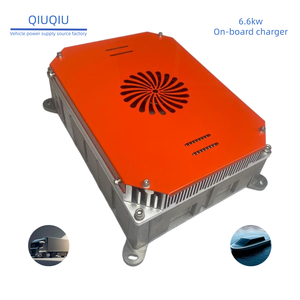
High-efficiency, IP67-rated micro-inverters, on-board chargers (OBC), and DC-DC power conversion modules engineered for electric vehicles, industrial machinery, and micro-grid energy systems.
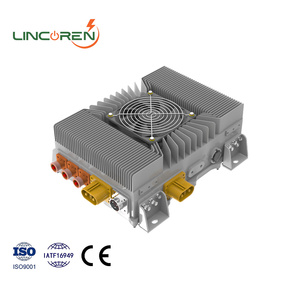
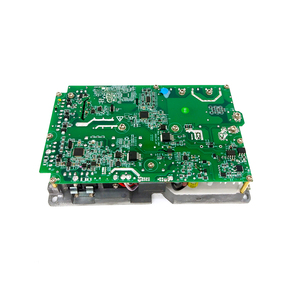
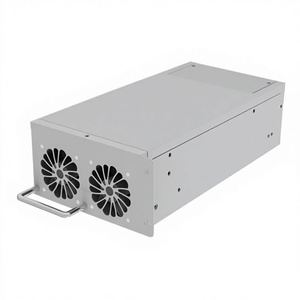
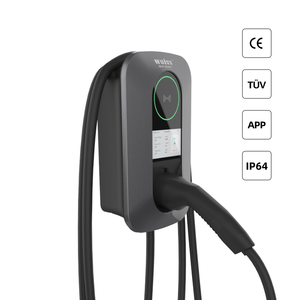
An authoritative analysis of power electronics manufacturing, semiconductor topology evolution, and strategic global B2B procurement in 2025 and beyond.
The global energy conversion landscape is undergoing a structural transition toward decentralized power architectures. In both distributed photovoltaic (PV) generation and e-Mobility infrastructure, China has established itself as the world's primary innovation hub for micro-inverters, isolated board-mounted DC-DC converters, and on-board chargers (OBC). Modern tier-1 Original Equipment Manufacturers (OEMs) and procurement buyers no longer evaluate suppliers solely on unit cost; the paradigm has shifted toward Information Gain—evaluating energy density per cubic centimeter, long-term thermal margin under harsh environmental stress, and firmware-level CAN communication scalability.
Top Chinese micro-inverter and power module factories lead this transformation by integrating wide bandgap (WBG) semiconductors, notably Silicon Carbide (SiC) MOSFETs and Gallium Nitride (GaN) HEMTs. These advanced semiconductor switches enable high switching frequencies (spanning 100 kHz to over 500 kHz), drastically reducing magnetic core volume and filter capacitance while maintaining thermal derating stability under full continuous load.
Micro-power converters isolate failure points down to individual module rails or solar panels. Compared to traditional centralized inverters or bulky external battery chargers, micro-inverter architectures achieve up to 18% higher lifetime yield, eliminate high-voltage DC single-point arc risks, and provide granular digital telemetry via real-time CAN bus monitoring.
Furthermore, China’s industrial ecosystem provides an unmatched vertical integration advantage. From automated surface-mount technology (SMT) lines to in-house magnetic core winding, planar transformer manufacturing, and automated vacuum potting, premier manufacturers reduce total cost-of-ownership (TCO) while offering robust ODM/OEM customization for commercial vehicles, telecom power shelves, and residential micro-grids.
Evaluating topology performance parameters for engineering specification teams and global B2B buyers.
| Architecture Parameter | Legacy Central Inverters / Chargers | Next-Gen China Micro Inverters | NetPower / Dilong Integrated OBC & DC-DC |
|---|---|---|---|
| Switching Topology | Hard-switched Silicon IGBTs (10–20 kHz) | Soft-switched SiC/GaN LLC Resonant (100–300 kHz) | Bidirectional Active Clamp & Phase-Shifted Full Bridge |
| Peak Efficiency | 88% – 92% | 95.5% – 96.8% | 95.0% – 96.5% Continuous |
| Thermal Management | Heavy External Forced Air Fans | Potting Encapsulated Conduction Cooling | IP67 Liquid & Micro-Channel Conduction Cooled |
| Power Density | Low (< 0.5 W/cm³) | High (> 2.5 W/cm³) | Ultra-High (Up to 3.8 W/cm³ in Brick Packages) |
| Environmental Resistance | IP20 – IP42 (Cabinet Dependent) | IP65 – IP67 Encapsulated | IP67 / IP69K Fully Sealed Metal Enclosures |
| System Fault Tolerance | Single Point System Disruption | Isolated Module-Level Redundancy | Dual-Subsystem Redundant (OBC + DC/DC) |
Why leading global tier-1 integrators specify Chinese high-density power modules and custom micro-inverters.
From sub-15W micro power modules to 5kW industrial vehicle converters, standard brick packages (1/32nd, 1/16th, 1/8th, quarter, half, and full brick) follow rigorous DOSA footprints. Designers scale single architectures across entire equipment platforms effortlessly.
Engineered for extreme operating environments. Automated high-vacuum polyurethane potting protects internal planar magnetics against shock, vibration, moisture, and chemical corrosion in heavy machinery, mining EVs, and outdoor solar setups.
Every module undergoes Automated Optical Inspection (AOI), High-Accelerated Life Testing (HALT), High-Accelerated Stress Screening (HASS), and 100% full continuous burn-in at elevated ambient temperatures before shipping. Full lot-level material traceability guaranteed.
Isolated converter platforms support extensive input bands: 9-36V, 9-75V, 18-75V, 36-75V, 16-160V, 34-160V, up to high-voltage automotive ranges of 180-400V, 300-500V, and 400-650V DC for seamlessly matching diverse battery chemistries.
Integrated CAN 2.0B protocols with customizable baud rates enable real-time telemetry of voltage, current, internal hot-spot temperature, fault diagnostic codes, and bootloader firmware updates over-the-air (OTA) for smart fleet management.
Standard platforms can be mechanically or electrically tailored. Engineers adjust mechanical mounting plates, pinouts, custom thermal liquid plates, and specific software firmware profiles with low NRE costs and rapid sample lead times.
Strategic insights for sourcing managers, procurement engineers, and system architects specifying Chinese power electronics components.
The line between solar micro-inverters and EV power electronics is blurring rapidly. Future OBCs and micro-converters are transitioning to bidirectional topologies. A 3.3kW or 6.6kW on-board charger now operates as both a Grid-to-Vehicle (G2V) charger and a Vehicle-to-Grid (V2G) micro-inverter capable of supplying 120V/240V AC back to micro-grids during peak demand. Sourcing teams should prioritize manufacturers offering dual AC/DC bi-directional matrix switching controls.
Discreet DC-DC converters and isolated chargers are being consolidated into integrated multi-in-one power assemblies (Combo Units combining OBC + DC-DC + Power Distribution Unit PDU). By sharing heavy metal heat sinks, structural housings, and high-voltage bus connectors, multi-in-one assemblies reduce total volumetric footprint by 35% and system weight by 25%, directly extending electric vehicle operating range.
While 400V battery buses remain prevalent in commercial vehicles and light passenger cars, premier OEMs are accelerating adoption of 800V SiC-based architectures. Modern micro-power suppliers in China are expanding input voltage capabilities up to 650V-1000V DC, lowering current draw, mitigating resistive copper losses (I²R), and facilitating ultra-fast DC charging without thermal runaway.
As power density escalates beyond 3 W/cm³, traditional air cooling reaches physical thermal dissipation limits. Procurement trends show a decisive shift toward integrated liquid-cooled cold plates utilizing ethylene glycol water mixtures. Chinese factories are utilizing friction stir welding (FSW) to integrate low-pressure-drop liquid channels directly into aluminum chassis, guaranteeing junction temperatures stay below 105°C during continuous heavy duty operations.
Clear, expert responses to the most critical technical and commercial questions raised by international OEM purchasers.