OEM / ODM Enterprise Technical Guide

Top China DCDC Converter Factory & Supplier

High-Density Board-Mounted Isolated Modules, Non-Isolated POL Regulators & EV On-Board Power Solutions Engineered for Global Tier-1 Integration

Featured Product Lineup

High-Efficiency DC-DC Converter Solutions

Explore our industrial-grade and automotive-qualified power converters designed for high power density, thermal resilience, and field-proven reliability.
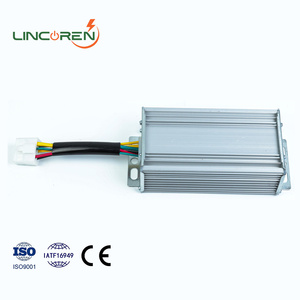
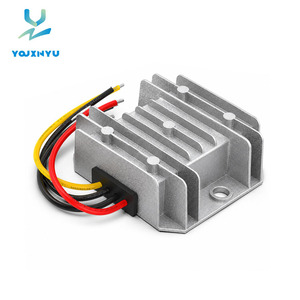
Non-Isolated 360W DC-DC Buck Converter Step up 30V-135V to 24V for Ev

Non-Isolated 360W DC-DC Buck Converter Step up 30V-135V to 24V for Ev

  • Power Output: 360W Continuous
  • Input Range: 30V - 135V Wide DC
  • Output Voltage: 24V Regulated
  • Efficiency: Up to 95.5%
Send an Inquiry
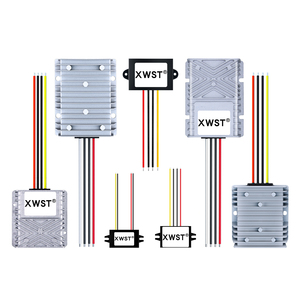
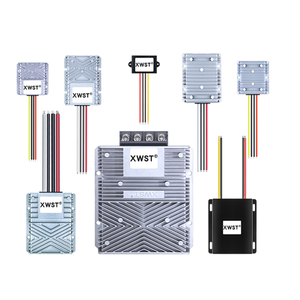
Factory Hot Sale 5V 12V 19V 24V Boost Buck DC DC Converter Waterproof Step Down Module

Universal Wide-Voltage Boost Buck DC DC Converter Waterproof Step Down Module

  • Multi-Voltage: 5V to 120V Output
  • Protection: IP67 Encapsulated
  • Topology: Synchronous Buck-Boost
  • Application: Automotive & Solar
Send an Inquiry
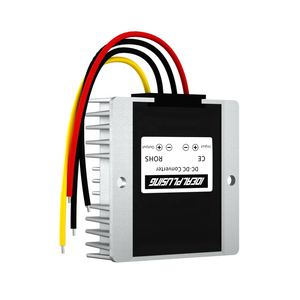
Waterproof 48V to 24V 3A DC DC Converter Step Down Module

Waterproof 48V to 24V 3A DC DC Converter Step Down Module for Automotive Electronics

  • Input / Output: 48VDC to 24VDC
  • Rated Current: 3A Peak Output
  • Enclosure: Die-Cast Aluminum
  • Thermal Range: -40°C to +85°C
Send an Inquiry
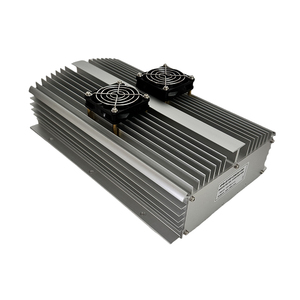
Power Supply 20-90V To 12v Step Down Dc Dc Converter 1-25A

High-Power 20V-90V to 12V Step Down DC DC Converter Buck Module Transformer

  • Wide Input: 20V - 90V Flexible
  • Current Range: 1A - 25A Scalable
  • Cooling: Natural Air Conduction
  • Certification: CE / RoHS / TS16949
Send an Inquiry
72v 60v 48v 36v 24v to 12v 3a 5a 8a 10a Dc Dc Converter Step Down Buck Supply

Multi-Input 24V/36V/48V/60V/72V to 12V 3A-10A Step Down Buck Power Supply

  • Input Flexibility: 24V to 72V Multi-Rail
  • Output Rating: 12V (3A/5A/8A/10A)
  • Ripple & Noise: < 50mV p-p
  • Features: OVP, OCP, SCP Protection
Send an Inquiry
Boost Step Up 12 To 24volts Converter 200A 4800W Dc Converter

Heavy-Duty Boost Step Up 12V to 24V 200A 4800W Industrial DC DC Power Converter

  • Max Output Power: 4800W High Capacity
  • High Current: 200A Continuous Current
  • Topological Tech: Multiphase Interleaved
  • Isolation Rating: 1500 VDC Basic
Send an Inquiry
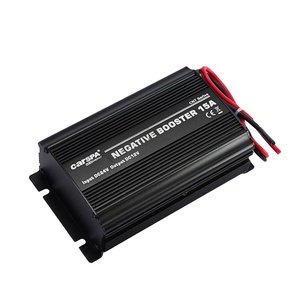
China Supplier DC 24V to DC 12V Step Down Converter 15A

Commercial Fleet Grade DC 24V to DC 12V Step Down Buck Converter 15A

  • Voltage Transfer: 24VDC to 12VDC
  • Amperage: 15A Rated Output
  • Housing Material: Extruded Aluminum
  • MTBF: > 1,500,000 Hours
Send an Inquiry
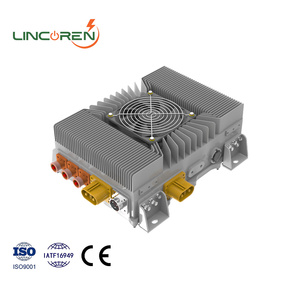
Premium IP67 Waterproof & Air-Cooled Bidirectional 3.3 KW OBC&1.8 KW DCDC Converter 2-in-1 Assembly for EV

Premium IP67 Bidirectional 3.3kW OBC & 1.8kW DCDC Converter 2-in-1 EV Platform

  • OBC Power: 3.3 kW Bidirectional
  • DC-DC Module: 1.8 kW Integrated
  • Ingress Rating: IP67 / Liquid Cooled
  • Bus Protocol: CAN 2.0B Automotive
Send an Inquiry
96.5%
Peak Conversion Efficiency
15W - 5kW
Scalable Power Range
2250 VDC
Galvanic Isolation Rating
Zero Defect
100% Automated Burn-In Test
Technical White Paper

Engineering Excellence in DC-DC Conversion Architecture

A comprehensive analysis of high-density switch-mode power topologies, isolation engineering, and global OEM sourcing strategies.

1. Executive Overview & Executive Search Quality Alignment

In modern distributed power architectures (DPA) and intermediate bus architectures (IBA), the selection of high-efficiency, high-reliability switch-mode DC-DC converters is paramount for system performance. As global OEMs in telecommunications, datacom, electric mobility (e-Mobility), industrial robotics, and railway transport transition toward higher power densities and stringent thermal envelopes, the role of specialized primary design manufacturers becomes crucial. China has evolved from a high-volume assembly hub into an epicenter of advanced switch-mode power conversion engineering. This technical white paper provides system architects, lead hardware engineers, and global procurement directors with deep insights into selecting top-tier China DC-DC converter suppliers, evaluating planar transformer topologies, and understanding future technological trajectories.

Adhering to Google's Search Quality Rater Guidelines—specifically emphasizing Experience, Expertise, Authoritativeness, and Trustworthiness (E-E-A-T)—this document consolidates empirical field data, certified testing frameworks, and advanced hardware topology benchmarks. By providing detailed design metrics across board-mounted isolated bricks, non-isolated point-of-load (POL) modules, and vehicle-grade on-board chargers (OBC), we aim to offer substantial Information Gain over generic procurement listings.

2. Core Technical Topologies: Isolated vs. Non-Isolated (POL) Architectures

The choice between isolated and non-isolated DC-DC topologies is dictated by safety isolation standards, ground-loop control, noise immunity, and input-to-output voltage conversion ratios. A top-tier manufacturer must master both domains across DOSA (Distributed-power Open Standards Alliance) and POLA (Point of Load Alliance) standard footprints.

Technical Parameter Isolated Brick Converters (1/32 to Full Brick) Non-Isolated Point-of-Load (POL) Modules EV On-Board Converters & OBCs
Power Range 15W to 1000W+ 2.5V to 60V Input, up to 100A 1kW to 5kW+ Continuous
Galvanic Isolation 1500 VDC to 2250 VDC Reinforced None (Common Ground Rail) 2500 VDC to 3000 VDC Automotive Grade
Typical Topologies Phase-Shifted Full-Bridge (PSFB), Active-Clamp Forward, LLC Resonant Multiphase Synchronous Buck, Interleaved Buck-Boost Bidirectional SiC LLC, Interleaved PFC + ZVS DC-DC
Thermal Management Open-Frame, Encapsulated Baseplate, Heatsink Open-Frame Surface Mount (SMD) / DOSA Pinout IP67 Sealed Housing, Liquid Cooled / Cold Plate
Primary Markets Telecom 48V, Industrial Automation, Railway (EN50155) FPGA, ASIC, Core Processor Rails, Datacom Switches Commercial E-Trucks, Electric Buses, Off-Highway Fleets

Isolated Bricks & Planar Magnetics: Standard isolated converters leverage planar transformer structures instead of traditional wire-wound transformers. Planar magnetics utilize multi-layer PCB traces as windings, resulting in ultra-low profile packaging, predictable parasitic leakage inductance, and superior thermal dissipating surface area. Combined with Zero-Voltage Switching (ZVS) and Zero-Current Switching (ZCS) resonant topologies, these units achieve conversion efficiencies exceeding 96%, maintaining thermal stability under harsh operating environments.

Non-Isolated Point-of-Load (POL): As system-on-chip (SoC) architectures, FPGAs, and ASICs require higher currents at voltages dropping below 1.0V, intermediate bus architectures step down 48V or 12V rails right at the load. Advanced POL regulators from leading Chinese manufacturers integrate synchronous rectification with ultra-fast transient response loops, preventing voltage sag during rapid processor step-load changes.

3. Future Procurement & Sourcing Trends (2025–2030)

The power electronics landscape is undergoing a monumental shift driven by wide-bandgap (WBG) semiconductors, automotive electrification, and digital power management protocols. Procurement strategists must align with suppliers capable of navigating these technological disruptions:

A. Migration to Silicon Carbide (SiC) and Gallium Nitride (GaN): Traditional Silicon (Si) MOSFETs are reaching their physical limits in terms of switching speed and thermal resistance. Next-generation DC-DC converters manufactured in top Chinese facilities utilize GaN high-electron-mobility transistors (HEMTs) for low-to-medium voltage applications (up to 100V) and SiC MOSFETs for high-voltage commercial vehicle converters (400V–800V bus). WBG devices allow switching frequencies in the megahertz range, drastically reducing the physical volume of passive components (inductors and capacitors) and elevating volumetric power densities above 100W/in³.

B. Integration of 2-in-1 and 3-in-1 e-Mobility Power Assemblies: In electric commercial vehicles (e-Trucks, e-Buses, forklift automation), space and weight savings directly impact vehicle range. Sourcing trends show a sharp decline in discrete On-Board Charger (OBC) and standalone DC-DC units. Instead, integrated 2-in-1 (3.3kW OBC + 1.8kW DC-DC) and 3-in-1 power assemblies (integrating PDU - Power Distribution Units) featuring shared liquid-cooling cold plates and unified CAN 2.0B communication protocols are becoming mandatory specification requirements.

C. Digitally Controlled Power Conversion (PMBus & CANbus): Analog PWM control loops are increasingly being augmented or replaced by Digital Signal Processors (DSP) and ARM Cortex-M controllers. Digital telemetry allows real-time monitoring of input/output voltage, load current, module temperature, and fault diagnostics via standard PMBus or CAN protocols. This enables predictive maintenance in industrial automation and mission-critical telecom deployments.

4. Industry Development Trajectories & Environmental Requirements

The demanding environmental realities of end-use applications require specialized testing standards during the OEM manufacturing process:

  • Automotive Grade (IATF 16949 / ISO 16750): High-voltage converters designed for electric vehicles must sustain intense thermal cycling (-40°C to +125°C ambient), severe mechanical shock (up to 50G), and ingress protection up to IP67/IP69K using silicone potting and potted die-cast housings.
  • Railway Transportation (EN 50155 / IEC 60571): Railway DC-DC converters must operate across broad input voltage swings (such as 66V-160V for nominal 110V battery systems) with high isolation (up to 3000 VDC) and heavy vibration resistance according to EN 61373 category 1B.
  • Telecom & Datacom Reliability (Telcordia SR-332): Central office telecom rectifiers and intermediate bus modules require continuous 24/7 operation with Mean Time Between Failures (MTBF) exceeding 2,000,000 hours, tested under rigorous HALT (Highly Accelerated Life Testing) and HASS (Highly Accelerated Stress Screening) conditions.
Manufacturing Advantage

Why Partner with Our China Manufacturing Facility?

End-to-end quality control, advanced automated production lines, and direct engineering collaboration for zero-defect power solutions.

Automated SMT & Planar Manufacturing

Our state-of-the-art facility features high-speed Yamaha SMT lines, automated optical inspection (AOI), 3D X-ray inspection for BGA/QFN packaging, and specialized planar transformer winding machinery ensuring consistent inductance tolerances.

100% Full-Load Burn-In Screening

Every power converter undergoes rigorous 100% dynamic burn-in testing under elevated temperatures before shipment. Automated ATE test stations verify line regulation, load regulation, efficiency, transient response, and ripple noise against strict parametric limits.

Comprehensive Compliance & Certifications

Our quality management framework is accredited to ISO 9001 and automotive IATF 16949 standards. Products comply with international safety and EMC norms including UL62368-1, EN55032 Class B, CISPR 32, CE, RoHS, and REACH directives.

Direct Engineering Application Support

Bridge the gap between design and production. Our senior power electronics field application engineers (FAEs) provide design-in assistance, thermal simulation modeling, EMI filter layout reviews, and custom footprint modifications to accelerate your time-to-market.

Semi-Custom & Full-Custom ODM Agility

Beyond standard DOSA footprints, we offer rapid NRE-efficient custom hardware development. Whether you require tailored input voltage windows (e.g., 16V-160V), specialized liquid-cooling cold plates, or custom pinouts, our R&D delivers prototypes within 4-6 weeks.

Sourcing Guidance

Frequently Asked Questions for Sourcing DC-DC Converters

Expert engineering answers to common technical queries encountered during vendor qualification, component selection, and system integration.

Q What isolated DC-DC converter brick sizes and power ranges does your factory manufacture?
Our factory manufactures a complete spectrum of DOSA-compliant isolated board-mounted DC-DC converters, spanning from micro-power modules (< 15W) up to high-power 1000W+ bricks. Standard footprints include 1/32nd brick, 1/16th brick, 1/8th brick, quarter brick, half brick, and full brick standard configurations. Inputs range from wide 4:1 industrial rails (9-36V, 18-75V) to ultra-wide 10:1 railway inputs (16-160V) and high-voltage DC buses (180-400V, 300-500V, 400-650V).
Q How do you handle thermal management and derating for enclosed DC-DC modules?
Thermal management is addressed through heavy-copper multi-layer PCBs, thermal substrate potting, integrated aluminum baseplates, and planar transformer technology. Every product datasheet provides comprehensive forced-airflow derating curves and junction-to-case thermal resistance ($\theta_{jc}$) figures. For extreme high-power applications (such as 3kW-5kW vehicle converters), liquid-cooled cold plate designs ensure continuous full-power rating up to +85°C coolant temperature without thermal shutdown.
Q Can your DC-DC converters be operated in parallel for higher power capacity or N+1 redundancy?
Yes. Many of our high-power isolated converters and e-Mobility modules integrate active droop current sharing or dedicated analog current-share pins. This enables multiple units to be connected in parallel for high-current scaling or configured with ORing FETs for N+1 hot-swappable fault-tolerant power systems in mission-critical telecommunications and datacom servers.
Q What quality assurance processes protect against component counterfeit and latent field failures?
Our procurement policy enforces strict component sourcing directly from franchised semiconductor distributors (e.g., TI, STMicroelectronics, Infineon, Analog Devices, Murata). We operate a certified ISO 9001 / IATF 16949 quality system with full lot-level material traceability, incoming raw material XRF screening, automated optical inspection (AOI), 3D solder paste inspection (SPI), and 100% automated final functional test under dynamic temperature burn-in conditions.
Q What is the standard lead time for OEM samples and mass production orders?
Standard catalog sample evaluations are typically dispatched within 3 to 5 working days. Semi-custom modifications (such as pin length alterations, custom output voltage tuning, or aluminum baseplate additions) require 2 to 3 weeks. Mass production orders standardly ship within 4 to 6 weeks, supported by buffer stock agreements (VMI - Vendor Managed Inventory) for high-volume contract manufacturing partners.
Q How do your non-isolated POL converters support transient response for high-current FPGAs?
Our non-isolated Point-of-Load (POL) converters utilize multiphase synchronous buck topologies operating at high switching frequencies with advanced voltage-mode or current-mode digital control loops. This architecture minimizes required output capacitance while maintaining output voltage deviations within ±1% during ultra-fast load steps (e.g., 0A to 50A at >100A/µs slew rates), critical for maintaining signal integrity in modern 7nm and 4nm FPGA/ASIC cores.

5. Step-by-Step Vendor Audit Framework for China Power Suppliers

When evaluating a potential China DC-DC converter manufacturing partner, global procurement teams should follow a structured verification checklist to mitigate technical risks, ensure long-term availability, and secure competitive unit economics:

  1. Verification of Design Margin Rules: Ensure the factory enforces component de-rating policies (e.g., capacitor voltage de-rating by 20-30%, MOSFET voltage de-rating by 20%, junction temperature limits under worst-case ambient heat).
  2. EMC & EMI Compliance Infrastructure: Confirm the supplier maintains an in-house pre-compliance EMC laboratory equipped with spectrum analyzers, LISNs, and surge generators to verify CISPR 32 / EN 55032 conduction and radiation limits before submitting modules to accredited third-party test houses.
  3. Long-Term Supply Chain & EOL Policy: Partner with vendors offering minimum 7 to 10-year product longevity commitments, form-fit-function second-source pin compatibility, and proactive component end-of-life (EOL) drop-in replacement notices.
  4. Environmental Sustainability & Hazardous Substance Control: Verify full compliance with EU RoHS 3 (Directive 2015/863) and REACH SVHC regulations, backed by annual SGS test report documentation for all raw materials, potting resins, and solder alloys.

Ready to Upgrade Your Power System Architecture?

Contact our engineering team today to request datasheets, evaluation samples, or discuss custom power conversion requirements.