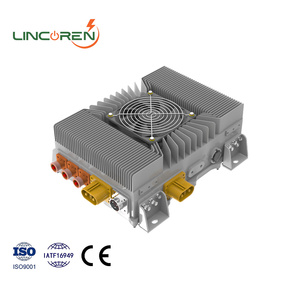
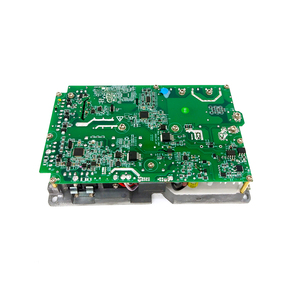
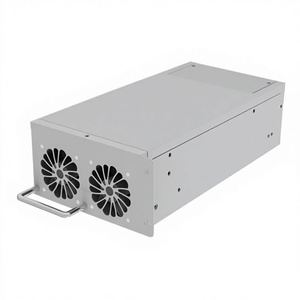
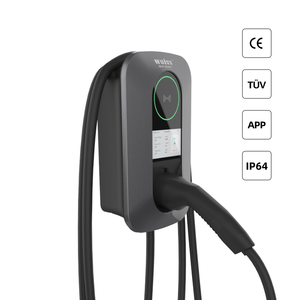
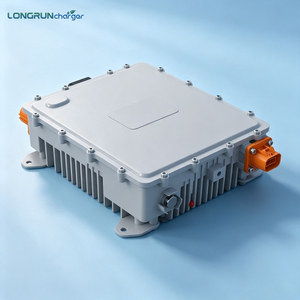
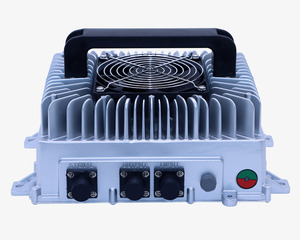
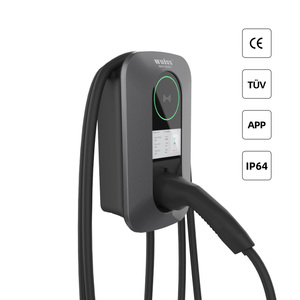
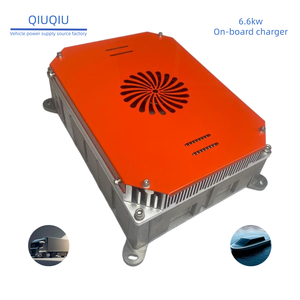
Explore our high-performance boost converters, isolated power modules, and integrated OBC assemblies engineered for extreme environments.
Backed by decades of power electronics expertise, rigorous testing methodologies, and millions of units deployed globally, our manufacturing framework delivers uncompromised reliability.
As a premier enterprise in high-efficiency, high-power-density board-mounted isolated DC-DC converters, non-isolated point-of-load (POL) modules, and specialized EV on-board converters, our production lines operate under strict international quality management standards. From initial architectural conceptualization and thermal simulation to advanced worst-case circuit analysis, every stage of product development is engineered to exceed industry benchmarks.
Our specialized engineering team applies exhaustive component de-rating protocols, accelerated life testing (HALT/HASS), and rigorous statistical process control. This unwavering dedication ensures that whether you are integrating low-power isolated modules into telecommunications infrastructure or deploying heavy-duty 5kW liquid-cooled on-board chargers into commercial electric fleets, the performance remains exceptionally stable, highly efficient, and field-proven.
An authoritative analysis of technical specifications, topology selection criteria, and procurement strategies for tier-1 engineering organizations.
The rapid evolution of modern industrial automation, telecommunications networks, data communication hubs, and e-Mobility transportation systems has drastically accelerated the demand for highly optimized power conversion modules. At the core of these sophisticated electronic ecosystems lies the DC-DC converter and the power boost converter. Designed to step up lower input voltages to regulated, higher output voltages while sustaining minimal electromagnetic interference (EMI) and maximum thermal efficiency, modern boost converters serve as vital building blocks for system designers worldwide.
China has emerged as the global epicenter for power electronic manufacturing, driven by extensive research and development investments, highly integrated supply chains, and stringent adherence to international quality protocols. Collaborating with tier-1 China boost converter manufacturers and specialized factories grants global buyers direct access to cutting-edge topologies—ranging from open-frame board-mounted modules (micro-power modules, 1/32nd, 1/16th, 1/8th, quarter, half, and full brick formats) to ruggedized, IP67-sealed, liquid- or air-cooled e-Mobility systems rated up to 5kW and beyond.
When specifying power modules for mission-critical deployments, engineers must evaluate several key performance indicators (KPIs) to ensure long-term reliability and system compatibility. Understanding these parameters separates high-end industrial power solutions from substandard consumer-grade alternatives:
As global industries transition toward electrified transportation, smart grid infrastructure, and decentralized renewable energy networks, the procurement landscape for power supplies is undergoing significant transformation. Key trends shaping the future of power module sourcing include:
Integration of Wide Bandgap (WBG) Semiconductors: The adoption of Silicon Carbide (SiC) and Gallium Nitride (GaN) power switches is no longer experimental; it is rapidly becoming standard practice. These advanced materials enable significantly higher switching frequencies, drastically reduced passive component sizes, and superior thermal performance. Sourcing partners who master WBG device integration deliver converters with unprecedented power density.
Smart Digital Control and CAN Bus Communication: Modern electric vehicles and industrial automation cells demand real-time telemetry, remote diagnostic capabilities, and adaptive parameter tuning. Power conversion modules equipped with integrated CAN communication protocols allow system controllers to monitor voltage, current, temperature, and fault status dynamically, improving overall system uptime and predictive maintenance workflows.
Customization and Modular Scalability: While standard footprint modules (such as DOSA-compatible bricks) remain foundational, the demand for semi-custom and full-custom mechanical packaging is surging. Procurement directors increasingly favor manufacturing partners capable of tailoring pinouts, connector types, firmware logic, and enclosure designs to match exact platform footprints with minimal Non-Recurring Engineering (NRE) friction.
The versatility of advanced boost converters and power modules is best illustrated by their deployment across diverse, high-stress sectors:
Electric Vehicles & e-Mobility: Electric trucks, transit buses, agricultural machinery, and specialty off-highway vehicles require ruggedized high-voltage to low-voltage (HV-LV) DC-DC converters and integrated on-board chargers (OBC). These units must withstand severe mechanical shock, continuous vibration, moisture ingress (IP67), and extreme thermal fluctuations.
Railway & Transportation Systems: Rolling stock electronics operate in environments subject to severe electrical noise and wide input voltage surges. Reinforced isolation and robust transient protection ensure uninterrupted operation of signaling, communication, and onboard auxiliary power supplies.
Telecom & Datacom Infrastructure: Base stations, optical network terminals, and server power shelves rely on stable 48V intermediate bus architectures and high-density POL regulators to power high-speed processors and communication ASICs with microsecond transient response times.
Discover how our rigorous design, testing, and production standards guarantee flawless field performance.
Compact footprints delivering maximum continuous power output without thermal throttling.
100% automated optical inspection, functional burn-in screening, and full lot traceability.
Optimized conduction, liquid, and air-cooled housing options for harsh thermal conditions.
Direct collaboration with expert power designers for tailored mechanical and electrical solutions.
Expert answers regarding power ratings, input voltages, customization options, and quality assurance.
Connect with our technical sales team today to request complete product catalogs, detailed specification sheets, or custom engineering consultations.
Get Catalog