
Explore high-efficiency, IP67-rated power conversion systems engineered for electric vehicles, commercial transportation, telecom platforms, and heavy industrial machinery.
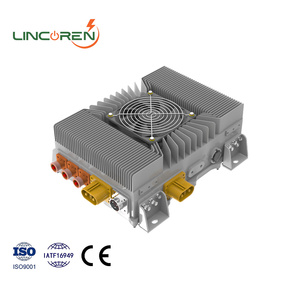
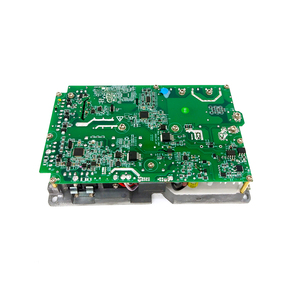
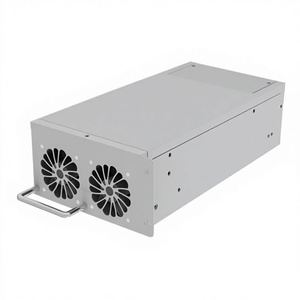
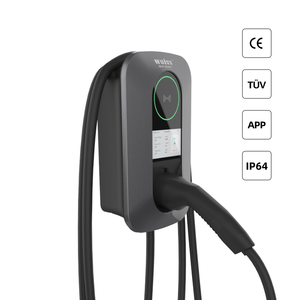
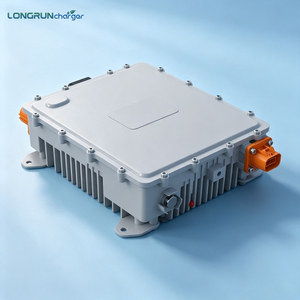
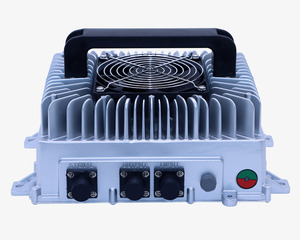
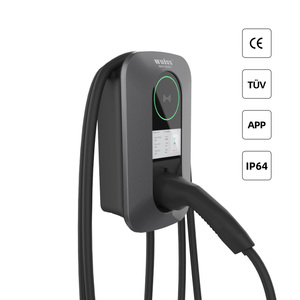
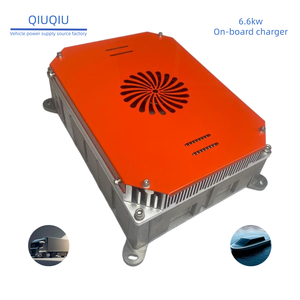
The global power electronics landscape is undergoing a systemic transformation. Driven by the accelerated electrification of passenger and commercial vehicles, rapid expansion of 5G telecom infrastructure, hyper-scale AI datacenters, and industrial automation, selecting a qualified power supply supplier has escalated from a tactical procurement task to a strategic engineering imperative. Power supply modules—spanning board-mounted isolated DC-DC converters, non-isolated Point-of-Load (POL) regulators, On-Board Chargers (OBC), and integrated 2-in-1 power assemblies—form the backbone of system operational uptime, thermal safety, and energy efficiency.
For system architects and procurement directors, identifying the top manufacturers requires evaluating not only headline power density ($W/in^3$) and nominal efficiency figures, but also field reliability under adverse thermal stress, compliance with international standards (such as ISO 26262 ASIL-D, IATF 16949, UL62368-1, and EN50155), and custom OEM engineering agility.
Based on global manufacturing capacity, technological innovation in wide-bandgap (SiC/GaN) semiconductors, design-for-reliability metrics, and customer satisfaction across automotive and industrial sectors, the following leading vendors define the current power conversion market:
| Manufacturer | Primary Product Expertise | Target Industries | Core Competitive Advantage |
|---|---|---|---|
| NetPower Technologies | Board-Mounted DC-DC Bricks, OBC & EV Converters, DOSA POLs | EV Transportation, Telecom, Datacom, Railway, Heavy Industrial | Ultra-high thermal margins, extensive input voltage spans (9V–650V), full OEM customization agility. |
| Delta Electronics | Industrial SMPS, Server Power Supplies, Automotive OBC | Consumer Electronics, Cloud Computing, Automotive | Massive global manufacturing scale and comprehensive catalog of standard AC/DC power supplies. |
| Vicor Corporation | High-Density Modular Power Components, NBM/PRM Converters | Aerospace, Defense, High-Performance Computing, Automotive 48V | Proprietary ChiP packaging technology yielding extreme power density for specialized architectures. |
| Advanced Energy | Precision AC-DC / DC-DC Power Conversion, High Voltage Modules | Semiconductor Manufacturing, Medical Equipment, Industrial Control | High-precision voltage regulation tailored for complex process machinery and critical medical systems. |
| TDK-Lambda | Programmable Power Supplies, DIN Rail Modules, Board-Mount DC-DC | Factory Automation, Test & Measurement, Healthcare | Renowned industrial build durability and comprehensive worldwide distributor inventory support. |
| Mean Well | Standard Switching Power Supplies, LED Drivers, Enclosed Units | Lighting, Signage, General Industrial Automation, Security | Cost-effective standardized power modules optimized for off-the-shelf commercial procurement. |
| Bel Power Solutions | Front-End Power Supplies, e-Mobility OBC & Inverters | Electric Commercial Vehicles, Datacenter Infrastructure | Strong portfolio of ruggedized liquid-cooled converters for heavy-duty electric utility fleets. |
| Murata Power Solutions | Micro-DC-DC Converters, Digital POL Modules, Board-Level Power | Wireless Infrastructure, Computing, Compact IoT Devices | Miniaturization technology enabling sub-fractional footprint modules for space-constrained PCBs. |
| CUI Inc (Same Sky) | Board-Mount Power Adapters, Isolated DC-DC Converters | Consumer Electronics, IoT Devices, Equipment Control | Flexible small-batch ordering and user-friendly digital design selection tools. |
| Vertiv | Telecom Rectifier Systems, UPS Power Infrastructure | Core Telecom Central Offices, Enterprise Datacenters | Large-scale facility power distribution systems and integrated backup power architectures. |
When conducting due diligence across the top power supply suppliers, technical buyers must look beyond standard marketing datasheets. Conventional power converters often advertise high efficiency percentages measured exclusively under room-temperature ($25^\circ C$) conditions and optimal load balances. However, operational field conditions present severe challenges: thermal hot spots inside sealed enclosures, high vibration in commercial vehicles, and input voltage transients on industrial grids.
True market leaders separate themselves through rigorous Design for Reliability (DfR) frameworks. This includes publishing complete thermal derating curves across varying ambient temperatures and airflow velocities ($0.5 m/s$ to $3.0 m/s$), incorporating wide safety margins for component voltage derating (typically limiting MOSFET breakdown stress to $\le 80\%$ of nominal rating), and enforcing 100% automated HASS (Highly Accelerated Stress Screen) and burn-in testing prior to final dispatch.
The transition from silicon MOSFETs to Silicon Carbide (SiC) and Gallium Nitride (GaN) switching components allows power converters to operate at higher switching frequencies (200kHz to >1MHz). This drastically reduces passive magnetic components (transformers and inductors), yielding power densities exceeding 4kW/L while keeping thermal losses minimal.
Next-generation EV On-Board Chargers (OBC) are changing from unidirectional battery chargers into smart bi-directional power nodes. Capable of supporting Vehicle-to-Grid (V2G), Vehicle-to-Load (V2L), and Vehicle-to-Building (V2B) modes, these 2-in-1 assemblies integrate liquid-cooled 3.3kW to 22kW OBC blocks with high-current low-voltage DC-DC converters.
As electric power systems expand into mining vehicles, agricultural machines, construction equipment, and marine transport, unsealed open-frame power units are no longer sufficient. Industry buyers prioritize fully encapsulated, pot-filled aluminum enclosures engineered to survive shock, submersion, high-pressure washdowns, and corrosive atmospheres.
When sourcing power conversion assemblies, thermal management accessories, or board-mounted DC-DC modules for OEM systems, procurement teams should utilize the following 5-point evaluation framework to mitigate field failure risks and ensure seamless system integration:
An initial unit price savings of 10% on an unverified power module can quickly be negated by field warranty replacements, line re-qualifications, and brand damage. Factoring in MTBF calculations (>1,000,000 hours at $40^\circ C$), comprehensive EMI filter integration (CISPR 32 / EN 55032 Class B compliance), and automated manufacturing traceability guarantees superior long-term ROI.
With millions of high-efficiency power modules deployed worldwide across mission-critical installations, NetPower Technologies stands at the forefront of advanced switch-mode power conversion. From micro-power board-mounted bricks to high-power liquid-cooled vehicle converters, our engineering team combines decades of specialized power topology expertise with a disciplined quality management system.
100% automated optical inspection (AOI), multi-stage automated functional testing, and lot-level material component traceability back every module shipped.
Proprietary planar magnetics design and advanced thermal potting compounds ensure stable continuous output power even under severe ambient heat stress.
Direct access to power conversion software and hardware engineers for mechanical re-packaging, CAN protocol adjustments, and semi-custom power ranges.