Top 10 Board Mount Supplier & Suppliers: Technical Procurement Guide 2025-2030

Next-Generation Board-Mounted DC-DC Converters, Point-of-Load (POL) Modules & Integrated On-Board Charger (OBC) Platforms for EV & Industrial Systems
15W - 5kW
Power Conversion Spectrum
96.5%
Peak Thermal Efficiency
IP67
Ingress Protection Rating
DOSA
Standard Footprint Compliance
Featured Product Portfolio

Recommended Board-Mount & EV Power Conversion Modules

Explore our top-tier selection of high-density isolated DC-DC converters, bi-directional OBC assemblies, and industrial power supplies designed for stringent automotive, datacom, and heavy industrial applications.

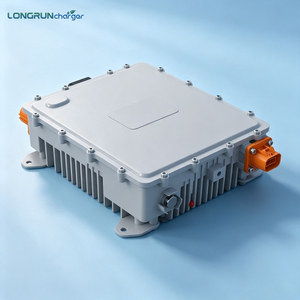
Premium IP67 Waterproof & Air-Cooled Bidirectional 3.3 KW OBC & 1.8 KW DCDC Converter

Premium IP67 Waterproof & Air-Cooled Bidirectional 3.3 KW OBC & 1.8 KW DCDC 2-in-1 Assembly

  • Bi-directional power transfer technology
  • IP67 Heavy-duty sealed aluminum casing
  • Combined 3.3kW OBC + 1.8kW DC-DC output
  • Advanced CAN 2.0B communication protocol
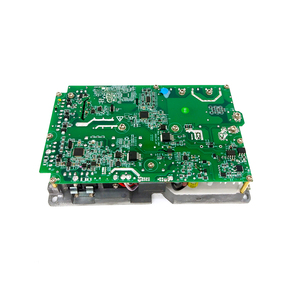
Dilong 3.3kW OBC EV On-board Charger Module

Dilong 3.3kW OBC EV On-board Charger Module (100V-200V Output DA3K3M13-150C)

  • Wide 100V-200V DC regulated output range
  • Automotive-grade component selection
  • High dynamic response & low output ripple
  • Comprehensive thermal & overvoltage protection
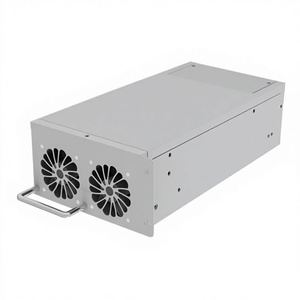
High Efficiency AC to DC Fast Charger 3.3kW Power Supply

High Efficiency AC to DC Fast Charger 3.3kW Rack-Mounted OBC Power Module

  • High conversion efficiency up to 95.5%
  • Standard rack-mount/board-mount interface
  • Engineered for industrial electric vehicles
  • Ultra-compact power density architecture
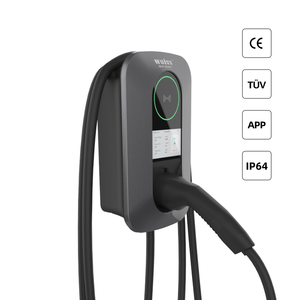
3.3kw Obc Charger Module Smart Charging Pile

3.3kW OBC Charger Module & 2kW Integrated Smart Floor/Wall Mount Station

  • Dual mode 48V / 72V / 144V flexibility
  • Smart battery management integration
  • Conduction & forced-air cooling compatibility
  • Severe environmental stress resistance
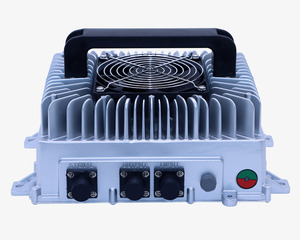
Industrial Grade 3.3KW EV Charger Module OBC DC DC Integrated Charger

Industrial Grade 3.3KW EV Charger Module OBC DC-DC Integrated Unit (IP67)

  • Fully encapsulated IP67 liquid/conduction unit
  • Targeted for EV conversions & fleet utility
  • Wide input range: 85V - 265V AC
  • Shock & vibration proof to MIL-STD-810G
3.3kw Ev on Board OBC Charger multi voltage

3.3kW EV On-Board OBC Charger (48V-312V Wide Range for E-Motorcycles)

  • Multi-voltage platform (48V, 72V, 144V, 312V)
  • Optimized LiFePO4 & NCM battery profiles
  • Isolated CAN-BUS telemetry output
  • Extremely low standby power loss (<2W)
3.3KW OBC DC Charger Module Wall Mounted EV Charging Station

3.3KW High-Density OBC Module & Smart Floor-Mounted Charging Pile

  • Commercial fleet fast-charging capability
  • Modular board-mountable topology
  • Programmable charging voltage curves
  • Enhanced thermal dissipation sink
3.3kw EV OBC DC Charger Module 6.6kw Obc

3.3kW / 6.6kW Scalable EV OBC Power Module for LiFePO4 Battery Systems

  • Scalable 3.3kW to 6.6kW dual-module stack
  • Integrated auxiliary power output
  • Active power factor correction (PFC > 0.99)
  • Ruggedized planar transformer technology
Executive Industry Whitepaper

Top Board Mount Power Supply Suppliers: Engineering Benchmarks & Selection Criteria

Modern electrical engineering projects in electric vehicles (EVs), telecommunications infrastructure, datacenters, and industrial automation demand unprecedented levels of power density, electrical efficiency, and thermal stability. Selecting the right board mount supplier requires evaluating technical parameters beyond simple price-per-watt metrics. Original Equipment Manufacturers (OEMs) and System Integrators must assess field-proven reliability, compliance with Distributed-power Open Standards Alliance (DOSA) footprints, and advanced thermal management capabilities.

Information Gain Insight: The shift toward wide-bandgap (WBG) semiconductors—specifically Silicon Carbide (SiC) and Gallium Nitride (GaN)—has redefined power density standards in board-mounted DC-DC converters and On-Board Chargers (OBC). Top suppliers are now expected to deliver volume power densities exceeding 100 W/in³ while maintaining isolation thresholds up to 2250 VDC or higher.

Key Evaluation Dimensions for Board-Mount Power Modules

When shortlisting board-mount suppliers for critical platforms, system architects must perform deep-dive audits across four core operational vectors:

Standardization & Footprints

Adherence to industry-standard brick sizes (1/32nd, 1/16th, 1/8th, Quarter, Half, and Full Brick) ensures multi-sourcing flexibility, drop-in replacement options, and reduced risk of single-vendor lock-in.

Efficiency & Dynamic Response

Conversion efficiencies up to 96% drastically lower internal dissipation. Fast transient response times ensure voltage stability during step-load changes in high-performance processors and FPGAs.

Severe Environmental Ruggedness

Potting technologies, IP67 enclosure seals, and HALT/HASS stress testing allow components to operate continuously under extreme vibration, moisture, and ambient temperatures from -40°C to +105°C.

Manufacturer Engineering Strengths

Enterprise Expertise: NetPower Advanced Power Conversion Architecture

NetPower Technologies stands at the forefront of high-efficiency, high-density power module engineering. Operating as a premier design and manufacturing powerhouse, NetPower delivers standard and custom board-mounted isolated DC-DC converters, non-isolated Point-of-Load (POL) modules, and complete e-Mobility power conversion systems spanning 15W to over 5kW.

With millions of modules deployed globally across telecommunications, datacom, industrial robotics, rolling stock rail, and heavy commercial electric vehicles, NetPower's engineering methodologies guarantee that benchtop performance directly translates to decade-long operational life in rugged field environments.

Rigorous Quality Assurance Standard: Every single production unit undergoes 100% automated final functional testing, stress burn-in screening, thermal cycling, and full material batch traceability. This ensures compliance with international automotive and industrial safety standards.
NetPower Engineering Team Developing High Power Density Converters
Strategic Roadmap

Future Procurement & Product Development Trends in Board Mount Power

As industrial automation accelerates and electric vehicle architectures transition toward higher operating voltages, global procurement teams must align their sourcing strategies with key technological shifts. The table below outlines the evolution of power conversion requirements over the coming half-decade:

1. Transition to 800V EV Bus Architectures

Next-generation commercial EVs and high-speed passenger vehicles are migrating from 400V to 800V battery platforms. Board-mounted DC-DC converters and OBC modules must accommodate wide input ranges (400V to 850V DC) with reinforced isolation ratings to support rapid charging protocols.

2. Bidirectional Power Transfer (V2G / V2L)

Vehicle-to-Grid (V2G) and Vehicle-to-Load (V2L) functionalities are shifting from optional features to baseline requirements. Modern 2-in-1 OBC and DC-DC assemblies integrate dual-directional topology, allowing stored battery energy to power external equipment or feed back into grid storage networks.

3. Digital Control & Telemetry Integration

Analog PWM control loops are rapidly being replaced by high-speed digital signal processors (DSPs) offering real-time CAN-BUS, PMBus, or Modbus telemetry. This enables remote diagnostics, adaptive voltage scaling, predictive thermal management, and firmware updates over-the-air (OTA).

4. Planar Magnetics & Advanced Thermal Packaging

Traditional wire-wound transformers are being superseded by multi-layer planar magnetics integrated directly into high-TG printed circuit boards. Combined with direct-to-baseplate liquid cooling and thermal potting, suppliers achieve smaller form factors with zero acoustic noise.

5. Dual-Fuel & Wide-Input Voltage Range Compatibility

Industrial customers require standardized power converter boards that seamlessly operate across multiple regional voltage grids (e.g., 9-75V DC for industrial controls, or 180-400V DC for high-voltage commercial equipment), lowering SKU complexity for global product releases.

6. Total Cost of Ownership (TCO) & Modular Sourcing

Procurement teams are prioritizing long-term platform availability and modular scalability over initial piece-part cost. Choosing suppliers with fully documented lifecycle support, secondary sourcing arrangements, and semi-custom engineering options mitigates costly redesign cycles.

Technical & Procurement FAQ

Frequently Asked Questions: Board Mount Power Modules & Suppliers

Essential answers for power electronics design engineers, procurement specialists, and supply chain managers.

What output power ranges do standard isolated board-mounted DC-DC converters cover?

Isolated board-mounted DC-DC converters typically cover power spectrums from below 15W up to 1000W+ in standardized DOSA footprints including micro-modules, 1/32nd brick, 1/16th brick, 1/8th brick, quarter brick, half brick, and full brick form factors. For higher power demands in EV systems, integrated sub-assemblies deliver continuous outputs from 1kW to 5kW+.

What input voltage ranges are available for telecom, railway, and automotive applications?

Standard isolated input range configurations include wide 2:1 and 4:1 options such as 9-36V, 9-75V, 18-36V, 18-75V, and 36-75V for industrial and telecom platforms. Railway applications utilize 16-160V, 34-160V, or 66-160V inputs, while high-voltage electric vehicle converters operate across 180-400V, 300-500V, and 400-650V DC lines.

How do non-isolated Point-of-Load (POL) modules differ from isolated DC-DC bricks?

Non-isolated Point-of-Load (POL) modules step down intermediate bus voltages (such as 12V or 5V) directly to low-voltage, high-current processor rails (1.0V to 3.3V) without galvanically isolating the input from the output. Placed in close physical proximity to FPGAs, ASICs, or CPUs, POL converters provide extremely fast transient load response, high efficiency, and ultra-compact footprints.

Can standard board-mount power converters be customized for bespoke OEM mechanical layouts?

Yes. Reputable manufacturers offer semi-custom and full-custom engineering services. Customization scope includes pinout re-configuration, alternative mechanical baseplates (conduction, air, or liquid-cooled), customized connector pinouts, specific CAN-BUS communication protocols, and unique thermal heatsink mountings tailored to strict chassis geometry constraints.

What thermal management strategies should be applied to high-density board-mount modules?

Thermal mitigation strategies include utilizing aluminum baseplates for direct attachment to cold plates or heatsinks, optimizing system forced-air airflow across thermal fins, applying high-thermal-conductivity potting encapsulation, and adhering strictly to manufacturer thermal derating curves published in engineering application notes.

What quality control protocols guarantee high field reliability and low MTBF failure rates?

High-reliability suppliers implement ISO 9001 / IATF 16949 certified quality management systems. Key screening processes include Design for Reliability (DfR) audits, Highly Accelerated Life Testing (HALT), Highly Accelerated Stress Screening (HASS), Automated Optical Inspection (AOI), 100% full-power burn-in screening, and full component lot traceability.

Strategic Sourcing Partner

Accelerate Your Power Electronics System Development

Need detailed technical datasheets, CAD models, thermal application notes, or volume quotation pricing for board-mounted DC-DC converters or on-board chargers?

Get Catalog