
Direct from certified OEM/ODM manufacturing facilities—covering power conversion modules, ECU PCBA, vehicle sensor chips, wire harnesses, and ADAS collision-avoidance systems.

Automotive electronics require zero-defect manufacturing standards, robust thermal management, long operational lifespan under extreme vibration, and strict compliance with international automotive specifications.
State-of-the-art SMT lines capable of placing 01005 components, fine-pitch micro-BGA, and heavy-copper high-power substrates. Fully equipped with SPI (Solder Paste Inspection), 3D AOI, and X-ray inspection for zero voiding in power semiconductors.
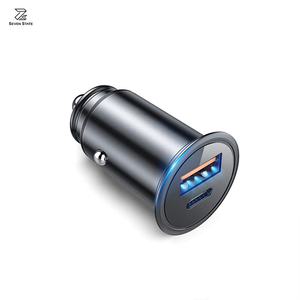
Specializing in board-mounted isolated DC-DC converters (15W to 1000W+) and e-Mobility high-power units up to 5kW. Engineered for telecom, heavy machinery, electric commercial vehicles, and automotive auxiliary power units with liquid or conduction cooling.
Every automotive ECU, sensor assembly, and power supply undergoes rigorous thermal shock testing, HALT (Highly Accelerated Life Testing), HASS screening, vibration profiles up to 20G, and complete material traceability down to individual component lots.
The global automotive industry is undergoing a structural transition toward electrification, autonomous driving, software-defined vehicles (SDV), and integrated vehicle architecture. Consequently, the demand for automotive-grade electronic control units (ECUs), sensor fusion modules, power conversion electronics, and robust wiring assemblies has reached unprecedented levels. Modern automotive electronics account for upwards of 40% of a modern vehicle's total bill of materials (BOM), a figure projected to approach 50% by 2030.
For Tier-1 system integrators, automotive procurement executives, and engineering design teams, evaluating potential manufacturing partners—the top automotive electronics factories—requires looking far beyond unit cost. It demands a rigorous assessment of quality management systems, thermal design capabilities, automated inspection technologies, semiconductor supply chain resilience, and compliance with strict standards such as IATF 16949, ISO 26262 (Functional Safety), and AEC-Q standards.
Executive Information Gain Takeaway: Unlike consumer electronics EMS providers, automotive electronics factories must maintain strict process controls capable of producing sub-15 PPM failure rates over a 10-to-15-year operational lifecycle under continuous vibration, thermal cycling (-40°C to +125°C), and harsh electromagnetic interference (EMI).
To establish a reliable automotive supply chain, OEMs must categorize factory capabilities based on sub-system complexity and thermal/mechanical stress levels. Below is an engineering evaluation matrix of key automotive electronic sub-assemblies:
| Category | Core Components / Systems | Key Manufacturing Challenge | Critical Standard / Certification |
|---|---|---|---|
| Power Electronics & E-Mobility | Isolated DC-DC Converters, OBC (On-Board Chargers), Inverters, POL Modules | Thermal dissipation, high-voltage clearance/creepage, planar transformer integration | IATF 16949, ISO 26262 ASIL-D, AEC-Q200 |
| ADAS & Radar Systems | 77GHz Millimeter-Wave Radar, LiDAR Processing PCBA, Vision Systems | High-frequency RF PCB layout, antenna phase matching, radome micro-sealing | ISO 26262, AEC-Q100, IP67/IP69K sealing |
| ECU & Motherboard Assembly | Engine Control Modules, BCM, Domain Controllers, Telematics Gateway | High-density BGA placement, underfill thermal stress, automated 3D X-Ray AOI | IPC-A-610 Class 3, J-STD-001 Automotive Space |
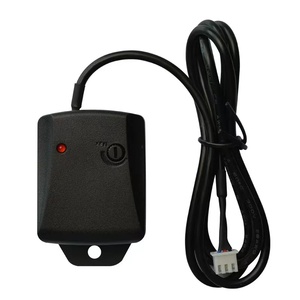
| Sensors & Actuators | Vibration ICs, Pressure Sensors, Hall Sensors, Speed Limiters | Micro-encapsulation, ESD immunity, continuous vibration resistance | AEC-Q100, ISO 16750 Environmental Testing |
| Interconnects & Wiring | Engine Wiring Harnesses, HV Battery Cables, RVVP Shielded Cables | Automated crimp force monitoring, ultrasonic wire welding, EMI shielding density | USCAR-2, ISO 6722 Cable Specifications |
As vehicle power systems transition from traditional 12V architectures to dual 12V/48V systems and high-voltage 400V/800V EV powertrains, high-efficiency power modules are essential. Modern automotive electronics factories utilize state-of-the-art power conversion platforms spanning from under 15W up to 5kW+. Key architectural considerations include:
Standard isolated input voltage ranges must support diverse industrial and transport platforms—including 9–36V, 9–75V, 18–36V, 18–75V, 36–75V, and high-voltage inputs ranging from 180V to 650V. Non-isolated Point-of-Load (POL) converters, operating across 2.5V to 60V within standardized DOSA footprints, provide low-ripple power directly to high-current microprocessors, FPGAs, and sensor processing units.
A benchmark automotive motherboard assembly line relies on fully automated SMT equipment with integrated 3D Solder Paste Inspection (SPI), high-speed multi-head chip placers, and multi-zone nitrogen reflow ovens. Solder joint integrity is confirmed using automated optical inspection (3D AOI) and high-resolution 3D X-Ray inspection to eliminate solder voiding under Ball Grid Array (BGA) packages and power ICs.
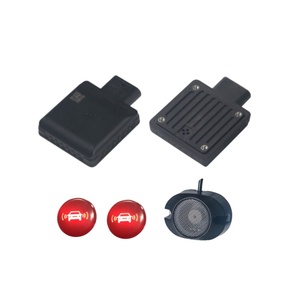
Radar systems such as the 77GHz Automotive Blind Spot Detection System (BSM-16) demand specialized manufacturing controls. Operating at high frequencies (77-79 GHz), the RF PCB substrates require specialized low-loss materials (e.g., Rogers or Taconic laminate), precision antenna etching, and automated microwave testing. Radar units must be completely protected from water ingress and salt spray using IP67/IP69K sealed housings with automated robotically applied polyurethane or silicone potting.
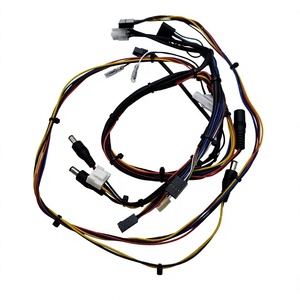
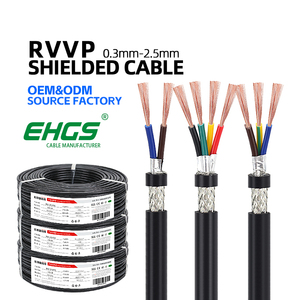
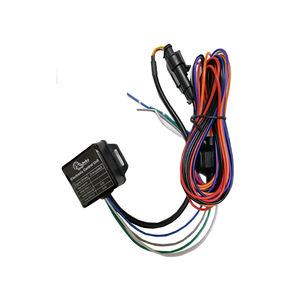
Automotive engine wiring harness kits and flexible multi-core shielded audio/data cables (such as EHGS RVVP standard wires) are the nervous system of the vehicle. Leading factories utilize automated wire cutting, stripping, and ultrasonic crimping machines equipped with real-time crimp force monitoring (CFM) to prevent terminal pull-out failures. High-density tinned copper braiding ensures complete electromagnetic shielding against high-voltage inverter switching noise.
When selecting an OEM/ODM partner among top automotive electronics factories, technical buyers must verify the following structural competencies:
Understanding future procurement trends enables OEM sourcing managers to align with forward-looking suppliers. The primary technological shifts shaping automotive electronics manufacturing include:
1. Centralized Zonal Architecture vs. Distributed ECUs: Traditional vehicles used up to 100 localized, discrete ECUs connected via CAN buses. Modern architectures consolidate processing into 3 to 5 centralized domain controllers (Autonomous Driving, Cockpit, Body & Chassis). Factories must now master ultra-high-density PCB designs featuring 16+ layer counts, micro-vias, and advanced heat-pipe thermal management.
2. Wide Bandgap (SiC & GaN) Semiconductors: Silicon Carbide (SiC) and Gallium Nitride (GaN) power devices are replacing conventional Silicon MOSFETs in DC-DC converters and On-Board Chargers (OBC). This transition enables higher switching frequencies (>500 kHz), smaller planar magnetics, and efficiency exceeding 96%. Factories must upgrade SMT processes to handle fragile die packaging and high-thermal-conductivity substrates.
3. Fleet Telematics & Regulatory Safety Compliance: Commercial vehicle safety mandates across North America, Europe, and Asia now require mandatory speed limiting devices with real-time data logging. Products like Dual-Mode GPS Pulse Speed Limiters combine satellite positioning with physical engine throttle actuation, requiring factories to adhere to strict tamper-proof potting and hardware security module (HSM) microcode flashing.
Answers to key technical, quality, and supply chain questions encountered by automotive buyers, Tier-1 system integrators, and OEM design engineers.