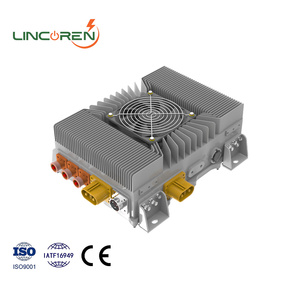
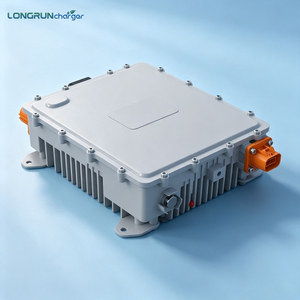
Premium IP67 Waterproof & Air-Cooled Bidirectional 3.3 KW OBC & 1.8 KW DCDC Converter 2-in-1 Assembly
- Dual Power Topology (3.3kW OBC + 1.8kW DC-DC)
- IP67 Hermetic & Air-Cooled Architecture
- Bi-directional V2G/V2L Power Flow Ready

Explore our engineering-grade portfolio of bi-directional solar inverters, high-efficiency OBCs, and heavy-duty DC-DC modules certified to rigorous automotive and industrial standards.
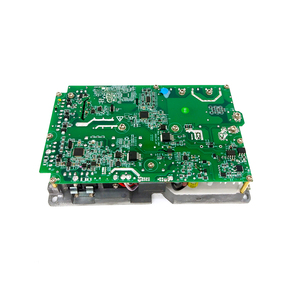
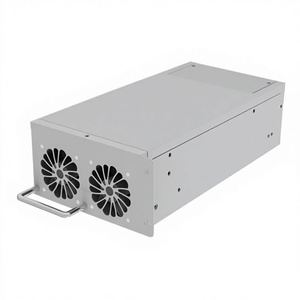
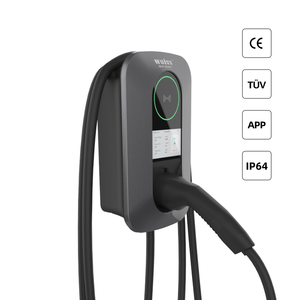
Combining decades of switch-mode power electronics experience with automated manufacturing rigor to supply millions of field-proven converters worldwide.
Engineered to handle extreme grid fluctuations and wide DC battery bands. Isolated inputs span from 9V up to 650V DC (including 18-75V, 36-75V, 180-400V, and 400-650V ranges) allowing seamless deployment across solar PV arrays, commercial telecommunications, and high-voltage EV battery traction packs.
Every single OEM/ODM solar inverter and OBC module is manufactured under strict quality management workflows. We perform 100% automated optical inspection (AOI), high-acceleration stress screening (HASS), and full lot-level component traceability to ensure zero-defect field reliability.
We solve difficult spatial and thermal constraints. From custom conduction-cooled cold plates and liquid cooling channels to tailored CANbus protocols (J1939, CANopen) and specific connector orientations, our engineering team tailors standard platforms into turn-key custom solutions.
A comprehensive technical exploration of next-generation power electronics topologies, wide bandgap semiconductors, and grid-tied storage synchronization.
The global solar energy and power conversion market is undergoing a rapid paradigm shift toward Silicon Carbide (SiC) and Gallium Nitride (GaN) power devices. Traditional Silicon IGBT-based topologies suffer from significant switching losses and thermal dissipation bottlenecks, capping operating frequencies around 20kHz to 40kHz.
By integrating SiC MOSFETs into OEM/ODM solar inverter and OBC topologies, switching speeds exceed 100kHz. This frequency elevation yields a dramatic reduction in passive component sizes—specifically magnetic transformers and filter inductors—enabling power densities exceeding 2.5 kW/L while driving conversion efficiency beyond 98.5% across wide load profiles.
Modern solar energy infrastructure no longer operates in a unidirectional fashion (harvesting PV power and injecting it exclusively into the AC grid). Industrial commercial buyers and utility project developers demand hybrid solar inverters integrated with Energy Storage Systems (ESS) and bi-directional Vehicle-to-Grid (V2G) interfaces.
Our OEM/ODM manufacturing architecture leverages dual-stage interleaved bi-directional topologies (DC-DC buck-boost linked to a full-bridge AC-DC inverter stage). This design enables microsecond-level mode switching between PV power conversion, battery charging, and back-up islanding inversion. Integrated active power factor correction (PFC > 0.99) and low total harmonic distortion (THD < 2.5%) ensure full compliance with international IEEE 1547 and UL 1741 SA grid connection standards.
| Platform Category | Input Voltage Bandwidth | Cooling Methodology | Isolation Rating | Target Application Spectrum |
|---|---|---|---|---|
| Hybrid Solar OEM Inverter | 200V - 1000V DC (PV Array) | Liquid-Cooled / Forced Air | 3000 VAC Reinforced | Residential & Commercial ESS Microgrids |
| Bi-Directional OBC (V2G) | 85V - 265V AC / 200-450V DC | IP67 Sealed Conduction | 2500 VDC Galvanic | Electric Commercial Fleets & V2X Stations |
| Isolated DC-DC Bricks | 9-36V, 18-75V, 180-400V DC | Baseplate Conduction | 2250 VDC Standard | Telecom Infrastructure, Industrial Drives |
| Non-Isolated POL Modules | 2.5V - 60V DC (DOSA Standard) | Natural Convection / Airflow | Non-Isolated Buck | FPGA, ASIC, Logic Board Power Rails |
Strategic purchasing insights for B2B procurement directors, system integrators, and OEM engineering managers.
To minimize I²R copper transmission losses and reduce overall system weight, both commercial solar farms and electric vehicle platforms are shifting from legacy 400V systems to 800V DC (for EVs) and 1500V DC (for utility solar). B2B procurement strategies are heavily prioritizing OEM manufacturers capable of supplying high-voltage isolated power components with ultra-high clearance and creepage safety margins.
Global equipment manufacturers are steering away from bespoke single-purpose custom power designs due to extended R&D cycle times and regulatory friction. Instead, procurement directors are selecting pre-certified, modular power platforms (such as 3.3kW to 6.6kW stackable sub-assemblies) that can be combined in parallel to scale from 10kW to 100kW+ without needing ground-up safety re-certifications.
Hardware excellence is no longer sufficient on its own. Next-generation procurement specs stipulate real-time digital monitoring over CANbus, RS485, or Ethernet/IP. Advanced power converters now feature predictive failure analytics, thermal health logging, and dynamic firmware flashing over-the-air (OTA), allowing cloud-connected energy management systems to optimize operational lifespans and prevent sudden field outages.
From initial circuit simulation to high-volume manufacturing, NetPower provides a seamless custom engineering pipeline tailored to your platform’s mechanical, thermal, and electrical boundaries.
Custom transformer design, worst-case circuit analysis, thermal modeling, and magnetics simulation tailored to your specific input/output ratio.
Precision cast-aluminum IP67 housings, liquid-cooled cold plates, or custom pinout configurations compatible with legacy footprints.
Comprehensive HALT/HASS stress testing, surge immunity, radiated EMC compliance, and full regulatory documentation (CE, UL, IEC).
Speak directly with our power electronics application engineers to discuss topology selection, custom pinouts, or sample evaluation units.
Get CatalogAddressing critical technical, regulatory, and logistics concerns raised by engineering teams and supply chain managers.
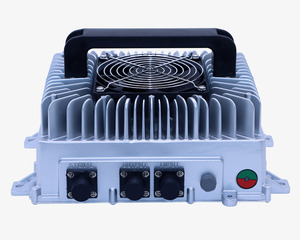
NetPower isolated power modules range from below 15W to over 1000W+ for board-mounted brick packages (1/32nd, 1/16th, 1/8th, quarter, half, and full-brick footprints). For heavy-duty e-Mobility, solar microgrids, and industrial vehicle systems, our integrated on-board chargers (OBCs) and high-density DC-DC converters deliver continuous output ratings from 1kW up to 5kW+ per unit, with modular parallel scalability reaching up to 60kW.
We engineer standard isolated input topologies covering 9-36V, 9-75V, 18-36V, 18-75V, 36-75V, 16-160V, 34-160V, 66-160V, 180-400V, 300-500V, and high-voltage 400-650V bands. Non-isolated Point-of-Load (POL) buck regulators accept wide 2.5V to 60V inputs in standard DOSA footprints, ideal for powering low-voltage logic, FPGAs, and microcontrollers.
Our OEM/ODM customization services cover mechanical re-packaging (custom mounting brackets and connector locations), thermal system modification (selecting air cooling, plate conduction, or IP67 liquid cooling jackets), custom firmwares for CAN 2.0B / J1939 telemetry, and tailored charge curves specifically matched to LiFePO4, NMC, or custom energy storage battery chemistries.
Quality control is governed by an ISO 9001 / IATF 16949 certified quality management system. Every production unit undergoes 100% automated optical inspection (AOI), automated functional testing (ATE), high-acceleration stress screening (HASS), and full burn-in under maximum thermal load. We maintain lot-level material traceability and publish complete compliance certificates (RoHS, REACH, CE, UL).
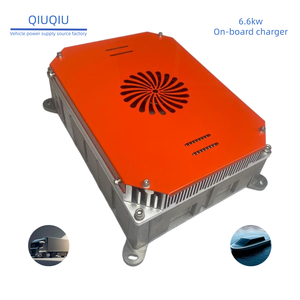
Yes. Our advanced bi-directional 3.3kW and 6.6kW converter platforms feature dual-directional power electronics that allow energy to flow seamlessly from the AC grid to charge high-voltage batteries, or reverse-invert energy from the traction battery pack back to power local AC loads (V2L) or feed stabilizing power into the solar microgrid (V2G).
For harsh industrial or outdoor solar enclosures exposed to temperatures up to +85°C, we recommend fully encapsulated baseplate conduction-cooled modules or IP67 liquid-cooled cold plate assemblies. Application notes detailing thermal derating curves versus airflow velocity are provided with all engineering evaluation kits.
Partner with an established OEM/ODM manufacturer trusted by global Fortune 500 equipment builders. Access field-proven reference designs, evaluation hardware, and full engineering support.