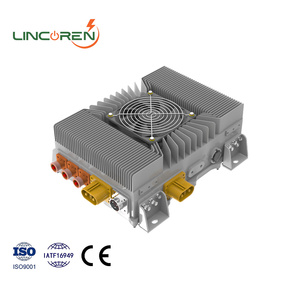
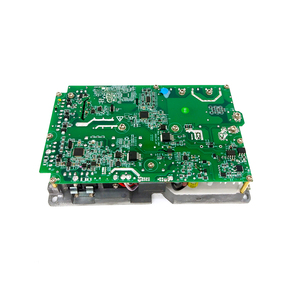
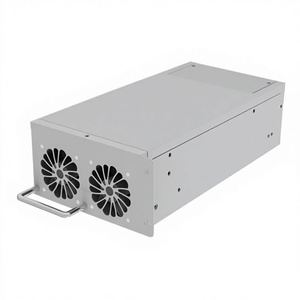
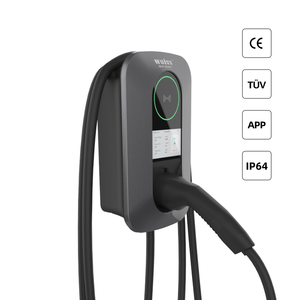
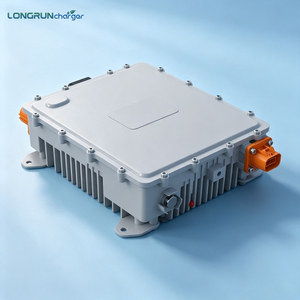
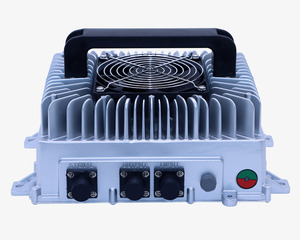
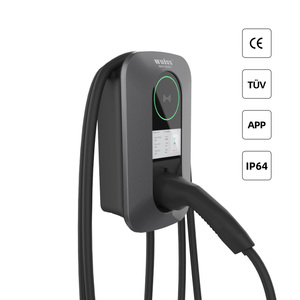
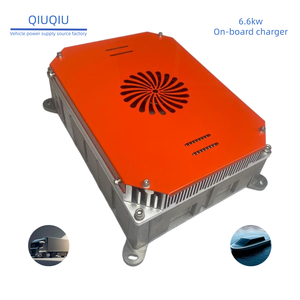
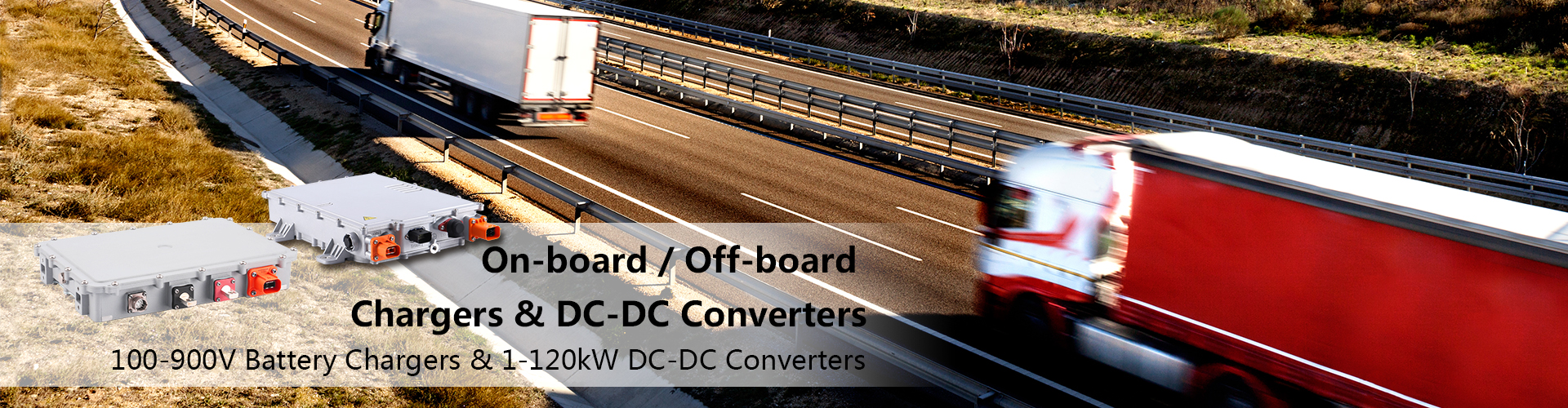
Explore our flagship high-density On-Board Chargers (OBC), Bidirectional DC-DC Converters, and Matrix Power Conversion modules engineered for automotive, industrial, and microgrid deployments.
An in-depth technical analysis of matrix topology evolution, Silicon Carbide (SiC) semiconductor integration, and why OEM engineering teams are transitioning away from conventional DC-link architectures.
Traditional two-stage voltage source inverters (VSI) rely heavily on bulky electrolytic DC-link capacitors to buffer energy between AC-DC and DC-AC stages. Matrix converters eliminate this DC bus entirely through direct bidirectional semiconductor switch arrays. This direct single-stage AC-AC matrix structure reduces overall volume by up to 45%, extends operational lifespan beyond 15 years, and removes the primary single point of failure in high-temperature operating environments.
Utilizing high-speed Space Vector Modulation (SVM) and advanced Direct Power Control (DPC) algorithms, matrix converters synthesize sinusoidal input current waveforms with near-unity power factor (≥0.99). Total Harmonic Distortion (THD) is reduced to under 3%, eliminating the requirement for large, heavy external passive filters while ensuring full compliance with stringent IEEE 519 and automotive UN ECE R10 electromagnetic compatibility (EMC) standards.
Because matrix converters are constructed using nine four-quadrant bidirectional switches connected between three-phase input and three-phase output lines, energy flow is inherently symmetrical. Dynamic braking energy from heavy electric vehicles, commercial machinery, or industrial servo drives is instantly fed back into the main AC grid with zero additional switching circuitry, optimizing total system energy economy.
As a leading designer and manufacturer of board-mounted isolated DC-DC converters (15W to 1000W+), non-isolated point-of-load (POL) modules, and e-Mobility power conversion systems, NetPower Technologies delivers custom power solutions tailored to exact mechanical and electrical envelopes.
Our OEM/ODM engineering services bridge the gap between initial concept and mass-volume production. Whether your project demands customized wide-input voltage ranges (such as 9-36V, 18-75V, 180-400V, or 400-650V), specialized liquid/conduction thermal cold-plates, or pin-to-pin compatible replacement for legacy DOSA footprints, our R&D team provides complete hardware, firmware, and compliance support.
Every custom module undergoes 100% automated final testing, Highly Accelerated Life Testing (HALT), and Highly Accelerated Stress Screening (HASS) to guarantee uncompromised reliability across defense, telecom, railway, and automotive field deployments.

A side-by-side engineering evaluation highlighting efficiency, power density, thermal footprint, and lifecycle cost advantages for industrial OEMs.
| Performance Parameter | Direct Matrix Converter (MC) | Two-Stage Back-to-Back VSI | Diode Rectifier + Inverter |
|---|---|---|---|
| Power Density ($kW/L$) | Ultra-High (8.5 - 12.0 kW/L) | Moderate (3.5 - 5.5 kW/L) | Low (2.0 - 3.5 kW/L) |
| Energy Storage Element | None (Zero DC-Link Capacitors) | Large Electrolytic Bank | Large Electrolytic Bank |
| Power Flow Directionality | Native 4-Quadrant Bidirectional | Bidirectional (Complex Control) | Unidirectional Only |
| Input Power Factor | ≥ 0.99 (Sinusoidal Input) | ≥ 0.98 (Active Front End) | 0.70 - 0.85 (High THD) |
| Operating Temperature Range | -40°C to +105°C (Silicon Carbide) | -25°C to +85°C (Capacitor Limited) | -25°C to +85°C |
| Expected Service Lifespan | > 150,000 Hours (MTBF) | ~ 45,000 Hours (Capacitor Wearout) | ~ 50,000 Hours |
Key strategic shifts driving global procurement teams, automotive Tier-1 integrators, and industrial equipment manufacturers toward modular OEM/ODM partnerships.
Global power system procurement is heavily prioritizing Wide Bandgap (WBG) Silicon Carbide (SiC) and Gallium Nitride (GaN) power stages. SiC-based matrix switches operate at switching frequencies exceeding 100 kHz with significantly reduced switching losses. Procurement teams are specifying SiC modules to shrink passives, reduce magnetic core mass, and decrease cooling system expenditures by up to 30% at the system level.
In electric commercial vehicle, railway, and aerospace procurement, hardware safety compliance has moved from an option to a strict pre-qualification mandate. Modern OEM matrix converters are expected to comply with ISO 26262 ASIL-D functional safety specifications, featuring dual-redundant microcontrollers, real-time CAN bus telemetry diagnostics, and isolated gate drivers for fail-safe operation under single-point fault conditions.
Rather than procuring discrete components (such as standalone On-Board Chargers, standalone DC-DC converters, and separate motor drives), procurement directors are sourcing integrated 2-in-1 and 3-in-1 power assemblies. Combining an OBC, a high-voltage to low-voltage DC-DC converter, and an auxiliary matrix power module within a single IP67-sealed enclosure drastically reduces harness wiring, simplifies mounting, and lowers overall assembly BOM costs.
From heavy commercial transportation to telecom power shelves, see how our power platforms operate under extreme operational stress.
Direct answers to technical, commercial, and operational questions when evaluating custom OEM/ODM Matrix Converter manufacturers.
A direct Matrix Converter eliminates the intermediate DC-link energy storage capacitor bank. This delivers three core advantages: (1) a 30% to 45% reduction in total physical volume and weight, (2) significantly extended system MTBF by eliminating electrolytic wearout components, and (3) inherent, instantaneous 4-quadrant bidirectional power regeneration capability with sinusoidal input current harmonic performance compliance (THD < 3%).
Our power conversion architecture spans from board-mount micro-modules under 15W up to high-power 5kW+ automotive and industrial platforms. Standard isolated DC-DC input voltage ranges cover 9-36V, 9-75V, 18-36V, 18-75V, 36-75V, 16-160V, 34-160V, 66-160V, 180-400V, 300-500V, and 400-650V. Custom output voltage profiles (12V, 24V, 48V, 72V, 144V, 312V to 800V HV platforms) can be modified to order.
We provide end-to-end ODM engineering services. Our thermal engineers optimize conduction, forced air, or liquid cooling cold-plate geometries for your enclosure constrained envelopes. Electrically, we customize firmware algorithms for dynamic CAN 2.0B / J1939 communication, customized soft-start curves, variable charging profiles (for LiFePO4, NCM, and LTO chemistry), and specialized pinout pin configurations matching standard DOSA footprints.
NetPower operates under strict ISO 9001 and IATF 16949 automotive quality management systems. Every product platform undergoes Design Failure Mode and Effects Analysis (DFMEA), thermal de-rating verification, Highly Accelerated Life Testing (HALT), and Highly Accelerated Stress Screening (HASS). 100% of production units complete automated parametric testing and burn-in screening prior to shipment, complete with lot-level material traceability.
Engineering evaluation samples are shipped with comprehensive datasheet specifications, airflow versus temperature derating curves, thermal imaging reports, recommended PCB layout footprints, and conducted EMC test reports. Our senior application engineers offer direct support for schematic reviews, loop stability analysis, parallel operation configuration, and system-level compliance certification.
Discuss your custom voltage, power density, thermal packaging, or timeline requirements with our senior power conversion engineering team today.
Get a Quote