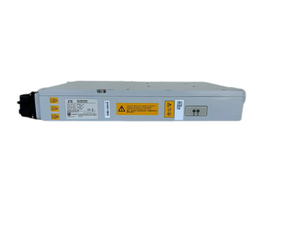

Browse our industry-leading range of high-efficiency rectifiers, IP65 outdoor base station power units, and intelligent embedded telecom power systems designed for tier-1 network architectures.
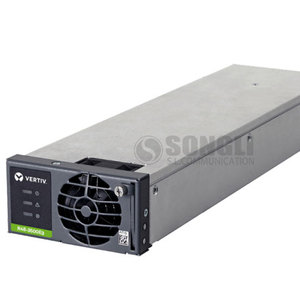
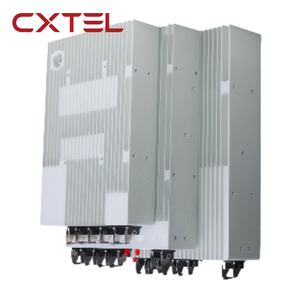
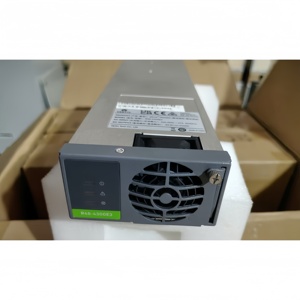
Engineering robust power conversion modules and custom OEM platforms backed by decades of proven thermal, electrical, and mechanical reliability.
In the modern telecommunications ecosystem, power conversion is no longer merely a utility component; it is the fundamental baseline for network availability, operational expenditure (OPEX) control, and decarbonization. As global telecom operators rapidly transition from legacy 3G/4G network architectures to 5G New Radio (NR), Massive MIMO, and distributed edge computing, power consumption at macro base stations and micro-cell sites has increased exponentially. Selecting a specialized custom OEM telecom power exporter is a strategic imperative for engineering teams, system integrators, and network procurement directors worldwide.
This technical whitepaper explores the underlying electrical engineering principles, thermal management innovations, and manufacturing rigor required to deploy highly reliable -48V DC telecom rectifiers, embedded power shelves, and outdoor IP65-rated power supply units for harsh environments.
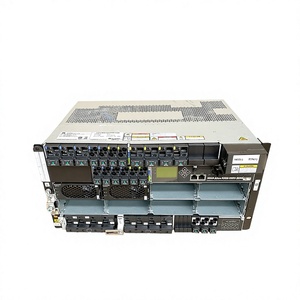
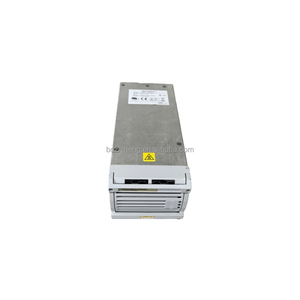
Modern enterprise telecom power systems must accept extremely wide AC grid inputs—ranging from 85VAC to 305VAC—to withstand severe utility voltage fluctuations in remote or developing grid environments. High-efficiency rectifiers, such as the Vertiv R48-3000E3 and Huawei ETP48600 series, utilize advanced active Power Factor Correction (PFC) stages combined with resonant LLC converter topologies. By switching at ultra-high frequencies (hundreds of kilohertz), these modules achieve power conversion efficiencies exceeding 96.5% while vastly reducing the physical footprint of magnetic components.
| Telecom Power Parameter | Standard Legacy Rectifier | Next-Gen OEM 5G Rectifier | Benefit to Network Operators |
|---|---|---|---|
| Conversion Efficiency | 90.0% – 92.5% | 96.5% – 98.0% (Titanium Grade) | Reduces waste heat by >50%, saving thousands in HVAC/Cooling energy per site annually. |
| Power Density | 15 W/in³ – 25 W/in³ | 45 W/in³ – 65 W/in³ | Frees up valuable cabinet space for baseband units (BBU) and edge servers. |
| Cooling Mechanism | Fixed-speed forced air | Smart PWM multi-speed fans / Natural Convection | Extends fan lifespan, minimizes noise, and prevents dust ingress in harsh environments. |
| Ingress Protection (IP) | IP20 (Indoor Rack Only) | IP65 / IP67 (Direct Outdoor Enclosure) | Eliminates the need for expensive indoor equipment rooms and air-conditioned shelters. |
| Telemetry & Control | Analog Contact Relays | CAN Bus, RS485, SNMPv3, NB-IoT/4G | Enables real-time remote telemetry, autonomous battery testing, and predictive maintenance. |
Thermal management is the single greatest determinant of power supply Mean Time Between Failures (MTBF). OEM telecom power exporters must implement rigorous thermal simulation (CFD analysis) to prevent localized hotspots on switching MOSFETs, rectifying diodes, and main transformers. High-power-density modules utilize metal-core PCBs (MCPCB), aluminum heatsink extrusion backplanes, and direct-conduction liquid cooling channels for heavy-duty electric and industrial installations.
In outdoor direct-mount RRU/AAU power supplies—such as the ZXDD01 P2000 and HTP6K054—forced-air fan cooling is completely eliminated in favor of passive natural heat dissipation. Encapsulated in IP65 die-cast aluminum enclosures, these units thrive in extreme ambient temperatures ranging from -40°C to +75°C without thermal derating breakdown.
Every telecom power unit exported by our certified OEM facility undergoes stringent design validation, environmental stress screening (ESS), and zero-defect quality verification protocols before global shipment.

Navigating the technology shifts transforming global telecommunications infrastructure sourcing over the next decade.
The adoption of Gallium Nitride (GaN) and Silicon Carbide (SiC) power devices is replacing traditional Silicon MOSFETs in rectifier stages. This shift allows telecom power exporters to achieve conversion efficiencies exceeding 98%, while cutting module physical volume by 40%. Sourcing engineers should prioritize supplier roadmaps that incorporate GaN/SiC topologies to future-proof network expansion.
Real estate acquisition and shelter rental represent major overhead costs for mobile network operators. Sourcing trends show a sharp migration away from heavy floor-standing power cabinets toward 1U/2U blade-style embedded power units and pole-mounted outdoor micro-power boxes. Zero-footprint systems mount directly onto 5G towers or utility poles, slashing site commissioning times.
Global procurement teams are demanding telecom power units with integrated Multi-Power Input capabilities. Modern rectifiers and power control modules must seamlessly blend AC grid power, PV solar MPPT inputs, and Lithium-iron-phosphate (LiFePO4) energy storage systems. This hybrid management minimizes diesel generator runtime at off-grid sites and reduces carbon footprints.
Telecom rectifiers are evolving from silent hardware blocks into intelligent edge nodes. Integrated controllers leverage Machine Learning algorithms to analyze network traffic patterns, executing peak shaving during high-tariff grid hours by drawing from battery reserves, and performing automated Health State (SOH) diagnostics on battery banks without manual intervention.
With power management connected directly to central Network Management Systems (NMS) via SNMPv3, HTTPS, and Modbus TCP, hardware security is paramount. Strategic OEM exporters must guarantee robust firmware encryption, secure boot routines, and compliance with IEC 62443 industrial cybersecurity standards to prevent unauthorized network breaches.
Global operators are increasingly avoiding rigid off-the-shelf power equipment in favor of agile OEM/ODM partnerships. Customized mechanical footprints, proprietary CAN protocol mapping, localized cable harness terminations, and pre-integrated distribution circuit breakers are key procurement criteria when choosing an export manufacturing partner.
In a global marketplace dominated by standardized commodity products, high-tier telecommunication infrastructure operators demand bespoke power conversion designs tailored to specific climate zones, grid stability profile, and mechanical space constraints. As a premier custom OEM telecom power exporter, our engineering division bridges the gap between raw semiconductor technology and deployable, field-proven power systems.
We provide full life-cycle engineering—from initial concept topology schematics and thermal fluid simulation to rapid prototype assembly, regulatory certification, and mass volume manufacturing:

When evaluating global power supply exporters, forward-looking procurement managers consider Total Cost of Ownership rather than simple unit purchase price. Energy loss across thousands of base stations operating 24 hours a day, 365 days a year represents millions of dollars in utility expenditure. By upgrading from 92% efficiency rectifiers to our 96.5%+ ultra-high-efficiency OEM modules, network operators achieve complete capital expenditure amortisation within 14 to 18 months of deployment.
Answers to key technical, regulatory, and logistics queries raised by network engineers and global procurement teams.
While the system is nominally referred to as "-48V DC", modern telecom rectifiers feature an adjustable output range—typically between -42.0VDC and -58.5VDC. This allows the rectifier system to support float charging, boost equalization charging, and temperature-compensated charging for lead-acid (VRLA) or modern Lithium (LiFePO4) battery strings.
Outdoor IP65 power modules (such as the ZXDD01 P2000 and HTP6K054) utilize specialized high-thermal-conductivity die-cast aluminum enclosures combined with internal heat-pipe technology. Heat generated by power switches and transformers is conducted directly to external finned surfaces, enabling full 2000W to 6000W operation under natural convection without maintenance-prone cooling fans.
Yes. All of our telecom rectifier modules feature active digital current sharing (droop or active CAN bus control). Multiple rectifiers can be installed in a single rack chassis or outdoor cluster to deliver N+1 or N+2 hot-swappable redundancy, ensuring continuous uninterrupted power even during single-module servicing.
Our telecom power products are engineered to comply with strict international standards, including IEC/EN 62368-1 for equipment safety, Telcordia GR-63-CORE / GR-1089-CORE, ETSI EN 300 386 for EMC, CISPR 32 Class B for conducted and radiated emissions, and RoHS/REACH environmental material requirements.
For standard rectifiers and embedded power frames (such as Vertiv or Huawei compatible units), stock is maintained for fast dispatch. For semi-custom or full-custom OEM developments (involving mechanical redesigns or custom firmware modifications), prototype samples are typically delivered within 4 to 6 weeks, with mass production lead times ranging between 6 and 8 weeks following sample sign-off.
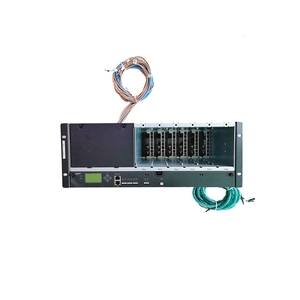
Our embedded power systems integrate a Central Supervision Unit (SMU) equipped with Low Voltage Disconnect (LVD) contactors. When the grid fails, the system runs on batteries. If the voltage drops to a critical threshold, the LVD contactor automatically disconnects non-essential loads or isolates the battery to prevent deep-discharge cell damage, preserving long-term battery lifespan.
Yes. Intelligent monitoring systems support standard northbound protocols including SNMP (v1/v2c/v3), Modbus RTU/TCP, and HTTP/HTTPS web interfaces. This allows seamless integration into third-party central Network Management Systems (NMS) such as SolarWinds, Zabbix, or carrier-proprietary OSS environments.
Partnering directly with a specialized export manufacturer provides direct engineering-level support, elimination of intermediary markup costs, guarantees factory-fresh component batch dates, and offers customization options that local stocking distributors cannot provide.
Need custom OEM/ODM telecom rectifiers, IP65 5G power systems, or bulk cross-reference replacements? Our application engineering team is ready to review your schematics and deliver competitive project quotes within 24 hours.