
Explore our factory-direct On-Board Charger (OBC) modules, integrated 2-in-1 powertrain assemblies, and industrial fast-charging platforms. Engineered for tier-1 vehicle integrators, golf carts, electric buses, commercial trucks, and specialized off-highway fleets.
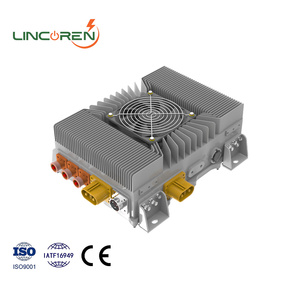
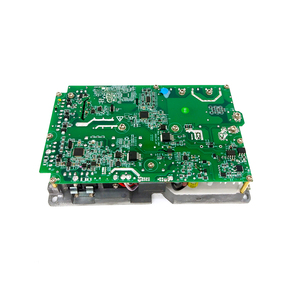
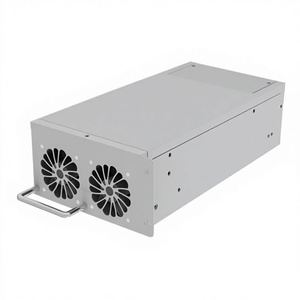
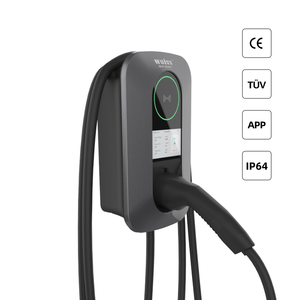
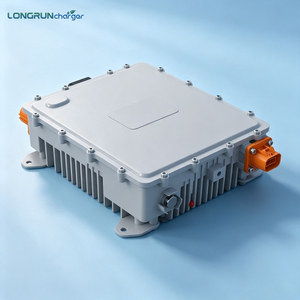
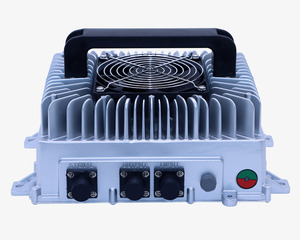
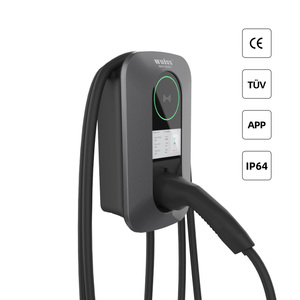
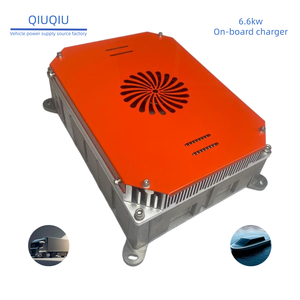
As the global electric vehicle (EV) market shifts toward higher architecture voltages (400V to 800V platforms) and demands faster AC charging capabilities, the requirement for highly efficient, compact, and thermally resilient On-Board Charger (OBC) modules has escalated from standard component sourcing to strategic system-level engineering partnerships. An On-Board Charger serves as the vital power electronics bridge converting AC grid power into high-voltage Direct Current (DC) to safely recharge the traction battery pack while ensuring active power factor correction (PFC), galvanic isolation, and strict Electromagnetic Compatibility (EMC).
For Original Equipment Manufacturers (OEMs), System Integrators, and Tier-1 automotive suppliers, identifying qualified custom OEM OBC module manufacturers and factories requires assessing far more than nominal voltage and continuous power ratings. Modern procurement decisions mandate a thorough analysis of silicon carbide (SiC) semiconductor integration, bidirectional vehicle-to-grid (V2G / V2X) readiness, combined 2-in-1 or 3-in-1 power domain packaging (OBC + DCDC converter + Power Distribution Unit), functional safety compliance (ISO 26262 ASIL standards), and strict manufacturing quality systems under IATF 16949 certification.
This technical whitepaper provides an authoritative overview of custom OBC module manufacturing methodologies, thermal management architectures, next-generation semiconductor trends, commercial procurement strategies, and technical evaluation criteria designed to help engineering teams streamline their OEM supplier qualification processes.
Building on decades of advanced power electronics design—spanning board-mounted isolated DC-DC converters (from 15W to 1000W+ across 1/32nd to full-brick footprints), non-isolated Point-of-Load (POL) modules, and heavy-duty e-Mobility platforms—our manufacturing facilities deliver uncompromised field reliability across mission-critical transportation and industrial applications.
We provide full-custom and derivative modifications including voltage range tailoring (48V, 72V, 144V up to 800V inputs), customized connector pinouts, specific mechanical geometry, and tailored firmware for CAN 2.0B / UDS communication protocols.
Every single OBC module undergoes 100% automated optical inspection (AOI), automated functional testing (ATE), HALT/HASS stress testing, full-load high-temperature burn-in screening, and component-level lot material traceability to ensure field MTBF exceeding 500,000 hours.
Engineered for extreme operating temperatures (-40°C to +85°C), our OBC platforms utilize potted die-cast aluminum enclosures rated at IP67 and IP6K9K, offering superior resistance against vibration, thermal shock, dust ingress, and harsh road debris.
The global transition to electrification has accelerated several key architectural transformations within On-Board Charger designs. Sourcing managers and system engineers must account for these technical developments when evaluating future-proof manufacturing partners:
Traditional silicon MOSFET topologies are rapidly being replaced by Silicon Carbide (SiC) and Gallium Nitride (GaN) power switches. Wide bandgap materials allow higher switching frequencies (over 100 kHz to 300 kHz), substantially reducing the physical mass and volume of magnetic components (inductors and transformers). This transition boosts peak conversion efficiencies beyond 96.5% while significantly decreasing thermal dissipation requirements.
Bi-directional OBC modules enable dual-mode operation: converting AC grid power to DC to charge the traction battery (Grid-to-Vehicle, G2V), and reversing the power flow to supply AC power back to the grid (Vehicle-to-Grid, V2G), home appliances (Vehicle-to-Load, V2L), or job-site industrial tools. OEM manufacturers are standardizing on active totem-pole Bridgeless PFC combined with dual active bridge (DAB) or bidirectional LLC resonant converters.
To optimize space and reduce total vehicle weight, OEM factories are integrating the On-Board Charger directly with a high-voltage to low-voltage (HV-to-LV) DC-DC converter (e.g., 3.3kW OBC + 1.8kW DCDC) into a single enclosed assembly. This eliminates redundant aluminum housings, minimizes heavy-gauge wiring harnesses, simplifies cooling loops, and lowers overall system procurement costs by up to 25%.
| Architecture Parameter | Legacy Silicon (Si) Modules | Next-Gen SiC / GaN Modules | OEM Custom Integration Impact |
|---|---|---|---|
| Peak Efficiency | 92.0% – 94.0% | 96.0% – 97.2% | Reduces thermal losses by up to 50% |
| Power Density | 1.2 – 1.8 kW/L | 2.8 – 4.5 kW/L | Saves critical under-hood space |
| Switching Frequency | 45 kHz – 70 kHz | 150 kHz – 300 kHz+ | Dramatically smaller inductors & transformers |
| Cooling Requirements | Bulky Air/Liquid Heatsinks | Compact Liquid Plate / Conduction | Simplifies vehicle thermal management loops |
| Power Flow Direction | Unidirectional (G2V Only) | Bidirectional (G2V, V2G, V2L) | Enables smart grid & off-grid energy storage |
Procuring custom OBC modules demands an understanding of key market dynamics, international certification frameworks, and supply chain strategies. Procurement executives should structure their RFP/RFQ evaluations around the following strategic imperatives:
Leading EV OEMs avoid single-vehicle dedicated designs. Instead, they specify modular OBC building blocks (e.g., 3.3kW base modules scalable in parallel to 6.6kW, 11kW, or 22kW) that can be seamlessly deployed across low-speed EVs, urban delivery trucks, passenger cars, and heavy machinery.
Standard off-the-shelf chargers rarely fit unique chassis footprints or custom battery management systems (BMS). OEMs increasingly favor factory partners equipped with in-house rapid prototyping, 3D thermal modeling, custom magnetics winding, and flexible Non-Recurring Engineering (NRE) terms.
Global component shortages have proven the necessity of dual-sourced critical components (such as microcontroller ICs, gate drivers, and SiC MOSFETs). OEM buyers prioritize factories with direct long-term semiconductor supply agreements and verified second-source BOM options.
To receive an accurate engineering proposal and technical quote, you should specify: (1) Nominal AC input voltage range (e.g., 85–265VAC single-phase or 380VAC 3-phase); (2) Required DC output voltage range compatible with your battery chemistry (e.g., 48V, 72V, 144V, 300V–450V); (3) Rated continuous output power (3.3kW, 6.6kW, 11kW); (4) Cooling method preferred (liquid/glycol, forced air, or conduction plate); (5) Desired IP sealing rating (IP67); and (6) Communication interface preferences (CAN 2.0B, SAE J1939, or custom CAN messaging).
An integrated 2-in-1 combo unit combines the AC-to-DC battery charger and the HV-to-12V/24V auxiliary DC-DC converter into a single aluminum enclosure. This eliminates secondary high-voltage cables, reduces mounting brackets and hardware, simplifies cooling hose routing, saves up to 30% under-hood space, and significantly lowers overall vehicle assembly time and inventory management overhead.
For sealed industrial electric vehicles (such as forklifts, mining machinery, and agricultural vehicles) exposed to extreme dust, mud, or water, liquid cooling or conduction cooling via chassis baseplate is strongly recommended. Forced air cooling requires fans and vents that are vulnerable to particulate clogging over time, whereas conduction and liquid-cooled designs maintain IP67 sealing and deliver consistent heat dissipation under full continuous load.
A qualified custom OBC module manufacturer must adhere to IATF 16949 quality management systems. Product-level compliance includes ISO 26262 for functional safety (typically targeting ASIL-B or ASIL-C for charging safety functions), IEC 61851 / UL 2202 for conductive charging system safety, CISPR 25 Class 3/5 for conducted and radiated electromagnetic emissions, and ISO 16750 for automotive environmental vibration, humidity, and mechanical shock testing.
Yes. Our engineering team routinely provides custom firmware adaptation for proprietary Battery Management Systems (BMS) and Vehicle Control Units (VCU). We support customizable CAN baud rates (125kbps, 250kbps, 500kbps), custom message framing, cyclic heartbeats, diagnostic fault codes (DTCs), and bootloader capabilities for over-the-air (OTA) or field updates via CAN interface.
For semi-custom modifications (adapting existing standard platforms for output voltage or connector pinouts), prototype samples ship within 4 to 6 weeks. For full ground-up mechanical and electrical custom designs, the standard development process—encompassing thermal simulation, PCB design, custom tooling, proto-builds, and DV/PV qualification testing—typically spans 12 to 16 weeks.
Connect directly with our application engineers and power supply design specialists. We provide rapid technical evaluations, custom topology feasibility studies, and competitive volume manufacturing quotes tailored to your vehicle platform schedule.