
Explore our industrial-grade embedded power architectures, mini DC UPS solutions, magnetic integrated LED drivers, and hot-swappable subrack power systems engineered for mission-critical telecom, data center, and edge computing environments.
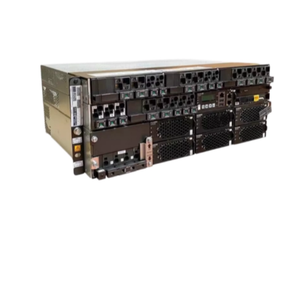
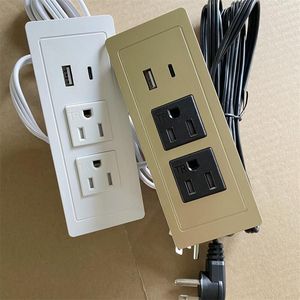
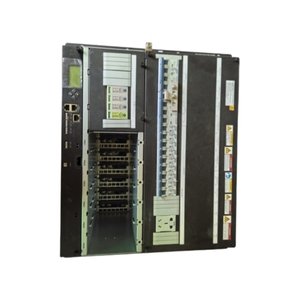
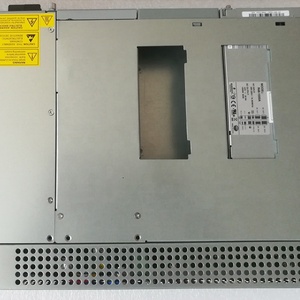
In the era of hyper-scale telecommunications, edge data centers, industrial IoT, and electric mobility platforms, embedded power conversion systems serve as the indispensable backbone ensuring continuous operational uptime and peak energy efficiency. Modern power architectures have evolved from localized passive linear regulation to highly integrated, digitally managed, hot-swappable switching networks.
As a global premier Custom OEM Embedded Power Manufacturer & Exporter, our engineering philosophy revolves around three uncompromising pillars: **power density optimization, rigorous thermal headroom management, and verified total cost of ownership (TCO) reduction**. Embedded power units—ranging from sub-15W micro-power modules to high-capacity 9kW 3U subrack systems—must seamlessly rectify incoming AC utility power, convert variable high-voltage DC, and deliver precisely regulated point-of-load (POL) voltage rails under extreme environmental operating envelopes.
Utilizing high-frequency soft-switching resonant topologies (LLC/CLLC) and wide-bandgap (GaN/SiC) semiconductors to shrink physical footprint while driving power conversion efficiency beyond 96%.
Integrated subrack systems featuring modular, hot-pluggable AC-DC rectifier units with active current sharing, enabling continuous maintenance with zero system downtime.
Microcontroller-driven internal control architecture communicating via PMBus, CANbus, or SNMP for real-time remote telemetry, predictive thermal diagnostic alerts, and dynamic voltage scaling.
Whether deploying 48V DC power systems for remote 5G cell sites, encapsulated isolated DC-DC converters for heavy industrial robotics, or IP67 liquid-cooled power conversion platforms for commercial electric vehicles, system integrators require standardized, certified, and fully customisable OEM hardware platforms that eliminate single points of failure.
B2B procurement executives, technical buyers, and system architects face shifting regulatory frameworks, rising electricity costs, and escalating thermal dissipation constraints. Key technological shifts are reshaping global OEM embedded power procurement budgets through 2030:
Legacy 12V backplane architectures suffer from excessive I²R copper conduction losses in high-current applications. The global power market is rapidly transitioning toward 48V DC intermediate bus architectures and 380V HVDC microgrids. Systems like the ETP48400-C4A1 (48V 400A) and ETP48300-C9A1 allow data centers, central offices, and fiber optic hubs to reduce cabling weight and distribution loss by over 70%, facilitating high-density rack computing.
Silicon power MOSFETs are reaching theoretical performance limits. OEM procurement strategies are prioritizing power modules built with Gallium Nitride (GaN) and Silicon Carbide (SiC) switches. These wide-bandgap materials allow switching frequencies up to 5x higher, reducing passive component magnetics size, shrinking 1/8th and 1/4 brick DC-DC footprint profiles, and delivering operation at junction temperatures exceeding +125°C.
Modern telecommunication nodes and industrial IoT installations demand hybrid embedded power solutions that seamlessly merge utility AC input, solar photovoltaic inputs, and direct lithium-iron-phosphate (LiFePO4) battery backup systems. Embedded subracks equipped with intelligent battery management software (BMS) automatically manage float-charging, peak shaving, and automatic failover during grid disruptions.
To avoid supply chain vulnerabilities, procurement teams are enforcing adherence to Distributed-power Open Standards Alliance (DOSA) standards. Standard footprints (from 1/32nd brick up to Full Brick) ensure seamless drop-in replacements, second-sourcing capabilities, and standardized pinouts without board redesign costs.
Selecting the optimal embedded power architecture requires evaluating key operational metrics including input voltage range, thermal dissipation strategy, physical footprint, and isolation rating. The benchmark matrix below summarizes our standard OEM engineering platforms:
| Product Category | Input Voltage Range | Output Capacity Range | Footprint / Chassis Standard | Cooling Strategy | Target Applications |
|---|---|---|---|---|---|
| Isolated DC-DC Bricks | 9-36V, 18-75V, 36-75V, 180-400V | 15W to 1000W+ | 1/32, 1/16, 1/8, Quarter, Half, Full Brick | Conduction Baseplate / Airflow | Telecom Linecards, Railway Control, Defense Systems |
| Non-Isolated POL Modules | 2.5V to 60V Wide DC Input | 10A to 100A Output Rail | DOSA Standard SMT / DIP Footprint | Natural Convection / Forced Air | FPGA, ASIC, DSP Core Power, Edge Servers |
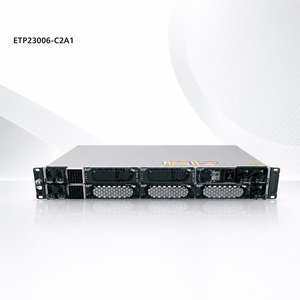
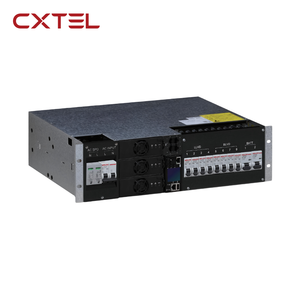
| Telecom Embedded Systems | 85-300V AC Single/Three Phase | 48V DC (100A to 400A System Output) | 19-Inch 1U, 2U, 3U Rack Subrack Chassis | Hot-Swappable Forced Air Fans | 5G Macro Base Stations, Fiber Infrastructure |
| e-Mobility On-Board Power | 200V-750V HV DC Battery Pack | 1kW to 5kW Continuous Low Voltage | IP67 Sealed Ruggedized Aluminum Die-Cast | Liquid Cooling / Conduction Cold Plate | Electric Commercial Vehicles, E-Buses, Heavy Machinery |
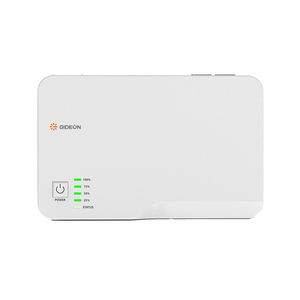
| Miniature DC UPS Solutions | 90V - 265V AC Universal Grid | 12V / 9V / 5V DC + PoE (15W - 30W) | Compact Wall-Mounted / Desktop Housing | Passive Natural Heat Sink | CCTV Security Monitoring, Wi-Fi Routers, IoT Gateways |
As an established engineering leader with millions of field-proven power modules deployed worldwide, our manufacturing facilities provide global original equipment manufacturers (OEMs) and original design manufacturers (ODMs) with complete turnkey custom power development.
Every standard module and custom derivative design undergoes exhaustive Design-for-Reliability (DFR) protocols. We conduct rigorous Highly Accelerated Life Testing (HALT) and Highly Accelerated Stress Screening (HASS) to expose design margins, subjecting prototypes to multi-axis vibration, rapid thermal cycling (-40°C to +125°C), and line-transient surges before mass-production approval.
Our manufacturing lines utilize state-of-the-art Automated Optical Inspection (AOI), 3D X-Ray Inspection (AXI), and 100% automated computer-controlled functional burn-in screening. Every power unit is assigned a unique serialized barcode, enabling comprehensive material traceability and batch-level quality tracking across its entire multi-decade operating lifecycle.
Standard power modules often require mechanical, electrical, or communication modifications to fit specialized physical footprints. Our dedicated application engineering team delivers rapid semi-custom and ground-up full-custom modifications—including specialized connector pinouts, conformal coating types, custom baseplate geometry, bespoke firmware logic (CANbus, Modbus), and extended input voltage ranges (up to 650VDC)—with industry-leading Non-Recurring Engineering (NRE) timelines.
All manufactured products are engineered to comply with major global safety, electromagnetic compatibility (EMC), and environmental standards, including UL 62368-1, IEC/EN 60950-1, EN 50155 (Railway Applications), CISPR 32 / EN 55032 Class B EMC, CE Marking, RoHS 3.0, REACH compliance, and IATF 16949 quality standards for automotive platforms.
Technical responses to common inquiries submitted by OEM hardware engineers, procurement officers, and power system designers:
Partner with a trusted custom OEM/ODM embedded power manufacturer. Contact our power application engineering team to request sample units, technical datasheets, CAD models, or custom design reviews.