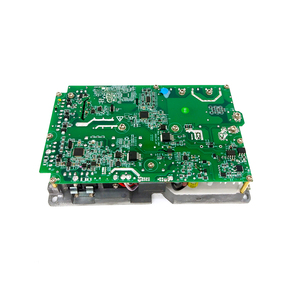
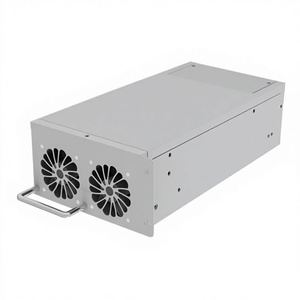
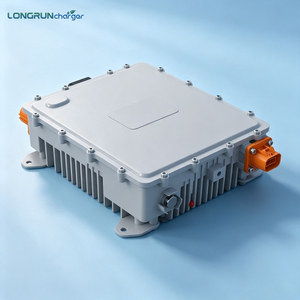
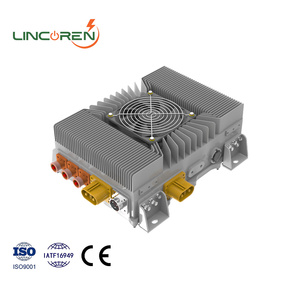
Direct wholesale supply for high-efficiency isolated DC-DC bricks, air/liquid-cooled OBCs, and integrated bidirectional converter assemblies designed for global transportation and industrial platforms.
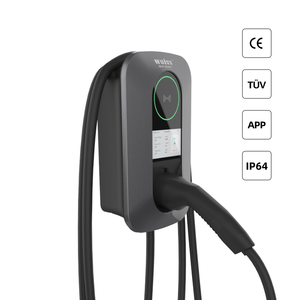
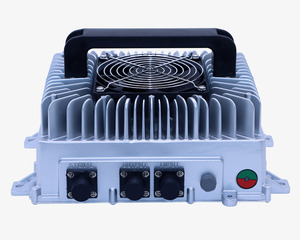
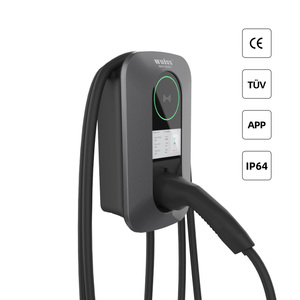
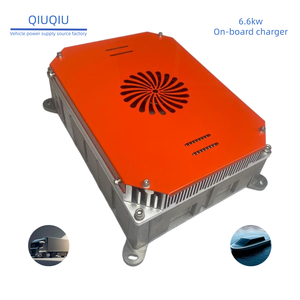
In the rapidly modernizing power electronics ecosystem, the demand for compact, highly efficient, and thermal-resilient board-mounted converters has driven global OEMs toward standardized modular footprints. Among these, the Half-Brick footprint (dimensioned at 2.28 x 2.4 x 0.5 inches / 57.9 x 61.0 x 12.7 mm) according to Distributed-power Open Standards Alliance (DOSA) specifications represents the sweet spot between elevated wattage delivery, electrical isolation capability, and PCB space optimization. As high-density processing racks, industrial robotics, telecommunications infrastructure, and electric vehicle (EV) powertrains require higher power densities, sourcing directly from top-tier China wholesale Half Brick manufacturers provides a profound competitive cost and engineering advantage.
Modern Half-Brick DC-DC converters utilize advanced topology architectures, including Phase-Shifted Full-Bridge (PSFB) and Resonant LLC converters operating in conjunction with Zero Voltage Switching (ZVS) mechanisms. This enables power conversion efficiency metrics to surpass 95% to 96.5%, dramatically diminishing internal thermal dissipation. In high-power e-Mobility environments, the principles of Half-Brick design directly translate into integrated 2-in-1 power assemblies combining On-Board Chargers (OBC) and high-voltage to low-voltage (HV-to-LV) auxiliary DC-DC converters within single IP67-sealed enclosures.
By implementing planar transformers integrated directly within multi-layer heavy-copper printed circuit boards (PCBs), parasitic leakage inductance is held below 1%, ensuring optimal magnetics performance. Furthermore, advanced silicon carbide (SiC) MOSFET switching components allow switching frequencies to scale beyond 200 kHz, drastically minimizing the footprint of passive inductive components and input/output ceramic decoupling filter banks.
To assist systems design engineers, hardware architects, and OEM procurement managers in selecting the exact topology for their specific application, the following matrix outlines the standardized electrical, mechanical, and thermal operational parameters of elite Chinese-manufactured power conversion units:
| Module / Platform | Input Voltage Range | Output Power / Voltage | Peak Efficiency | Cooling Architecture | Ingress / EMI Standard |
|---|---|---|---|---|---|
| DOSA Half-Brick DC-DC | 18V – 75V DC / 180V – 400V DC | 500W – 1000W (3.3V, 12V, 24V, 48V) | 95.8% | Conduction / Baseplate Heatsink | EN 55032 / IEC 60950-1 |
| 3.3kW Bidirectional OBC + 1.8kW DC-DC | 85V – 265V AC (Wide Universal) | OBC: 200V-450V DC / DC-DC: 14V DC | 96.2% | IP67 Sealed Air-Cooled / Liquid | ISO 26262 / UN ECE R10 |
| 3.3kW Rack-Mounted Fast Charger | 90V – 264V AC | 48V, 72V, 144V, 312V Nominal Battery | 95.5% | Forced Air Cooling (Intelligent Fan) | UL 62368-1 / CISPR 32 Class A |
| 6.6kW Dual-Module On-Board Charger | 180V – 260V AC Dual Phase | 200V – 750V HV Battery Systems | 96.5% | Liquid-Cooled (Water/Glycol Loop) | SAE J1772 / IEC 61851 |
Engineers specifying these units gain access to advanced CAN 2.0B communication protocols, allowing active dynamic control over battery charge profiles (Constant Current / Constant Voltage / Constant Power modes), real-time temperature telemetry monitoring, and over-the-air firmware adjustments.
When procuring power conversion modules from Chinese wholesale manufacturers, mapping system topology requirements to product functional classes is critical for minimizing redesign risks and ensuring high Field Reliability Indices (MTBF > 1,500,000 hours):
Requires ultra-compact, vibration-proof 3.3kW OBC and 48V/72V/144V battery charging modules with high IP67 ingress ratings. Integrated CAN Bus connectivity enables seamless synchronization with battery management systems (BMS).
Demands heavy-duty 2-in-1 combo units (3.3kW / 6.6kW OBC coupled with 1.8kW - 3kW auxiliary DC-DC converters). Requires liquid cooling blocks, wide input voltage tolerance, and shock compliance to ISO 16750 standards.
Employs DOSA-compliant Half-Brick isolated DC-DC converters accepting 36V-75V input rails, delivering tightly regulated 12V or 48V intermediate buses for micro-servers, 5G remote radio heads (RRH), and edge computing nodes.
Utilizes encapsulated, baseplate-cooled Half-Bricks and smart floor-mounted or wall-mounted 2kW/3.3kW fast-charging piles for automated guided vehicles (AGVs), forklifts, and industrial robotics operating in harsh dusty conditions.
Requires high-voltage isolated input ranges (66V–160V DC and 180V–400V DC) with 3000 VAC reinforced insulation barriers, complying with EN 50155 railway standards for shock, vibration, and extreme operating temperatures (-40°C to +105°C).
Utilizes bidirectional AC/DC and DC/DC converters allowing seamless energy flow between LiFePO4 battery banks and microgrids, incorporating advanced power factor correction (PFC > 0.99) and low total harmonic distortion (THD < 3%).
The power conversion landscape is undergoing a massive architectural shift driven by the electrification of global transport and energy storage industries. Wholesale procurement strategies must account for several major technology vectors currently being pioneered by premier Chinese manufacturing houses:
A. WBG (Wide-Bandgap) Semiconductor Domination: Traditional Silicon MOSFETs are rapidly being replaced by Silicon Carbide (SiC) and Gallium Nitride (GaN) power devices. SiC switching devices allow higher voltage operation (up to 1200V) with drastically reduced switching losses, enabling Half-Brick modules and OBC units to achieve power density increases exceeding 40% while operating at higher junction temperatures without thermal runaway.
B. Bidirectional Vehicle-to-X (V2X) Integration: Modern charging infrastructure is transitioning from unidirectional power transfer to bidirectional topologies (V2G - Vehicle to Grid, V2L - Vehicle to Load). Future procurement trends show that over 65% of tier-1 EV manufacturers now specify bidirectional capability in their 3.3kW and 6.6kW OBC tender documents to support emergency backup power and grid stabilization functions.
C. High-Voltage 800V Architecture Scaling: To enable ultra-fast charging capability, passenger and commercial EV battery bus voltages are transitioning from 400V nominal to 800V architectures. Consequently, isolated Half-Brick DC-DC converters and OBC modules must accommodate wide input ranges up to 850V DC while maintaining robust galvanic isolation (exceeding 3000 VDC isolation barriers).
Establishing a long-term supply chain relationship with leading China wholesale Half Brick manufacturers guarantees access to world-class manufacturing infrastructures. Production facilities operate under strict IATF 16949 automotive quality management systems and ISO 9001 environmental certifications, ensuring consistent lot-to-lot reliability.
Every power module passes through a multi-stage quality gate verification process before dispatch:
In addition, direct engineering access allows OEM clients to request semi-custom or full-custom modifications—including specialized aluminum baseplate geometric profiles, custom connector pinouts, conformal coating thicknesses (such as military-grade polyurethane or silicone encapsulants), and tailored CAN Bus communication matrix tables.
Need customized mechanical enclosures, tailored CAN matrices, or factory-direct volume pricing for Half-Brick modules and EV On-Board Chargers?
Get Catalog