
Explore our top-tier regulated voltage converters, ranging from sub-compact board-mounted DC-DC bricks and industrial SMPS to high-voltage variable frequency drives and automotive inverters.
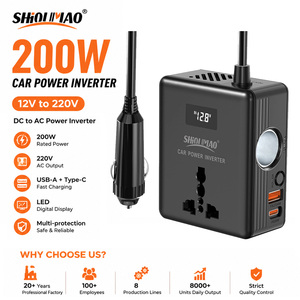
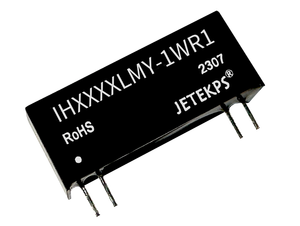
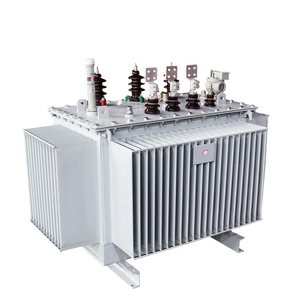
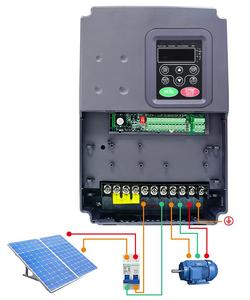
Regulated power converters serve as the foundation of modern electrical engineering, providing constant output voltage despite fluctuations in line voltage, load current, or ambient thermal conditions. As global industries accelerate electrification—from 5G telecom infrastructure and electric vehicles (EV) to automation robotics—the demand for China-manufactured regulated converters with high power density, thermal efficiency, and broad input tolerances has reached unprecedented levels.
Modern switch-mode power conversion (SMPS) relies on advanced pulse-width modulation (PWM) control architectures, active power factor correction (PFC), and high-frequency switching semiconductors. By operating at frequencies ranging from 100 kHz to over 1 MHz, switch-mode regulated converters dramatically reduce the physical size of internal magnetic components (transformers and inductors) while driving conversion efficiency up to 98%.
When selecting a power converter platform, systems design engineers must evaluate the necessity of galvanic isolation:
Leading Chinese manufacturing plants (including OEM platforms like NetPower, Yingjiao, and ZhongShao) are rapidly integrating Gallium Nitride (GaN) HEMTs and Silicon Carbide (SiC) MOSFETs into standard production lines. Compared to legacy silicon switches, WBG devices exhibit lower conduction losses, near-zero reverse recovery charge, and elevated temperature tolerance (+175°C junction limits). This transition enables ultra-compact form factors such as 1/32nd and 1/16th brick DC-DC converters capable of delivering several hundred watts within a footprint smaller than a postage stamp.
To assist global procurement directors and hardware design engineers in specifying optimal power architectures, the following matrix categorizes key technical parameters across major regulated converter topologies manufactured in China:
| Converter Category | Standard Input Voltage | Isolation Level | Typical Efficiency | Primary Industrial Applications |
|---|---|---|---|---|
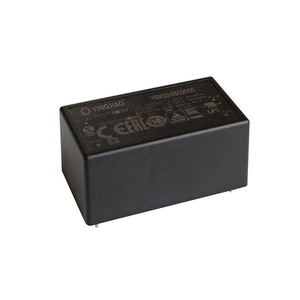
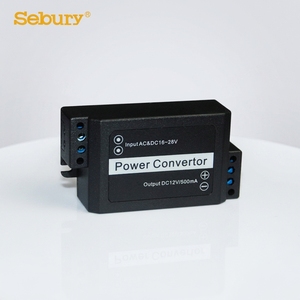
| Micro SIP/DIP DC-DC Modules | 3.3V, 5V, 12V, 24V DC | 3000VDC to 7000VDC | 75% – 88% | Sensor telemetry, access control, board-level signal isolation |
| DOSA Brick DC-DC (1/32 to Full Brick) | 9-36V, 18-75V, 36-75V, 180-400V | 1500VDC to 2250VDC | 88% – 95% | Telecom base stations, datacom servers, defense electronics |
| e-Mobility & EV On-Board Converters | 200V - 800V HV DC Bus | Reinforced 3000VAC | 94% – 96% | Electric buses, commercial trucks, battery management systems |
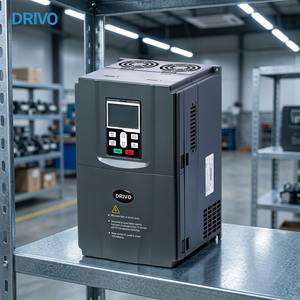
| Industrial Variable Frequency Drives (VFD) | 1-Phase / 3-Phase 110V/220V/380V AC | Non-isolated (Internal Logic Isolated) | 95% – 98% | Motor speed control, HVAC pumps, CNC machinery automation |
| Oil-Immersed High-Voltage Transformers | 110V, 220V, 10kV, 35kV AC | High Voltage Oil Insulation | 97% – 98.5% | Substation power distribution, heavy industrial plants |
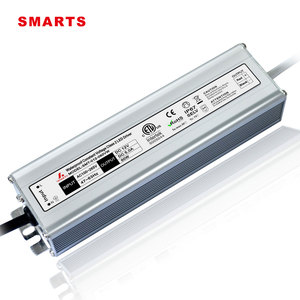
| Enclosed Industrial AC-DC SMPS / LED Drivers | 85-264V Universal AC | 3000VAC Input to Output | 82% – 92% | LED architectural lighting, industrial control panels, security systems |
As international buyers evaluate sourcing partnerships with Chinese converter manufacturers, four major engineering trends are shaping the supply chain landscape:
Legacy converters functioned within narrow input bands (e.g., 2:1 ratio). Modern industrial and railway specifications demand 4:1 (9-36V, 18-75V) and even 8:1 / 12:1 ultra-wide input ranges (14V to 160V continuous). This allows a single standard converter P/N to operate seamlessly across various battery voltages and railway line standards globally.
High power density creates concentrated thermal dissipation challenges. Premium Chinese manufacturers now employ advanced epoxy/silicone potting compounds and baseplate conduction cooling. Encapsulated brick converters achieve IP67/IP68 ingress protection while operating in extreme ambient temperatures from -40°C to +105°C without derating.
Analog feedback loops are increasingly supplemented or replaced by digital controllers featuring PMBus or CAN bus communication interfaces. System operators can remotely monitor output voltage, current load, operating temperature, and fault flags in real-time, enabling predictive maintenance in mission-critical datacenters and commercial EVs.
Miniaturization increases switching noise risks. Tier-1 Chinese converter factories integrate multi-stage internal EMI filter networks. Modules are engineered to pass CISPR 32 / EN 55032 Class B conducted and radiated emission limits with minimal external passive filter components.
Establishing authority and trust (E-E-A-T) in power supply manufacturing requires rigorous quality control systems, verifiable component traceability, and international certification compliance. Sourcing from certified Chinese power converter factories provides distinct structural advantages:
Tier-1 factories operate under certified ISO 9001:2015 (Quality Management) and IATF 16949 (Automotive Quality Management) standards. Every production lot undergoes a stringent battery of tests before shipment:
To comply with stringent EU and North American regulations, authentic Chinese power module factories utilize premium-grade raw materials: UL 94V-0 flame-retardant substrates, 105°C/125°C rated long-life electrolytic capacitors, and high-permeability magnetic cores from top-tier suppliers. All modules strictly adhere to RoHS, REACH, CE, UL, and CE Marking standards.
Detailed answers to the most common questions raised by electrical engineers, system architects, and B2B sourcing managers regarding China-manufactured regulated converters.
Whether you require standard DOSA brick DC-DC converters, custom high-isolation micro modules, or high-power EV automotive conversion platforms, our engineering team delivers market-leading power density, field-proven MTBF, and competitive factory-direct pricing.