
Comprehensive Procurement Guide: China Onboard Charger Factories & OEM Ecosystem
The global transition toward electric mobility—spanning passenger electric vehicles (EVs), commercial e-trucks, electric buses, industrial machinery, and off-highway utility vehicles—has placed the On-Board Charger (OBC) and integrated power conversion assembly at the absolute core of vehicle powertrain engineering. As systemic battery capacities increase and charging expectations demand faster turnaround times, selecting an authoritative, high-yield manufacturing partner among China's top onboard charger factories becomes a pivotal strategic decision for Tier-1 automotive integrators and global OEM buyers.
Key Strategic Takeaway: Modern EV power conversion architectures are rapidly evolving from standalone AC-to-DC charging modules into highly integrated 2-in-1, 3-in-1, and 8-in-1 mechatronic powertrains. Partnering with a factory featuring deep in-house DC-DC topology expertise, automated SMT lines, and automotive ISO 26262 functional safety compliance dramatically cuts time-to-market while reducing total system footprint.
1. The Technology Evolution of On-Board Power Systems
The technical landscape of On-Board Chargers has transformed rapidly over recent years. Historical 3.3kW unidirectional charging modules built on legacy silicon IGBTs are being replaced by high-power, bi-directional, multi-kilowatt platforms driven by Wide-Bandgap (WBG) semiconductors.
Silicon Carbide (SiC) and GaN Switch-Mode Architectures
By transitioning from legacy Si-junctions to Silicon Carbide (SiC) MOSFETs, modern China power conversion factories have raised switching frequencies from 65 kHz up to 200 kHz+. This frequency scaling yields three immediate engineering benefits:
- Volumetric Reduction: Passive component sizes—specifically magnetic transformers, boost inductors, and EMI filtering chokes—are reduced by up to 40%, optimizing under-hood payload space.
- Efficiency Gains: Thermal dissipation losses drop dramatically, elevating peak system efficiency beyond 96.5% across wide input AC operating windows (90V–264V).
- Thermal Operating Margins: Elevated junction temperature limits (Tj up to 175°C) allow reliable operational performance in high-heat engine bays under full continuous load.
Bi-Directional Charging: V2G, V2L, and V2X Capabilities
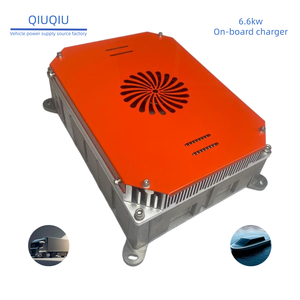
Modern grid interactivity mandates that OBC modules support bi-directional power flow. Dual Active Bridge (DAB) and totem-pole bridgeless PFC (Power Factor Correction) topologies enable the vehicle’s high-voltage traction battery to supply AC power back to the grid (Vehicle-to-Grid, V2G), feed external job-site industrial tools (Vehicle-to-Load, V2L), or supply home backup energy (Vehicle-to-Home, V2H). Integrated bi-directional 3.3kW and 6.6kW OBCs convert DC battery power into pure sine-wave AC output with total harmonic distortion (THD) under 3%.
2. Integrated Powertrain Systems: 2-in-1 & 3-in-1 Modular Converters
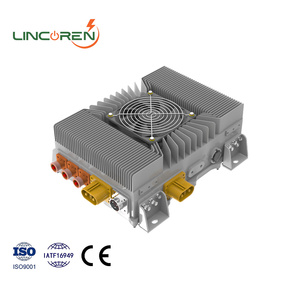
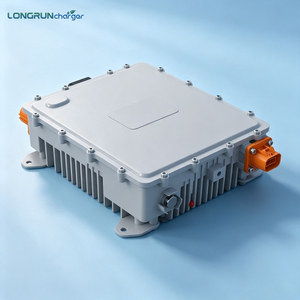
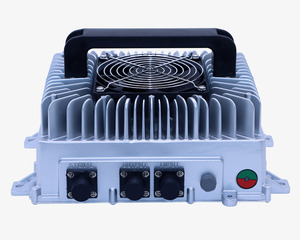
Space and weight optimization remain paramount in automotive engineering. Leading Chinese manufacturers now lead the market in co-packaging the On-Board Charger (OBC) with high-voltage to low-voltage (HV-to-LV) DC-DC converters and Power Distribution Units (PDUs).
| Integration Level | Sub-System Components | Typical Output Power | Cooling Mechanism | Target EV Applications |
|---|---|---|---|---|
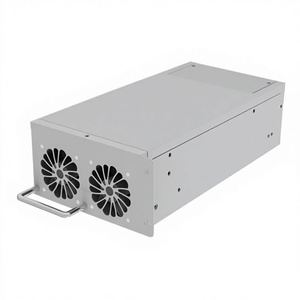
| Standalone OBC | AC-DC Charger | 3.3 kW / 6.6 kW / 11 kW | Air / Conduction Cooled | Electric Motorcycles, AGVs, Light Utility |
| 2-in-1 Combo | OBC + Auxiliary DC-DC | 3.3kW OBC + 1.8kW DCDC | IP67 Sealed / Liquid Cooled | Passenger EVs, Commercial Fleets, Forklifts |
| 3-in-1 Smart Power Unit | OBC + DC-DC + PDU | 6.6kW OBC + 2.5kW DCDC | Integrated Liquid Cold-Plate | Heavy e-Trucks, Buses, Mining Equipment |
| High-Voltage Platform | 800V Architecture Combo | 11kW - 22kW Bi-Directional | Dual-Circuit Liquid Cooling | Next-Gen Fast Charge Passenger & Commercial EVs |
Integrating the auxiliary 12V/24V DC-DC converter directly into the OBC housing eliminates duplicate high-voltage connectors, heavy copper busbars, and individual aluminum enclosures. This structural synergy reduces total weight by 25% while streamlining installation into the chassis harness.
3. Global Procurement & Future Supply Chain Trends (2025–2030)
When sourcing power conversion electronics from Chinese manufacturing facilities, international procurement teams must look beyond initial unit pricing to evaluate long-term supply resilience, regulatory conformity, and technology roadmaps.
Key Sourcing & Manufacturing Trends
- Transition to 800V Battery Platforms: Driven by ultra-fast DC charging demands, luxury EVs and commercial fleets are shifting from traditional 400V bus systems to 800V architectures. Leading factories now produce high-voltage OBC models operating safely across 500V–850V DC outputs.
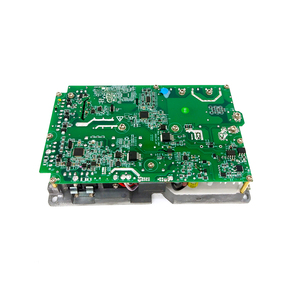
- Automated SMT & Traceability Systems: Top-tier Chinese factories utilize MES (Manufacturing Execution Systems) tied to 2D barcode scanning on every PCB board. This provides 100% component-level traceability back to raw silicon wafer lots and capacitor manufacturing batches.
- Modular Standardization (DOSA & Custom Footprints): Combining standardized board-mounted DC-DC brick footprints (1/16th, 1/8th, quarter, half brick) with modular OBC power stages reduces custom engineering NRE fees and shortens production lead times for specialty vehicle OEM builders.
4. Enterprise Advantages: Engineering Rigor & Quality Systems
Leveraging deep industrial power conversion expertise, NetPower and partner factory ecosystems apply stringent quality control measures to withstand demanding operational conditions.
Environmental & Thermal Robustness
Off-highway vehicles, agricultural machines, and municipal buses face extreme vibration, humidity, and chemical exposure. Modern OBC designs utilize fully encapsulated potting compounds housed inside die-cast aluminum enclosures certified to IP67 and IP69K ingress protection ratings. Advanced liquid cold-plate designs maintain internal component temperatures well within safe limits, even during high ambient summer operation.
Electrical Safety & Isolation Standards
Safety is non-negotiable in high-voltage e-mobility applications. Standard equipment features heavy-duty galvanic isolation between high-voltage DC circuits, low-voltage control logic, and chassis ground. On-board units comply with global compliance benchmarks including UL2202, IEC 61851, CE mark requirements, and CISPR 25 Class 5 electromagnetic compatibility (EMC) standards to minimize radio frequency interference.