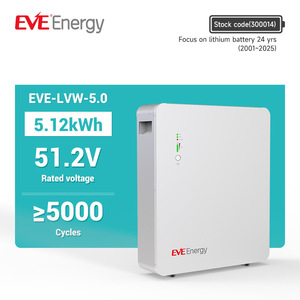
EVE 5KW 10KW Home Energy Storage System off Grid Lifepo4 for Solar Energy Lithium Battery Storage System
51.2V LFP
Off-Grid Ready
6000+ Cycles

Explore engineered LiFePO4 battery modules, residential rack/wall systems, and utility-scale containerized BESS manufactured by China's leading OEMs.
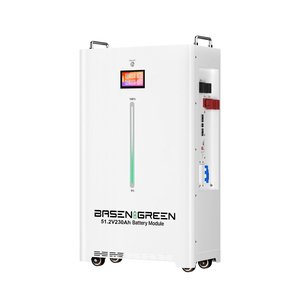
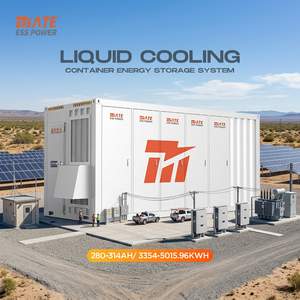
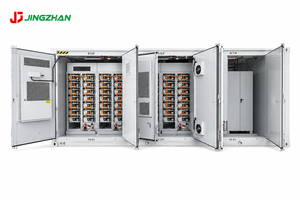
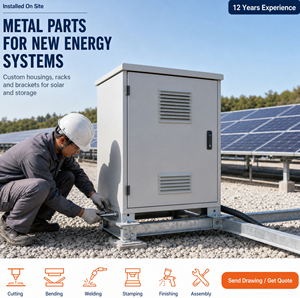
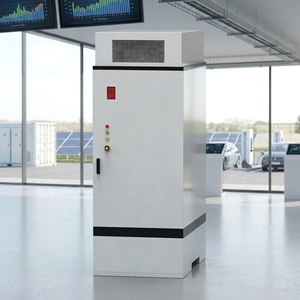
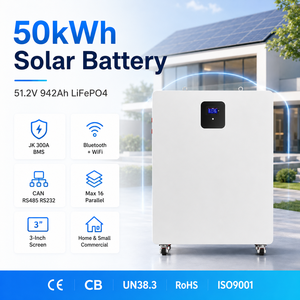
As the global energy transition accelerates toward net-zero targets, China has established an unassailable leadership position in the research, development, and mass manufacturing of Lithium Iron Phosphate (LiFePO4) Battery Energy Storage Systems (BESS).
Understanding the structure of China's energy storage ecosystem requires evaluating the multi-tiered manufacturing landscape. Tier-1 manufacturers, including CATL, EVE Energy, REPT Battero, Hithium, and BYD, dominate upstream electrochemical research and automated cell production lines. Downstream integrators leverage these high-density prismatic cells to construct highly tailored residential battery walls, commercial cabinet enclosures, and utility-scale 20ft/40ft liquid-cooled containerized systems.
For international procurement directors, EPC contractors, and system integrators, selecting the right manufacturing partner in China goes beyond comparing FOB price per kilowatt-hour ($/kWh). It necessitates a granular audit of battery management system (BMS) firmware integration, thermal dissipation modeling, electrical isolation design, cell-matching balance tolerances, and international safety compliance certifications such as UL 1973, UL 9540, UL 9540A, IEC 62619, and UN 38.3.
Key technological shifts and supply chain dynamics shaping global procurement decisions for commercial, industrial, and utility-scale energy storage assets over the next decade.
The global storage market is rapidly transitioning from traditional 280Ah cells to 300Ah+ and 314Ah high-energy-density prismatic cells. By utilizing 314Ah chemistry, system integrators achieve a 5MWh energy footprint inside standard 20-foot container enclosures without expanding physical footprints, driving down Levelized Cost of Storage (LCOS) by over 12%.
Liquid thermal management is replacing forced air cooling in systems exceeding 100kWh. Liquid-cooled cold plates maintain cell-to-cell temperature variations under 2.5°C, suppressing thermal runaway risks, extending system cycle life by up to 20%, and significantly reducing parasitic auxiliary power consumption.
Utility-scale projects are shifting from 1000V DC topologies to 1500V systems. Higher voltage reduces cable copper weight, lowers line transmission losses, maximizes inverter power density, and optimizes total system balance-of-plant (BOP) capital expenditure.
Modern procurement demands active-balancing BMS coupled with IoT telemetry. Cloud-based machine learning algorithms continuously evaluate internal cell impedance, State of Health (SOH), and thermal signatures to predict insulation degradation or cell anomalies weeks before failure occurs.
Commercial & Industrial buyers are favoring modular, pre-assembled, plug-and-play outdoor cabinets (e.g., 100kW/215kWh to 200kW/372kWh). These enclosures integrate PCS, isolation transformers, liquid cooling units, active aerosol fire protection, and EMS in a single footprint, shortening site installation times by 70%.
With regulations like the EU Battery Regulation coming into force, top manufacturers in China now provide full material traceability down to mined lithium and cobalt sources, alongside audited Product Carbon Footprint (PCF) disclosures and ESG passports.
Compare electrical engineering metrics, thermal topology choices, and protective measures across standard energy storage system tiers.
| System Category | Typical Capacity Range | Nominal Voltage | Cooling Mechanism | Target Applications | Key Certifications |
|---|---|---|---|---|---|
| Residential Wall/Rack | 5 kWh – 30 kWh | 48V / 51.2V / HV (200-400V) | Natural Air / Passive Convection | Home Solar Storage, Emergency Backup, Off-Grid | UL 1973, CE, IEC 62619, UN 38.3 |
| C&I Outdoor Cabinet | 100 kWh – 500 kWh | 600V – 1000V DC | Liquid Cooling / Forced HVAC | Peak Shaving, Demand Charge Reduction, Microgrid | UL 9540, UL 9540A, NFPA 855 |
| Containerized Utility BESS | 2.5 MWh – 5.0 MWh | 1000V – 1500V DC | Precision Liquid Cooling Plate | Grid Frequency Regulation, Renewable Integration | UL 9540, IEC 62933, IEEE 1547 |
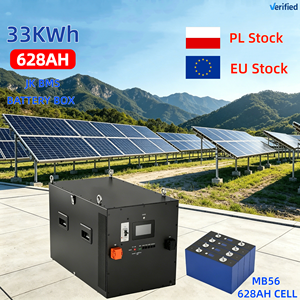
| DIY / Stackable Storage | 10 kWh – 32 kWh | 51.2V (16S LFP) | Internal Air Channels | Solar Installers, Off-Grid Cabins, Modular Power | CE, UN 38.3, MSDS |
Leading Chinese energy storage manufacturers integrate stringent design-for-reliability principles, robust thermal management, and comprehensive quality assurance protocols.

Before module assembly, cells undergo automated optical inspection (AOI), 100% capacity grading, and ultra-precise internal resistance (IR) matching within ±0.5mΩ to prevent premature pack degradation.
Utilizing CFD thermal simulations, cooling plates and air duct geometries are optimized for uniform heat removal, ensuring operational safety under extreme ambient temperatures from -30°C to 55°C.
Finished battery systems endure Highly Accelerated Life Testing (HALT), thermal shock cycling, salt spray corrosion testing, and 3-axis vibration testing to satisfy heavy automotive and industrial transport standards.
Cabinets incorporate multi-tier protection: pack-level aerosol fire suppression, combustible gas detection (CO, H2), pressure relief vents, and high-voltage disconnections via pyrotechnic fuses.
Get definitive technical and commercial answers regarding factory audits, warranty terms, certifications, and customization options when sourcing BESS from China.
Grade A cells meet 100% of the manufacturer’s rigorous electric vehicle (EV) capacity, internal resistance, and dimensional specifications. They feature zero cosmetic flaws and undergo strict self-discharge testing over 30 days. Grade B cells exhibit slight capacity deviations (typically 2-5% below nominal) or minor self-discharge variance and are diverted away from tier-1 energy storage systems. Top factories guarantee 100% Grade A fresh prismatic cells with traceable QR codes laser-etched on cell terminals.
For North America (USA & Canada), systems must comply with UL 1973 (stationary battery safety), UL 9540 (energy storage system safety certification), UL 9540A (thermal runaway fire propagation testing), and NFPA 855 site installation standards. For the European Union, requirements include CE, IEC 62619 (industrial lithium battery safety), EN 61000 series for EMC compliance, and UN 38.3 transport certification for lithium batteries.
LiFePO4 offers superior thermal and chemical stability compared to Nickel Manganese Cobalt (NMC). LFP cells exhibit a higher thermal runaway threshold (~270°C vs ~210°C for NMC) and do not release oxygen during thermal decomposition, eliminating explosive flame risks. Furthermore, LFP delivers significantly longer cycle life (6,000 to 15,000 cycles at 80% DOD vs 2,500 cycles for NMC) at a substantially lower cost per kWh.
Leading Chinese manufacturers offer a standard 10-year linear performance warranty or 6,000 to 10,000 cycle throughput warranty (whichever comes first) for battery systems, maintaining at least 70% or 80% remaining State of Health (SOH). Auxiliary components like power conversion systems (PCS), liquid chillers, and HVAC units typically carry 3 to 5-year standard warranties, which can be extended via service agreements.
Yes. Chinese BESS factories specialize in OEM/ODM firmware integration. BMS control boards natively support CANbus, RS485, and Modbus-RTU protocols pre-programmed for seamless interoperability with world-leading inverter brands including Victron Energy, SMA, Studer, Deye, Sol-Ark, Growatt, GoodWe, and Megarevo.
For standardized containerized systems (e.g., 20ft 3.35MWh or 5MWh liquid-cooled units), production lead times range between 6 to 8 weeks after engineering drawing approval. Custom mechanical modifications, non-standard voltage requirements, or specialized transformer integrations may extend lead times to 10–12 weeks, excluding ocean shipping duration.
Connect directly with our senior power engineers and OEM specialists to request datasheets, factory audit reports, customized technical proposals, and wholesale pricing.