
Explore our export-grade portfolio spanning bidirectional BESS converters, isolated DC-DC bricks, hybrid solar inverters, and automotive-grade auxiliary power systems.
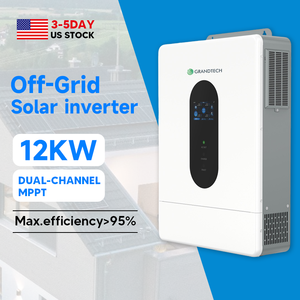
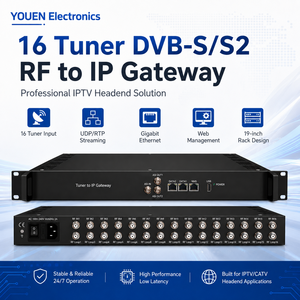
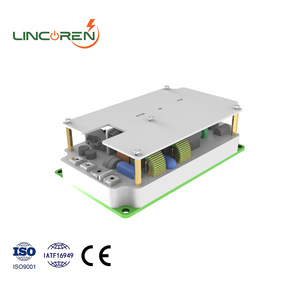
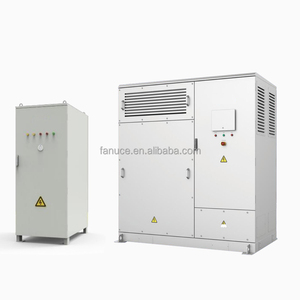
As the global energy landscape pivots rapidly toward decarbonization, electrification, and high-density computing infrastructure, the role of Power Conversion Systems (PCS), isolated board-mounted DC-DC converters, and e-Mobility power electronics has transformed. China has consolidated its standing as the world's premier manufacturing powerhouse and exporter of high-reliability power converter systems. Beyond raw manufacturing throughput, leading Chinese original equipment manufacturers (OEMs) and original design manufacturers (ODMs) now drive cutting-edge technological innovations in Wide Bandgap (WBG) semiconductors (Silicon Carbide - SiC and Gallium Nitride - GaN), high-power-density planar magnetic integration, and intelligent digital control loops.
This technical white paper delivers an authoritative evaluation of China's top converter system manufacturing ecosystem. We explore critical engineering benchmarks, architectural advancements in bidirectional battery energy storage systems (BESS), point-of-load (POL) buck regulators, automotive auxiliary converters, and strategic procurement considerations essential for global engineering leaders and B2B procurement managers.
Key Takeaway for B2B Buyers: Modern power systems demand more than peak efficiency ratings. Thermal margin, immunity to voltage surges, electromagnetic compatibility (EMC), and multi-vendor footprint standardization (such as DOSA brick standards) represent the true metrics of field reliability across 10+ year operational lifecycles.
Modern industrial and commercial systems utilize four primary power conversion topologies, each designed to solve specific energy conversion challenges across renewable grids, telecommunications, datacenters, and commercial transportation:
Below is a comparative breakdown of key operational envelopes across export-grade Chinese converter platforms engineered for global deployments:
| Converter Category | Standard Footprints / Form Factor | Input Voltage Ranges (DC/AC) | Efficiency Benchmark | Cooling & Thermal Protection | Primary Industrial Applications |
|---|---|---|---|---|---|
| Micro & Brick DC-DC | 1/32nd, 1/16th, 1/8th, 1/4, 1/2, Full Brick | 9-36V, 18-75V, 36-75V, 180-400V DC | 90% – 95% | Conduction Baseplate / Forced Air | Telecom Line Cards, Datacom, Industrial Automation |
| Point-of-Load (POL) | DOSA Standard Surface-Mount / SIP | 2.5V – 60V Wide DC Input | 92% – 96% | Natural Convection / Open Frame Airflow | FPGA, ASIC, Server Motherboards, DSP Core Rails |
| e-Mobility DC-DC | Sealed Enclosure (Automotive Grade) | 200V – 850V Traction DC Input | 94% – 96.5% | Liquid Cooling / IP67 Air-Cooled Fins | Electric Commercial Vehicles, e-Buses, Heavy Machinery |
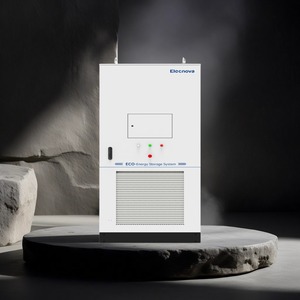
| Commercial PCS | 19-inch Rack Cabinet / Outdoor Enclosure | 660V – 950V DC / 380V-480V 3-Phase AC | 98.5% (Peak Power) | Intelligent Forced Air / Liquid Cooled Heat Exchangers | BESS Energy Storage, Solar Hybrid Microgrids, Peak Shaving |
| Utility-Scale PCS | Containerized / Modular Skids (1.5MW+) | up to 1500V DC High Voltage Battery Bus | > 99.0% Peak | Direct Liquid Cooling / HVAC Climate Control | Utility Grid Frequency Regulation, Large-Scale Solar PV |
Why Tier-1 global integrators choose Chinese converter OEMs for mission-critical power system manufacturing.
Our manufacturing centers adhere strictly to ISO9001, ISO14001, and IATF16949 automotive quality standards. Every batch undergoes 100% automated optical inspection (AOI), full-load burn-in screening, and statistical process control (SPC) to guarantee zero-defect yields.
All power module architectures undergo rigorous Highly Accelerated Life Testing (HALT) and Stress Screening (HASS). Thermal shock cycling (-40°C to +125°C), vibration tolerance, and worst-case thermal margin simulations ensure dependable operation in extreme environments.
From mechanical form-factor re-engineering and thermal baseplate modifications to custom CAN-bus communication firmware and non-standard input voltage tailoring, our R&D team converts engineering specifications into mass-production-ready hardware.
By integrating 3rd Generation SiC MOSFETs and GaN switches, our power conversion designs achieve up to 3x higher switching frequencies, reducing magnetic component volume by 40% while raising efficiency curves above 98%.
Our complete power product family holds compliance certifications for CE, UL, RoHS, REACH, FCC Part 15 Class A/B, and EN 50155 (Railway Applications), easing fast-track market entry across North America, Europe, and Asia-Pacific markets.
Supported by direct raw-material relationships with semiconductor foundries and passive component suppliers, we maintain stable lead times, competitive unit economics, and established international freight logistics handling over 100+ countries.
As industrial automation, utility battery storage, and transport electrification continue to accelerate, procurement engineers and purchasing executives face shifting technology requirements. Understanding these major trends is crucial for building future-proof hardware platforms:
Legacy power distribution relies heavily on 400V DC intermediate buses for electric vehicles and 1000V DC topologies for solar/BESS installations. However, global standards are transitioning to 800V DC in commercial electric transport and 1500V DC in utility-scale energy storage. Higher operational voltages reduce copper cabling weight and ohmic losses, enabling higher power transfer at lower current density. Importers must prioritize factories capable of manufacturing high-voltage isolated converters rated for high transient immunity and elevated dielectric breakdown thresholds.
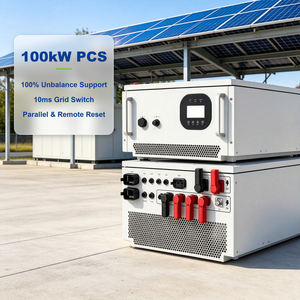
Centralized monolithic inverters are increasingly replaced by modular Power Conversion Systems (PCS). Rack-mounted 50kW, 100kW, and 125kW bidirectional PCS modules arranged in parallel offer N+1 redundancy, eliminating single points of failure in commercial energy storage plants. If a single module experiences a fault, hot-swappable architecture allows continuous system operation without total site downtime.
Modern converter systems are no longer isolated analog power blocks. Embedded microcontrollers equipped with CAN-bus, Modbus TCP, and Ethernet/IP protocols transmit real-time telemetry—including MOSFET junction temperature estimates, electrolyte capacitor aging metrics, and harmonic distortion rates—directly to IoT platforms. Industrial buyers are demanding predictive maintenance data streams to minimize field servicing overhead.
While initial acquisition cost remains a core procurement metric, global enterprise buyers are calculating Total Cost of Ownership (TCO). A 1% increase in power converter efficiency across a 100MW energy storage project yields hundreds of thousands of dollars in energy loss savings over a 15-year lifecycle. Consequently, top Chinese exporters are focusing heavily on publishing verified full-load thermal derating curves and lifetime MTBF (Mean Time Between Failures) reports exceeding 1,000,000 hours.
To provide actionable insights for hardware design architects, the technical diagram below outlines the evolutionary roadmap of Chinese converter system designs over the coming decade:
R&D Focus Area: Advanced Thermal Packaging
Traditional epoxy pot encapsulation is being rapidly replaced by high-thermal-conductivity ceramic substrates (DBC/AMB) paired with direct-liquid cooling cold plates. This allows auxiliary 5kW EV converters to operate efficiently in ambient environments exceeding +85°C without severe power derating.
Furthermore, magnetic integration technology—where planar transformers and resonant inductors are integrated directly into multi-layer printed circuit boards (PCBs)—has dramatically lowered module profile heights. Brick converters can now achieve power densities above 500W/in³, opening up critical board real estate for compute-heavy AI accelerator cards and high-density telecom line units.
Detailed technical and commercial answers addressing common engineering and purchasing inquiries regarding Chinese converter system sourcing.
Our isolated DC-DC brick converters support standardized wide input ranges designed for diverse industrial sectors: 9-36V DC and 18-75V DC for industrial automation; 36-75V DC for telecom 48V bus architectures; 16-160V DC and 66-160V DC for railway traction electronics (EN 50155); and high-voltage DC ranges spanning 180-400V DC, 300-500V DC, and 400-650V DC for electric vehicle DC-DC auxiliary systems and DC microgrids.
Our 100kW to 1500kW bidirectional PCS systems feature independent three-phase control algorithms utilizing digital signal processors (DSPs). This enables the converter to handle up to 100% phase load unbalance on the AC side without tripping or introducing excessive total harmonic distortion (THD < 3%). This capability is vital for microgrid applications with uneven single-phase load distribution.
Yes. As a leading OEM/ODM exporter, we specialize in custom and semi-custom power conversion projects. Whether you require a specialized DOSA-compatible pinout, custom heatsink mounting plate, liquid-cooling block integration, or custom CAN-bus telemetry protocols for vehicle integration, our engineering team manages projects from prototype samples through volume production.
Our e-Mobility DC-DC converters and outdoor PCS modules feature IP65, IP67, and IP68 sealed aluminum enclosures. They are engineered to resist salt spray corrosion, dust ingress, high humidity, and direct water jets, making them ideal for heavy mining trucks, marine vessels, and exposed solar-plus-storage field sites.
All automotive-grade and industrial modules undergo 100% automated test routines, AOI inspection, automated conformal coating application, and thermal burn-in under heavy load. Products designed for mobile or heavy machinery applications are qualified under ISO 16750-3 vibration and mechanical shock stress testing.
We provide full technical documentation with all evaluation modules, including recommended input/output LC filter schematics, PCB layout guidelines, thermal derating charts, and pre-compliance EMC test reports (CISPR 32 / EN 55032 Class A and B). Our application engineers are available to review customer system board layouts to ensure seamless qualification.
Whether you require standard DOSA brick converters, high-density POL modules, automotive-grade EV power converters, or megawatt-scale grid PCS systems, our engineering team delivers superior efficiency, reliability, and competitive factory-direct pricing.
Get a Quote