
Explore our tier-1 grade automotive power conversion platforms, GB/T to CCS2/CCS1 fast-charging adapters, and catalytic conversion assemblies engineered for high power density and harsh thermal operational profiles.
Navigating global electro-mobility transitions and stringent international emission mandates requires an engineering partner that blends advanced power electronics research with scalable industrial manufacturing.
Our engineering architecture spans isolated DC-DC converter bricks (1/32nd to Full Brick footprints) to high-power commercial EV converters. Utilizing Silicon Carbide (SiC) and Gallium Nitride (GaN) switching topologies, our power density exceeds industry benchmarks, reaching up to 5kW/L.
Operating under IATF 16949 and ISO 9001 quality frameworks, every vehicle converter and adapter undergoes automated optical inspection (AOI), high-acceleration stress testing (HALT/HASS), and 100% full-load burn-in screening before shipment.
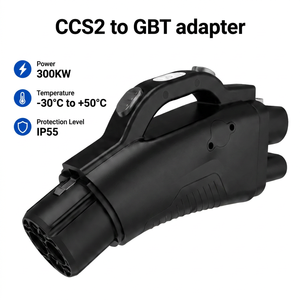
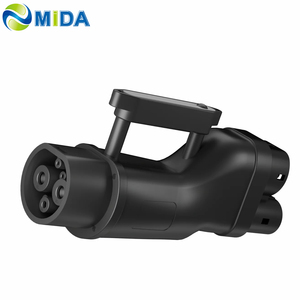
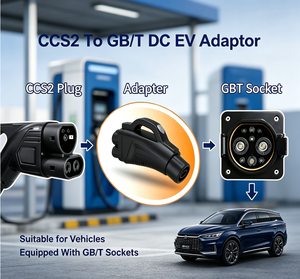
Our fast-charging conversion platforms resolve global standards fragmentation. By bridging CCS2, CCS1, GB/T, and NACS protocols, our fast DC adapters feature microsecond-level CAN communication translation and active thermal monitoring.
Analysis of market shifts, semiconductor advancements, and global supply chain strategies for automotive procurement officers and OEM system architects.
The global EV market is rapidly pivoting toward 800V high-voltage platforms to enable sub-15-minute fast charging and minimize vehicle wiring weight. Consequently, global procurement teams are discontinuing traditional silicon IGBT modules in favor of Silicon Carbide (SiC) MOSFET-based DC-DC converters. SiC switches enable switching frequencies above 200kHz, drastically reducing passive inductor size and thermal dissipation overhead. Sourcing partners must ensure suppliers possess native SiC power stage design capabilities to mitigate future obsolescence.
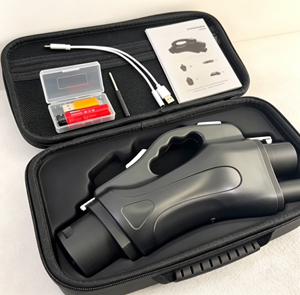
With the massive international export of Chinese Electric Vehicles (BYD, ZEEKR, NIO, Avatr, Geely) to European, Middle Eastern, and South American markets, fleet operators face infrastructure incompatibility between GB/T vehicle inlets and local CCS Combo 2 or NACS charging infrastructure. Procurement demand for high-power (200kW–300kW) external adapters featuring integrated microcontrollers and IP55/IP67 weatherproofing has grown exponentially. The strategic priority is securing supplier compliance with DIN 70121, ISO 15118, and IEC 61851 safety standards.
Automotive OEMs are increasingly demanding bi-directional functionality within onboard auxiliary converters and portable power units. Vehicles are transforming into mobile energy storage systems (ESS). Modern vehicle converters must support Vehicle-to-Load (V2L) and Vehicle-to-Grid (V2G) modes with high efficiency in both buck and boost modes, requiring complex dual-active-bridge (DAB) topologies and real-time firmware control loops.
| Technology Domain | Legacy Technology (2018–2022) | Next-Gen Industry Standard (2025–2030) | Procurement Impact & Benefit |
|---|---|---|---|
| Semiconductor Topology | Silicon MOSFET / IGBT (30–60 kHz) | SiC / GaN Wide Bandgap (>200 kHz) | +35% Power Density, -40% Thermal Losses |
| EV Charging Protocol | Static Single-Standard Inlets | Multi-Protocol Smart Adapters (CCS2/GBT/NACS) | Seamless cross-border fleet deployment |
| Thermal Management | Forced Air Cooling / Heavy Heatsinks | Direct Liquid Cooling / Baseplate Conduction | Massive weight reduction & IP67 enclosure fitment |
| Exhaust Catalysts | Standard Cordierite Substrates | SiC Substrates + Integrated DPF/SCR | Compliance with Euro 6e / EPA Tier 4 / China VI |
Deep technical breakdown of topology evolutions, thermal simulation, and emission control chemistry shaping modern vehicle power systems.
Achieving zero-voltage switching (ZVS) across varying load conditions is paramount for high-efficiency vehicle power conversion. Modern DC-DC converter modules utilize LLC resonant topologies that maintain efficiency curves above 95% even at 10% light-load operational regimes, significantly conserving traction battery reserve power.
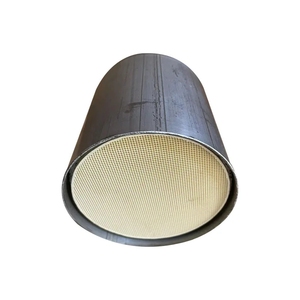
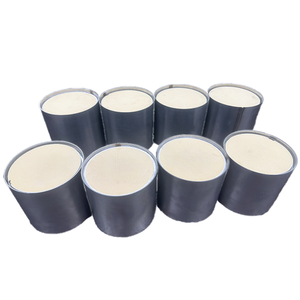
In combustion and hybrid powertrain systems, exhaust treatment demands extreme thermal shock resistance. Silicon Carbide (SiC) catalyst substrates offer superior thermal conductivity compared to traditional ceramic cordierite. Integrated with Diesel Particulate Filters (DPF), these catalytic converters achieve rapid light-off temperatures, reducing cold-start hydrocarbon and NOx emissions by over 92%.
To withstand severe vehicle vibration profiles (compliant with MIL-STD-810G and ISO 16750-3), board-mounted DC-DC modules and high-power charging adapters utilize thermally conductive silicone encapsulation. This design eliminates air voids, enhances dielectric isolation up to 2250V DC, and transfers heat directly to outer aluminum alloy heat-sink enclosures.
Direct answers to key commercial, engineering, and compliance questions asked by automotive buyers and systems integrators.
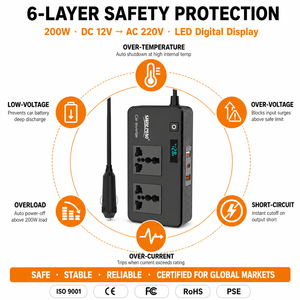
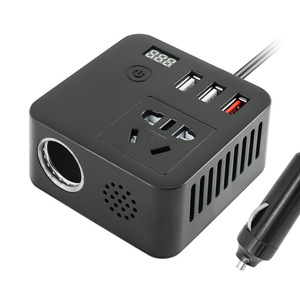
Whether you require custom onboard DC-DC converters, 300kW CCS2/GB/T EV fast-charging adapters, high-efficiency car inverters, or specialized SiC catalytic exhaust systems, our engineering team is ready to deliver sample evaluation units and technical support.
Get a Quote