
Direct from tier-1 validated manufacturing lines: Explore our premier selection of bidirectional On-Board Chargers (OBC), integrated DC-DC converters, and rack-mounted industrial power supply modules engineered for high power density, superior thermal management, and extreme field reliability.

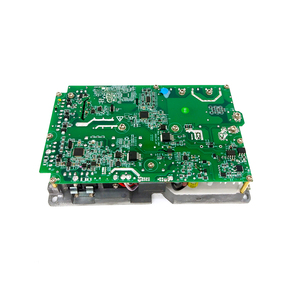
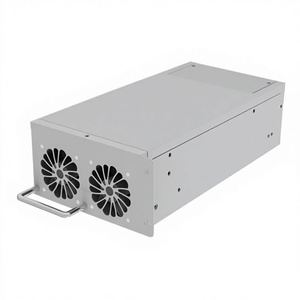
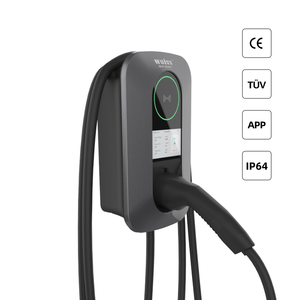
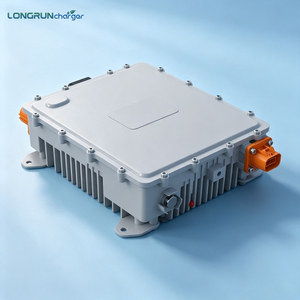
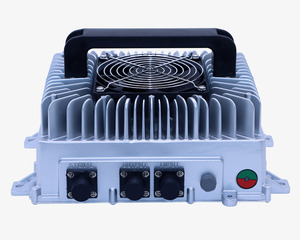
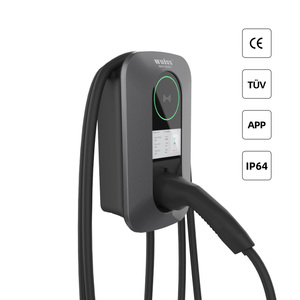
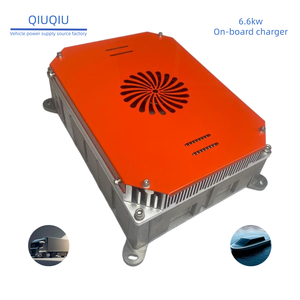
When sourcing high-power onboard chargers (OBC), DC-DC converters, and isolated board-mounted power modules, evaluating China’s manufacturing landscape requires inspecting process rigor, component traceability, and automated thermal-vibration testing standards.
Leading Chinese power supply factories utilize high-precision Yamaha and Panasonic Surface Mount Technology (SMT) lines combined with 10-temperature-zone nitrogen reflow ovens. This eliminates voiding in high-power MOSFETs and SiC switch assemblies, maintaining solder void ratios below 5% for optimal thermal conduction.
Reliability is validated through Highly Accelerated Life Testing (HALT) and Highly Accelerated Stress Screening (HASS). Every production unit undergoes 100% full-load thermal burn-in inside environmental chambers ranging from -40°C to +85°C, cycled with active electrical stress.
Tier-1 Chinese factories enforce NAVMAT P-4855 and MIL-HDBK-217F component stress derating guidelines. Combined with an enterprise Manufacturing Execution System (MES), every semiconductor, magnetic core, and film capacitor is tied to a specific lot code and unit serial number.
Understanding the hardware architecture behind Chinese power converter factories helps procurement engineers balance unit costs against thermal footprint, switching efficiency, and system size.
| Architecture Feature | Traditional Silicon (Si) MOSFETs | Wide Bandgap Silicon Carbide (SiC) | Gallium Nitride (GaN) Board Modules |
|---|---|---|---|
| Typical Switching Frequency | 50 kHz – 150 kHz | 200 kHz – 500 kHz | 500 kHz – 2+ MHz |
| Peak Efficiency Range | 92.0% – 94.5% | 95.5% – 97.2% | 96.5% – 98.0% |
| Power Density (W/cm³) | 1.2 – 1.8 W/cm³ | 2.8 – 4.2 W/cm³ | 5.0 – 8.0 W/cm³ |
| Thermal Resistance / Operating Temp | Up to 105°C junction limit | Up to 175°C junction capability | Up to 150°C junction capability |
| Target Application | Cost-sensitive light industrial EVs | High-voltage EV OBC & Heavy Duty DC-DC | High-density board-mounted POL & Telecom |
| System Unit Cost Trend | Lowest upfront BOM cost | Moderate BOM / Reduced Heatsink Size | Premium BOM / Smallest Form Factor |
As electric commercial fleets, industrial automation, and high-density computing architectures expand globally, procurement models for power electronics are shifting from simple off-the-shelf component sourcing to strategic co-engineering partnerships.
Global OEM procurement teams are rapidly moving away from standalone On-Board Chargers (OBC) and separate Low Voltage DC-DC Converters (LDC). Modern RFQs explicitly demand 2-in-1, 3-in-1, and 8-in-1 integrated power assemblies.
Integrating the OBC and DC-DC converter into a shared liquid-cooled or IP67 air-cooled chassis eliminates duplicate enclosures, internal wiring harnesses, and redundant CAN transceivers. This reduces total vehicle weight by 20–30% while trimming system installation labor.
With regional variations in electric vehicle architecture (from 48V low-voltage light EVs to 400V/800V high-voltage commercial trucks), procurement managers are favoring power converter platforms with ultra-wide input and output compliance.
Factories offering programmable software-controlled voltage limits—configurable via J1939 or CAN open protocols—allow OEMs to standardize on a single physical converter module across multiple chassis variants, dramatically lowering SKU management complexity.
Full custom power supply redesigns incur steep non-recurring engineering (NRE) fees and 12–18 month development lead times. Consequently, procurement strategies favor semi-custom platform architectures.
Top Chinese suppliers maintain pre-certified core topology building blocks (such as standard Half-Brick, Quarter-Brick, or 3.3kW OBC power stages). They modify only mechanical mounting points, connector types, or firmware profile lines—shortening time-to-market to under 12 weeks.
Advanced power conversion design is governed by strict physics: maximizing energy density while minimizing thermal dissipation and electromagnetic interference (EMI). Chinese factories are investing heavily in several key technological breakthroughs.
The transition from traditional unidirectional power supply topologies to bidirectional topologies represents a paradigm shift in power conversion. Advanced On-Board Chargers are designed around Dual Active Bridge (DAB) and Totem-Pole PFC configurations.
This enables Vehicle-to-Grid (V2G), Vehicle-to-Load (V2L), and Vehicle-to-Vehicle (V2V) functionality. Electric commercial vehicles serve as mobile energy storage units, feeding AC power back into tools, job sites, or the grid with peak conversion efficiencies surpassing 95.5% in both charging and discharging modes.
To minimize switching losses at high operational frequencies, state-of-the-art power converters implement Zero Voltage Switching (ZVS) and Zero Current Switching (ZCS) resonant LLC topologies.
By switching transistors precisely when voltage or current passes through zero, thermal stress on SiC MOSFETs is minimized. This allows for smaller magnetic components (transformers and inductors), directly contributing to lighter, more compact encapsulated packages with IP67 protection against dust and moisture ingress.
Technical answers to common engineering and procurement inquiries regarding factory qualifications, customization options, and compliance standards.
Tier-1 Chinese factories design modules to meet international automotive and heavy industrial standards such as SAE J1378, ISO 16750-3, and MIL-STD-810G. Power electronics modules are potted with thermally conductive polyurethane or silicone compounds that damp mechanical stress, shield against humidity, and evenly dissipate localized semiconductor heat across aluminum die-cast cold plates.
For vehicle and industrial deployment in western markets, converter modules should hold CE, UL (e.g., UL 2202 for EV charging equipment), and UN ECE R10 (E-mark certification for automotive electromagnetic compatibility). Furthermore, factories must prove compliance with CISPR 25 Class 5 conducted and radiated emission limits to prevent interference with vehicle CAN networks, telemetry, and audio equipment.
Yes. Premium power converter manufacturers provide customized firmware integration services. Engineering teams calibrate CAN baud rates (typically 250kbps or 500kbps), modify DBC file mappings, implement UDS (Unified Diagnostic Services) ISO 14229 protocols, and tailor charging algorithm curves (CC/CV phases) to match proprietary Battery Management Systems (BMS) for LiFePO4, NMC, or LTO battery configurations.
Air-cooled modules rely on internal fans or natural convection, making them cost-effective for enclosed environments with low thermal density. Conduction-cooled bricks transfer heat via a flat aluminum baseplate directly to the vehicle frame or external heatsink. Liquid-cooled converters utilize integrated coolant channels (compatible with ethylene glycol/water mixtures) to dissipate heat efficiently, enabling maximum power output in restricted engine bays or high ambient temperature settings (>60°C).
Standard catalog products (e.g., standard 3.3kW OBCs or DOSA footprint isolated DC-DC bricks) typically have sample lead times of 1–2 weeks and an MOQ of 5–10 units. Semi-custom modifications (connector alterations, modified output voltage trimmings) require 4–6 weeks. Full custom development cycles—including PCB layout, tooling creation, and full IATF qualification—range from 12 to 16 weeks, with production MOQs determined by project scope.
Galvanic isolation is achieved through high-frequency planar transformers and optical or digital isolators rated for reinforced isolation (typically tested up to 2250 VDC or 3000 VAC between primary high-voltage input and secondary low-voltage output). This prevents high-voltage battery transients from entering 12V/24V auxiliary vehicle circuits, protecting sensitive microcontrollers, sensors, and vehicle occupants.
Connect directly with senior application engineers to review technical specifications, request 3D CAD step files, or receive customized price quotes for production-grade power converters.