
Explore our CE-compliant, high-efficiency unregulated bus converters, bidirectional OBC assemblies, and IP67 sealed DC-DC units engineered for severe thermal and electromagnetic environments.

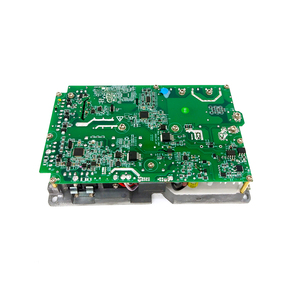
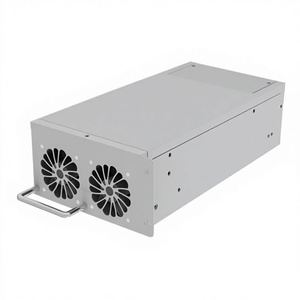
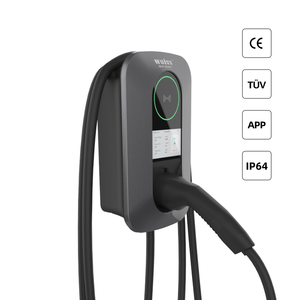
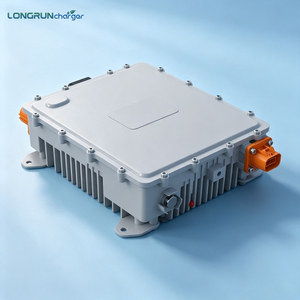
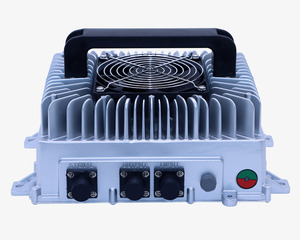
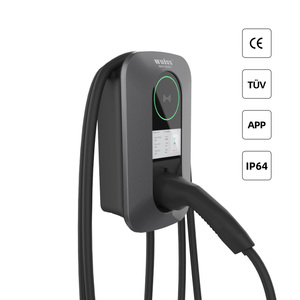
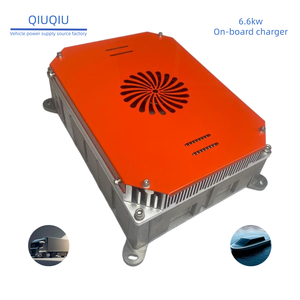
An in-depth evaluation of fixed-ratio intermediate bus converters (IBC), galvanic isolation requirements, and CE compliance standards for tier-1 industrial and OEM automotive platforms.
In distributed power architectures (DPA) and intermediate bus architectures (IBA), electrical design engineers face a persistent conflict: maximizing power density while minimizing thermal dissipation. Traditional fully regulated DC-DC converters incorporate continuous feedback control loops to regulate output voltage across wide input swings. However, this control overhead introduces switching losses and component bulk.
An unregulated converter (frequently designated as a fixed-ratio bus converter or electronic transformer) operates at a fixed duty cycle near resonance, transferring power across a galvanic isolation barrier with minimal switching losses. By converting a wide DC bus (e.g., 48V, 300V, or 400V) to a proportionally scaled intermediate voltage, unregulated modules achieve peak efficiencies exceeding 96.5% and power densities unachievable by legacy topology.
For European market entry and global OEM integration, CE certification is not merely a label—it represents strict adherence to the Low Voltage Directive (2014/35/EU) and EMC Directive (2014/30/EU).
Hazard-based safety engineering covering electrical energy ratings, thermal insulation limits, and creepage/clearance distances.
Verification of conducted and radiated emissions limits, ensuring seamless integration without interfering with sensitive RF instrumentation.
Rigorous protection against electrostatic discharge (ESD), fast transients (EFT), surges, and high magnetic field disturbances.
| Technical Characteristic | Unregulated Bus Converter (IBC) | Regulated DC-DC Converter | Integrated OBC & DC-DC 2-in-1 Unit |
|---|---|---|---|
| Primary Application Focus | High-density intermediate bus distribution & POL feeding | Precision power rails requiring tight voltage tolerance | EV traction battery charging & auxiliary 12V/24V power supply |
| Peak Conversion Efficiency | 96.0% - 97.8% | 88.0% - 93.5% | 94.5% - 96.0% |
| Feedback Control Loop | None / Open-loop fixed duty cycle ratio | Closed-loop PWM / PFM feedback loop | Closed-loop DSP CAN-controlled digital regulation |
| Thermal Dissipation Profile | Ultra-low thermal load; minimal heatsink footprint | Moderate to high thermal load; requires large heatsinks | Optimized liquid or forced air cooling channels |
| Power Density (W/in³) | Up to 450 W/in³ (DOSA standard bricks) | 100 - 200 W/in³ | Automotive-grade compact aluminum chassis |
| Transient Response Speed | Sub-microsecond instantaneous throughput | 50µs - 200µs transient settling duration | Programmed dynamic ramping via CAN bus |
| CE & Safety Compliance | EN 62368-1, EN 55032 Class B | EN 62368-1, UL 60950-1 | CE LVD/EMC, ISO 26262 ASIL-B/C, E-Mark |
Combining decades of power electronics research with rigorous quality control, our manufacturing infrastructure delivers field-proven reliability across telecom, industrial automation, railway, and e-Mobility markets.
Operated under ISO 9001 and IATF 16949 certified quality systems. Every manufacturing batch undergoes full material traceability, Automated Optical Inspection (AOI), and 100% automated high-voltage burn-in screening before shipment.
Our isolated DC-DC converters strictly adhere to DOSA (Distributed-power Open Standards Alliance) standard pinouts, spanning 1/32nd brick, 1/16th brick, 1/8th brick, quarter brick, half brick, and full brick footprints from 15W to over 1000W+.
Configurable thermal management solutions including potting encapsulated designs, conduction baseplates, active forced-air modules, and liquid-cooled cold plates built to withstand extreme thermal shock and vibration profiles.
Specially sealed e-Mobility chargers and integrated DC-DC units offer IP67 waterproof and dustproof enclosures, operating flawlessly under ambient temperature ranges from -40°C to +85°C in off-highway and electric commercial fleets.
Engineered to adapt. We offer tailored firmware adaptation, CAN 2.0B / J1939 communication protocol tuning, mechanical footprint modifications, and custom voltage input ranges (e.g., 9-75V, 16-160V, 180-400V, 400-650V).
Complete compliance documentation package supplied with every series, including CE LVD/EMC declarations, UL94-V0 flame retardancy compliance, EN 50155 railway transport certification, and RoHS/REACH material safety audits.
Strategic analysis for procurement directors, component engineers, and supply chain executives navigating wide-bandgap semiconductors, 800V EV architectures, and modular power designs.
The transition from silicon MOSFETs to Silicon Carbide (SiC) and Gallium Nitride (GaN) power devices is fundamentally reshaping the unregulated converter landscape. SiC and GaN transistors exhibit lower switching energy losses, higher breakdown voltages, and superior thermal conductivity.
For procurement managers, choosing power module suppliers with established SiC/GaN manufacturing lines translates directly to a 30% to 50% decrease in module physical volume and reduced total cost of ownership (TCO) due to simplified thermal management structures.
Commercial electric vehicle OEMs (busses, delivery trucks, forklifts, and AGVs) are abandoning standalone components in favor of integrated power domain controllers. Combining a 3.3kW or 6.6kW On-Board Charger (OBC) with a high-efficiency 1.8kW or 2kW auxiliary DC-DC converter into a unified IP67 liquid-cooled enclosure reduces cabling complexity, eliminates redundant magnetic cores, and optimizes CAN bus diagnostic networks.
To reduce copper weight and accelerate charging speeds, automotive and heavy industrial sectors are transitioning from standard 400V DC buses to 800V DC architectures (accepting 400V to 850V input ranges). Unregulated intermediate bus converters serving these platforms must feature ultra-reinforced galvanic isolation (up to 3000VAC / 4250VDC isolation ratings) and verified immunity against high dV/dt switching transients.
Global component shortages have underscored the necessity of second-sourcing and pin-compatible standardization. Enterprise buyers prioritize suppliers that offer standard DOSA pinouts and cross-reference flexibility, enabling rapid substitution without requiring complete printed circuit board (PCB) re-spins or lengthy re-qualification delays.
Get immediate clarity on converter topologies, safety certifications, custom development options, and volume manufacturing lead times.
An unregulated converter operates at a fixed transformation ratio (K-factor) without an active internal feedback control loop, allowing the output voltage to track the input voltage linearly. This leads to significantly higher power density, higher peak efficiency (up to 97%), and lower component counts. A regulated converter actively adjusts its internal PWM duty cycle to hold output voltage strictly constant regardless of input voltage variations.
CE certification confirms that the power module satisfies essential European Union directives: EN 62368-1 for electrical safety and CISPR 32 / EN 55032 for electromagnetic compatibility (EMC). This certification simplifies import customs clearance, satisfies global OEM quality audits, and guarantees that the module will not disrupt adjacent microprocessor digital logic.
Our standard isolated DC-DC brick converters support multiple wide-input operational ranges: 9–36V, 9–75V, 18–36V, 18–75V, 36–75V (telecom standard), 16–160V, 34–160V, 66–160V (railway standards), as well as high-voltage DC ranges including 180–400V, 300–500V, and 400–650V for EV platforms.
Yes. We specialize in semi-custom and full-custom ODM/OEM engineering. We can adapt mechanical mounting flanges, connector types, thermal baseplate geometries, cooling mechanisms (liquid, air, or conduction), and modify CAN 2.0B / J1939 baud rates and messaging telemetry to match your vehicle or industrial system architecture.
While our converters maintain exceptional efficiency, thermal performance depends on airflow (LFM), baseplate cooling, or liquid coolant flow rates. Detailed airflow-versus-derating curves and maximum allowable baseplate temperature limits (typically 100°C) are published in each module’s engineering datasheet to ensure long-term MTBF (>2.5 million hours).
Our production facilities employ a rigorous Design for Reliability (DFR) framework. Every manufactured module undergoes Automated Optical Inspection (AOI), 100% automated electrical testing, High-Temperature Reverse Bias (HTRB) testing, HALT/HASS stress testing, and extended full-load burn-in screening before packaging.