Explore our CE-certified high-density power modules, bi-directional OBC units, and isolated DC-DC converters engineered for aerospace, telecom, industrial automation, and heavy e-Mobility platforms.
In modern distributed power architectures (DPA) and intermediate bus architectures (IBA), power density, thermal headroom, and compliance reliability dictate system performance. The sixteenth brick DC-DC converter represents a critical evolutionary leap in power miniaturization. Measuring a standard DOSA (Distributed-power Open Standards Alliance) footprint of 1.30 x 0.90 x 0.38 inches (33.0 x 22.9 x 9.6 mm), these board-mounted isolated power modules deliver up to 300 Watts of continuous power output, replacing legacy eighth-brick and quarter-brick modules while slashing PCB real estate requirements by up to 44%.
As a premier CE certified sixteenth brick manufacturer and factory, our engineering design principles prioritize extreme efficiency across wide input voltage ranges (9–36V, 18–75V, 36–75V, 66–160V for railway applications, and high-voltage 180–400V/400–650V ranges for e-Mobility platforms). By integrating advanced planar transformer designs, zero-voltage switching (ZVS) topology, and synchronous rectification, our power modules maintain flat efficiency curves above 95% from medium to full load conditions.
Key Takeaway for System Architects: Upgrading to certified high-density sixteenth brick converters enables engineers to boost card-level power output without increasing thermal dissipation or requiring active liquid cooling in dense 1U rack-mount chassis and sealed industrial enclosures.
Achieving power output up to 300W in a compact 33.0 x 22.9mm footprint. Minimal PCB occupation permits higher integration of digital processing nodes, microcontrollers, and memory arrays.
Fully compliant with European Union Directives 2014/35/EU (LVD) and 2014/30/EU (EMC). Reinforced dielectric isolation up to 2250 VDC guarantees complete functional separation and operator safety.
Offered in open-frame, baseplate-cooled, and fully encapsulated pot-sealed variations. Operation guaranteed across wide ambient spans from -40°C to +105°C operating temperatures.
To assist procurement specialists and hardware designers in selecting the optimal module footprint, the matrix below highlights how modern 1/16th brick modules stack against legacy standard brick configurations:
| Form Factor | Dimensions (mm) | PCB Area (cm²) | Typical Power Range | Peak Efficiency | Primary Application Segment |
|---|---|---|---|---|---|
| Full Brick | 116.8 x 61.0 x 12.7 | 71.2 | 600W – 1500W | 94.5% | Centralized Telecommunication Rectifiers & High-Voltage Traction |
| Half Brick | 61.0 x 57.9 x 12.7 | 35.3 | 300W – 800W | 95.0% | Industrial Automation Drives, Heavy Railway Electronics |
| Quarter Brick | 57.9 x 36.8 x 9.6 | 21.3 | 150W – 500W | 95.5% | Intermediate Bus Converters (IBC), Datacom Rack Switches |
| Eighth Brick (1/8th) | 58.4 x 22.9 x 9.6 | 13.4 | 100W – 300W | 95.8% | Cellular Base Stations (5G RRU), Avionics Data Concentrators |
| Sixteenth Brick (1/16th) | 33.0 x 22.9 x 9.6 | 7.56 | 50W – 300W | 96.2% | High-Density Embedded Computing, Edge AI Processing, Medical Instrumentation |
Procuring power modules directly from a certified original manufacturer requires rigorous validation of testing protocols and compliance tracking. Our manufacturing facility operates under strict ISO 9001:2015 quality management and IATF 16949 automotive-grade manufacturing standards. Every CE-marked sixteenth-brick power module leaving our production line undergoes rigorous multi-stage validation to guarantee field reliability.
To ensure long-term MTBF (Mean Time Between Failures) exceeding 2.5 million hours under Telcordia SR-332 guidelines, our factory implements a total reliability assurance cycle:
CE Certification is more than a stamp—it is a binding declaration of conformity backed by verified laboratory test reports. Our compliance documentation dossier for OEM buyers includes:
When sourcing power conversion hardware for mission-critical applications, standard off-the-shelf catalog products frequently fail to meet specialized mechanical or electrical boundaries. As an established designer and high-volume manufacturer, we bridge the gap between standard off-the-shelf DOSA modules and fully tailored custom power assemblies.
Beyond standard 2:1 and 4:1 input ranges, our engineering team custom-tunes transformer windings and feedback loops to support ultra-wide 8:1 and 12:1 input voltage ranges (e.g., 9–75V for industrial systems or 16–160V for railway rolling stock EN 50155 compliance).
Choose from standard open-frame configurations for forced-air cooling, integrated aluminum baseplates for heatsink attachment, or full epoxy potting for harsh dust, vibration, and liquid-submerged environments.
Support for positive or negative Remote On/Off logic, remote sense compensation, output voltage trim range (±10% to -50%/+20%), and integrated PMBus digital telemetry communication over I²C lines.
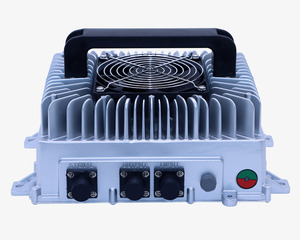
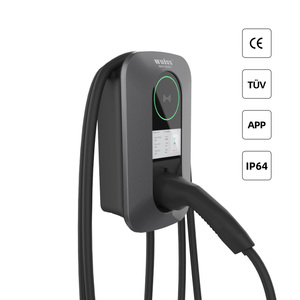
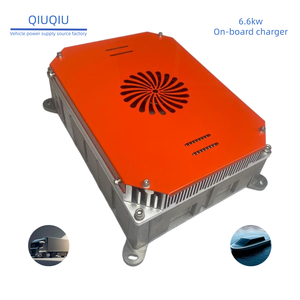
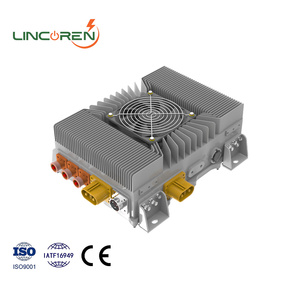
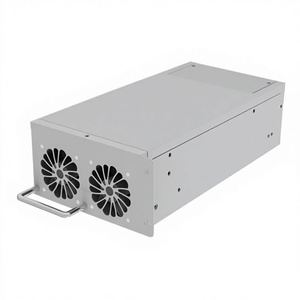
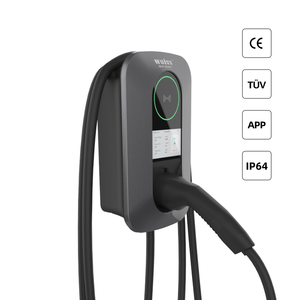
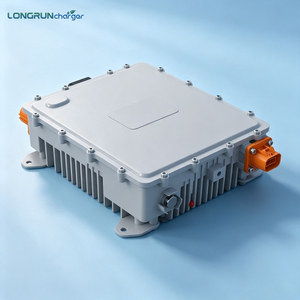
Integration with e-Mobility & High-Power Systems: In addition to 1/16th brick board-mounted modules, our manufacturing plant produces integrated 3.3kW to 6.6kW On-Board Chargers (OBC) and 1.8kW–5kW high-voltage DC-DC converters for commercial electric vehicles, off-highway haulers, and smart charging piles, allowing enterprise clients to consolidate their power supply vendor chain.
The global industrial power electronics market is undergoing a structural transition driven by higher efficiency mandates, electrification of transport, and density demands of cloud AI datacenters. B2B procurement managers and system engineering leads must plan their design roadmaps around four critical industry trends:
Silicon MOSFETs are approaching their physical efficiency limit. The integration of Gallium Nitride (GaN) devices in low-to-medium voltage converters (below 100V) and Silicon Carbide (SiC) diodes and switches in high-voltage modules (400V/800V) allows switching frequencies to scale from 300 kHz up to 2 MHz. This dramatic frequency increase reduces magnetic component dimensions by over 50%, enabling future sixteenth-brick modules to achieve power outputs previously reserved for quarter-brick packages.
Traditional 12V intermediate distribution buses suffer from excessive I²R copper conduction losses at high currents. Hyperscale datacenters, 5G telecom networks, and modern 48V automotive systems (LV148 standard) are shifting to a single 48V distribution bus. High-efficiency 1/16th brick bus converters play a central role in stepping down 48V directly to point-of-load (POL) sub-assemblies with minimal conversion stages.
Analog PWM controllers are increasingly being replaced by digital signal processors (DSPs) with PMBus functionality. Real-time telemetry permits monitoring of input/output voltage, load current, thermal junction temperature, and fault logging. Modern sixteenth-brick modules enable predictive maintenance in critical telecom base stations and edge servers before physical component failure occurs.
With industrial automation expanding into harsh outdoor environments, mining, and maritime applications, demand for IP67-rated sealed power modules and fully encapsulated 1/16th bricks is surging. Silicone-free, thermally conductive resin encapsulation provides immunity against severe shock (MIL-STD-810G), 100% relative humidity, and salt spray exposure.
Selecting the right factory partner for CE-certified 1/16th brick power modules requires balancing technical capability, cost structure, and supply chain continuity. Purchasing managers should evaluate suppliers using the following strategic framework:
Ensure that the supplier strictly adheres to DOSA mechanical pinout standards. Standard pin dimensions, pitch distance, and pin assignments allow drop-in replacement across alternate vendor sources, preventing single-source lock-in during global component shortages.
Tier-1 factories maintain complete lot traceability for passive components, active ICs, and PCB laminates. Inquire whether key switching ICs and power stage components feature verified second-source equivalents on the Approved Vendor List (AVL).
Here are detailed technical responses to common questions raised by power system designers and procurement agents when specifying sixteenth brick modules: