
Industrial-grade, IP67 waterproof, liquid & air-cooled power conversion platforms designed for electric commercial vehicles, buses, forklifts, and industrial equipment.
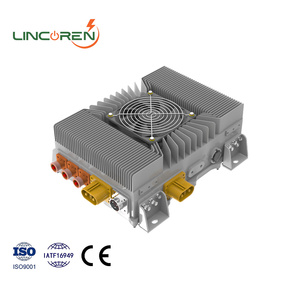
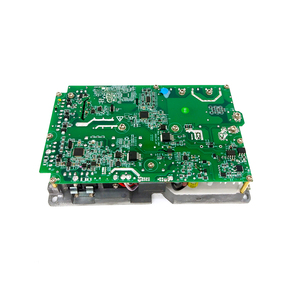
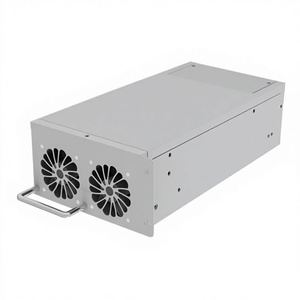
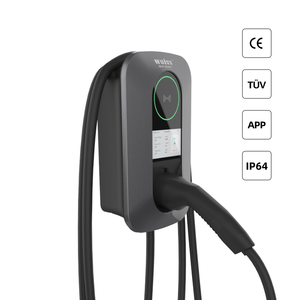
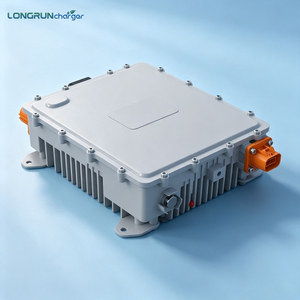
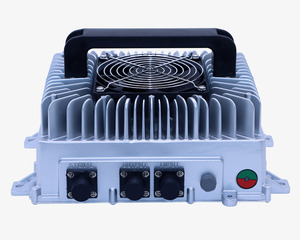
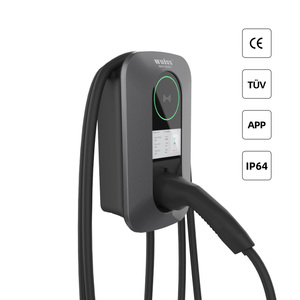
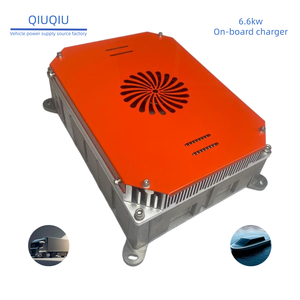
As a premiere OEM designer and certified supplier of high-density power conversion hardware, NetPower Technologies delivers mission-critical energy management systems engineered specifically for electric mobility (e-Mobility), commercial transit, telecom infrastructure, and heavy-duty industrial machinery. Over decades of switch-mode power innovation, our engineering teams have deployed millions of isolated DC-DC converters, non-isolated point-of-load (POL) modules, and advanced On-Board Charger (OBC) platforms across North America, Europe, and the Asia-Pacific region.
Technical Reliability Insight: NetPower's e-Mobility converters are built upon field-proven topologies that undergo rigorous HALT (Highly Accelerated Life Testing) and HASS (Highly Accelerated Stress Screening). Every unit shipped adheres to strict worst-case thermal derating rules, ensuring zero-defect operation even when exposed to severe automotive shock, thermal cycling, and high EMI stress.
Selecting a verified CE certified EV converter manufacturer requires validating both thermal performance margins and regulatory compliance documentation. Our state-of-the-art manufacturing infrastructure operates under stringent ISO 9001 and IATF 16949 quality management systems, incorporating 100% automated optical inspection (AOI), full-load burn-in screening, and lot-level component traceability.
Strict adherence to EN 61851-1, EN 62368-1 safety standards and EN 55032 Class B electromagnetic compatibility (EMC) requirements.
Utilizing Silicon Carbide (SiC) MOSFETs and planar transformers to maximize volumetric power density while minimizing chassis footprint.
Heavy-duty die-cast aluminum housing rated IP67 and IP6K9K, resistant to high-pressure washdowns, salt spray, and extreme dust infiltration.
The global transition toward electrification across commercial transportation, off-highway machinery, and passenger vehicles has fundamentally altered the performance metrics required for vehicle-grade power electronics. Traditional silicon IGBT-based converter architectures are rapidly being superseded by Wide Bandgap (WBG) semiconductors, compact multi-functional integration, and intelligent bi-directional energy transfer capabilities.
Silicon Carbide (SiC) power devices enable dramatically faster switching frequencies (up to 500 kHz) compared to silicon switches. Higher switching speeds directly reduce the required inductance and capacitance values, allowing engineers to shrink magnetic components and passive filters by up to 45%. This technological shift yields overall converter efficiencies exceeding 96.5%, significantly reducing thermal dissipation requirements and extending battery range per charge cycle.
Modern vehicle architectures demand aggressive space savings. Separate standalone units for On-Board Chargers (OBC), Auxiliary DC-DC Converters (APU), and Power Distribution Units (PDU) are increasingly combined into integrated 2-in-1 or 3-in-1 power assemblies. By sharing liquid cooling cold plates, structural enclosures, and high-voltage DC bus filtering, integrated power assemblies reduce vehicle weight by up to 35% and simplify high-voltage wiring harnesses during assembly.
As smart electrical grids evolve, electric vehicle power electronics are transitioning from unidirectional chargers to bi-directional V2G (Vehicle-to-Grid) and V2L (Vehicle-to-Load) systems. Modern 3.3kW to 6.6kW bi-directional OBC modules allow EV battery packs to export power back to AC microgrids, construction site tools, or emergency backup systems with seamless dual-stage power regulation.
Design Advantage: NetPower's bi-directional 3.3kW OBC & 1.8kW DC-DC integrated units incorporate dual-direction active phase-shift full-bridge (PSFB) control, facilitating zero-voltage switching (ZVS) across the entire operational voltage range for maximum thermal longevity.
Automotive Original Equipment Manufacturers (OEMs), fleet aggregators, and system integrators face increasing pressure to balance technical performance, regulatory compliance, and total cost of ownership (TCO). Procurement managers must navigate several strategic shifts when sourcing CE certified EV power conversion hardware:
With battery pack nominal voltages diversifying across different vehicle platforms (e.g., 48V/72V for light electric vehicles vs. 400V/800V for commercial transit buses), tier-1 buyers prioritize converter platforms that offer wide input range adaptability without requiring total layout redesigns. Modular platform architectures enable engineering teams to scale continuous power output from 1.5kW to 5kW+ across multiple vehicle models.
Fixed-function hardware is no longer sufficient for smart electric vehicle architectures. Sourcing managers actively select suppliers capable of customizing embedded firmware for standardized CAN bus communications (SAE J1939, CANopen, or UDS protocols). Dynamic control over output charge profiles, real-time telemetry streaming, diagnostic trouble code (DTC) reporting, and software over-the-air (OTA) update capability are mandatory procurement prerequisites.
To guard against single-source bottlenecks, global vehicle builders favor suppliers utilizing standard industry mechanical footprints (such as DOSA brick footprints for board-level converters or standardized mounting hole centers for IP67 vehicle enclosures). NetPower offers both off-the-shelf standard products and semi-custom drop-in replacements for end-of-life legacy components.
Below are critical technical inquiries faced by vehicle system engineers and procurement officers when evaluating CE certified EV converters and OBC modules:
Building reliable, high-performance electric vehicles requires power electronics that withstand the harsher realities of daily field operation. NetPower Technologies combines deep switch-mode power expertise with uncompromising quality control standards, ensuring that every CE certified EV converter, on-board charger module, and isolated DC-DC brick delivers measured efficiency and long-term durability.
Whether your application demands standard 3.3kW OBC modules for lithium battery management, 2-in-1 bidirectional power assemblies, or heavy-duty IP67 isolated converters for commercial transport, NetPower delivers field-proven solutions tailored to your production schedule.
Contact our senior application engineers to request detailed technical datasheets, 3D CAD step files, or evaluation hardware samples.
Contact Us