
0%

Choosing an Eighth Brick DC-DC Converter is not just a matter of comparing output power. Engineers also need to check input-voltage range, isolation, efficiency, thermal limits, and protection features. Small differences can matter. A module that performs well on a bench may behave differently inside a crowded chassis, where airflow is limited and nearby components generate heat.

This guide introduces China-based manufacturers of Eighth Brick DC-DC Converters and the factors buyers can use to assess them. The focus is on practical evidence: clearly stated electrical specifications, accessible test data, quality-control processes, customization capabilities, and responsive technical support. Look closely at operating-temperature curves, derating guidance, EMI information, and protection behavior—not only headline efficiency. Ask whether sample units and relevant qualification documents are available. A polished product page helps, but it cannot answer every design question.

There is no single best supplier for every application. Requirements differ between telecommunications equipment, industrial controls, and other embedded systems. Even a familiar form factor can conceal meaningful differences in pinout, cooling needs, or transient response. This deserves a second look. The manufacturers discussed here should therefore be compared against a defined project checklist, rather than treated as a universal ranking. Careful evaluation takes time, but it can reveal where a product fits—and where the available information remains incomplete.
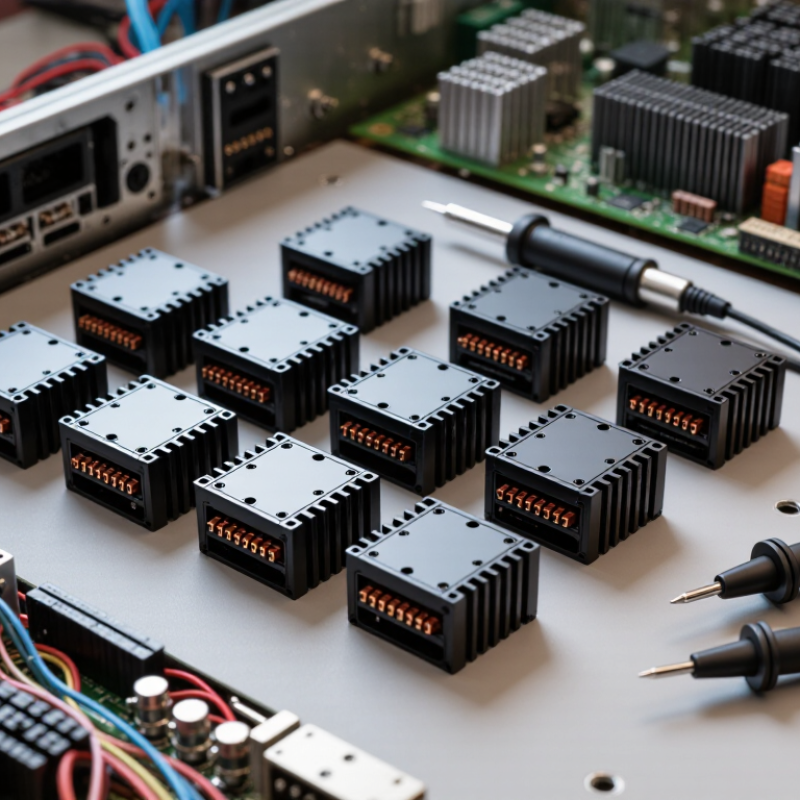
China Top Eighth Brick DC-DC Converter Manufacturers

Eighth-Brick Dimensions: 22.86 × 11.43 × 6.35 mm Form-Factor

China Top Eighth Brick DC-DC Converter Manufacturers

An eighth-brick converter’s stated dimensions, 22.86 × 11.43 × 6.35 mm, offer a compact envelope for dense power designs. Every millimeter matters when fitting converters beside connectors, memory, or cooling hardware. Yet the dimensions alone do not confirm that a unit will fit. Check the datasheet drawing for measurement order, tolerances, pin locations, and clearance beneath the board. Confirm the package definition with the manufacturer, too; “brick” labels can vary across product ranges. A mismatch here can mean a board-layout revision.

Small size brings trade-offs. The enclosure must still move heat away from switching components, especially at high load or in a warm cabinet. Review rated output, efficiency curves, isolation details, and thermal test conditions rather than relying on a headline power figure. Leave room for airflow where required. Bench testing under the intended input voltage and load can reveal hot spots that a paper review misses. I would not skip that step, even when the nominal ratings look comfortable.

Tips: Compare the mechanical drawing with your PCB footprint before ordering. Measure nearby parts, check solder-pin spacing, and allow for airflow. Keep one sample for fit and temperature checks.

Eighth-Brick DC-DC Converter Dimensions

Dimensions stated in the title (mm)

The listed dimensions are 22.86 × 11.43 × 6.35 mm, equivalent to 0.90 × 0.45 × 0.25 inches. The chart reflects the dimensions supplied in the title and does not independently verify a standard eighth-brick form factor.

Core Specifications: 36–75 V Input, Output Range, Efficiency, and Isolation

For an eighth-brick DC-DC converter, a 36–75 V input range suits many nominal 48 V power systems. Verify the full operating window, not just the nominal voltage. Cable drops, battery variation, and input transients can push the converter toward its limits. Check the margins. A module that starts at low input voltage may still lose regulation under a heavy load.

Output range should match the downstream bus and its tolerance. Compare fixed-output options with adjustable versions, and check whether adjustment affects protection or stability.

Efficiency figures need context: ask for performance across load and temperature, rather than relying on one peak value. Even a small efficiency drop can become noticeable as heat inside a compact chassis.

Isolation also deserves a close look. Confirm the specified input-to-output withstand voltage, insulation type, and isolation capacitance against the system design. Not always. A higher isolation rating alone does not guarantee lower noise or safer integration.

Review thermal test conditions and required clearances, then validate the selected unit in the actual airflow and load profile.

Datasheets simplify reality a little; that is worth remembering.

Eight Chinese Manufacturers: Product Portfolios and DC-DC Converter Applications

China’s brick DC-DC converter market serves telecom, industrial, and embedded systems. Comparing eight manufacturers means looking beyond package size. Their portfolios may include isolated modules, multiple input ranges, and different power levels. Some prioritize compact units for dense circuit boards; others offer higher-power bricks for equipment racks. The details matter. Engineers should check efficiency, isolation ratings, thermal derating, and output ripple under realistic loads. A neat catalog table cannot show every operating condition.

Applications shape the choice. Telecom equipment may need stable conversion during changing loads, while factory controls often require dependable isolation near electrical noise. Compact bricks can help when board space is tight, but airflow and nearby heat sources still matter. For transport or other demanding systems, confirm environmental ratings and supporting test data rather than relying on general claims. Published efficiency figures may use different input voltages and loads, so comparisons are not always fair. That is an imperfect part of the buying process. Requesting curves, dimensions, and test conditions makes portfolio differences easier to judge.

Performance Benchmarks for 48 V Telecom and Data-Center Power Systems

For 48 V telecom and data-center systems, evaluate a brick converter across the actual bus range, not at nominal voltage alone. Test at 25%, 50%, and full load, recording efficiency, output regulation, and case temperature. A single peak-efficiency figure can hide poor performance at everyday load levels. Small detail, big difference.

Useful benchmarks include ripple, load-step response, startup behavior, and protection recovery. Specify measurement bandwidth and probe setup when comparing ripple; otherwise, test reports may not be comparable. Apply repeatable load steps and record output deviation and recovery time. For thermal tests, document ambient temperature, airflow, board orientation, and nearby heat sources. A warm rack is unforgiving.

When comparing manufacturers, request test curves, sample variation, and results after thermal cycling or extended operation. Check isolation and safety ratings against the system design and applicable standards. Then verify performance on the intended bus, load, and cooling path. Datasheets are useful, but not the whole story. I would still leave thermal margin; field airflow rarely stays perfect, and that assumption deserves a second look.

Selection Criteria: Power Density, Thermal Limits, Certifications, and Reliability

China Top Eighth Brick DC-DC Converter Manufacturers

Choosing an eighth-brick DC-DC converter starts with the actual load, not the headline wattage. Compare output power with the input-voltage range and expected operating temperature. A compact unit may fit the board beautifully, yet run hot inside a sealed enclosure. Check the airflow. Review efficiency curves at the load levels your system will use most.

Power density matters, but thermal limits decide whether that density is practical. Check the manufacturer’s derating curves and recommended heat-sinking conditions. Then test the converter in a representative layout, including nearby heat sources and restricted airflow. A datasheet rating can mislead when installation differs from the test setup. I would give measured case temperature more weight than a neat catalog figure.

Certifications should match the exact model and intended application; verify the documentation rather than relying on broad claims. For reliability, examine operating-temperature range, protection behavior, isolation specifications, and published qualification data. Ask how production consistency is monitored, too. Small details matter. Some selection decisions remain uncertain until a prototype runs through real load changes and thermal cycles. That extra evaluation takes time, but it can reveal weaknesses early.

FAQS

What are the stated dimensions of an eighth-brick converter?

The listed envelope is 22.86 × 11.43 × 6.35 mm. Check the drawing; package labels can vary.

Do these dimensions guarantee a fit on my PCB?

No. Compare pin locations, tolerances, measurement order, and clearance beneath the board. Nearby connectors can interfere.

What should I inspect before ordering?

Match the mechanical drawing to your PCB footprint. Measure solder-pin spacing and nearby parts. Keep one sample for fit checks.

Why do compact converters need thermal testing?

Small enclosures can make heat removal harder, especially under high load or in a warm cabinet. Measure temperatures. Guessing is risky.

Which electrical details should I compare?

Review output ratings, efficiency curves, isolation details, output ripple, and thermal derating. Headline power figures may hide test conditions.

How should I compare efficiency claims?

Compare curves at matching input voltages and loads. Published figures may use different conditions. It is not a perfect comparison.

Which applications use brick DC-DC converters?

They serve telecom, industrial, and embedded systems. Compact units can suit crowded boards; higher-power versions may suit equipment racks.

What matters in noisy or demanding environments?

Check isolation ratings and environmental test data. Factory controls may operate near electrical noise. Verify the details, even when the catalog looks clear.

Conclusion

This article explores the compact eighth-brick form factor, measuring 22.86 × 11.43 × 6.35 mm, and the design considerations behind Eighth Brick DC-DC Converters. It outlines key specifications, including a 36–75 V input range, available output options, conversion efficiency, and electrical isolation. The article also surveys the product portfolios and application areas of eight Chinese manufacturers without focusing on individual brand names, highlighting uses in telecom equipment, data-center infrastructure, and other systems that require compact, dependable power conversion.

For 48 V telecom and data-center power systems, the comparison considers performance factors such as efficiency, power density, and thermal behavior. It also explains how to evaluate converters by checking load and cooling requirements, operating limits, relevant certifications, and reliability expectations. Together, these topics provide a practical framework for comparing eighth-brick modules and selecting a solution suited to the intended power system.

Olivia

Olivia

Olivia is a dedicated marketing professional with a strong understanding of the company’s products, customers, and industry landscape. With a background in strategic communication, content development, and market research, she transforms complex product information into clear, practical, and......