
0%

Choosing the right Half Brick DC-DC Converters can shape an entire power system’s reliability, thermal behavior, and service life. Global buyers face different input ranges, isolation requirements, certification expectations, and supply conditions. A converter that performs well in a laboratory may struggle inside a crowded telecom shelf or factory control cabinet.

Dr. Vlatko Vlatkovic, a respected power-electronics specialist, offers a practical design principle: “Choose the converter by system requirements, not by efficiency alone.” That idea matters here. Efficiency numbers can look impressive, yet poor thermal derating may create failures during continuous operation. Datasheet details deserve close attention. Check input voltage, output regulation, isolation rating, switching frequency, protection functions, and operating temperature.

Small details matter.

A half-brick module should also match the system’s airflow, mounting method, and control architecture. Buyers should examine conducted emissions, remote sensing accuracy, current sharing, and start-up behavior. These features often decide whether integration feels smooth or frustrating. Independent test data, manufacturer history, warranty terms, and technical support can add confidence across international procurement projects.

This guide reviews seven Half Brick DC-DC Converters for global buyers. The selection considers electrical performance, mechanical compatibility, thermal practicality, and documented reliability. It does not treat one specification as universally superior. That would be misleading. Some products may excel in efficiency, while others offer stronger transient response or broader environmental tolerance.

Real-world priorities differ.

Engineers should verify every critical value against the latest manufacturer documentation before purchase. Availability may also change by region. A careful comparison can reduce redesign work, unexpected heat buildup, and costly field replacements.
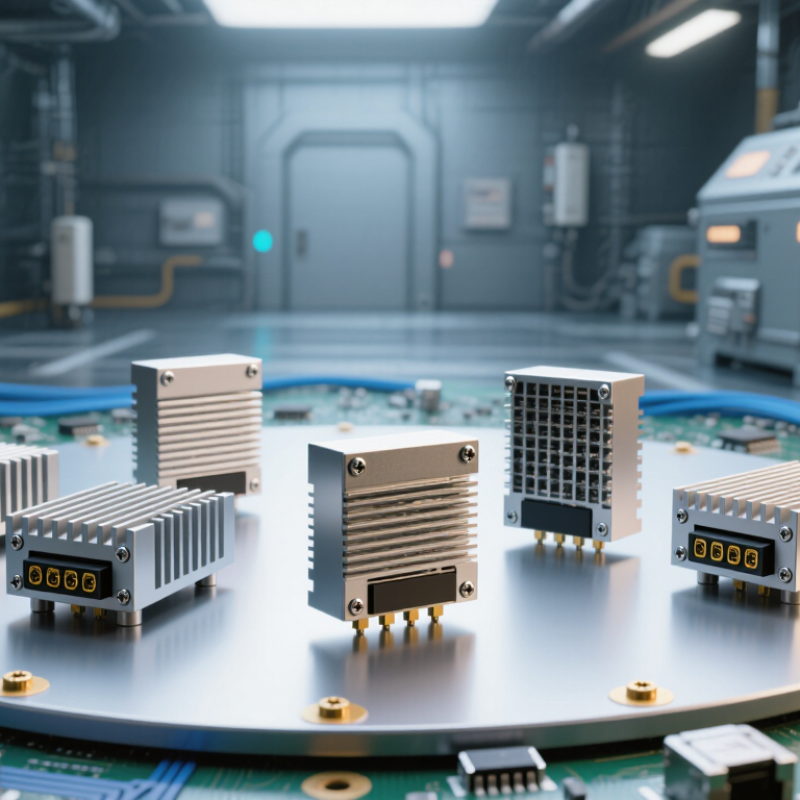
7 Best Half Brick DC DC Converters for Global Buyers

What Is a Half-Brick DC-DC Converter?

A half-brick DC-DC converter is a compact power module with a standardized footprint. It typically measures about 2.28 by 2.40 inches, with a height near 0.50 inches. The name describes its physical size, not its electrical performance. Inside, switching circuits convert one DC voltage into another. Many models also provide galvanic isolation, helping protect sensitive control boards and communication interfaces.

Power ratings vary widely, often from tens to several hundred watts. Input ranges may support industrial batteries, telecom buses, or unstable vehicle supplies. Output options can include 5 V, 12 V, 24 V, or adjustable rails. According to the IEA’s Electricity 2024 report, data-center electricity use could exceed 1,000 TWh globally by 2026. That pressure makes conversion efficiency important, especially in dense racks with limited cooling. A one-percent efficiency loss becomes heat. Quickly.

Engineers usually check efficiency curves, thermal derating, isolation voltage, ripple, and transient response. Safety documentation should align with applicable international standards, including insulation and creepage requirements. A converter rated at 500 W may not deliver 500 W inside a sealed cabinet. Airflow, baseplate temperature, and mounting orientation matter. This is where product sheets can feel optimistic. I still verify test conditions, because “typical efficiency” rarely matches every installation. Global buyers should also confirm input polarity, certification scope, and protection behavior before comparing prices.

7 Best Half-Brick DC-DC Converters for Global Buyers: What Is a Half-Brick DC-DC Converter?

A half-brick DC-DC converter is a compact, isolated power module with a commonly used nominal footprint of approximately 61 × 58 mm (2.40 × 2.28 in). The chart compares typical industry brick footprints to show why the half-brick format is widely selected when designers need higher power density than a quarter-brick module without using the larger full-brick format.

Dimensions shown are nominal industry footprints and may vary slightly by manufacturer, mounting hardware, pin layout, and thermal design. Half-brick modules commonly support isolated power conversion for telecom, industrial, transportation, and other high-density applications.

Key Specifications for Global Power Conversion Needs

7 Best Half Brick DC DC Converters for Global Buyers

Key Specifications for Global Power Conversion Needs

Global buyers should compare half brick DC DC converters by measurable performance, not catalog appearance. The IEA Electricity 2024 report expects global electricity demand to grow by about 4% in 2024 and 2025. That growth increases pressure on compact power systems. Select an input range covering your actual source, such as 18–75 VDC or 36–160 VDC. Check output voltage accuracy, ripple, transient response, and isolation rating. A 1,500 VDC isolation rating may suit demanding industrial equipment, but it is not automatically the best choice.

Efficiency matters in sealed enclosures. A converter operating at 92% efficiency still loses eight watts as heat for every 100 watts delivered. Review the full load curve, not only the peak figure. Thermal derating is often overlooked. IEC 62368-1 and IEC 60601-1 may influence insulation, creepage, clearance, and testing requirements, depending on the application. Confirm compliance evidence before purchasing. Datasheets can sound confident. Field conditions are less polite.

Tips: Compare efficiency at 25%, 50%, and 100% load. Check cooling assumptions. Forced air can hide a weak thermal design. Also verify remote sensing, parallel operation, short-circuit protection, and reverse-polarity behavior. For global deployment, examine operating temperature, altitude limits, vibration data, and documentation quality. A converter rated for -40°C to 100°C case temperature may still need careful board layout. I would leave design margin above the expected load; choosing exactly the required wattage often looks efficient, but it can age badly.

Seven Leading Half-Brick DC-DC Converter Options

Seven leading half-brick DC-DC converter options serve different power-system needs. A wide-input isolated model suits telecom equipment with unstable supply rails. A high-voltage input version supports industrial battery systems and demanding control cabinets.

Dual-output converters help power digital logic and analog circuits together. They can reduce board space.

High-current low-voltage units fit processors, motors, and compact automation equipment. Rugged railway-grade converters handle vibration, temperature changes, and wide input fluctuations. Medical-oriented models focus on low leakage current and controlled isolation.

Baseplate-cooled high-power converters work well in dense enclosures, especially when airflow is limited. Selection should include efficiency, ripple, transient response, isolation voltage, and protection features. From practical testing, thermal design often matters more than a remarkable efficiency figure.

Tips:

Confirm the half-brick footprint before ordering. Check pin spacing and mounting holes. Compare derating curves at your real ambient temperature. Also verify input undervoltage, short-circuit behavior, and startup timing.

Ask for test reports, safety certifications, and production traceability. Some specifications look impressive but depend on ideal airflow. That is easy to miss.

Global buyers should review regional compliance requirements and environmental conditions before approving samples. A converter may pass a laboratory test yet perform poorly inside a sealed cabinet.

Leave measurable design margin, even when the project budget feels tight.

How to Compare Efficiency, Isolation, and Thermal Performance

Choosing among the 7 best half brick DC-DC converters requires more than reading the headline efficiency figure. Compare efficiency at 10%, 50%, and 100% load. A converter reaching 96% at half load may perform poorly near its current limit. The IEA reported that data centres used about 460 TWh of electricity in 2022. Demand could exceed 1,000 TWh by 2026. Small efficiency losses now create larger operating costs later.

Isolation and noise Isolation needs equal attention. Check the tested input-to-output rating, insulation method, creepage distance, and safety documentation. Digital control systems often need clean, isolated power rails. However, isolation alone does not guarantee low noise. Review conducted emissions, switching frequency, and transient response.

Thermal performance For thermal performance, examine the derating curve rather than the maximum output rating. In a compact half brick, every blocked airflow path matters. A 10°C rise can change reliability assumptions. I sometimes find laboratory figures too optimistic because real enclosures restrict cooling.

Tips: Test each candidate with your actual input range, load profile, and airflow. Record case temperature after steady operation. Use thermocouples near the transformer and power switches. Also request efficiency data at your expected ambient temperature. The DOE and IEC reliability frameworks encourage condition-based evaluation, yet many comparisons still use room-temperature samples. That is a weakness worth challenging. Check isolation capacitance, startup behaviour, and protection recovery before approval. A converter that looks excellent on paper may respond slowly during a sudden load step.

Global Selection Factors: Standards, Availability, and Applications

Global buyers should judge half-brick DC-DC converters beyond voltage and price. IEC 62368-1 addresses equipment safety, while IEC 61000 standards guide electromagnetic compatibility testing. These requirements are not interchangeable. A converter may pass laboratory tests yet fail inside a tightly packed enclosure. Check isolation voltage, creepage distance, thermal derating, and conducted emissions at the system level. That matters.

Availability is not certainty. The International Energy Agency’s Electricity 2024 report estimates that data centers consumed about 460 TWh globally in 2022 and may exceed 1,000 TWh by 2026. This growth increases demand for efficient intermediate-bus conversion in servers, telecom equipment, and industrial controls. Buyers should compare realistic stock, production lead time, lifecycle notices, and approved second sources. A low unit price means little if qualification takes twelve months.

Applications should determine the electrical profile. Rail systems may require wider input ranges and stricter transient protection. Telecom platforms often prioritize 36–75 V inputs, high isolation, and remote monitoring. Factory automation may need reinforced insulation and stable operation near motors. Industry analysis from MarketsandMarkets projects continued expansion in power electronics through 2028, driven by electrification and data infrastructure. However, market forecasts vary widely. Treat them as direction, not proof. In my view, the weakest purchasing habit is selecting the highest efficiency figure alone. Test efficiency across load levels, airflow conditions, and aging components. Check the margins.

7 Best Half Brick DC DC Converters for Global Buyers - Global Selection Factors: Standards, Availability, and Applications

No. Recommended Converter Type Typical Input Range Typical Output Options Typical Power Typical Efficiency Isolation & Protection Relevant Global Standards Availability Typical Applications Key Selection Factor
1 18–36 V Input, 25–50 W Half Brick 18–36 VDC 3.3 V, 5 V, 12 V, or 15 VDC 25–50 W 87–92% Usually 1,500–2,250 VDC isolation; short-circuit, over-temperature, and over-voltage protection are commonly available IEC/EN/UL 62368-1, EN 55032 or CISPR 32, RoHS and REACH; verify the exact certificate Common in industrial and transportation supply channels Robotics, industrial controllers, vehicle electronics, and distributed control systems Choose when the source is a nominal 24 V battery or industrial DC bus and moderate power is sufficient
2 36–75 V Input, 50–75 W Telecom Half Brick 36–75 VDC 3.3 V, 5 V, 12 V, or 15 VDC 50–75 W 89–94% Typically 1,500–3,000 VDC isolation; remote on/off, input under-voltage lockout, and trim are often offered IEC/EN/UL 62368-1, EN 55032/CISPR 32, IEC 61000-4 immunity testing where specified Very common because 48 V systems are widely used worldwide Telecommunications, networking equipment, optical access systems, and data communications Confirm continuous operation across the complete 36–75 V range and check baseplate or heatsink requirements
3 36–75 V Input, 100–150 W High-Power Half Brick 36–75 VDC 5 V, 12 V, 15 V, or 28 VDC 100–150 W 90–95% Reinforced or functional isolation depends on the design; over-current, over-voltage, and thermal shutdown are typical IEC/EN/UL 62368-1; EMC requirements commonly reference CISPR 32 and IEC 61000-4 series Moderate; often supplied through specialist distributors Network switches, FPGA and processor boards, radio systems, and high-density embedded equipment Evaluate thermal resistance, airflow, derating curves, and allowable output ripple before selecting maximum power
4 9–36 V Wide-Range Input Half Brick 9–36 VDC 5 V, 12 V, 15 V, or 24 VDC 50–100 W 85–92% Galvanic isolation is common; input surge protection, reverse-polarity protection, and UVLO should be checked individually IEC/EN/UL 62368-1; EN 55032/CISPR 32; automotive or railway standards require separate qualification Moderate; wider input range may reduce catalog availability Mobile equipment, vehicle systems, solar battery systems, and variable-voltage industrial platforms Use for mixed 12 V and 24 V platforms; verify transient, cranking, and battery-discharge requirements
5 18–75 V Input, 5 V Logic Output Half Brick 18–75 VDC 3.3 V or 5 VDC 25–100 W 88–94% Isolation commonly 1,500–2,250 VDC; remote enable, output trim, and soft start are frequently available IEC/EN/UL 62368-1, CISPR 32 or EN 55032, RoHS and REACH Moderate to common for embedded and communications designs Digital control boards, processors, FPGAs, routers, and instrumentation Prioritize low ripple, fast transient response, remote sensing, and compatibility with downstream point-of-load regulators
6 Wide-Input Dual-Output Half Brick 18–75 VDC or 36–75 VDC ±5 V, ±12 V, or ±15 VDC 50–150 W total 87–93% Isolated dual outputs; output balance, cross-regulation, and minimum-load behavior must be reviewed IEC/EN/UL 62368-1, EN 55032/CISPR 32, and applicable IEC 61000-4 immunity tests Less common; dual-output variants usually have fewer stocking options Analog circuits, measurement equipment, industrial sensors, and operational amplifier power rails Check whether both outputs require equal loading and whether independent regulation is necessary
7 High-Isolation Railway and Harsh-Environment Half Brick 24–110 VDC, depending on the system 5 V, 12 V, 15 V, or 24 VDC 50–150 W 85–93% Higher isolation and reinforced protection may be offered; conformal coating and thermal derating are application-dependent EN 50155 and EN 45545-2 for applicable railway applications; IEC/EN/UL 62368-1 may apply to other equipment Specialist; longer lead times and qualification documents are common Railway control systems, wayside equipment, outdoor communications, and industrial automation in harsh environments Require documented vibration, shock, humidity, fire, EMC, and operating-temperature performance rather than relying on a standard catalog rating

Buyer note: Half-brick mechanical dimensions are commonly about 57.9 × 61.0 mm (2.28 × 2.40 in), but height, pinout, mounting pattern, and thermal performance vary. Efficiency, isolation voltage, EMC compliance, environmental qualification, and certifications should be confirmed from the exact model documentation before purchase.

FAQS

What input range should a half-brick DC-DC converter support?

Choose an input range covering your real source voltage. Common examples include 18–75 VDC or 36–160 VDC. Leave extra margin for surges and battery variation. Exact matching can be risky.

How should converter efficiency be compared?

Check efficiency at 10%, 25%, 50%, and 100% load. A high half-load figure may hide poor full-load performance. Record efficiency at your expected ambient temperature. Paper ratings mislead.

Why does thermal performance matter in compact equipment?

A converter delivering 100 watts at 92% efficiency loses about eight watts as heat. Sealed enclosures can trap that heat quickly. Review derating curves and airflow assumptions. Real air matters.

What isolation details should global buyers inspect?

Review tested input-to-output isolation, insulation type, creepage, and clearance distances. A 1,500 VDC rating may suit demanding equipment. It is not automatically the best choice. Isolation alone does not ensure low noise.

Which safety and electromagnetic standards may apply?

Equipment safety requirements can influence insulation, spacing, and testing. Electromagnetic compatibility requirements address conducted and radiated disturbances. Confirm evidence for the complete system, not only the converter. Laboratory success may not transfer perfectly.

What applications need special electrical attention?

Rail equipment may require wide input ranges and strong transient protection. Telecom systems often need 36–75 V inputs, isolation, and remote monitoring. Factory controls may face motor noise and changing loads. Application details decide priorities.

Which protection and control features are worth checking?

Inspect remote sensing, parallel operation, short-circuit protection, and reverse-polarity behavior. Check startup timing and recovery after a fault. Test response during sudden load changes. Small delays can disturb sensitive circuits.

How should availability and long-term purchasing risk be evaluated?

Compare actual stock, production lead times, lifecycle notices, and qualified second sources. A low price helps little if approval takes twelve months. Keep design margin above the expected load. I sometimes trust forecasts too much.

Conclusion

Half Brick DC-DC Converters are compact, high-performance power modules designed to convert one DC voltage level into another while supporting demanding industrial, telecom, transportation, and renewable energy systems. Their standardized half-brick form factor provides a practical balance between power density, installation flexibility, and system integration. When evaluating these converters, buyers should consider input and output voltage ranges, rated power, efficiency, galvanic isolation, control features, protection functions, and operating temperature limits.

This guide reviews seven leading types of half-brick solutions and explains how to compare their efficiency, thermal performance, isolation capability, reliability, and cooling requirements. For global buyers, selection should also account for international safety and electromagnetic compatibility standards, regional availability, documentation, lead times, environmental conditions, and after-sales support. By matching electrical specifications with application demands and compliance requirements, engineers can choose a dependable converter that improves energy efficiency, simplifies system design, and supports stable operation across diverse markets.

Elara

Elara

Elara is a dedicated marketing professional who combines strategic insight, industry knowledge, and a strong understanding of customer needs to communicate the value of our company’s products. With extensive experience in content strategy, digital communication, and market research, Elara regularly......