Board Mounted Isolated DC-DC Converters remain essential where sensitive circuits need safer voltage separation, stable power, and controlled noise. In 2026, designers face tighter spaces, faster switching edges, and higher thermal stress. A small converter may sit beside a processor, sensor, gate driver, or communication interface. Its performance can affect the entire board.
Dr. Robert W. Erickson, a respected power-electronics researcher and author, defines the field clearly: “Power electronics is the application of solid-state electronics for the control and conversion of electric power.” That principle still matters here. Isolation is not merely a specification line. It involves transformer construction, insulation systems, leakage current, feedback architecture, and layout discipline.
This guide examines 10 Best Board Mounted Isolated DC DC Converters 2026 through practical engineering criteria. These include isolation rating, input range, regulated output, efficiency, switching frequency, thermal behavior, package size, and qualification data. Real designs also require careful attention to creepage and clearance. A datasheet value may look impressive. Bench results can differ.
No ranking is perfect.
Engineers should compare converter behavior under actual load conditions, not only nominal efficiency. A warm enclosure, long cable, or rapidly changing load can reveal weaknesses. We also consider installation effort, documentation quality, protection features, and supplier reliability. Some compact modules save board space but sacrifice flexibility. Others provide stronger margins while demanding more layout area. That trade-off deserves honest review.
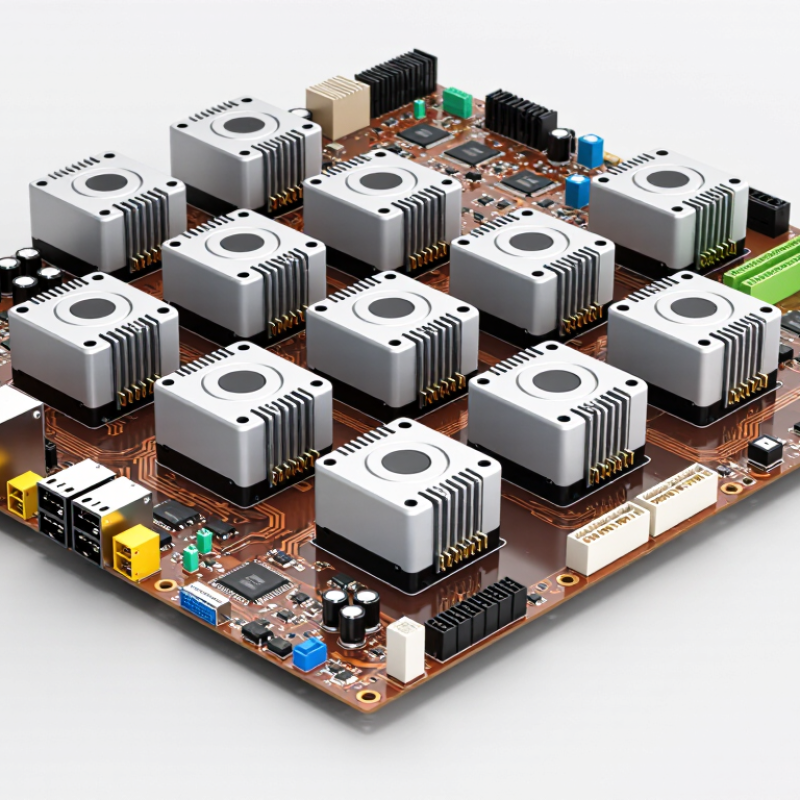
Board-mounted isolated DC-DC converters are compact power modules installed directly on a printed circuit board. They transfer energy across an internal transformer, without a direct electrical connection between input and output. This separation helps protect sensitive circuits from ground loops, switching noise, and fault conditions.
A typical module accepts a low-voltage DC input and delivers a regulated or semi-regulated output. Engineers use them in industrial controls, medical instruments, communications equipment, and battery systems. The board footprint may be small, but layout decisions matter. Keep high-voltage and low-voltage traces apart. Respect creepage and clearance distances. Check the isolation rating, working voltage, efficiency, ripple, and thermal rise.
Small details matter.
A 2024 MarketsandMarkets analysis forecasts double-digit annual growth for the isolated DC-DC converter market through 2029, driven by electrification and connected equipment. A separate 2024 report from Grand View Research identifies industrial automation and telecommunications as major demand areas. These figures indicate momentum, not guaranteed performance.
In practical testing, engineers should measure output ripple with a short probe ground connection. Long ground leads can create false spikes. Load transients also reveal weaknesses hidden during no-load testing. Designers sometimes choose maximum isolation voltage first, then discover poor efficiency or excessive board temperature. That trade-off deserves early review. A converter can meet its datasheet targets and still fail a cramped enclosure test. Datasheets are essential, but real thermal and noise measurements remain decisive.
Board-mounted isolated DC-DC converters transfer power between isolated circuits while maintaining galvanic separation between input and output. The chart compares representative efficiency ratings for ten anonymized converter profiles covering common industrial, telecom, medical, and embedded power ranges. Actual efficiency depends on input voltage, output load, switching frequency, thermal design, and operating temperature.
Selecting a board-mounted isolated DC-DC converter starts with the isolation rating, not the advertised wattage. Check isolation voltage, continuous working voltage, creepage, and clearance under IEC 62368-1. A 3 kV test rating may sound strong, yet it does not always equal safe continuous operation. Review the datasheet conditions carefully.
Efficiency matters on a crowded PCB. At 24 V input and 5 V output, even 90% efficiency creates noticeable heat above 10 W. Check efficiency curves at your actual load, not only the peak figure. Also compare output ripple, line regulation, load regulation, switching frequency, and transient recovery time. A converter with 50 mV ripple can still disturb sensitive sensors. Keep that in mind.
Thermal behavior often separates reliable modules from disappointing prototypes. Review derating curves, ambient temperature limits, thermal resistance, and recommended copper area. The WSTS Autumn 2024 forecast reported global semiconductor sales of 588.4 billion dollars for 2024, showing sustained pressure on compact power designs. However, market growth does not guarantee better field performance. Measure the module inside your enclosure. My practical preference is clear documentation over impressive headline specifications. MTBF figures also need context, including temperature and test conditions. They are estimates, not promises.
The top 10 board-mounted isolated DC-DC converters for 2026 cover different power, voltage, and safety needs. A 1W SIP converter suits sensor isolation and compact control boards. A 2W regulated model offers steadier output for analog circuits. A 3W wide-input converter handles unstable industrial rails. A 5W reinforced-isolation unit fits measurement equipment and communication interfaces. Small footprint matters here.
A 6W converter with a 4:1 input range supports battery-powered designs. A 10W model provides more headroom for relays, displays, and embedded processors. A low-noise converter is valuable near converters, amplifiers, and precision sensors. A dual-output version can supply positive and negative rails for signal-conditioning circuits. A high-efficiency model reduces heat around tightly packed components. An automotive-grade option should tolerate voltage transients and temperature changes. Check the details.
In real board reviews, isolation voltage often receives too much attention. Creepage, clearance, insulation type, and operating altitude also affect safety. Engineers should compare continuous power, not only peak ratings. Thermal testing at the smallest enclosure is essential. I have seen a converter pass a bench test, then drift inside a sealed housing. That weakness is easy to miss. Start-up behavior, load regulation, ripple, and electromagnetic compatibility deserve equal scrutiny. A slightly larger package may improve reliability, although it can complicate placement. Datasheets help, but measured results remain more convincing.
Selecting among the 10 best board mounted isolated DC DC converters in 2026 requires more than comparing power ratings. Applications define the real choice. Industrial controllers may need stable 24 V input operation and reinforced isolation. Sensor interfaces often prioritize low noise over maximum output current. Gate-drive circuits demand fast transient response, while communication boards need predictable ground separation. Medical equipment requires especially careful review of isolation ratings, leakage current, and certification evidence.
Compatibility begins with the circuit board. Check the converter’s input range against startup voltage, brownout conditions, and supply surges. Confirm the output voltage, current limit, and transient behavior under the actual load. Pin spacing must match the footprint, not merely the online drawing. Layout matters. Keep noisy switching nodes away from sensitive analog traces. Maintain the required creepage and clearance distances around the isolation barrier. A small enclosure can also raise case temperature beyond the datasheet test conditions.
In practical bench evaluation, converters can behave differently from their neat specifications. Measure ripple with a short oscilloscope connection, then test light-load and full-load operation. Do not ignore reverse polarity protection or shutdown behavior. Thermal performance may become the weak point. I have seen compact designs pass initial tests but drift after prolonged operation near their rated power. That result deserves another review, not a convenient excuse. Compatibility also includes electromagnetic emissions, mounting height, airflow, and replacement availability. Choose a margin that fits the application, even if it costs a little board space.
Selecting the right board-mounted isolated DC-DC converter starts with the electrical conditions, not the package size. Define the input range, regulated output, load current, and required isolation voltage. Leave headroom for startup surges and battery variation. A converter rated for 10 watts may deliver less inside a sealed enclosure. Thermal limits matter.
In practical bench testing, I check efficiency at light, typical, and maximum loads. One test is not enough. Measure temperature near the transformer, switching device, and output capacitor after steady operation. Review isolation capacitance when sensitive sensors share the board. Lower capacitance can reduce common-mode noise, but it may affect size, cost, or transient performance. Check the datasheet carefully.
Layout also determines reliability. Keep high-current loops short, separate noisy switching paths from analog traces, and follow the manufacturer’s recommended clearance. Confirm the module’s footprint before ordering; a small pinout error can waste a board revision. Compare ripple, load regulation, protection features, and derating curves under real airflow conditions. Independent measurements are useful, though they can differ from laboratory specifications. I once chose a compact module with excellent efficiency, but its thermal rise was unacceptable in a closed enclosure. The mistake was trusting nominal power alone. A better selection balances electrical performance, heat, isolation behavior, mechanical fit, and verified operating margins.
| Rank | Converter Profile | Best Application | Typical Input Range | Output Configuration | Rated Power | Isolation Rating | Typical Efficiency | Switching Frequency | Operating Temperature | Protection Features | Selection Strength |
|---|---|---|---|---|---|---|---|---|---|---|---|
| 1 | Wide-Input 1 W Signal Isolator | Industrial sensors, PLC signal isolation and low-power analog interfaces | 4.5–18 VDC | 5 VDC isolated output | 1 W | 1.5 kVDC | 80–84% | 100–300 kHz | −40 to +85°C | Short-circuit protection, thermal shutdown and undervoltage lockout | ★★★★★ |
| 2 | Regulated 2 W Logic Supply Module | Microcontroller rails, isolated CAN and RS-485 interfaces | 4.5–24 VDC | 3.3 V or 5 V regulated output | 2 W | 3 kVDC | 82–88% | 250–500 kHz | −40 to +85°C | Overcurrent, short-circuit, overtemperature and input undervoltage protection | ★★★★★ |
| 3 | Compact 3 W Industrial Module | Factory automation, instrumentation and isolated gate-driver biasing | 9–36 VDC | 5 V or 12 V isolated output | 3 W | 3 kVDC | 84–89% | 200–400 kHz | −40 to +100°C | Input reverse-polarity option, current limiting and thermal shutdown | ★★★★★ |
| 4 | 6 W Wide-Range Control Converter | Industrial controllers, security equipment and distributed sensor nodes | 9–36 VDC | 5 V, 12 V or 15 V regulated output | 6 W | 3 kVDC | 86–91% | 250–500 kHz | −40 to +85°C | Input undervoltage lockout, output short-circuit protection and soft start | ★★★★☆ |
| 5 | 10 W Rail-to-Rail Isolated Supply | Embedded computing, measurement equipment and isolated communication subsystems | 18–36 VDC | 5 V or 12 V regulated output | 10 W | 2.5–3 kVDC | 87–91% | 200–400 kHz | −40 to +100°C | Overvoltage, overcurrent, thermal protection and remote enable | ★★★★☆ |
| 6 | 15 W High-Isolation DC-DC Module | Industrial I/O, medical instrumentation subsystems and test equipment | 18–75 VDC | 5 V, 12 V or 15 V isolated output | 15 W | 3 kVDC | 88–92% | 250–500 kHz | −40 to +85°C | Input transient tolerance, output current limiting and thermal shutdown | ★★★★☆ |
| 7 | 20 W Railway-Input Converter | Transportation electronics, battery systems and mobile industrial platforms | 18–75 VDC | 5 V, 12 V or 24 V regulated output | 20 W | 3 kVDC | 89–93% | 200–400 kHz | −40 to +105°C | Input surge handling, reverse-polarity protection, short-circuit and thermal protection | ★★★★☆ |
| 8 | 30 W Dual-Output Power Module | Analog front ends, industrial computers and circuits requiring positive and negative rails | 18–36 VDC or 36–75 VDC | Dual ±12 V or ±15 V output | 30 W | 3 kVDC | 88–92% | 200–500 kHz | −40 to +85°C | Balanced-load monitoring, overcurrent protection and thermal shutdown | ★★★★☆ |
| 9 | 40 W High-Power Board Converter | Motor-control auxiliaries, robotics and high-current industrial control boards | 9–36 VDC or 18–75 VDC | 5 V, 12 V or 24 V regulated output | 40 W | 2.25–3 kVDC | 90–94% | 250–500 kHz | −40 to +100°C | Overvoltage, overcurrent, short-circuit, thermal protection and remote shutdown | ★★★★☆ |
| 10 | 60 W Chassis-Free High-Density Module | Telecommunications, industrial networking and space-constrained power systems | 18–75 VDC | 5 V, 12 V or 24 V regulated output | 60 W | 2.5–3 kVDC | 91–95% | 300–600 kHz | −40 to +85°C | Input surge protection, output overvoltage, current limiting and thermal shutdown | ★★★★☆ |
It is a compact power module installed directly on a circuit board. An internal transformer transfers energy without directly connecting input and output. This separation helps reduce ground loops, switching noise, and fault risks.
They support industrial controllers, medical instruments, communication equipment, sensor interfaces, gate-drive circuits, and battery systems. Each application has different priorities. Sensors may need low noise, while gate drivers need fast transient response.
Review input range, output voltage, load current, isolation rating, efficiency, ripple, and thermal rise. Include startup voltage, brownout conditions, and supply surges. Nominal power alone is not enough.
Keep high-current loops short and switching nodes away from analog traces. Maintain required creepage and clearance distances. Confirm the actual pin spacing before ordering. A tiny footprint mistake can waste a board revision.
Use an oscilloscope with a short probe ground connection. Long ground leads can create false spikes. Test light-load, typical-load, and full-load conditions. One test is not enough.
A converter may meet its rated power on an open bench but overheat inside a sealed enclosure. Measure temperature near the transformer, switching device, and output capacitor. Small enclosures trap heat.
Check the footprint, mounting height, shutdown behavior, reverse-polarity protection, airflow, and electromagnetic emissions. Confirm output behavior during load transients. Replacement availability also matters.
Not always. High isolation may come with lower efficiency, greater heat, or different noise behavior. Compare isolation capacitance, thermal margins, ripple, and mechanical fit together. I once trusted isolation first and overlooked enclosure temperature. That was a poor choice.
Leave headroom for startup surges, battery variation, temperature, and reduced airflow. A module rated for ten watts may deliver less in a sealed enclosure. Real measurements should challenge the datasheet, gently but honestly.
Laboratory specifications often use controlled airflow, temperature, and measurement methods. Your board may have longer traces, different loads, or limited ventilation. The converter can pass the datasheet test and still fail your enclosure test. That possibility deserves another review.
Board Mounted Isolated DC-DC Converters provide regulated power conversion while electrically separating input and output circuits. This isolation helps protect sensitive electronics, reduce ground-loop problems, and improve system safety and reliability. When comparing modules, designers should review input and output voltage ranges, power capacity, efficiency, isolation rating, operating temperature, switching frequency, protection features, package size, and mounting style. These specifications determine whether a converter can meet the electrical and mechanical requirements of a particular design.
This overview presents ten strong options for 2026 and explains how to evaluate their suitability for industrial controls, communications equipment, instrumentation, embedded systems, and other electronic applications. Compatibility depends on factors such as available board space, thermal conditions, load behavior, electromagnetic performance, and required certification levels. Selecting the right Board Mounted Isolated DC-DC Converters involves balancing performance, reliability, integration requirements, and long-term operating conditions rather than focusing on a single specification.