Selecting the best Encapsulated DC-DC Power Modules for 2026 requires more than comparing output voltage and price. Engineers must examine efficiency, thermal resistance, isolation, protection, and long-term availability. A module may look excellent on a specification sheet, yet perform poorly inside a sealed enclosure. Heat has little room to escape there.
Patrizio Vinciarelli, founder of Vicor and a respected power-electronics expert, once stated, “Power is the new software.” His observation remains relevant as vehicles, medical devices, robotics, and industrial controllers demand smaller and more intelligent power systems. Encapsulation can protect sensitive circuits from moisture, dust, vibration, and contamination. It can also limit repairability and complicate thermal design. That trade-off deserves honest attention.
This 2026 guide examines practical module choices for demanding applications. It considers input ranges, regulated outputs, conversion efficiency, standby consumption, electromagnetic compatibility, and operating temperature. It also looks at credible manufacturer data, qualification testing, and field experience. Numbers matter. So does the environment around them.
A 96% efficiency rating may impress, but the remaining heat still needs somewhere to go. Designers should check test conditions carefully. Different vendors may measure performance differently. That makes direct comparisons imperfect.
The best Encapsulated DC-DC Power Modules are not automatically the smallest or cheapest options. They are the modules that deliver stable power, predictable protection, and dependable operation within real system constraints. Some recommendations will remain debatable. That is useful. Engineering decisions should invite verification, not discourage it.
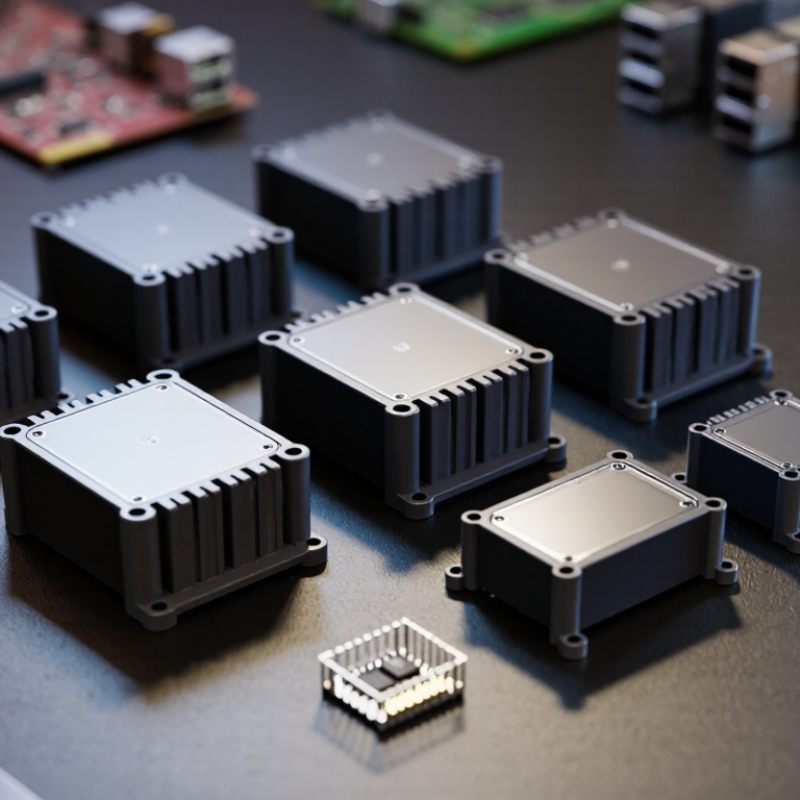
An encapsulated DC-DC power module converts one direct-current voltage into another inside a sealed package. It commonly contains switching transistors, a transformer or inductor, control circuitry, and protective components. The resin enclosure limits moisture, dust, vibration, and accidental contact with live parts.
Inside the module, a controller switches current at high speed. Magnetic components transfer energy, while capacitors smooth the output into usable DC power. Feedback continuously compares the output voltage with its target. If the load changes suddenly, the controller adjusts switching behavior. Under heavy demand, however, heat can build quickly. Small packages still need careful thermal planning.
The best 2026 modules should match the application, not merely offer the highest efficiency figure. Engineers should check input range, regulated output, isolation voltage, ripple, startup behavior, and continuous load capacity. A 24-volt industrial sensor may need different protection from a battery-powered communication device. Measure temperature near the module during full-load testing. Review the derating curve, because a rated output at 25°C may fall sharply inside a sealed enclosure. Short-circuit protection is valuable, but it does not replace correct fuse selection. Imperfect layouts can also create noise, even with a well-designed module. Leave room for airflow, testing points, and future revisions.
| Module Type | Typical Input Range | Typical Output Options | Isolation | Typical Power | Typical Efficiency | Common Package | Typical Operating Temperature | Best-Fit Applications |
|---|---|---|---|---|---|---|---|---|
| Unregulated Isolated Module | 5 V, 12 V, or 24 V DC | 5 V, 9 V, 12 V, or 15 V DC | 1.0–3.0 kV DC | 0.5–2 W | 75–85% | Through-hole SIP or compact DIP | −40°C to +85°C | Low-cost signal isolation, sensors, serial interfaces, and analog circuits |
| Regulated Isolated Module | 4.5–18 V or 9–36 V DC | 3.3 V, 5 V, 9 V, 12 V, or 15 V DC | 1.5–3.0 kV DC | 1–3 W | 80–90% | Encapsulated SIP or DIP | −40°C to +85°C | Industrial control, measurement equipment, isolated communications, and embedded electronics |
| Wide-Input Industrial Module | 9–36 V or 18–75 V DC | 5 V, 12 V, or 15 V DC | 1.5–3.0 kV DC | 3–6 W | 82–91% | Encapsulated SIP, DIP, or surface-mount package | −40°C to +85°C | Factory automation, transportation electronics, remote I/O, and battery-powered systems |
| Regulated Railway-Input Module | 36–160 V DC | 5 V, 12 V, 15 V, or 24 V DC | 2.5–3.0 kV DC | 5–15 W | 85–92% | Encapsulated chassis or board-mount module | −40°C to +85°C or +105°C | Railway controls, trackside equipment, transit systems, and high-voltage battery interfaces |
| High-Power Industrial Module | 9–36 V, 18–75 V, or 36–160 V DC | 5 V, 12 V, 15 V, or 24 V DC | 1.5–3.0 kV DC | 15–40 W | 88–94% | Encapsulated brick, chassis-mount, or board-mount package | −40°C to +85°C | Industrial computers, robotics, telecom equipment, instrumentation, and control cabinets |
| Medical-Grade Isolated Module | 5–36 V DC | 5 V, 12 V, or 15 V DC | 3.0–5.0 kV AC test rating | 1–20 W | 80–92% | Encapsulated SIP, DIP, or low-profile board-mount package | −40°C to +85°C | Patient-connected instrumentation, monitoring equipment, laboratory devices, and medical subsystems |
| Telecom and PoE Auxiliary Module | 18–36 V, 36–75 V, or 36–57 V DC | 5 V, 12 V, or 24 V DC | 1.5–3.0 kV DC | 5–30 W | 88–94% | Encapsulated surface-mount, quarter-brick, or compact board-mount package | −40°C to +85°C | Network equipment, wireless infrastructure, Ethernet power systems, and remote terminals |
| Automotive and Battery-System Module | 9–16 V or 18–36 V DC | 5 V, 12 V, or 15 V DC | 1.0–3.0 kV DC | 3–25 W | 85–93% | Encapsulated PCB or compact chassis-mount package | −40°C to +105°C | Vehicle electronics, battery management subsystems, charging equipment, and mobile power systems |
| Non-Isolated Buck Module | 6–36 V or 9–60 V DC | 1.2–24 V DC, adjustable or fixed | Not isolated | 5–100 W | 90–97% | Encapsulated surface-mount or compact board-mount package | −40°C to +85°C or +105°C | Point-of-load conversion, embedded processors, industrial sensors, and distributed power architectures |
Selection note: Values shown are typical specification ranges for encapsulated DC-DC power-module classes available for 2026 designs. Actual performance depends on input voltage, load level, cooling, switching frequency, PCB layout, isolation requirements, and compliance testing. Verify creepage, clearance, EMC, surge, short-circuit, and safety requirements before final selection.
It converts one direct-current voltage into another inside a sealed package. The enclosure helps block moisture, dust, vibration, and accidental contact. It typically contains switching transistors, magnetic components, capacitors, and control circuits.
A controller switches current rapidly through magnetic components. Capacitors smooth the resulting waveform into usable DC power. Feedback compares the output with its target. The controller then adjusts switching behavior when the load changes.
Check the input range, regulated output, isolation voltage, ripple, and startup behavior. Confirm the continuous load rating. Review short-circuit and overload protection. The highest efficiency figure may not fit the actual application.
Test the module at 25%, 50%, and 100% load. Record input current, output voltage, and surface temperature. Also examine startup, standby, and changing-voltage conditions. One impressive efficiency result can hide important losses.
Heat can build quickly inside a small, sealed enclosure. Calculate power loss by subtracting output power from input power. A 10-watt loss needs a clear path through the board, case, or mounting surface. Small packages still need breathing room.
Measure near the module pins, not only on the top cover. Check temperatures during full-load operation. Take several readings because hidden hot spots may appear. I would not trust one measurement.
Encapsulation reduces exposure to moisture, dust, vibration, and accidental contact. It cannot repair poor circuit layout or insufficient cooling. Review humidity resistance, vibration data, and continuous-operation test results. Long-life claims need evidence.
Verify isolation voltage, insulation resistance, creepage distance, and clearance. Match these values to the working voltage and pollution environment. A sealed package does not automatically guarantee suitable isolation. The details matter.
In 2026, Encapsulated DC-DC Power Modules are essential for converting one DC voltage level to another while providing compact construction, electrical protection, and dependable operation. Their sealed design helps shield internal components from moisture, dust, vibration, and mechanical stress, making them suitable for industrial controls, telecommunications, transportation systems, renewable energy equipment, and embedded electronics. Understanding their working principles, input and output ranges, power ratings, efficiency, switching frequency, and isolation characteristics is critical when evaluating different solutions.
The best module depends on the specific power conversion requirement. Engineers should compare efficiency across load conditions, thermal performance, protection features, isolation voltage, regulation accuracy, operating temperature, and expected service life. Low-power isolated modules may suit signal interfaces and control circuits, while higher-power options are better for automation, battery systems, and distributed power architectures. Careful selection should balance electrical performance, installation space, cooling conditions, reliability, compliance needs, and total system cost to achieve stable and efficient long-term operation.